Curtiss A12 Shrike (1933)
 USAAC dive bomber (1933-42), 46 built
Archive: nationalmuseum.af.mil
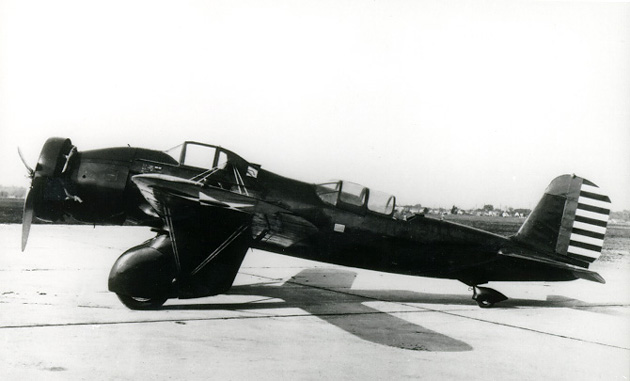
Initial prototype
The A-12 was the production version of the Curtiss YA-10. The YA-10 was converted from the first YA-8 (S/N 32-344) and was primarily designed to test the feasibility of a radial engine version of the Curtiss Shrike. Beginning in the early 1930s, the Army Air Corps General Staff began to favor the air-cooled radial engine over the liquid cooled "V" engine. The two primary reasons for this change of thinking were: 1) the liquid-cooling system was very vulnerable to ground fire damage during low-level attack missions, and 2) the radial engine was simpler to maintain and cheaper to operate than a comparable liquid-cooled engine.
Forty-six A-12s were purchased. Originally, the Air Corps placed an order for 46 A-8Bs (with liquid-cooled Curtiss Conqueror engines), but the success of the YA-10 test program resulted in the order being switched for the radial powered A-12. The Air Corps received the first A-12 in late 1933 and used it (S/N 33-212) and two other A-12s for service testing. The A-12 also incorporated some design changes. The most notable was the spacing of the two cockpits. All previous Shrike models had widely spaced cockpits; however, this hampered cooperation between the pilot and observer/gunner, so the rear cockpit was moved forward.

The A-12 served mainly with the 3rd Attack Group and the 37th Attack Squadron of the 8th Pursuit Group. In 1936, some A-12s were transferred to Wheeler Field, Hawaii, and later reassigned to Hickam Field, Hawaii. The commander of the 3rd Attack Group at this time was Lt. Col. Horace Meek Hickam, who was killed on Nov. 5, 1934, when the A-12 he was piloting crashed while landing at Fort Crockett, Texas. Hickam Field was named in his honor. Some A-12s were still at Hickam Field on Dec. 7, 1941, when the Japanese attacked; however, none of the aircraft saw any combat. The A-12 was withdrawn from service soon after.
Special Projects: The first three A-12s (S/N 33-212, -213 and -214) were retained for service testing; however, other aircraft were involved in test and modification programs during their service lives. One of the simplest modifications involved adapting the aircraft for operating on snow. The main landing gear wheel covers were removed and F-1 skis were added. The F-1 ski had a slot in its center to allow the tire to pass through. With the F-1 skis added, the A-12 could operate on regular runways, grass and dirt fields, as well as on snow and ice.

After the 26th Attack Squadron was formed at Wheeler Field, Hawaii, the Air Corps conducted a test program to analyze an emergency flotation system. The program, which reached the test phase, involved adding an overwing streamlined structure just outboard on the struts. Each 'box' contained an inflatable air bladder that could be used in an emergency to keep the aircraft floating in case of a forced water landing.
The A-12 was never used in combat, but could carry a variety of light bomb loads. The maximum external load was 488 pounds (four 122-pound bombs) carried on external underwing racks. Internally, the A-12 could carry up to 10 30-pound bombs in a small bomb bay located behind the pilot's cockpit. The bombs were carried vertically, five on each side on the main fuel tank. The main fuel tank could be jettisoned in flight in an emergency. The A-12 also had limited reconnaissance capability with observer operated cameras mounted. The A-12 could carry parachute flares for illuminating battle areas at night either for reconnaissance or attack.
Development & Design

To keep it short, The Model 60 was developed from the A-8 and experimental YA-10 by the Curtiss Aeroplane and Motor Company for the United States Army Air Corps. It was accepted for a short production run of 26 for the USAAC, as rapidly evolving aviation technology, and a new doctrine of the USAAC that preferred multi-engined attack aircraft, led to its cancellation. Curtiss however obtained 20 more exports to China. The biggest difference between the A-12 and A-8 was the engine: It was air-cooled and radial, replacing the inline, water-cooled engine of the prececessor.

Curtiss A-8 (1932): 13 manufactured, 7 variants, first flight 1931. Designed by Don Berlin, retired 1938-39.
Indeed, that was on a demand by USAAC to favor radial engines, especially for attack aircraft given its lower profile, making it less vulnerable to ground fire, simpler cooling less prone to groundfire, and lighter maintenance overall. However the A-12 retained many trademarks from the A-8 like the open cockpit and it also had the same weapons load. To improve pilot and observer co-operation however the rear cockpit was moved forward so that its glazed covering formed a continuation of the fuselage decking, behind the pilot. In short, they were now better able to communicate.
Design of the A12
General layout
Like the A-8, the A-12 was a monoplane cantilever (low wing), but the latter was reworked, yet still was supported by struts attached to the fuselage to a point of structure berween the inner and outer sections either side of the large fairing of the undercarriage, also attached by cables like the outer section of the wings. It was also a bit taller and larger overall compared to the A-8.Apart the swap to a radial engine which changed the general outlook and balance, the A-12 was a bit larger, at 3,898 lb (1,768 kg) empty and 5,756 lb (2,611 kg) gross versus 3,910 lb/5,888 lb (2,671 kg). It had the same wingspan and wings, tail unit, but was slightly longera at 32 ft 3 in (9.83 m) versus 32 ft (9.75 m) despite its shorter engine, because there was a large fuel tank behind. Also as said above, the cockpit was changed. The observer was also navigator and radio with a radio set and map table behind him, forward, and he was also a MG-gunner when facing aft.
Engine and performances
The Curtiss A12 had now a Wright R-1820-21 Cyclone 9-cylinder air-cooled radial piston engine, 690 hp (510 kW) coupled with a Hamilton 3-bladed fixed-pitch propeller, instead of the A-8's Curtiss V-1570-31 Conqueror V-12 rated for 600 hp (450 kW). The different of almost 100 hp for the same fuselage and weight essentially however meant degraded performances due to the added drag of the radial, 177 mph (285 km/h, 154 kn) in top speed versus 183 mph (295 km/h, 159 kn), also for the Cruise speed down to 150 mph (240 km/h, 130 kn) versus 153 mph (246 km/h, 133 kn). However range was better, at 520 mi (840 km, 450 nmi) versus 480 mi (770 km, 420 nmi) but without external 52-gallon belly tank. Ceiling was 15,150 ft (4,620 m) versus 18,100 ft (5,500 m) on the previous A-8, so another drop in performances as the climb rate, from 1,325 ft/min (6.73 m/s) down to 1,170 ft/min (5.9 m/s).Armament
The A12 was armed the same way as the A-8, with four forward-firing 0.30 in (7.62 mm) M1919 Browning machine guns in the wheel fairings, which was quite unique and place them out of the propeller's arc. There was of course also the 0.30 in (7.62 mm) machine gun mounted in the observer's cockpit for rear defense. In terms of bombs they carried up to 4 × 122 lb (55 kg) under the wings or up to 10 × 30 lb (14 kg) fragmentation bombs in fuselage chutes, either side of the main fuel tank.⚙ A12 specifications | |
| Empty Weight | 3,898 lb (1,768 kg) |
| Gross weight | 5,756 lb (2,611 kg) |
| Length | 32 ft 3 in (9.83 m) |
| Wingspan | 44 ft (13.41 m) |
| Height | 9 ft (2.74 m) |
| Wing Area | 284 sq ft (26.4 m2) |
| Engine | Wright R-1820-21 Cyclone 9-cyl. AC radial piston engine 690 hp (510 kW) |
| Propeller | 3-bladed metal Hamilton fixed-pitch propeller |
| Top Speed, sea level | 177 mph (285 km/h, 154 kn) |
| Cruise Speed | 150 mph (240 km/h, 130 kn) |
| Range | 520 mi (840 km, 450 nmi) |
| Climb Rate | 1,170 ft/min (5.9 m/s) |
| Ceiling | 15,150 ft (4,620 m) |
| Armament | 4x Browning 0.3 M1919 fairings, 1 rear, 4× 122 lb (55 kg) bombs |
| Crew | 2; Pilot, Obsrrer |
Operational History
In US Service:
Introduced in 1933, the A-12 arrived in active USAAC squdrons that same year and in 1934 for the last year of production. They entered the 3rd Attack Group and the 8th and 18th Pursuit Groups. They were replaced by the Northrop A-17 for the USAAC as seen above from 1933s, but the design influenced also the Northrop BT-1, which itself became the base for the Douglas SBD Dauntless dive bomber of WW2 fame. Nine A-12 were still in reserve at Hickam Field on 7 December 1941, motly used for training and target tugs to this point, albeit they trained for attacks in 1940. They saw no combat in the attack, with some damaged in the bombings and strafing runs by the IJN. The surviving ones, grounded just after the Pearl Harbor attack, likely scrapped for spares.In Chinese Service:
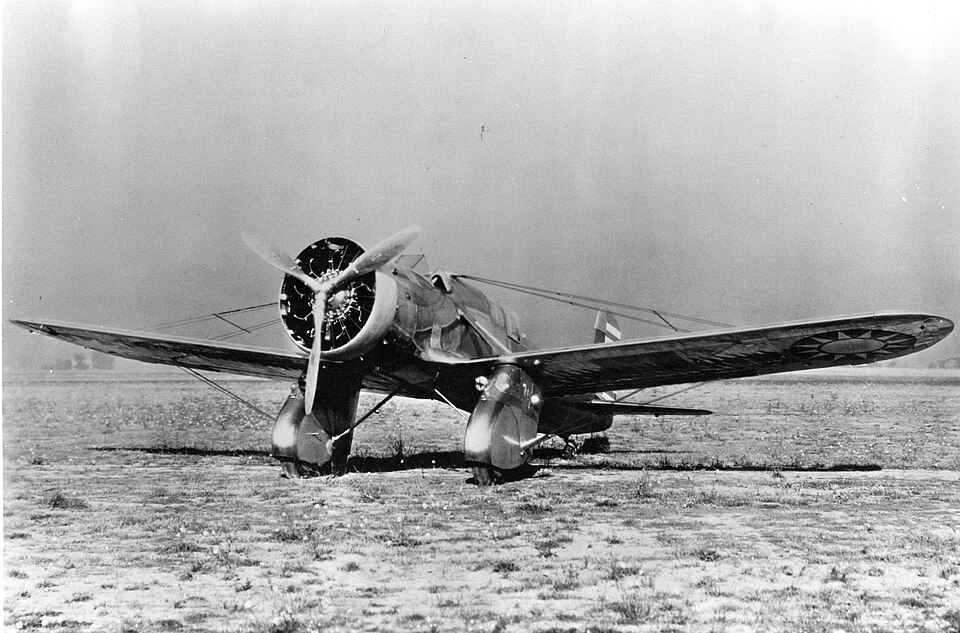
Chinese A-12s. They were dlivered in crates and assembled at local workshops.
The Chinese Nationalist Air Force received 20 A-12 Shrikes in 1936, so before the war, making the bulk of the 27th and the 28th Squadron of the 9th Group. On 15 August 1937, whe started the Sino-Japanese War they were close enough to take part in the monumental Battle of Shanghai: The Imperial Japanese Navy aircraft carrier Kaga launched 45 aircraft, targeting Chinese Air Force airfields and facilities in the province of Jiangsu, around Shanghai. Thirteen Aichi D1A1 "Susie" dive-bombers were unable to find their intended target in Suzhou. So they were diverted to Jianqiao Airbase, just to meet the A-12 Shrikes of the 26th and 27th Squadrons from the Chao'er auxiliary airbase that were preparing for strikes against the Japanese advancing on Shanghai.
Albeit they had bombs, the A-12 were still quite agile and they four forward MGs so they took the initiative of a dogfight. Two D1A1s were shot down by Chinese A-12s, another badly damaged, albeit it managed to return to Kaga with a crewman that later died. These were the only initial successes before a new attack on 15 August in which they downed four D1A1s. After deploying them in ground support missions in Shanxi, they were all shot down by IJN fighters, A4Ns and A5Ms of the Navy and the suviving ones assigned to training duties after their units were disbanded.
Gallery:
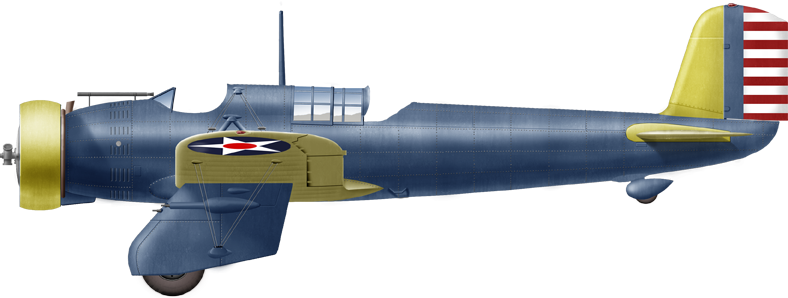
A12 Shrike of the USAAC in 1934.
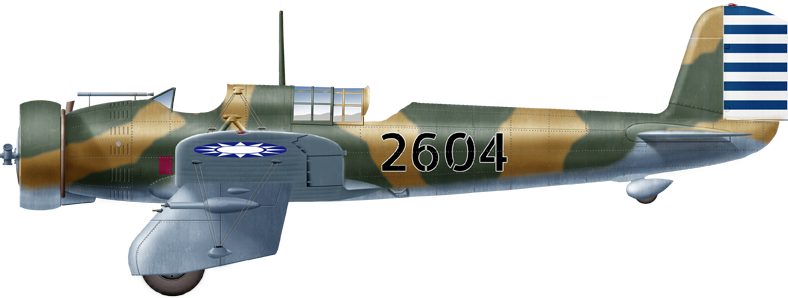
A12 of the ROCAF, Chao'er auxiliary airbase, summer 1937
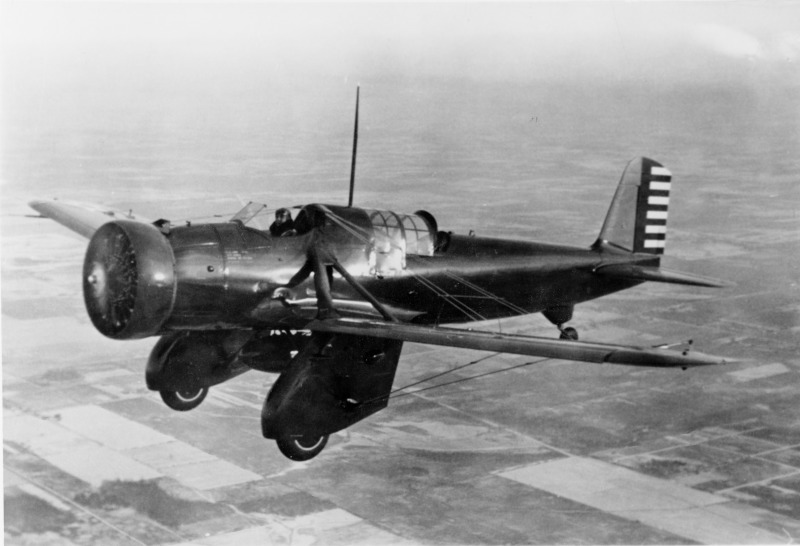
Early production model
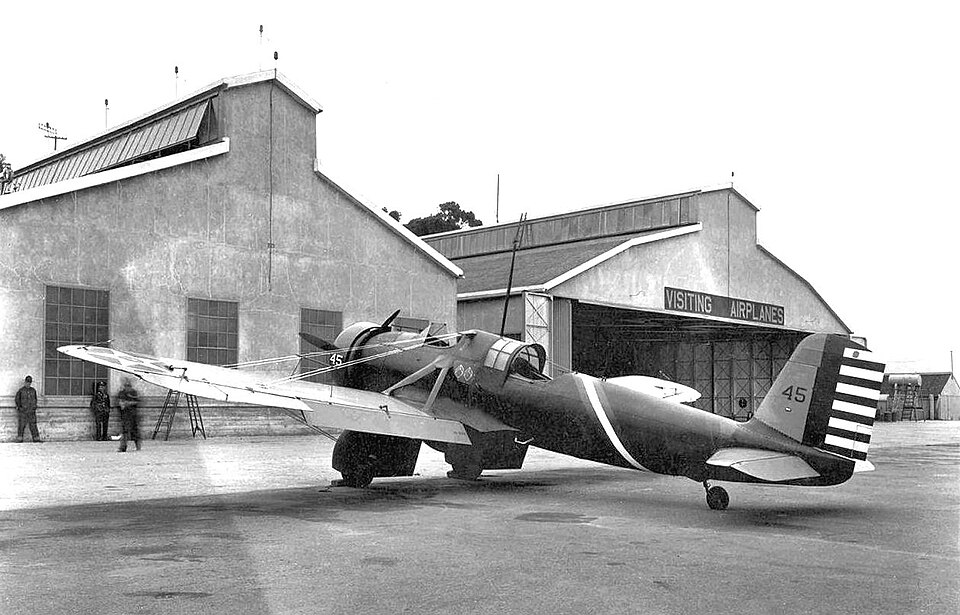
Production model in the 90th attack Sqn.
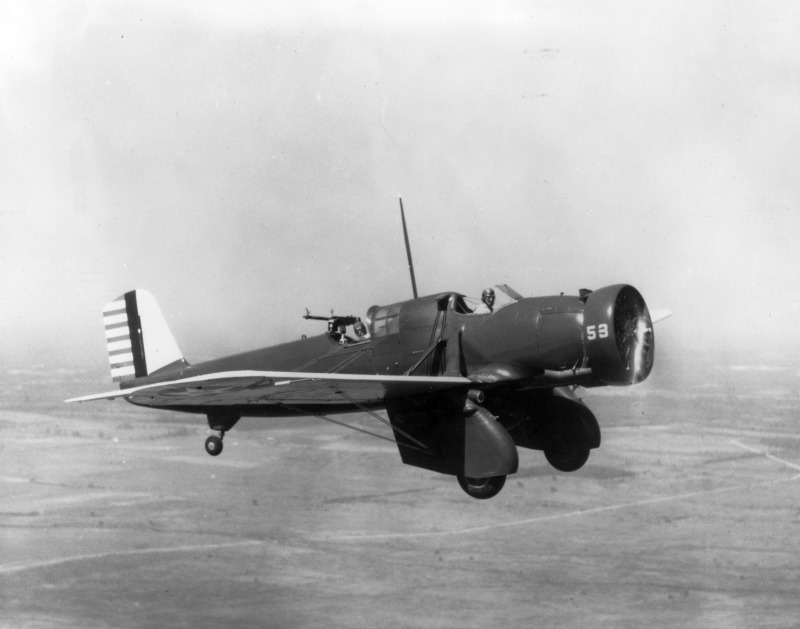
From the Ray Wagner coll.
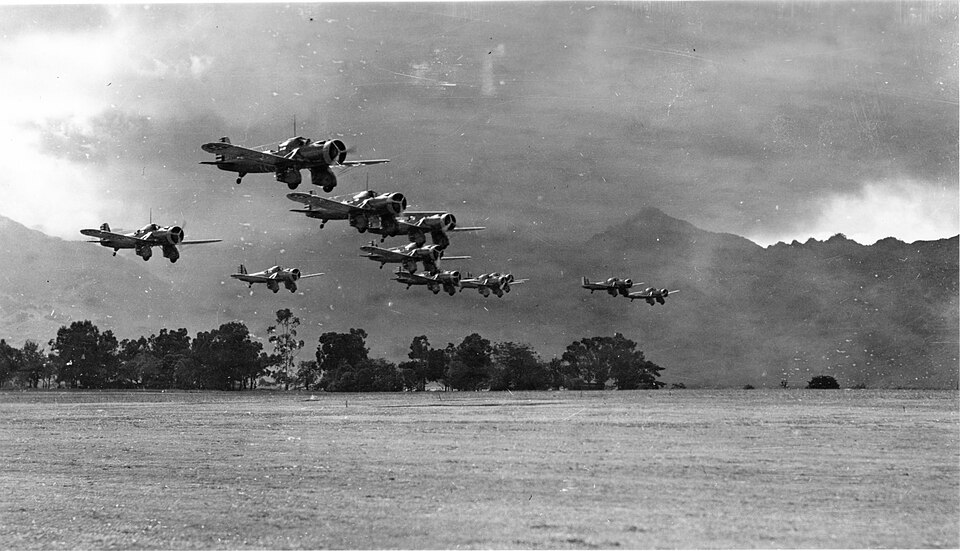
Training in formation at Hawaii in 1940

Plans - pinterest

AI impression of an A12 of the 26th/27th Squadrons, 9th Attack Group, during the desperate airfield defense and improvised dogfight at Chao'er Auxiliary Airbase, Battle of Shanghai, 15 August 1937.


Src/Read more about the FB.5:
Eden, Paul and Soph Moeng, eds. The Complete Encyclopedia of World Aircraft. London: Amber Books Ltd., 2002Fitzsimons, Bernard, ed. The Illustrated Encyclopedia of the 20th Century Weapons and Warfare, Vol. 21. Purnell & Sons 1969
Andrade, John M. . U.S Military Aircraft Designations and Serials since 1909. Midland Counties Publications, 1979.
Swanborough, F. G. and Peter M. Bowers. United States Military aircraft since 1909. London: Putnam 1963
Bowers, Peter M. . Curtiss Aircraft 1907-1947. London: Putnam, 1979, 1987.
Cheung, Raymond. OSPREY AIRCRAFT OF THE ACES 126: Aces of the Republic of China Air Force. Bloomsbury Pub. 2015.
axis-and-allies-paintworks.com
books.google.fr/
CC Images
nationalmuseum.af.mil
/en.wikipedia.org
forum.warthunder.com
- Lohner E (1913)
- Macchi M3 (1916)
- Macchi M5 (1917)
- Macchi M7 (1918)
- Ansaldo ISVA (1918)
- Short S.38 (1912)
- Sopwith Baby (1916)
- Short 184 (1916)
- Fairey Campania (1917)
- Sopwith Cuckoo (1917)
- Felixstowe F.2 (1917)
- Gotha WD.2 (1914)
- Friedrichshafen FF 33 (1916)
- Albatros W4 (1916)
- Albatros W8 (1918)
- Hanriot HD.2
- Grigorovich M5 (1915)
- Grigorovich M9 (1916)
- Grigorovich M11 (1917)
- IJN Farman MF.7
- IJN Yokosho Type Mo
- Yokosho Rogou Kougata (1917)
- Yokosuka Igo-Ko (1920)
- Curtiss N9 (1916)
- Curtiss H4 (1916)
- Curtiss H12 (1917)
- Curtiss H16 (1918)
- Aeromarine 39
- Vought VE-7
- Douglas DT (1921)
- NAF/Curtiss TS-1 (1922)
- Boeing FB.5 (1923)
- Boeing F4B (1928)
- Vought O2U/O3U Corsair (1928)
- Grumman FF (1931)
- Akron class airships (1931)
- Curtiss F9C Sparrowhawk (1931)
- Curtiss F11C Goshawk (1932)
- Curtiss BF2C Goshawk (1933)
- Blackburn Blackburn (1922)
- Supermarine Seagull (1922)
- Fairey Flycatcher (1923)
- Hawker Horsley (1925)
- Blackburn Ripon (1926)
- Fairey IIIF (1927)
- Fairey Seal (1930)
- LGL-32 C.1 (1927)
- Fokker T.II (1921)
- Fokker T.III (1923)
- Caspar U1 (1921)
- Dornier Do J Wal (1922)
- Rohrbach R-III (1924)
- Mitsubishi 1MF (1923)
- Mitsubishi B1M (1923)
- Yokosuka E1Y (1923)
- Nakajima A1N (1927)
- Nakajima E2N (1927)
- Mitsubishi B2M (1929)
- Nakajima A2N (1930)
- Nakajima A4N (1935)
- CANT 18
WW1
✠ K.u.K. Seefliegerkorps:
 Italian Naval Aviation
 RNAS
RNAS
 Marineflieger
 French Naval Aviation
 Russian Naval Aviation
 IJN Air Service
 USA
USA
Interwar
Interwar US
 Interwar Britain
 Interwar France
 Interwar Netherlands
 Interwar Germany
 Interwar Japan
 Interwar Italy
- Grumman F2F (1933)
- Curtiss SOC seagull (1934)
- Grumman F3F (1935)
- Northrop BT-1 (1935)
- Consolidated PBY Catalina (1935)
- Grumman J2F Duck (1936)
- Brewster/NAF SBN-1 (1936)
- Curtiss SBC Helldiver (1936)
- Vought SB2U Vindicator (1936)
- Brewster F2A Buffalo (1937)
- Douglas TBD Devastator (1937)
- Vought Kingfisher (1938)
- Curtiss SO3C Seamew (1939)
- K-class Blimps (1939)
- Douglas SBD Dauntless (1939)
- Grumman F4F Wildcat (1940)
- F4U Corsair (NE) (1940)
- Brewster SB2A Buccaneer (1941)
- Grumman TBF/TBM Avenger (1941)
- Consolidated TBY Sea Wolf (1941)
- Grumman F6F Hellcat (1942)
- Curtiss SB2C Helldiver (1942)
- Curtiss SC Seahawk (1944)
- Grumman F7F Tigercat (1944)
- Grumman F8F Bearcat (1944)
- Ryan FR-1 Fireball (1944)
- Douglas AD-1 Skyraider (1945)
- Fleet Air Arm
- Hawker Osprey (1932)
- Fairey Swordfish (1934)
- Blackburn Shark (1934)
- Supermarine Walrus (1936)
- Fairey Seafox (1936)
- Blackburn Skua (1937)
- Short Sunderland (1937)
- Blackburn Roc (1938)
- Fairey Albacore (1940)
- Fairey Fulmar (1940)
- Grumman Martlet (1941)
- Hawker sea Hurricane (1941)
- Brewster Bermuda (1942)
- Fairey Barracuda (1943)
- Fairey Firefly (1943)
- Grumman Tarpon (1943)
- Grumman Gannet (1943)
- Supermarine seafire (1943)
- Blackburn Firebrand (1944)
- Hawker Sea Fury (1944)
- Coastal Command
- Vickers Wellington (1937)
- IJN aviation
- Yokosuka E6Y (1930)
- Aichi D1A "Susie" (1934)
- Mitsubishi A5M "Claude" (1935)
- Nakajima A4N (1935)
- Yokosuka B4Y "Jean" (1935)
- Mitsubishi G3M "Nell" (1935)
- Nakajima E8N "Dave" (1935)
- Kawanishi E7K "Alf" (1935)
- Nakajima B5N "Kate" (1937)
- Kawanishi H6K "Mavis" (1938)
- Aichi D3A "Val" (1940)
- Mitsubishi G4M "Betty" (1940)
- Mitsubishi A6M "zeke" (1940)
- Nakajima E14Y "Glen" (1941)
- Nakajima B6N "Jill" (1941)
- Mitsubishi F1M "pete" (1941)
- Aichi E13A Reisu "Jake" (1941)
- Kawanishi E15K Shiun "Norm" (1941)
- Nakajima C6N Saiun "Myrt" (1942)
- Yokosuka D4Y "Judy" (1942)
- Kyushu Q1W Tokai "Lorna" (1944)
 Luftwaffe
- Heinkel 114 (1935)
- Arado 196 (1937)
- Me109 T (1938)
- Blohm & Voss 138 Seedrache (1940)
 Italian Aviation
- Savoia-Marchetti S.55
- IMAM Ro.43/44
- CANT Z.501 Gabbiano
- CANT Z.506 Airone
- CANT Z.508
- CANT Z.511
- CANT Z.515
 French Aeronavale
- GL.300 (1926-39)
- CAMS 37 (1926)
- Levasseur PL.5 (1927)
- Potez 452 (1935)
- Loire 210 (1936)
- Loire 130 (1937)
- LN 401 (1938)
 Soviet Naval Aviation
- Shavrov SH-2 (1928)
- Tupolev TB-1P (1931)
- Beriev MBR-2 (1930)
- Tupolev MR-6 (1933)
- Tupolev MTB-1 (1934)
- Beriev Be-2 (1936)
- Polikarpov I16 naval (1936)
- Tupolev MTB-2 (1937)
- Ilyushine DB-3T/TP (1937)
- Beriev Be-4 (1940)
 Swedish Naval Aviation
- SAAB B17S
-
 Skoda Š-328V
  R-XIII Idro
 Fokker C.XI W (1934)
 Rogožarski PVT-H (1938)
WW2
 ☍ USNA
- De Havilland Sea Vixen
- Hawker Sea Hawk
- Supermarine Scimitar
- Blackburn Buccaneer
- Hawker Sea Harrier
- Douglas A4 Skyhawk
- Grumman F9F Panther
- Vought F8 Crusader
- McDonnell-Douglas F-4 Phantom-II
- North Am. A5 Vigilante
- TU-142
- Yak 38 forger
☢ Cold War
✧ NATO
Fleet Air Arm
 US Navy
☭ Warsaw Pact
Merch
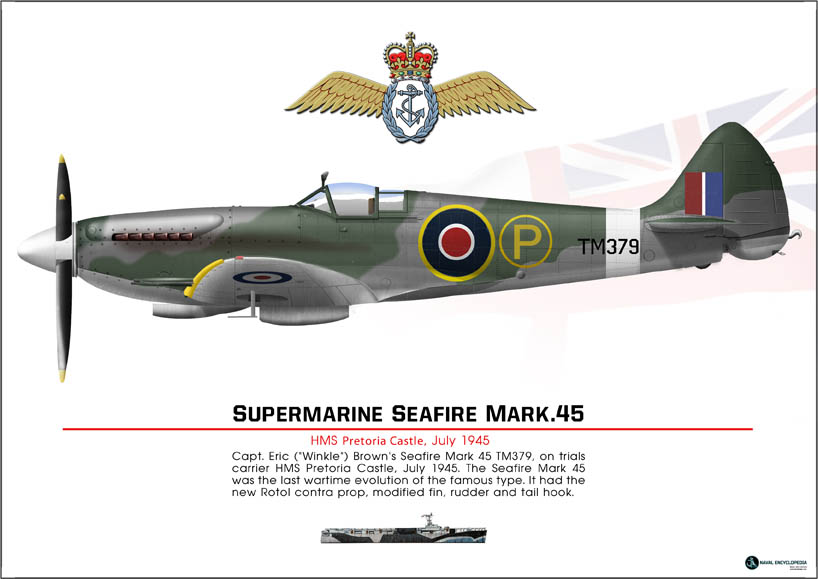
Seafire Mark 45; HMS Pretoria Castle
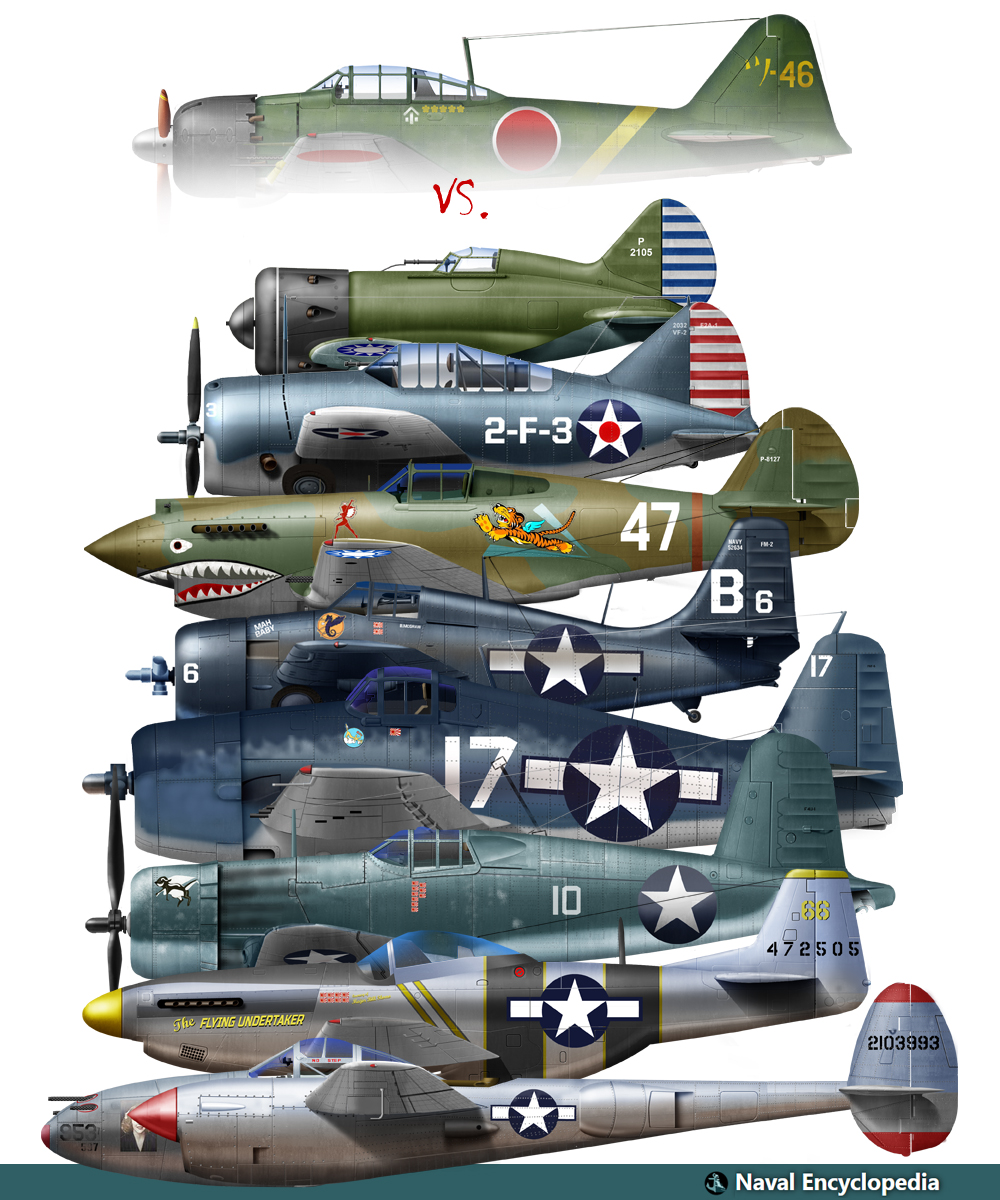
Zeros vs its aversaries
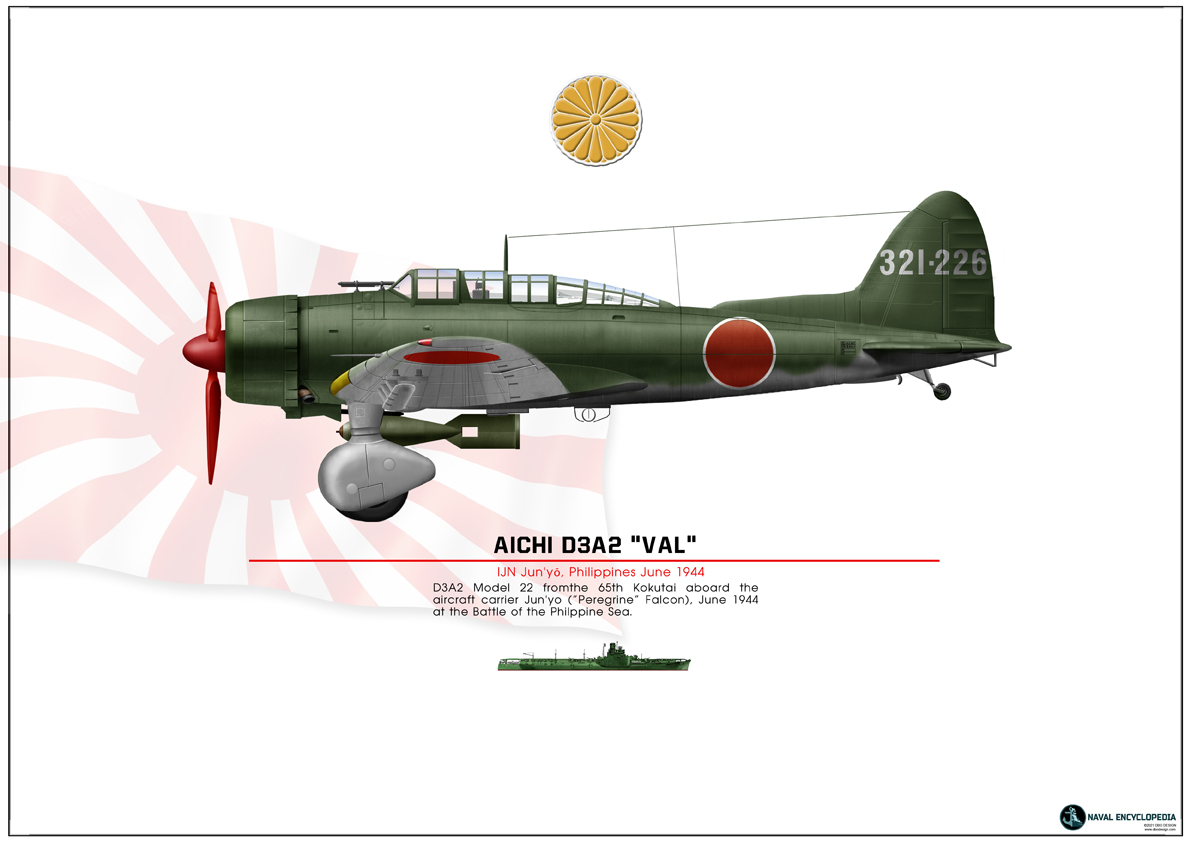
Aichi D3A “Val” Junyo
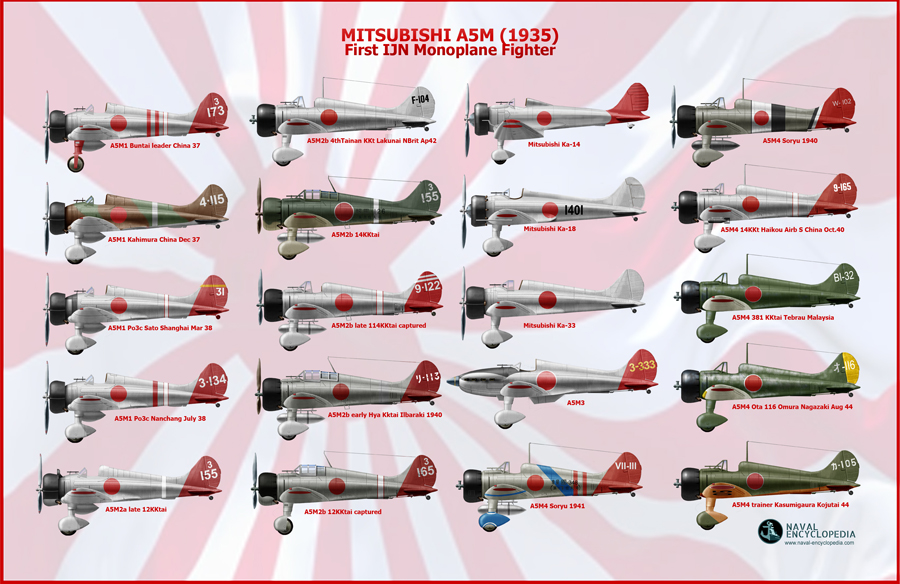
Mitsubishi A5M poster
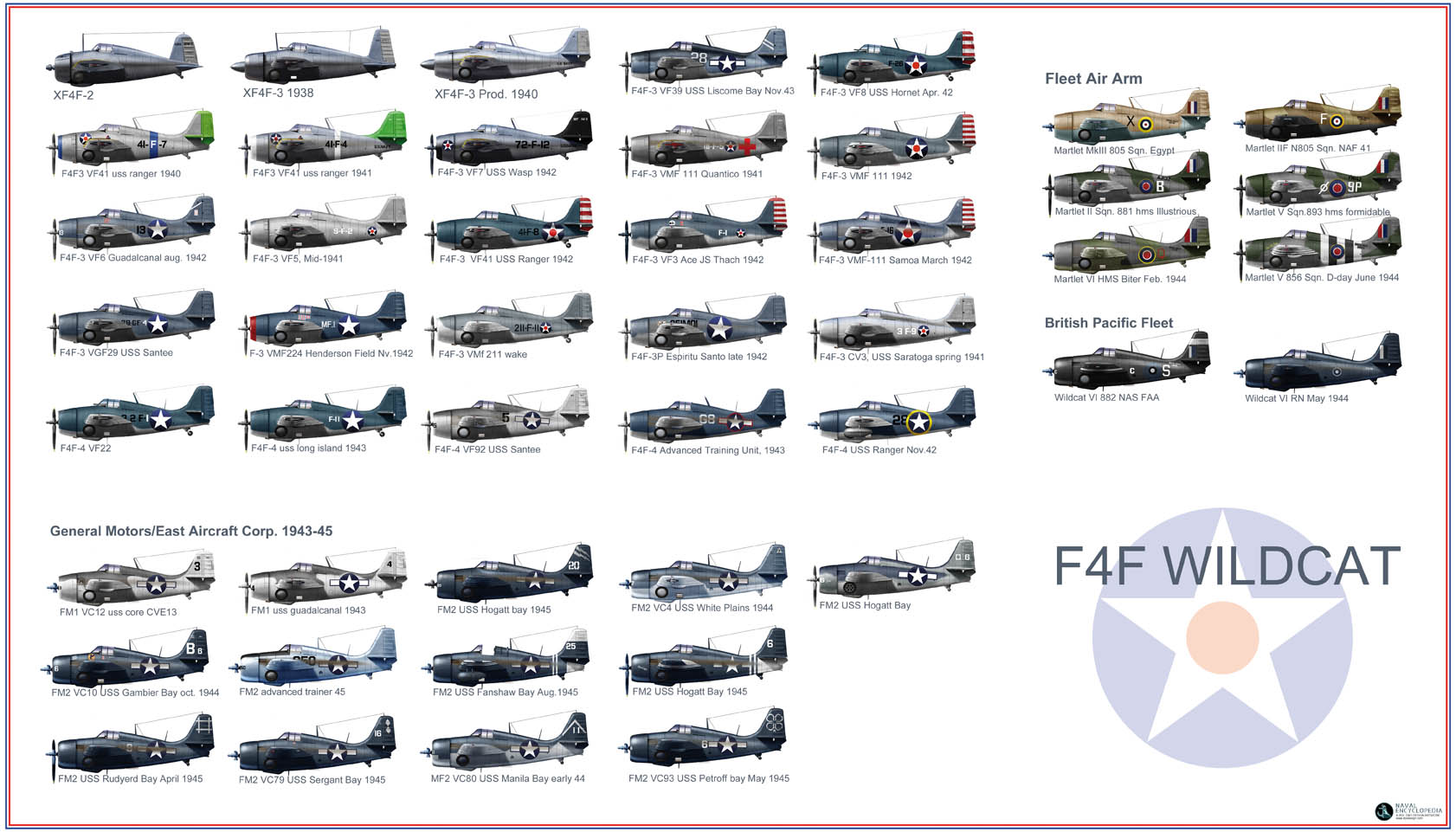
F4F wildcat
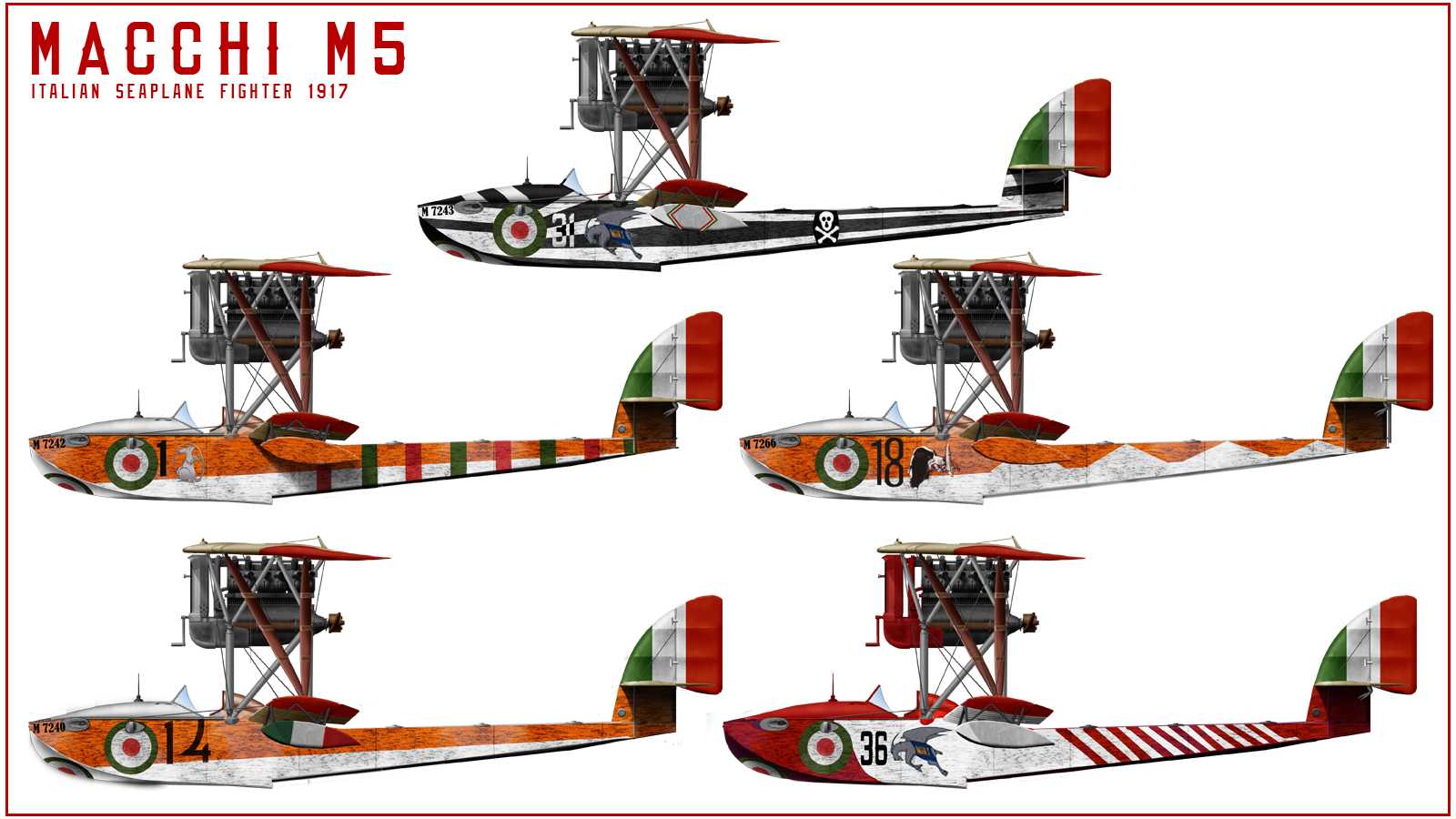
Macchi M5
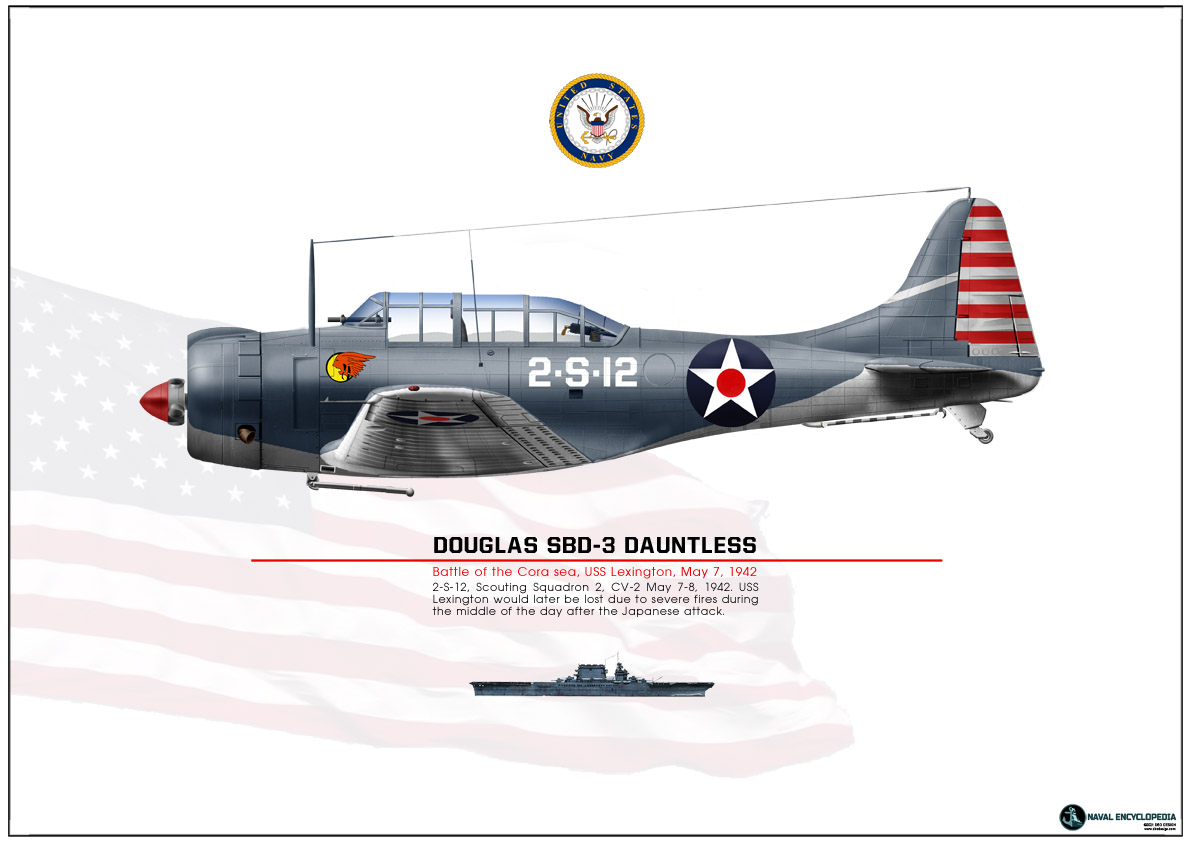
SBD Dauntless Coral Sea
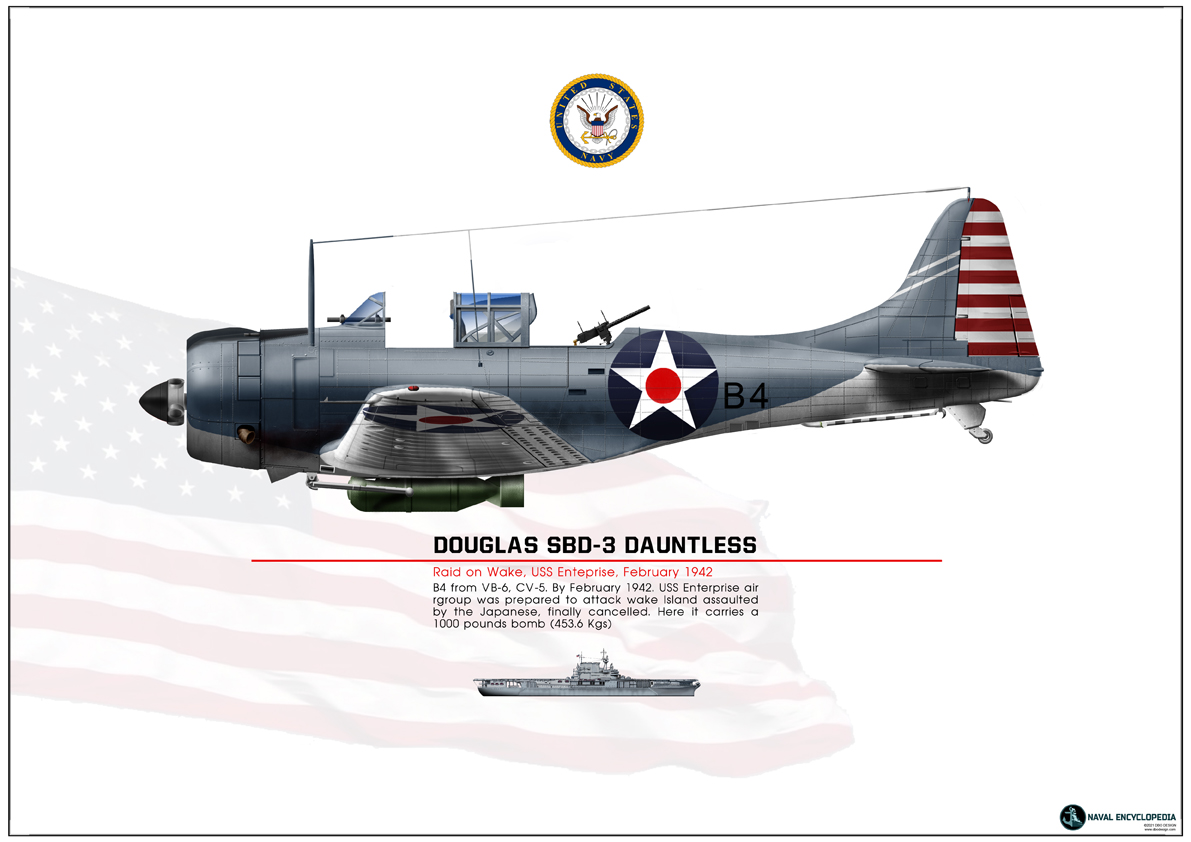
SBD Dauntless USS Enterprise
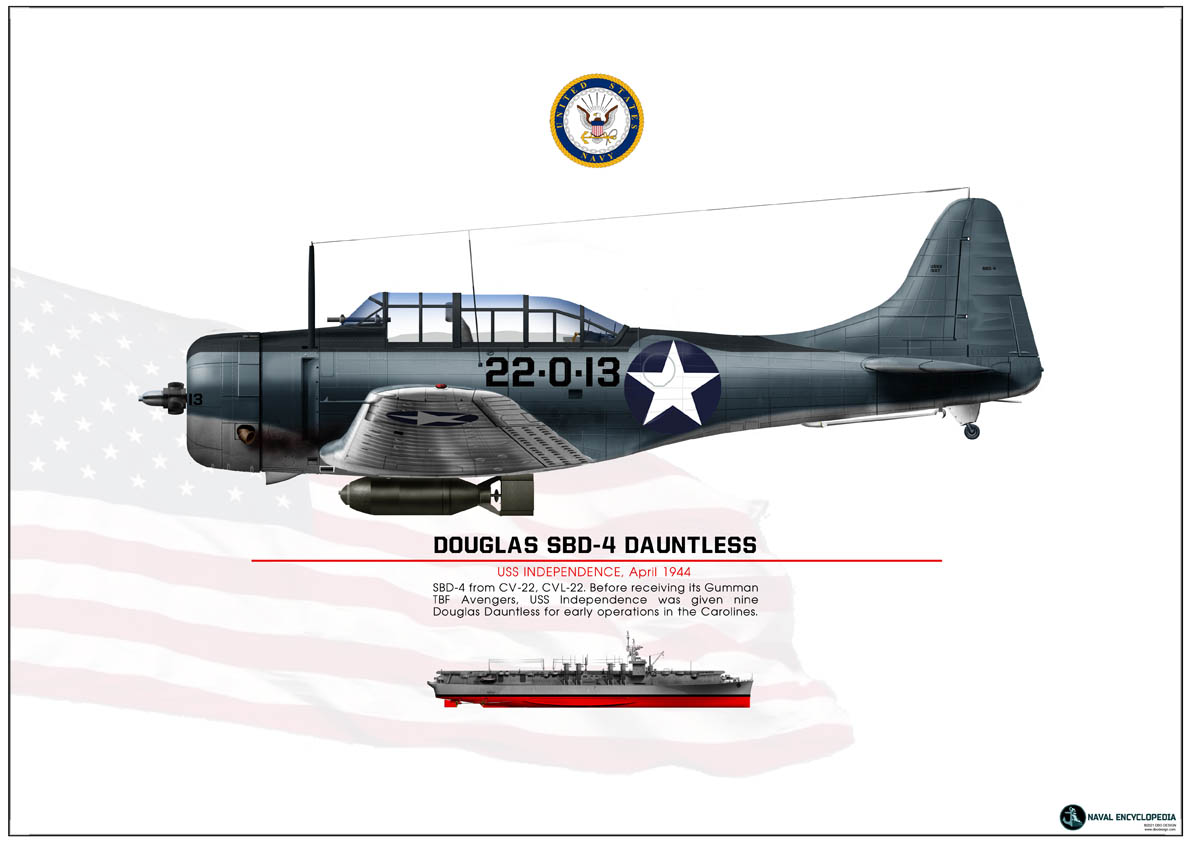
SBD-4 CV22