CAMS-37
 Aéronautique Navale: 332 built total 1926-37
The CAMS 37 Development
From CAMS to SNCASE (1922-37)
The saga of the Chantiers Aéro-Maritimes de la Seine (CAMS), an aircraft brand deeply linked to the sea, started at Saint-Ouen in November 1920, founded by Swiss-born engineer Laurent-Dominique Santoni (Geneva 1877). The company started from an existing product, a range of Società Idrovolanti Alta Italia (SIAI) design under licence in France. In 1922 Raffaele Conflenti left SIAI for CAMS, taking the head as chief designer for the company to have its own aircraft designs. The company soon gained a long-term partnership in the French Navy, but like the whole aeronautical sector it was nationalized in 1936 by French Aviation minister Pierre Cot to consolidate a mozaic of workshops-size companies with archaic construction methods. CAMS was thus merged with rival Chantiers aéronavals Étienne Romano (CAER), Lioré et Olivier, Potez and SPCA, forming the "Société nationale des constructions aéronautiques du Sud-Est" (SNCASE) on 1 February 1937. In practice, CAMS associated itself more with Potez, but none of its model met the same success as the CAMS 37.If the move was sensible to allocate more resources to modernize manufacturing and R&D, the timeframe could not have been worse for the French Aviation as a whole, as it provoked a wholesale and chaotic reorganization over two years marked with social strikes and officer's purge, Stalinian style (postwar, Cot was proven a Soviet agent). Long story short, when the war broke out in 1939 the Armée de l'Air and Aeronavale were left with ageing designs and many "finished" aircraft in park accepted until May-June while having gross quality issues and lacking parts. All the next, modern designs planned in 1935 were just starting production in 1940. CAMS under its own name, early phase, produced 31 models from 1923 to 1929 but most of them were prototypes, then in association with Potez, 14 models until 1939, diversifying in between: The Potez-CAMS 170 (1939) was for example a fascinating and promising single-seat seaplane fighter project. Productions were still limited to prototypes.
Genesis of the CAMS 37
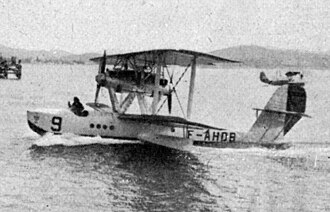 The company had more success with the CAMS-33, its first production model for the Navy, while trying to appear in the prestigious Schneider Trophy race with the CAMS-36. The CAMS-32 was a 1922 demonstrator (2 made) very much in the style of SIAI productions, biplane floatplane with a pusher configuration. The CAMS 33 (first flight 1923) really was the starting point for the later model 37, sharing many identical details, but with a push-pull configuration and tailored for transport, but used in practice for reconnaissance with a tandem open cockipit and seats inside the fuselage for a map table, navigator and radio. It was unarmed at first, but gained a bow Lewis LMG and dorsal single position and could carry 300 kgs of bombs. They were assigned to the Escadrille 1R1 at Cherbourg-Chantereyne but retired before WW2.
By the time the CAMS 37 was studied, it was when Maurice Hurel, which joined CAMS in August 1923, and became the true head of the design office when Santoni and Burri decided to leave the company at the end of December 1924. Hurel was a pure sailor-engineer, WWI veteran on the cruiser Gloire and naval aviator from 1917, breveted in 1918. He took part in many competition to help the company's notoriety. Santoni so left CAMS for good on January 15, 1925, filed the plans and patents for the CAMS seaplanes in the name of C.G.C.A., and went to Marseille to start a new manufacturing business in September 1925 as the Société Provençale de Construction Aéromaritime (S.P.C.A.), creating the "Météore", a large, tri-engine, hull-type biplane making S.P.C.A. became a competitor of CAMS. Others included Lioré et Olivier, Blériot (then led by Zappata, which later moved to CANT), Latham, Latécoère, Nieuport-Delage, Loire-Nieuport, and SPCA for the cvilian side and Marcel Besson, Schreck-FBA, Denhaut, Farman, Gourdou-Leseurre, Pierre Levasseur, Potez, and François Villiers.
So after Conflenti's departure, before Santoni's, Hurel was at the design office, but as a test pilot, after Burri departed, and before Pierre Brunel replaced him. The new design office and CAMS Sartrouville factory opened in May 1924 so Hurel completed the development the new military biplane flying boat planned by his predecessor, the Type 37. It was intended for the French Navy as a four-seater, amphibious, for training, reconnaissance and other purposes, around a 9-cylinder Gnome & Rhône Jupiter radial as a pusher. In 1924, the Navy ordered two prototypes, but of three-seater, and it needed to have folding-wings for onboard ship use. It was intended to use it for observation and gunnery spotting. The first prototype of a long serie had a 400 hp Lorraine V12, as a pure flying boat, while the second, amphibious, had a 450 hp Lorraine W12. They flew one after the other in early 1926, with Hurel at the commands. They had a nose-extension for an observer doubling as gunner.
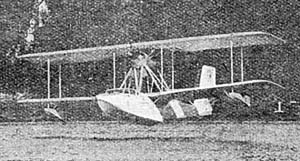 Lieutenant Commander Louis Demougeot, a specialist in seaplanes and catapults, identified potential civilian airfields across France on the CAMS 37 002 which had retractable wheels. That unarmed, four-seat military version had a fully enclosed cockpit to carry VIPs. The Navy purchased for 400,000 francs, including the engine, both the 37 A (amphibious) and 37-2 (non-amphibious) assorted by an order for 230 that were manufactured from 1928 to 1937. Six were acquired by Portugal in 1929, differing by their 450 hp Hispano V12 engine and twelve to the French air force (Armee de L'Air). The three-seater A-2/A-3 versions were designed with an elongated hull and the 4-seater A6 was unarmed. The A-9 LIA version had a an enclosed cockpit, used as French Navy top brass transport from 1928 to 1940, and it was more modern, made with a duralumin hull (see variants below).
Design

CAMS 37/37A, details, L'Aeronautique March 1928
General Layout
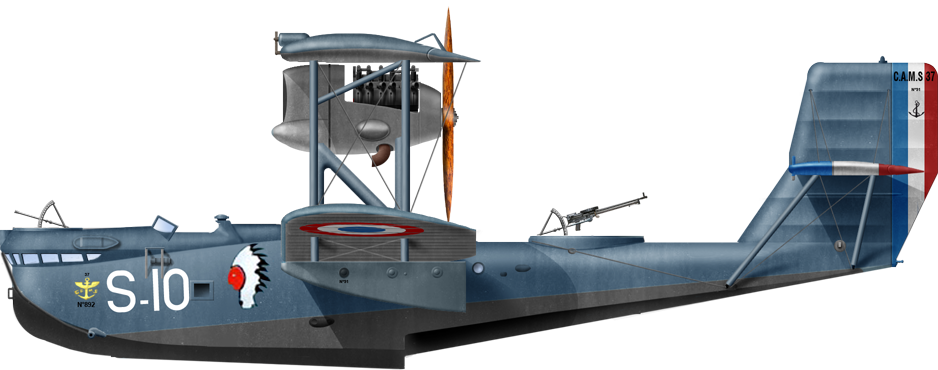
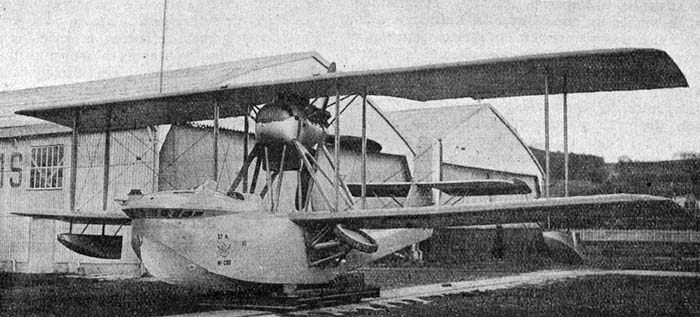
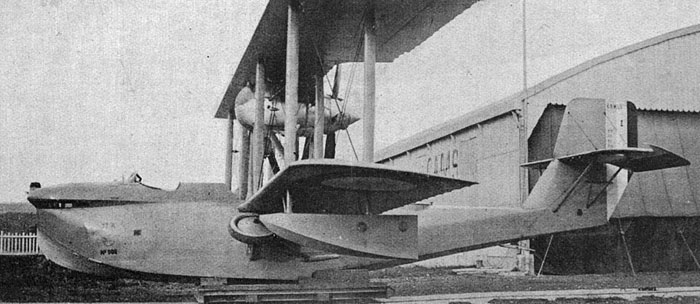
The CAMS 37 seaplane was made in all-wood construction. The structure used hard woods joined by metal brackets, and covered with a plywood-covered fuselage, typical of CANT flying boats, with a well shaped bottom. The Versions 37A.9 and 37.13 replaced however plywwod for duralumin. The fuselage, in its reconnaissance form, housed open crew cabins, one gun position in the bow and another amidship aft. The passenger version had covered cockpits. The Versions 37A and 37A.2 were amphibians with retractable wheeled undercarriage.The three seater measured 11.43 m for a wingspan of 14.50 m equal, top and bottom, a full height of 4.20 m and a wing area of 59.9 m² for a wing loading of 50 kg/m². Power load was 6.7 kg/hp and wing power 7.5 hp/m². The empty weight was 2,170 kg for a standard takeoff weight of 3 tonnes and max gross weight of 3,125 kg. The reconnaissance version was far more "ungainly", with a nose split with a slanted peripheric glasshouse for forward and below observation.
This nose structure also housed the gunner's post and the pilot was seated further away. The one crew member less happy by the configuration was the aft gunner, also doubling as observer, located on the dorsal aft position, close to the propeller. If the wing folded back, it was on its receiving end. The wing were folding back on a pivot point at the rear, with the main wing capable support made of four struts, while the engine, radiator first, was attached bt a pair of inverted V struts and two upper struts connected to the upper wing hub.
The foldable wings had a single pair of outer struts, and the cross-wire cables bracing them had to be set loose before folding. The model also had two small floats underwing, below the outer struts, whereas the amphibian wheeltrain was braced by V style struts, huinged on the fuselage and and could be folded up below the outer wings by a pneumatic arm. The tail was squared, as partly the ailerons. The amphibian also had a tail foot with tubular double-baffle damping.
Powerplant
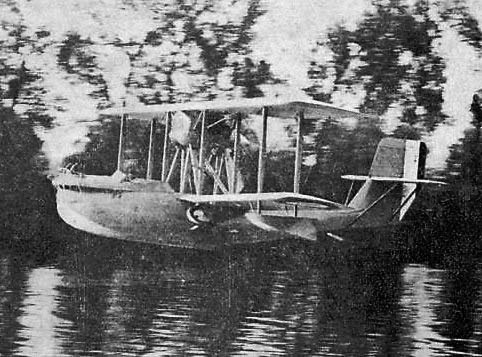
Recce version taking off in 1931
Power was provided by a 12-cylinder V-engine mounted in a nacelle beneath the upper wing, driving a pusher propeller. This was a Lorraine 12Ed twelve-cylinder with a rated power of 500 hp (368 kW) for the recce version CAMS 37/2 and 450 hp (331 kW) for the CAMS 37/6. Fuel capacity was 420 kg. Top speed was 175 km/h at 1,000 m altitude for the 37/2 and 185 km/h at the same for the 37/6. Minimal landing speed was 85 km/h and the climb time was on average for the first, 8 min to 1,000 m altitude and 19 min to 2000 m whereas the 37/6 was faster at 6.5 min to 1000 m and 13 min to 2000 m. Max range was 1,200 km for the first type and 850 km for the second, with a service ceiling which varied from 3,400 to 3,800 m. Flight duration at low speed was up to 6 hours. This was not stellar, but useful for coastal patrol near the French Riveria or colonial outposts.
Armament
The aircraft was armed with two or four 7.7 mm Lewis machine guns in pairs, two mounts fore and aft for the recce version. They had attachement points underwing as well to carry up to 300 kg, generally in 50 kgs bombs. The enclosed cockpit versions were unarmed.Variants
Several types were developed from the basic 37/11, there like the CAMS 37/41 with its twin-engine, 800 hp to act as seaplane bomber as well as the type CAMS 37/41bis and 42 as a 900-hp seaplane bomber. The 37/43 was powered by two 9-cylinder Jupiter radial for 420 hp and the Type 44 was a paper study for a heavy torpedo seaplane up to 1000 hp. The CAM-37/39, 40, 45 and 47 to 49 remained also as paper projects from 1925 onwards. CAMS 37: Flying boat prototype, one built.CAMS 37A: Main amphibious version, 185 built.
CAMS 37/2: Pure flying boat with refinements from the 37A, 45 built.
CAMS 37 A/3: Reinforced hull prototype, two built.
CAMS 37 A/6: Enclosed cabin admiral's barge for Aéronavale, 3 built
CAMS 37A/7: Also called CAMS 37Lia (aka 37 A/7), liaison amphibian, 36 built. CAMS 37A/9: Metal-hulled staff/VIP transport for the French Navy, 4 built. CAMS 37/10: Version for catapult trials, 2 built.
CAMS 37/11: 4-seat liaison trainer (wooden-hulled), 110 built.
CAMS 37/12: Civilian version, with enclosed 4-seat cabin, 1 prototype. CAMS 37/13: Also called 37bis, metal-hulled version reinforced for catapult launching.
CAMS 37GR:'Grand Raids' version, long range based on the 37C*.
CAMS 37C: single commercial transport prototype, converted to the 37GR.
CAMS 37E: "E" meaning "ecole" ("school"), designation for the CAMS 37/11 trainer.
*The CAMS 37GR was a single, long-range model converted for very long haul flights, the cockpit had an enclosed cabin and the forward and rear observers posts as well as the wheeled gear were deleted. It was flown by Lt.Vais. Guilbaud, taking from l'Etang de Berre with a support Lioré-Olivier LeO H-194 on 12 October 1926. Their goal was to reach Madagascar via the eastern African coast. On 3 January 1927, the engine threw a connecting rod, so Guilbaud abandoned the flight and returned to Marseille on 9 March 1927 via Sudan, Egypt, Lebanon, Turkey, Greece, Malta and Tunisia.
Users
France: Aviation Navale, French Air Force, then Vichy French Air Force. Portuguese Naval Aviation: 6 were purchased in 1929 with a 450 hp Hispano-Suiza V12. Four served on the converted Cubango seaplane transport and went into action during the Madeira revolt in 1931.
Civilian service:
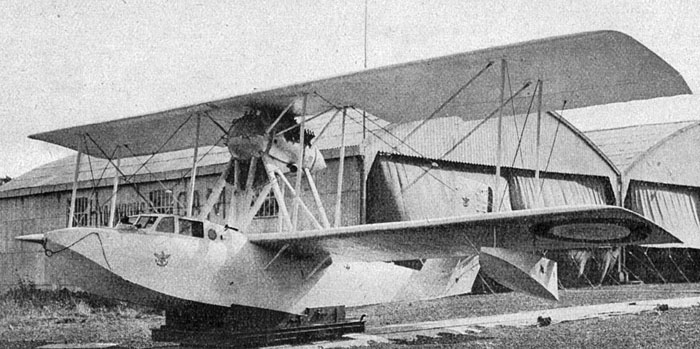
CAMS 37GR L'Aerophile Dec. 1926
Designated 37 C (C for "commercial"), the first civilian version was in service by the summer of 1926. It had extra fuel tanks for very long-distance flights. The first model was flown by Lt. Cdr. René-Cyprien Guilbaud as lead pilot, with Chief Petty Officer Georges Bougault. They took off while Lt. Cdr Marc Bernard piloted the Lioré et Olivier H-194 for the raid to Madagascar from October 12, 1926. The CAMS 37 GR could not go on due to systermatic engine failures. It was repaired only to return to France after a trip of 22,600 km with 38 stops, 240 flight hours. Mail transport was another task given to the CAMS 37/10 built in 1927 and acquired by the Compagnie Générale Transatlantique, famous for its transtlantic liners. These two flying boats were catapulted from the Ile-de-France 750 km from the coast, saving a day for the mail. In 1929 and 1930 these models also were used for test flights. From their fuel capacity of 850 liters they reached 1,000 kilometers.
Naval service:

The CAMS 37/11
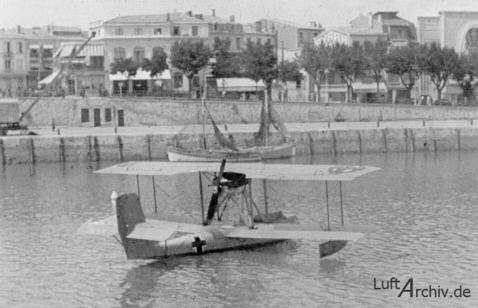
The Marine Nationale had a program of school flying boats in three-seater. This was specifically for naval aviation training as the CAMS production went on. The CAMS type 37-11, or 37 E (for "Ecole", school) was developed in 1931 in SGA, which absorbed CAMS. 110 were delivered to the French Navy schools, at Hourtin and Saint-Raphaël, operational from 1937. Three were kept at the Gnome & Rhône flying school at Saint-Chamas, Berre lake, until 1940. Thus when WW2 broke out, the CAMS-37 was operational both in these flight schools and reconnaissance units of the Navy. They were gradually withdrawn from front line duties however by 1936-39 and as World War II started only the trainer/laison CAM 37/11 remained active. In September 1939, reconnaissance models were reactivated, and still used by two units for coastal patrol, Escadrille 2S2 until August 1940. However, CAMS 37/11 trainers were used by the Free French unit in Tahiti until 15 January 1941, and Vichy France Indochina until late 1942. A few were captured and in German service as well (photo). The true successor was the CAMS-55, of which 112 were manufactured from 1931.
⚙ CAMS-37 specifications | |
| Empty Weight | 1,950 kg (4,299 lb) |
| Gross Weight | 2,850 kg (6,283 lb) |
| Lenght | 11.432 m (37 ft 6 in) |
| Wingspan | 14.5 m (47 ft 7 in) |
| Height | 4.04 m (13 ft 3 in) |
| Wing Area | 58 m2 (620 sq ft) |
| Engine | Lorraine 12Ed Courlis W-12 WC piston 340 kW (450 hp) |
| Propeller | 2-bladed fixed pitch propeller |
| Top Speed | 175 km/h (109 mph, 94 kn) |
| Cruise Speed | 90 km/h (56 mph; 49 kn) |
| Range | 1,200 km (750 mi, 650 nmi) |
| Climb rate | 3,000 m (9,800 ft) in 35 minutes |
| Ceiling | 4,500 m (14,800 ft) |
| Armament | 4x 7.7 mm Lewis bow and behind prop, 300 kg (660 lb) bombs (lower wing) |
| Crew | 3: Pilot, fwd gunner/observer, rear gunner |
Gallery
CAMS 37A L'Aerophile November 1926
CAMS-37A Dec. 1926
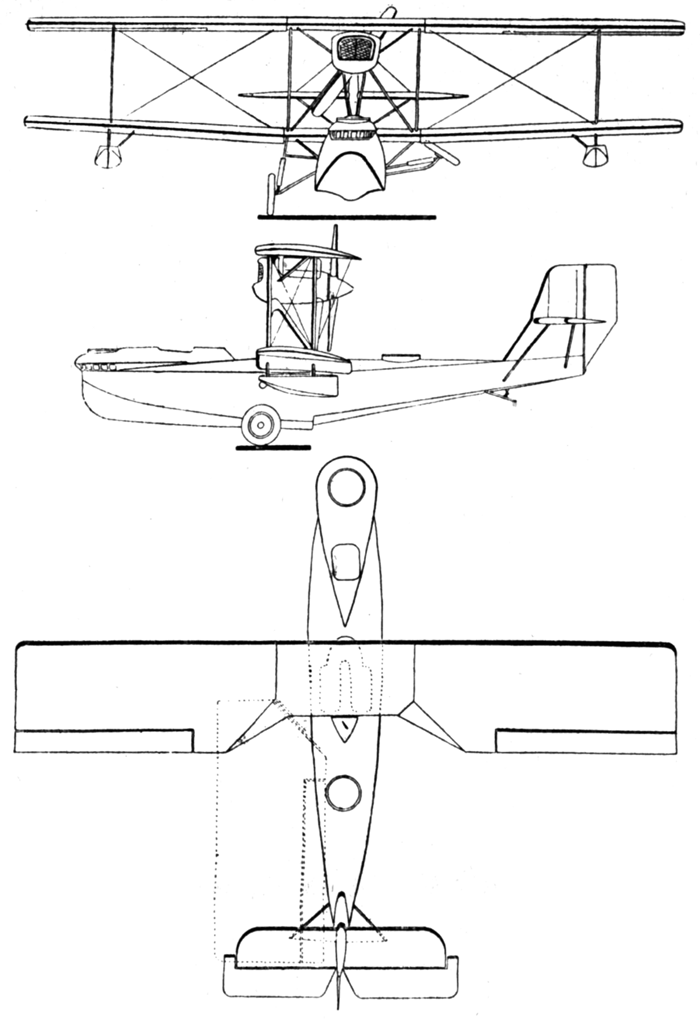
CAMS-37A 33-views Les Ailes May 19, 1927
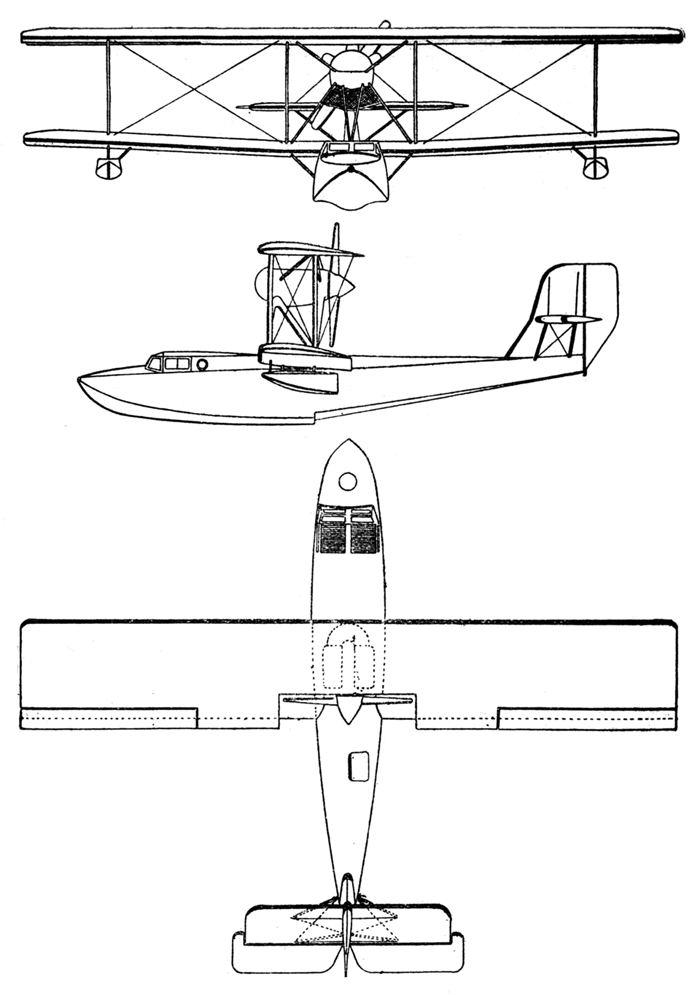
3 Views Plan 37 GR October 1926
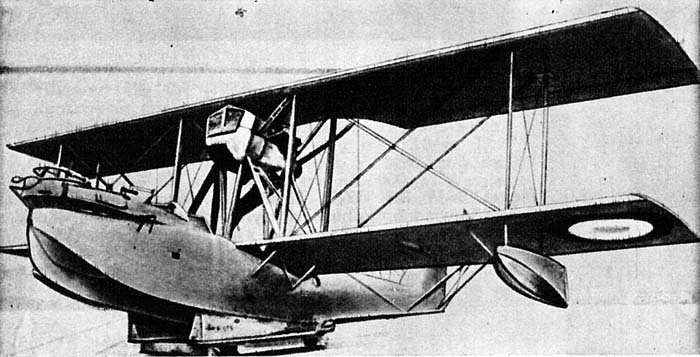
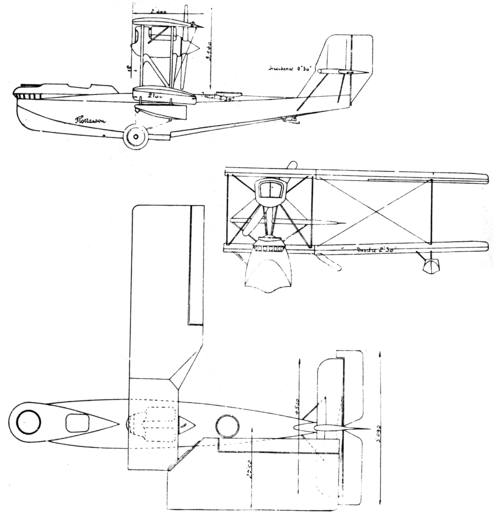
CAMS-37A 3-views L'Air October 1927
Read More

Avions no. 118 "Les CAMS 37 de la Marine"
Gérard Hartmann, « Les hydravions CAMS ». Dossiers historiques hydravions et moteurs
The Illustrated Encyclopedia of Aircraft (Part Work 1982–1985). Orbis Publishing.
Green, William (1968). Warplanes of the Second World War, Volume 5: Flying Boats. Macdonald.
Taylor, Michael J. H. (1989). Jane’s Encyclopedia of Aviation. Studio Editions. Bousquet, Gérard (2013). French Flying Boats of WW II. Sandomierz, Poland
Cortet, Pierre (March 1999). "Des C.A.M.S. à coque "metal"" Avions: Toute l'aéronautique et son histoire
Cortet, Pierre (December 1999). "Courrier des Lecteurs". Avions: Toute l'aéronautique et son histoire
Esperou, Robert (April 1994). "Les vols d'essais commerciaux français sur l'Atlantique Nord, de 1928 à 1939". Fana de l'Aviation 293
Morareau, Lucien (June 1998). "Courrier des Lecteurs" Avions: Toute l'aéronautique et son histoire
Morareau, Lucien (December 1998). "L'escadrille du bout du monde". Avions: Toute l'aéronautique et son histoire
Les C.A.M.S. 37 & 55 Aéronautique navale: Les ailes de gloire No. 18. Patrick Marchand, Junko Takamori.
Links
hydroretro.netfalkeeinsgreatplanes.blogspot.com
Parmentier, Bruno. "C.A.M.S. 37". Aviafrance 24 February 2018.
aviafrance.com 2
PIERRE BREGERIE COLL. CAMS 37 GR
Chantiers Aero-Maritimes de la Seine
passionair1940.fr
secretprojects.co.uk CAMS designations
aviadejavu.ru
Model Kits
All kits on scalemates, Azur and Dujin 1:72- Lohner E (1913)
- Macchi M3 (1916)
- Macchi M5 (1917)
- Macchi M7 (1918)
- Ansaldo ISVA (1918)
- Short S.38 (1912)
- Sopwith Baby (1916)
- Short 184 (1916)
- Fairey Campania (1917)
- Sopwith Cuckoo (1917)
- Felixstowe F.2 (1917)
- Gotha WD.2 (1914)
- Friedrichshafen FF 33 (1916)
- Albatros W4 (1916)
- Albatros W8 (1918)
- Hanriot HD.2
- Grigorovich M5 (1915)
- Grigorovich M9 (1916)
- Grigorovich M11 (1917)
- IJN Farman MF.7
- IJN Yokosho Type Mo
- Yokosho Rogou Kougata (1917)
- Yokosuka Igo-Ko (1920)
- Curtiss N9 (1916)
- Curtiss H4 (1916)
- Curtiss H12 (1917)
- Curtiss H16 (1918)
- Aeromarine 39
- Vought VE-7
- Douglas DT (1921)
- NAF/Curtiss TS-1 (1922)
- Boeing FB.5 (1923)
- Boeing F4B (1928)
- Vought O2U/O3U Corsair (1928)
- Grumman FF (1931)
- Akron class airships (1931)
- Curtiss F9C Sparrowhawk (1931)
- Curtiss F11C Goshawk (1932)
- Curtiss BF2C Goshawk (1933)
- Blackburn Blackburn (1922)
- Supermarine Seagull (1922)
- Fairey Flycatcher (1923)
- Hawker Horsley (1925)
- Blackburn Ripon (1926)
- Fairey IIIF (1927)
- Fairey Seal (1930)
- LGL-32 C.1 (1927)
- Fokker T.II (1921)
- Fokker T.III (1923)
- Caspar U1 (1921)
- Dornier Do J Wal (1922)
- Rohrbach R-III (1924)
- Mitsubishi 1MF (1923)
- Mitsubishi B1M (1923)
- Yokosuka E1Y (1923)
- Nakajima A1N (1927)
- Nakajima E2N (1927)
- Mitsubishi B2M (1929)
- Nakajima A2N (1930)
- Nakajima A4N (1935)
- CANT 18
WW1
✠ K.u.K. Seefliegerkorps:
 Italian Naval Aviation
 RNAS
RNAS
 Marineflieger
 French Naval Aviation
 Russian Naval Aviation
 IJN Air Service
 USA
USA
Interwar
 Interwar US
 Interwar Britain
Interwar France
 Interwar Netherlands
 Interwar Germany
 Interwar Japan
 Interwar Italy
- Grumman F2F (1933)
- Curtiss SOC seagull (1934)
- Grumman F3F (1935)
- Northrop BT-1 (1935)
- Consolidated PBY Catalina (1935)
- Grumman J2F Duck (1936)
- Brewster/NAF SBN-1 (1936)
- Curtiss SBC Helldiver (1936)
- Vought SB2U Vindicator (1936)
- Brewster F2A Buffalo (1937)
- Douglas TBD Devastator (1937)
- Vought Kingfisher (1938)
- Curtiss SO3C Seamew (1939)
- K-class Blimps (1939)
- Douglas SBD Dauntless (1939)
- Grumman F4F Wildcat (1940)
- F4U Corsair (NE) (1940)
- Brewster SB2A Buccaneer (1941)
- Grumman TBF/TBM Avenger (1941)
- Consolidated TBY Sea Wolf (1941)
- Grumman F6F Hellcat (1942)
- Curtiss SB2C Helldiver (1942)
- Curtiss SC Seahawk (1944)
- Grumman F7F Tigercat (1944)
- Grumman F8F Bearcat (1944)
- Ryan FR-1 Fireball (1944)
- Douglas AD-1 Skyraider (1945)
- Fleet Air Arm
- Hawker Osprey (1932)
- Fairey Swordfish (1934)
- Blackburn Shark (1934)
- Supermarine Walrus (1936)
- Fairey Seafox (1936)
- Blackburn Skua (1937)
- Short Sunderland (1937)
- Blackburn Roc (1938)
- Fairey Albacore (1940)
- Fairey Fulmar (1940)
- Grumman Martlet (1941)
- Hawker sea Hurricane (1941)
- Brewster Bermuda (1942)
- Fairey Barracuda (1943)
- Fairey Firefly (1943)
- Grumman Tarpon (1943)
- Grumman Gannet (1943)
- Supermarine seafire (1943)
- Blackburn Firebrand (1944)
- Hawker Sea Fury (1944)
- Coastal Command
- Vickers Wellington (1937)
- IJN aviation
- Yokosuka E6Y (1930)
- Aichi D1A "Susie" (1934)
- Mitsubishi A5M "Claude" (1935)
- Nakajima A4N (1935)
- Yokosuka B4Y "Jean" (1935)
- Mitsubishi G3M "Nell" (1935)
- Nakajima E8N "Dave" (1935)
- Kawanishi E7K "Alf" (1935)
- Nakajima B5N "Kate" (1937)
- Kawanishi H6K "Mavis" (1938)
- Aichi D3A "Val" (1940)
- Mitsubishi G4M "Betty" (1940)
- Mitsubishi A6M "zeke" (1940)
- Nakajima E14Y "Glen" (1941)
- Nakajima B6N "Jill" (1941)
- Mitsubishi F1M "pete" (1941)
- Aichi E13A Reisu "Jake" (1941)
- Kawanishi E15K Shiun "Norm" (1941)
- Nakajima C6N Saiun "Myrt" (1942)
- Yokosuka D4Y "Judy" (1942)
- Kyushu Q1W Tokai "Lorna" (1944)
 Luftwaffe
- Heinkel 114 (1935)
- Arado 196 (1937)
- Me109 T (1938)
- Blohm & Voss 138 Seedrache (1940)
 Italian Aviation
- Savoia-Marchetti S.55
- IMAM Ro.43/44
- CANT Z.501 Gabbiano
- CANT Z.506 Airone
- CANT Z.508
- CANT Z.511
- CANT Z.515
 French Aeronavale
- GL.300 (1926-39)
- CAMS 37 (1926)
- Levasseur PL.5 (1927)
- Potez 452 (1935)
- Loire 210 (1936)
- Loire 130 (1937)
- LN 401 (1938)
 Soviet Naval Aviation
- Shavrov SH-2 (1928)
- Tupolev TB-1P (1931)
- Beriev MBR-2 (1930)
- Tupolev MR-6 (1933)
- Tupolev MTB-1 (1934)
- Beriev Be-2 (1936)
- Polikarpov I16 naval (1936)
- Tupolev MTB-2 (1937)
- Ilyushine DB-3T/TP (1937)
- Beriev Be-4 (1940)
 Swedish Naval Aviation
- SAAB B17S
-
 Skoda Š-328V
  R-XIII Idro
 Fokker C.XI W (1934)
 Rogožarski PVT-H (1938)
WW2
 ☍ USNA
- De Havilland Sea Vixen
- Hawker Sea Hawk
- Supermarine Scimitar
- Blackburn Buccaneer
- Hawker Sea Harrier
- Douglas A4 Skyhawk
- Grumman F9F Panther
- Vought F8 Crusader
- McDonnell-Douglas F-4 Phantom-II
- North Am. A5 Vigilante
- TU-142
- Yak 38 forger
☢ Cold War
✧ NATO
Fleet Air Arm
 US Navy
☭ Warsaw Pact
Merch
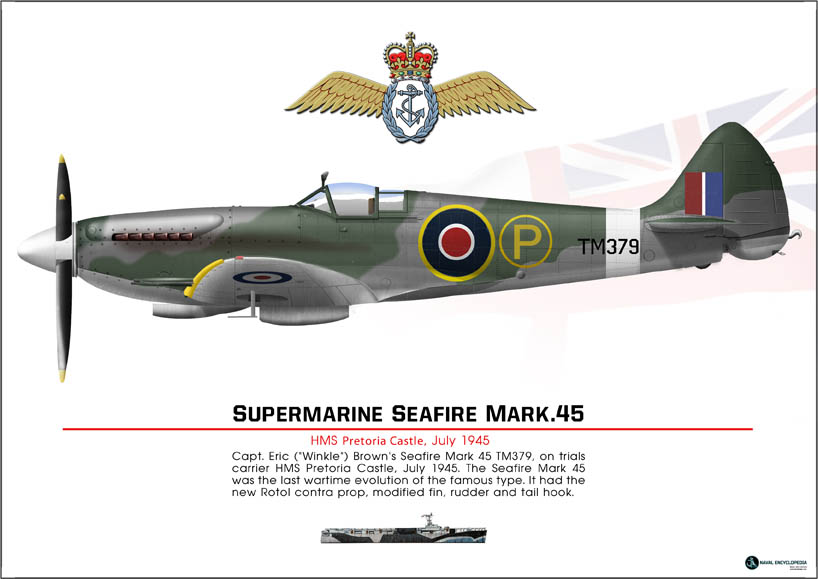
Seafire Mark 45; HMS Pretoria Castle
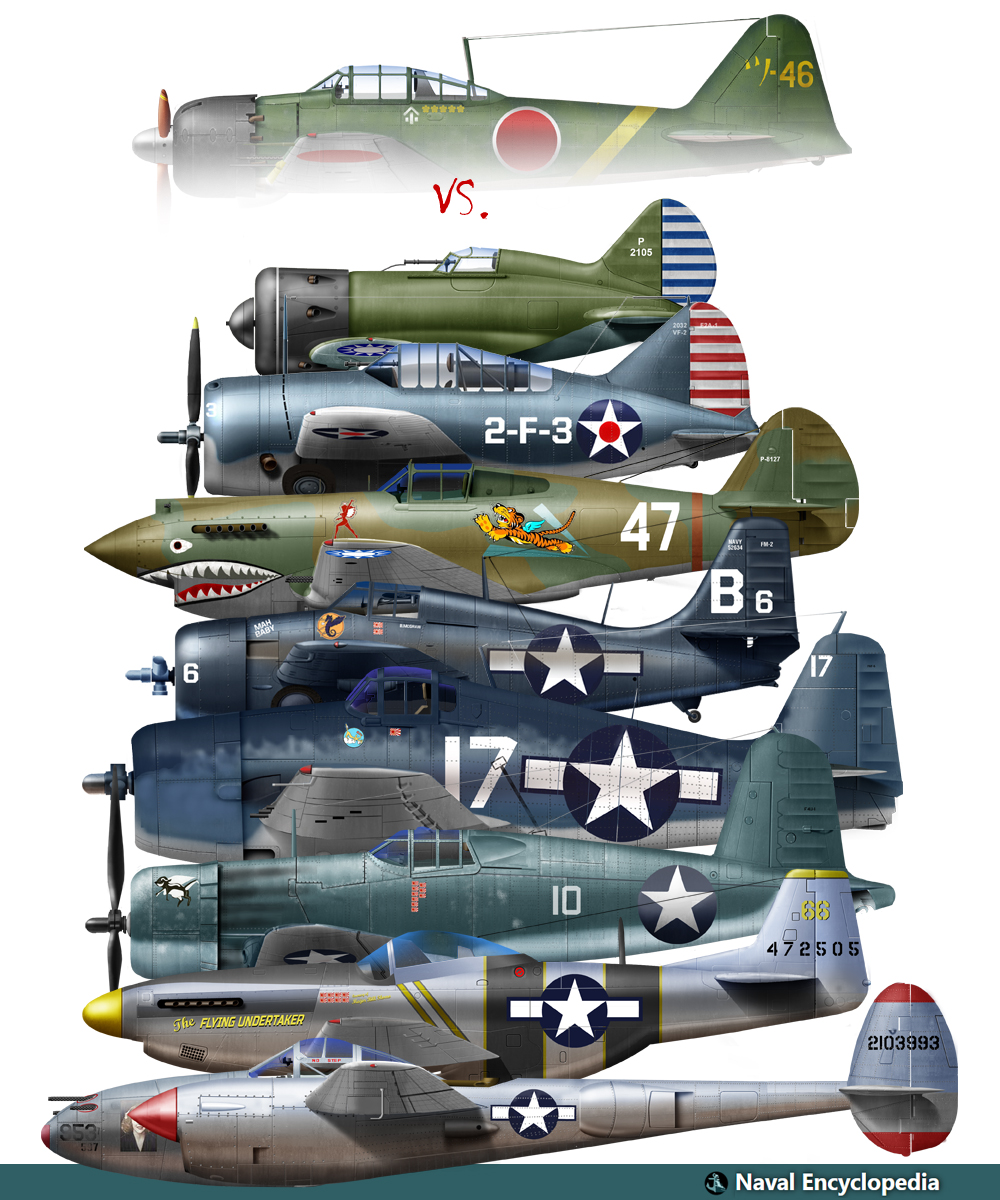
Zeros vs its aversaries
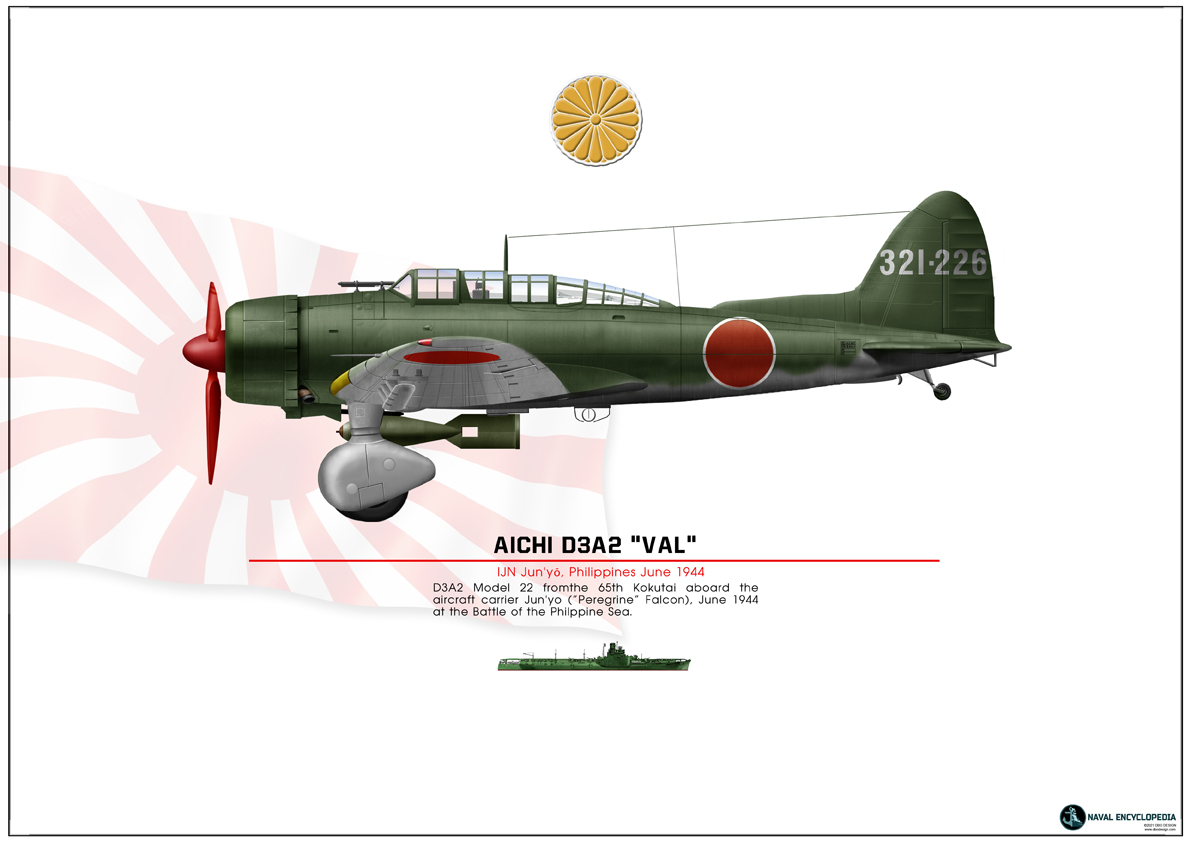
Aichi D3A “Val” Junyo
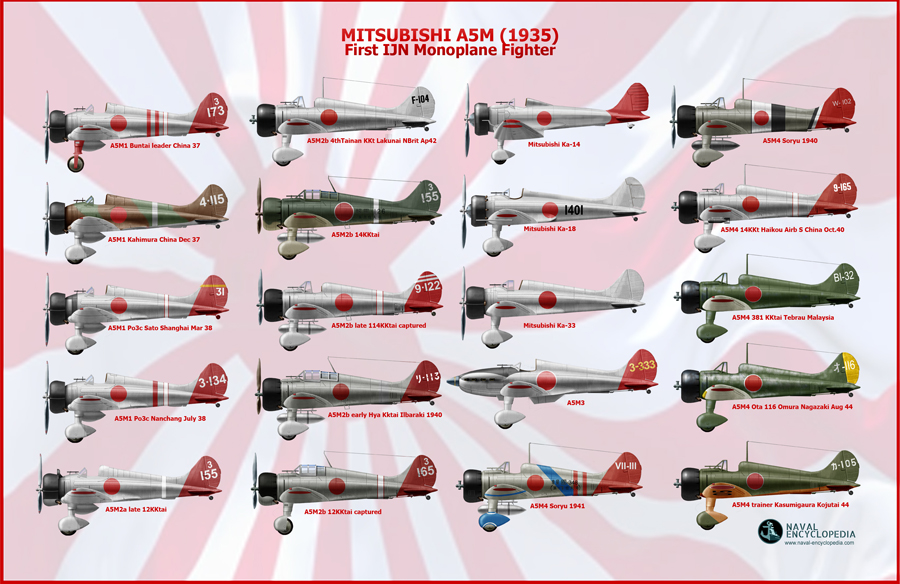
Mitsubishi A5M poster
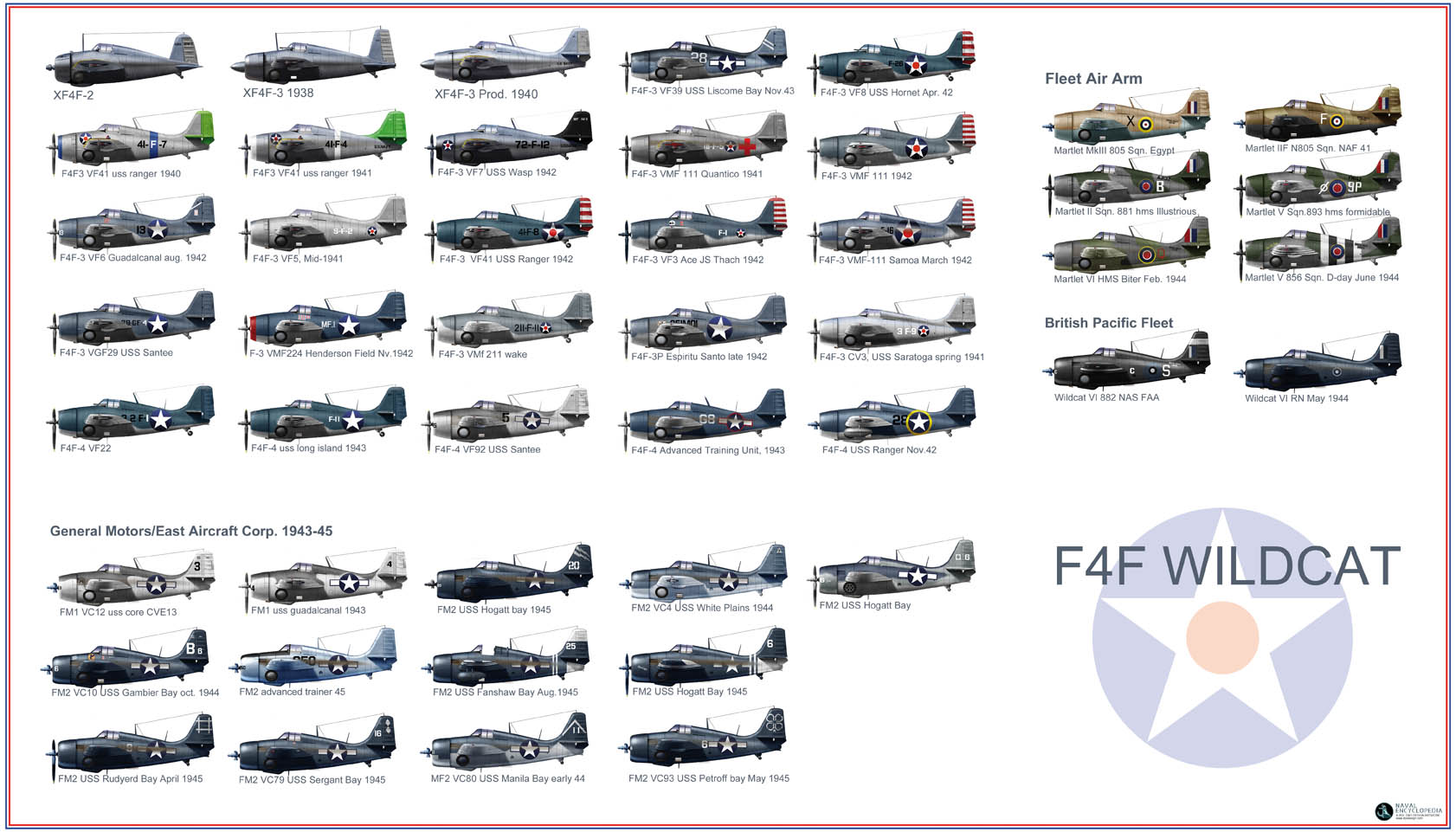
F4F wildcat
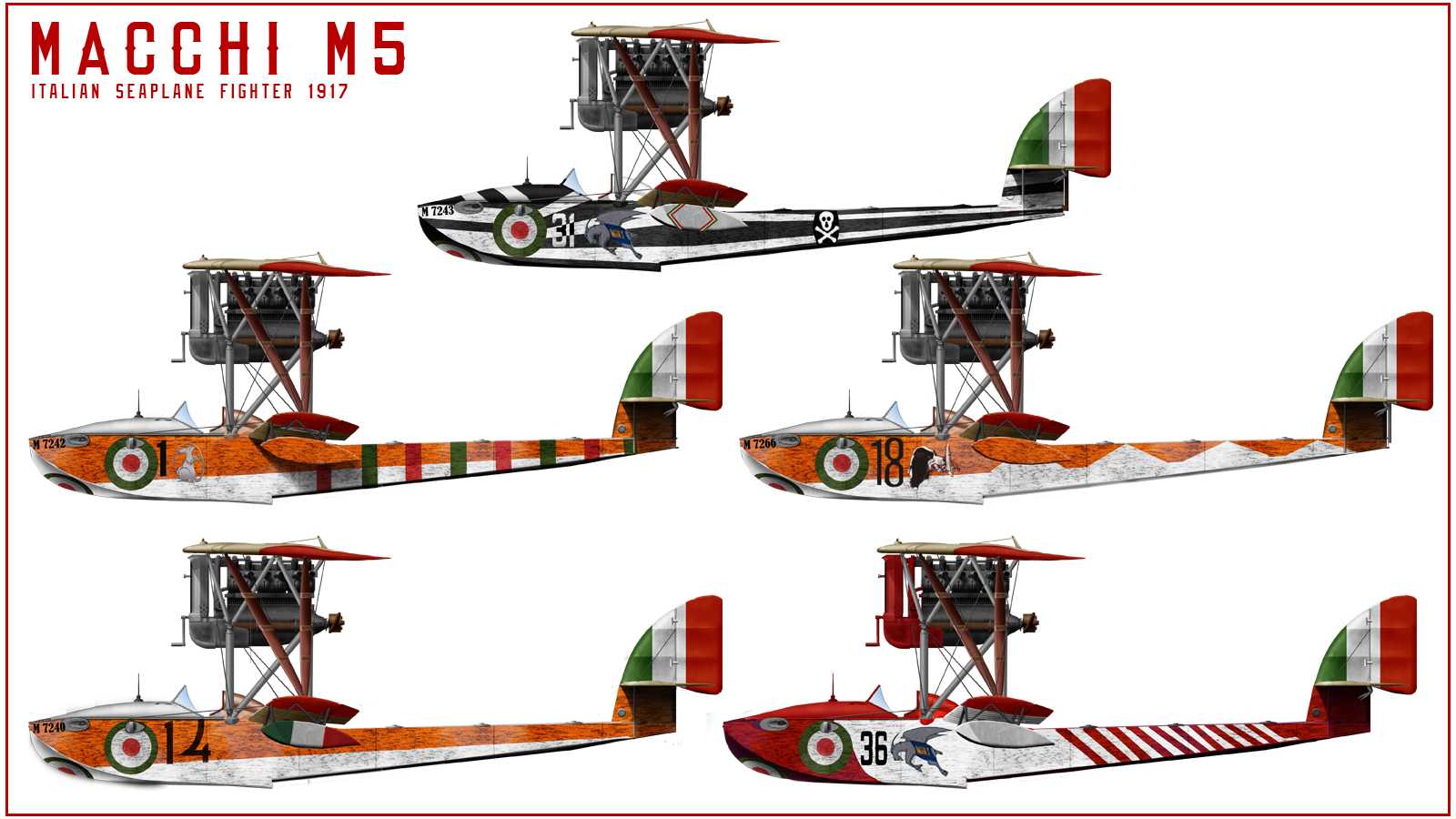
Macchi M5
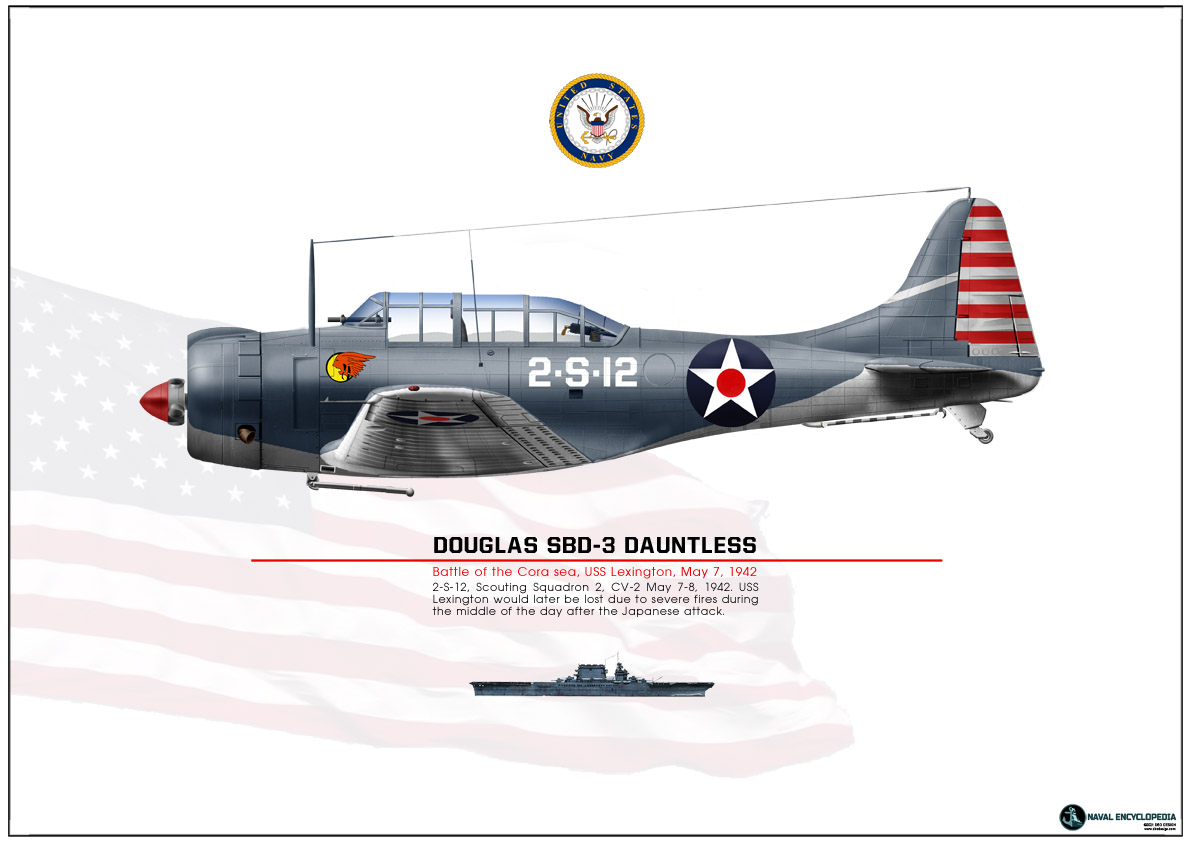
SBD Dauntless Coral Sea
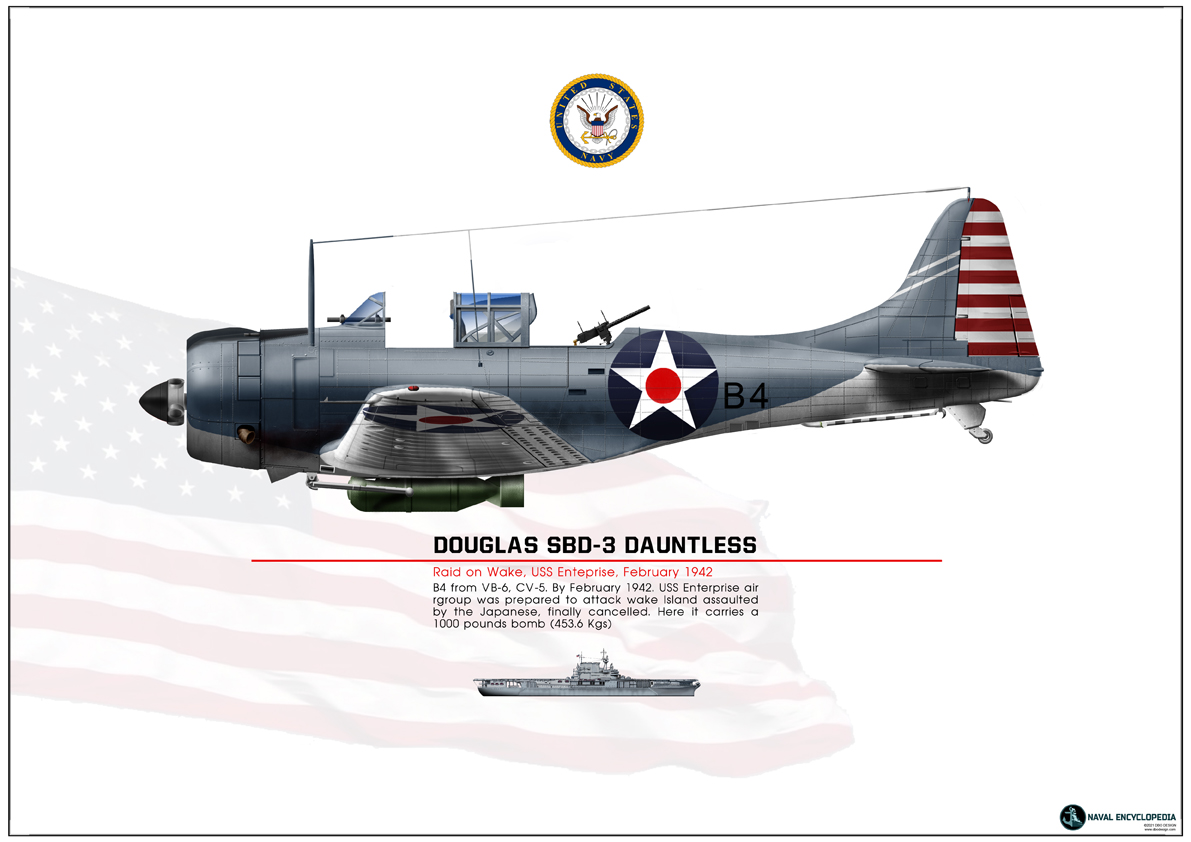
SBD Dauntless USS Enterprise
SBD-4 CV22