CANT Z.515
 10* built 1939-43
Development
The CANT Z.515 was a twin engine monoplane floatplane designed and built for maritime reconnaissance in Italy shortly before World War II that was never mass produded and remained in limited service. The The Z.515 ("Z" as it was another Zappata design) resulted from an Italian Regia Marina requirement, passed on to the Regia Aeronautica for a reconnaissance seaplane with light bombing capability. This was to be a smaller and lighter model compared to the CANT Z.506 Airone tri-motor, in 1937. The Regia Aeronautica also looked for a successor to its small Z.501 Gabbiano parasol patrol flying boat which was becoming obsolete due to rapid advances in technology. Like the Z.501, the new model would perform reconnaissance and patrol but also anti-submarine warfare. But the specs precised many points, notably that it was to be a floatplane, not flying boat, and otherwise other details.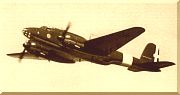 At the time, if the Regia Aeronautica submitted a tender, Filippo Zappata, proposed to military authorities a project of light seaplane based on the CANT Z.1018 Leone, a projected twin-engine medium long range fast bomber. It eventually received the company designation Z.514, and after its First flight on 9 October 1939 did not attract interest (15 were built). Indeed, the fuselage was too narrow to accommodate its defensive armament, had excessive tailplane vibration had its cockpit way back, plagued by poorly visibility for landing, its proposed copilot was unjustified. Besides this, it had frequent mechanical failures and not enough room to absorb the needed modifications requested by Regia Aeronautica. Als its new engines were not reliable.
The Regia Aeronautica looked at the time for a replacement for the CANT Z.501 in fast maritime reconnaissance. Zappata adapted the Leone to these new requirements, adding floats, making the fuselage shorter, adding a H-shaped tail, and ended with a draft that looked partly similar to the CANT Z.1018 with its two engines, low-wing cantiliver, and fuselage shape, glassed nose. The same year in 1939, the Italian Royal Air Force showed this time interested and asked CANT to suppy a wooden flying mock-up made of wood. It was Zappata's preferred technology, and preferred solution before a production with all-metal.
Filippo Zappata as chief designer of C.R.d.A. (Cantieri Riuniti dell'Adriatico, Monfalcone aeronautical division) or "CANT" designed this all-wood mockup floatplane, with metal floats however, like the Airone. The Italian Aviation preferred floatplanes at the time, as if the floatplane version was successful, it could also be declined into a land-based versions with undercarriage. He really devised a model that would be easy to produce in wartime but planned for the start that all cells would mix aluminium and duralumin. He kept however the same types of floats already used by the Z.506. Attention to the powerplant was also made in order to spare common aero engines of the time. One suggestion on the ministry he considered indeed the line-line Isotta-Fraschini "Delta" RC.35-I engine, rated for 710 hp. It was not overly powerful, but between the lightweight fuselage and generally very aerodynamic profile, it would procure the desired speed and be less susceptible to water spray, a common issue for radial engines on seaplanes at the time. It was also recoignised as reliable.
He devised an oval-section fuselage, with a narrow beam, heavily glazed nose for an excellent visibility. Behind the forward observer and pilot sat a radio operator/gunner under the glassed canopy that followed. Defence rested on a single 12.7 mm Scotti machine gun in the dorsal turret. There was an option for additional gunners with two Breda 7.7 mm in side turrets. External hardpoints enabled a limited load (960 kg) of depth charges or small bombs. In the nose were mounted two cameras AGR 90 and APR. Production models could be optionally all-metal if the ministry required.
Construction of the first Z.515 prototype MM.466 was completed in 1939, and it was practically airworthy, but needed minor modifications for over almost a year, so that its maiden flight was pushed back to July 8, 1940 without armament, to test speed, as it was reserved for production aircraft. Tests were quite successful. The prototype Z.515 in its first run, flew from the Adriatic coast off Monfalcone, under control of ttest pilot, Commander Mario Stoppani. The pilot noted about the limited power from the pair of Isotta Fraschini Delta RC.35s but his trials confirmed the validity of the design. CANT then sent it to the Centro Sperimentale Idrovolanti, in Vigna di Valle. There, Regia Aero personnel examined it alongside the competing Fiat R.S.14 as it came from an open tender. This was from December 3, 1940, and the Seaplane Experimental Center made a serie of acceptance trials before delivering its greenlight.

The rival Fiat RS.14 tested in 1940 and adopted for service. Only 15 were delivered before cancellation.
Comparative tests revealed however in 1941 the superiority of the design supplied by the CRDA. Upon completion of these tests however, it was judged that the CANT model was closely matched and promising anyway, the Regia Aeronautica issued on May 19, 1941, an initial supply contract for three aircraft, supplemented on December 6, by a second and a total order of 50 units. The May 19 contract also assigned the Sicilian Air Force a contract fo 52 more under license, and a second for 14 from CRDA, then 52 aircraft to S.A. Piaggio. Still, the general opinion was that the CMASA (Fiat) RS.14 had slightly better performance and the Regoa Aeronautica eventually picked it up for production, not the CANT model. In the early months of 1942, CRDA delivered an initial batch of 15 RS.14 which first flew on October 7, 1942. In November 1942, orders were cancelled altogether for the Fiat floatplane as well. Mussolini decided bomber production should have all priority given the limited means of the country. They were deemed more necessary. Thus the winner Fiat R.S.14 from CMASA at Marina di Pisa ended in short supply just like its rival. The planned production of hunded Z.515 series aircraft order was cancelled as well.
Soon, the R.S.14s assigned to flight units soon revealed operational limitations. The Regia Aeronautica deemed it necessary to restart production of the Z.515, and its second prototype was on the verge of being withdrawn when the Armistice of Cassibile caused a new production halt as it fell under German administration. The Luftwaffe estimated still the project interesting enough and authorized completion of the intended batch. By March 1944 the first seven Z.515s were completed at Monfalcone but before deployment, they were destroyed by three bombing raids of the RAF on 19 March, 4 and 20 April. Today, records agrees on a total of 15, but they never entered service. Logs postwar shows a production originally split between 64 from CANT, and 50 from Aeronautica Sicula in Palermo. Some sources states only ten were completed before the German takeover, leaving perhaps 3 almost completed after (for seven total) plus the two prototypes.
Design
General Layout
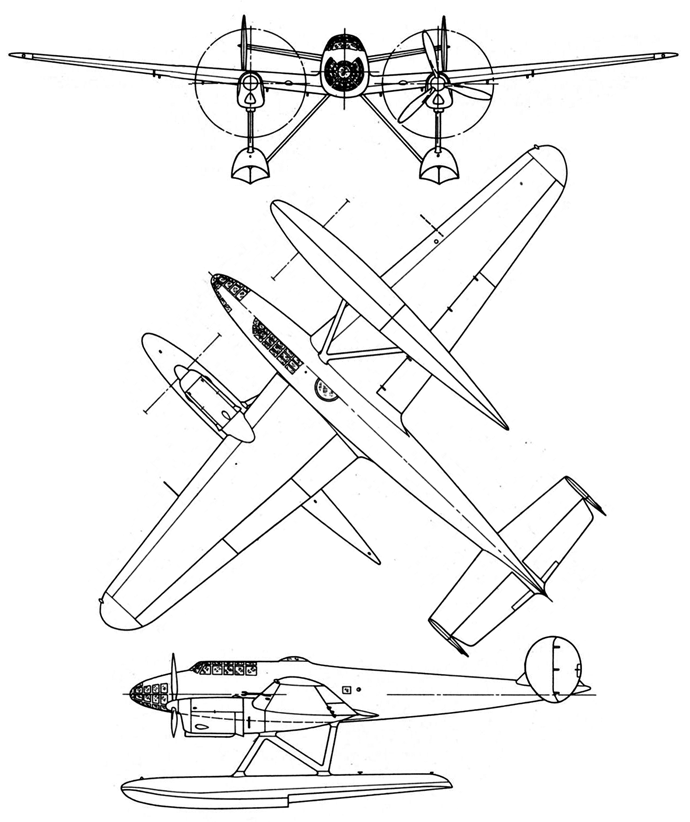
The Z.515 was typical of Zapatta's design of the time and shared many elemùents with the Leone. The design of the fuselage was modern and echoed the design of the Z.1018, very similar in overall shapes. Although the prototype was built of wood, the production version was planned as all-metal. This differed from that of the Z.1018 by a lack of a ventral nacelle. It had large windows positioned at the front apex, enclosing the observer's station. Behind was a two-seat cockpit for the pilot and his co-pilot enclosed by a large canopy. Behind them was the radio operator's station. He also acted a gunner and could reach the rear dorsal gun post behind. Access inside was via a hinged ladder in the central section, after the wingtip joined the fuselage. The graceful lines ended in a narrow, pointed tail terminated the two-fin empennage. Aerodynamic attention was paid in the nose shape and way it received windows, for a better visibility when landing compared to the Leone and more space for a pilot and co-pilot side by side.
It was a cantilever low wing monoplane, with straight tapered wings that had a noticeable dihedral, and rounded tips. Flaps were inboard of the ailerons. The engine thrust line was in the wing plane. Their fairings behind engine mountings, on the wing undersiden extended short of the trailing edge. The rear engine mounting supported forward attachment points for the rearward and sloping "N" shaped struts down to single stepped floats similar to thes used on the Z.506 and Z.511 Idrogigante. They were the smallest of the three and in all-metal from the start. These floats were laterally braced, by inverted-V struts at the bottom of the fuselage. The "H" style tailplane was mounted on top of the fuselage had a greater dihedral than the wing. They carried endplate fins. The horizontal surfaces were straight but tapered, and the elevators like the rudders had all trim tabs. Vertical surfaces were almost elliptical elbeit their were split roughly equally between fin and had an unbalanced rudder each.
Powerplant
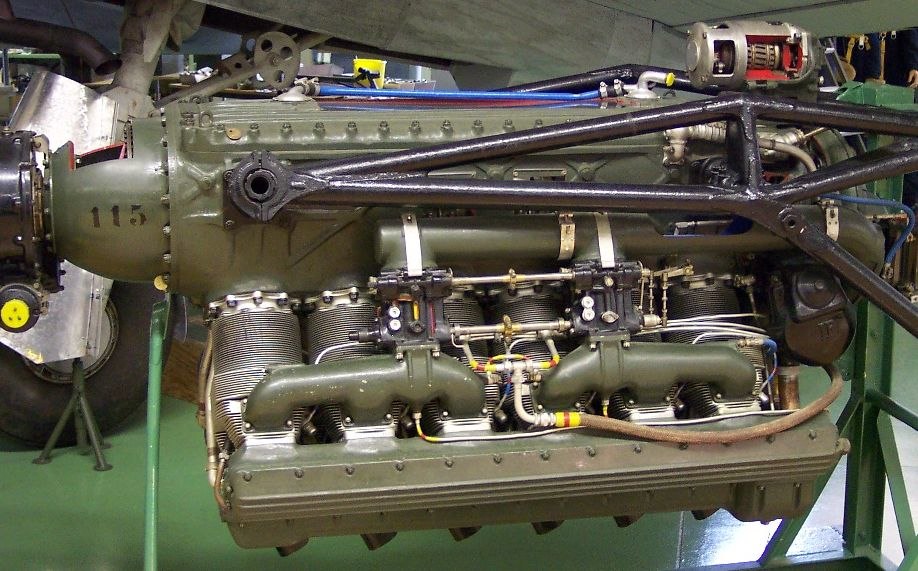
The two 560 kW (750 hp) V-12 inverted air-cooled Isotta-Fraschini Delta RC.35 engines. They were mounted well forward of the leading edge. They were coupled to three-bladed propellers, with fixed pitch, all metal. The Isotta Fraschini Delta was designed in 1927 and c3300 were made total. They ere remarkable as being rare example of sucessful large air-cooled inline engine, as normally liquid was used for cooling, notably for the rearmost cylinders. 750 hp was for common versions, with examples rated up to 900 hp. It was used in a number of production aircraft and advanced prototypes. Its valves were powered by dual overhead cams, driven by power shafts, at the rear of the engine.
Exhaust ports were arranged to exit toward the middle of the engine, with a cylinder bank being the mirror of the other so that piping be ganged below the engine nacelle. It was provided to the proposed emergency wooden fighter Ambrosini SAI.107, SAI.207 and 403 prototypes, the Caproni Ca.313, 314, 331, French Caudron C.714 prototype fighter alternative to the Renault V12, Henschel Hs 129 prototype, Reggiane Re.2001 prototype and Savoia-Marchetti SM.86. Only the CANT Z.515 adopted it for seaplane applications.
Performances were not stellar in 1940 but conform with the drag endured by any floatplane: Top speed was 237 mph (381 kph) for the light, wooden prototype at 14,108 ft (4,300 m), for a cruise Speed of 186 mph (300 kph), 17,75 min to climb to 16,404 ft (5000 m) and a range of 1,181 miles (1,900 km). See data for the production model below.
Armament
The defensive armament rested on the dorsal turret 12.7 mm Scotti/Isotta Fraschini machine gun on board a Caproni-Lanciani Delta E mount. A second 12.7 mm Breda-SAFAT mount was added for the pilot, fixed at the starboard wing. There were two 7.7 mm Breda-SAFAT machine guns posed on either side of the fuselage as well with flexible mounts and from small pistol ports close to the wing's end. The lower nose of the Z.515, completely glazed was provisioned also to mount another 7.7 m Breda LMG. The dorsal machine gun turret at mid-chord was however criticized by its lack of visibility. The droppable military payload consisted of six underwing positions for bombs weighing up to 100 kg (221 lb) or depht charges so a total of 600 kg (1,320 lb).Japanese Order
Unlucky with Italy, CANT had the prospect of a Japanese order however. Due to the Imperial Japanese Navy's need for that same role, a production license for the Z.515 was transferred in 1941. The documentation was sent via a Rome-Tokyo-Rome run in a Savoia-Marchetti SM.75 GA (Grande Autonomia) three-engined aircraft. It Took off from the Zaporoskje airfield, now in Ukraine, after a 21-hour non-stop flight, and reached Japanese-occupied Manchukuo after 6,000 km, much of it over Soviet airspace. However Japan never started production.⚙ spec. | |
| Empty Weight | 6,390 kg |
| Gross Weight | 8,482 kg (18,700 lb) |
| Max TO Weight | 8,640 kg |
| Lenght | 16.04 m (52 ft 7 in) |
| Wingspan | 22.50 m (73 ft 10 in) |
| Height | 5.86 m (19 ft 3 in) |
| Wing Area | 63.10 m2 (679.2 sq ft) |
| Engines | 2× Isotta Fraschini Delta III R.C.40 LC IV-12 560 kW (750 hp) |
| Top Speed | 383 km/h (238 mph, 207 kn) at 4,300 m |
| Cruise Speed | 304-310 km/h (190 mph, 170 kn) |
| Range | 1,800 km (1,100 mi, 960 nmi) |
| Climb Rate | Unknown |
| Ceiling | 7,200 m |
| Range | 1,900 km |
| Armament | 1× 12.7 mm (0.5 in)MG +dorsal turret, 3× 7.7 mm hand controlled MGs |
| Armament (Bombs) | 6x 100 kg bombs (1,323 lb total) |
| Crew | 5 |
Fate
Once in service, the rival FIAT R.S. 14 proved to be disappointing so the Regia Aeronautica wanted to revive the cancelled Z.515 and resume construction with a first order for 15 awarded to CRDA CANT in early 1942. The first of these production model (in all metalpreumably) flew on 7 October 1942. The second was close to delivery by 8 September 1943 when the armistice of Cassibile was signed. After CRDA came under German administration, completion was authorised so a further 7 were completed by March 1944, until three RAF bombing raids on 19 March, 4 and 20 April completely destroyed the Workshops and all aircraft under construction burned. This left a grand total of 10, not 15 in most sources: 1 prototype, 2 production models, 7 destroyed in the factory. Officially the Z.515 never entered service as apart the prototype tested, the two first production models fate is unknown. There were not enough to be of any use in a regular unit. It's possible they were burned during the same RAF raids. Photos are rare also, alsways showing the prototype being tested. As for the potential livery,Construction detais shows the following:
-Wooden flying mock-up MM.466. First flight Monfalcone on 08/07/40 (Mario Stoppani), tested Vigna di Valle.
-Delays in production with 50 ordered, contract No. 621 for £. 102,600,000, MM. 35789-35838.
-19/05/41 order to Aer Sicula for 53 more (MM.35875-35926), contract No. 1739 19/01/43 for £25,000,000, cancelled.
-11/42 order canceled, 15 approved instead, MM. 35789-35803, to maintain construction skills.
-Order for 14 to CRDA (MM.35927-35938) cancelled 11/42.
-Order for 52 to Piaggio (MM.35939-359090) also cancelled 11/42.
-31/07/43, order for three experimental variants, two reconnaissance ones.
-MM. 35790 accepted on 08/09/43.
-German control: Work resumes on MM. 35791-35803, 80% complete at the time of the first raid.
-MM.35790-35797 destroyed. Remaining aircraft likely scrapped.
Gallery
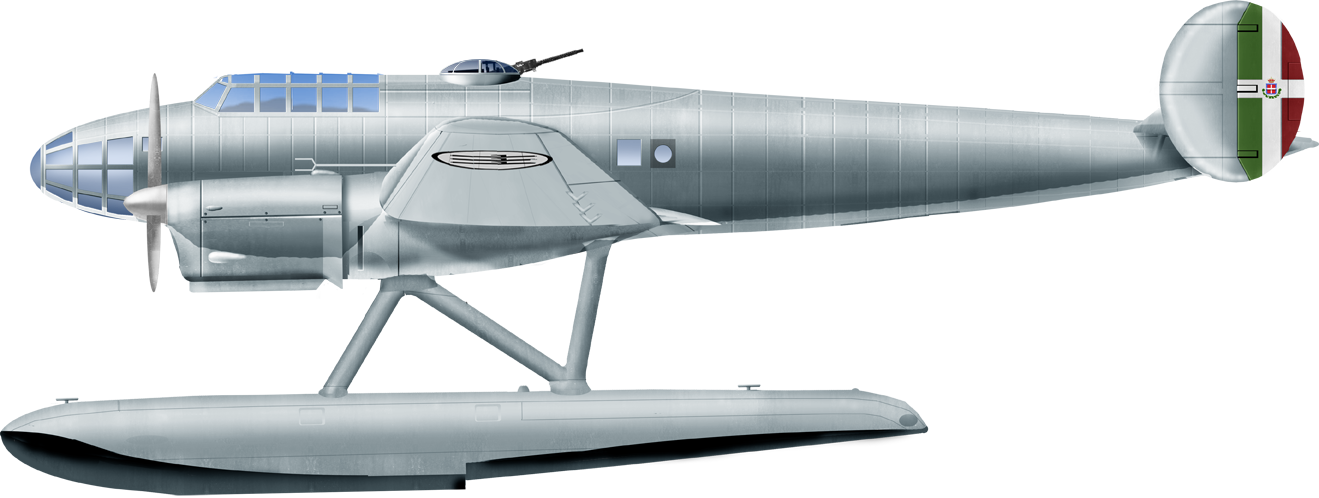
Z515 with its probably trials livery according to photos.
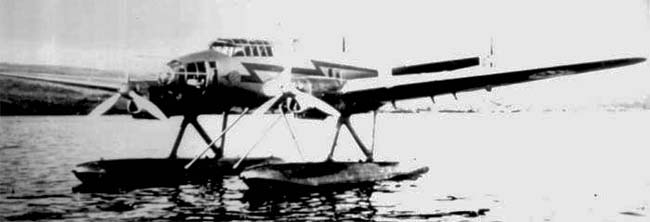
View of the Z.515 factory prototype tested at Montfalcone in 1940 with Mario Stoppani. The fuselage was in wood.

Z.515 prototype in official trials taking off in 1940. Note the operational markings and probable medium grey color above and light blue below.
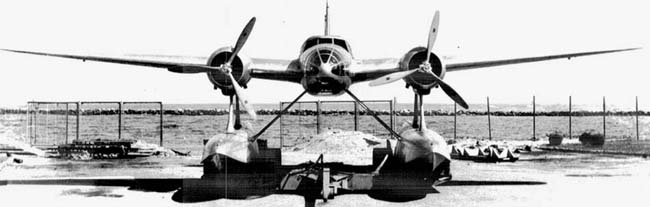
Z.515 prototype, fd. view
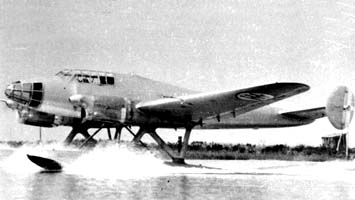
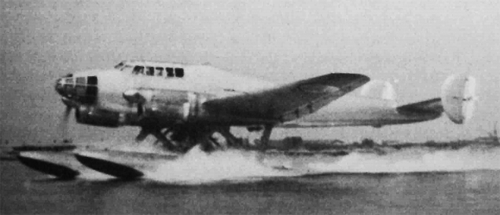
Cant Z.515 taking off (CC)
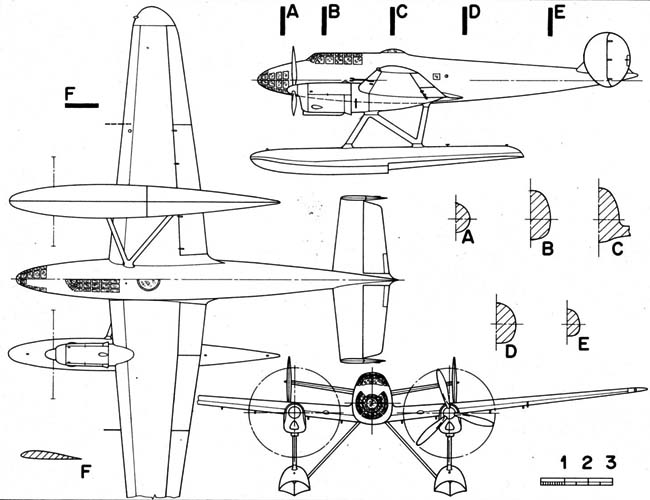
Z.515 3 views and sections. A graceful aircraft.
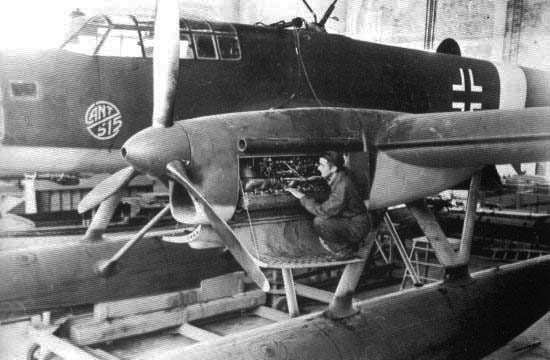
Z.515 production model in construction under german control, March 1944.
Read More/Src
Thompson, Jonathan (1963). Italian Civil and Military Aircraft 1930-1945.Fallbrook, California: Aero Publishers, Inc. pp. 64
Giorgio Evangelisti. Le Navi Aeree Di Filippo Zappata. Edizioni Olimpia.
The Illustrated Encyclopedia of Aircraft (Part Work 1982-1985), 1985, Orbis Publishing
Brotzu/Caso/Cosolo – Dimensione cielo – Ed. Bizzarri
Evangelisti – Gente dell’aria – Ed. Olimpia
Evangelisti/Zappata – Le navi aeree di Filippo Zappata – Ed. Olimpia
Arena – La Regia Aeronautica – Ed. Stato Maggiore Aeronautica
Thompson – Italian civil and military aircraft. 1930-1945 – Ed. Publishers
Dunning – Courage alone. The italian air force. 1940-1943 – Ed. Hikoki
Curami/Gambarini – Catalogo delle Matricole Militari della Regia Aeronautica. 1923-1943.
Links
airwar.ruarcheologiaindustriale.it
aviastar.org
aereimilitari.org
ww2aircraft.net/
armedconflicts.com
giemmesesto.org
secretprojects.co.uk
Model Kits
None found so far- Lohner E (1913)
- Macchi M3 (1916)
- Macchi M5 (1917)
- Macchi M7 (1918)
- Ansaldo ISVA (1918)
- Short S.38 (1912)
- Sopwith Baby (1916)
- Short 184 (1916)
- Fairey Campania (1917)
- Sopwith Cuckoo (1917)
- Felixstowe F.2 (1917)
- Gotha WD.2 (1914)
- Friedrichshafen FF 33 (1916)
- Albatros W4 (1916)
- Albatros W8 (1918)
- Hanriot HD.2
- Grigorovich M5 (1915)
- Grigorovich M9 (1916)
- Grigorovich M11 (1917)
- IJN Farman MF.7
- IJN Yokosho Type Mo
- Yokosho Rogou Kougata (1917)
- Yokosuka Igo-Ko (1920)
- Curtiss N9 (1916)
- Curtiss H4 (1916)
- Curtiss H12 (1917)
- Curtiss H16 (1918)
- Aeromarine 39
- Vought VE-7
- Douglas DT (1921)
- NAF/Curtiss TS-1 (1922)
- Boeing FB.5 (1923)
- Boeing F4B (1928)
- Vought O2U/O3U Corsair (1928)
- Grumman FF (1931)
- Akron class airships (1931)
- Curtiss F9C Sparrowhawk (1931)
- Curtiss F11C Goshawk (1932)
- Curtiss BF2C Goshawk (1933)
- Blackburn Blackburn (1922)
- Supermarine Seagull (1922)
- Fairey Flycatcher (1923)
- Hawker Horsley (1925)
- Blackburn Ripon (1926)
- Fairey IIIF (1927)
- Fairey Seal (1930)
- LGL-32 C.1 (1927)
- Fokker T.II (1921)
- Fokker T.III (1923)
- Caspar U1 (1921)
- Dornier Do J Wal (1922)
- Rohrbach R-III (1924)
- Mitsubishi 1MF (1923)
- Mitsubishi B1M (1923)
- Yokosuka E1Y (1923)
- Nakajima A1N (1927)
- Nakajima E2N (1927)
- Mitsubishi B2M (1929)
- Nakajima A2N (1930)
- Nakajima A4N (1935)
- CANT 18
WW1
✠ K.u.K. Seefliegerkorps:
 Italian Naval Aviation
 RNAS
RNAS
 Marineflieger
 French Naval Aviation
 Russian Naval Aviation
 IJN Air Service
 USA
USA
Interwar
 Interwar US
 Interwar Britain
 Interwar France
 Interwar Netherlands
 Interwar Germany
 Interwar Japan
 Interwar Italy
- Grumman F2F (1933)
- Curtiss SOC seagull (1934)
- Grumman F3F (1935)
- Northrop BT-1 (1935)
- Consolidated PBY Catalina (1935)
- Grumman J2F Duck (1936)
- Brewster/NAF SBN-1 (1936)
- Curtiss SBC Helldiver (1936)
- Vought SB2U Vindicator (1936)
- Brewster F2A Buffalo (1937)
- Douglas TBD Devastator (1937)
- Vought Kingfisher (1938)
- Curtiss SO3C Seamew (1939)
- K-class Blimps (1939)
- Douglas SBD Dauntless (1939)
- Grumman F4F Wildcat (1940)
- F4U Corsair (NE) (1940)
- Brewster SB2A Buccaneer (1941)
- Grumman TBF/TBM Avenger (1941)
- Consolidated TBY Sea Wolf (1941)
- Grumman F6F Hellcat (1942)
- Curtiss SB2C Helldiver (1942)
- Curtiss SC Seahawk (1944)
- Grumman F7F Tigercat (1944)
- Grumman F8F Bearcat (1944)
- Ryan FR-1 Fireball (1944)
- Douglas AD-1 Skyraider (1945)
- Fleet Air Arm
- Hawker Osprey (1932)
- Fairey Swordfish (1934)
- Blackburn Shark (1934)
- Supermarine Walrus (1936)
- Fairey Seafox (1936)
- Blackburn Skua (1937)
- Short Sunderland (1937)
- Blackburn Roc (1938)
- Fairey Albacore (1940)
- Fairey Fulmar (1940)
- Grumman Martlet (1941)
- Hawker sea Hurricane (1941)
- Brewster Bermuda (1942)
- Fairey Barracuda (1943)
- Fairey Firefly (1943)
- Grumman Tarpon (1943)
- Grumman Gannet (1943)
- Supermarine seafire (1943)
- Blackburn Firebrand (1944)
- Hawker Sea Fury (1944)
- Coastal Command
- Vickers Wellington (1937)
- IJN aviation
- Yokosuka E6Y (1930)
- Aichi D1A "Susie" (1934)
- Mitsubishi A5M "Claude" (1935)
- Nakajima A4N (1935)
- Yokosuka B4Y "Jean" (1935)
- Mitsubishi G3M "Nell" (1935)
- Nakajima E8N "Dave" (1935)
- Kawanishi E7K "Alf" (1935)
- Nakajima B5N "Kate" (1937)
- Kawanishi H6K "Mavis" (1938)
- Aichi D3A "Val" (1940)
- Mitsubishi G4M "Betty" (1940)
- Mitsubishi A6M "zeke" (1940)
- Nakajima E14Y "Glen" (1941)
- Nakajima B6N "Jill" (1941)
- Mitsubishi F1M "pete" (1941)
- Aichi E13A Reisu "Jake" (1941)
- Kawanishi E15K Shiun "Norm" (1941)
- Nakajima C6N Saiun "Myrt" (1942)
- Yokosuka D4Y "Judy" (1942)
- Kyushu Q1W Tokai "Lorna" (1944)
 Luftwaffe
- Heinkel 114 (1935)
- Arado 196 (1937)
- Me109 T (1938)
- Blohm & Voss 138 Seedrache (1940)
 Italian Aviation
- Savoia-Marchetti S.55
- IMAM Ro.43/44
- CANT Z.501 Gabbiano
- CANT Z.506 Airone
- CANT Z.508
- CANT Z.511
- CANT Z.515
 French Aeronavale
- GL.300 (1926-39)
- CAMS 37 (1926)
- Levasseur PL.5 (1927)
- Potez 452 (1935)
- Loire 210 (1936)
- Loire 130 (1937)
- LN 401 (1938)
 Soviet Naval Aviation
- Shavrov SH-2 (1928)
- Tupolev TB-1P (1931)
- Beriev MBR-2 (1930)
- Tupolev MR-6 (1933)
- Tupolev MTB-1 (1934)
- Beriev Be-2 (1936)
- Polikarpov I16 naval (1936)
- Tupolev MTB-2 (1937)
- Ilyushine DB-3T/TP (1937)
- Beriev Be-4 (1940)
 Swedish Naval Aviation
- SAAB B17S
-
 Skoda Š-328V
  R-XIII Idro
 Fokker C.XI W (1934)
 Rogožarski PVT-H (1938)
WW2
 ☍ USNA
- De Havilland Sea Vixen
- Hawker Sea Hawk
- Supermarine Scimitar
- Blackburn Buccaneer
- Hawker Sea Harrier
- Douglas A4 Skyhawk
- Grumman F9F Panther
- Vought F8 Crusader
- McDonnell-Douglas F-4 Phantom-II
- North Am. A5 Vigilante
- TU-142
- Yak 38 forger
☢ Cold War
✧ NATO
Fleet Air Arm
 US Navy
☭ Warsaw Pact
Merch
Seafire Mark 45; HMS Pretoria Castle
Zeros vs its aversaries
Aichi D3A “Val” Junyo
Mitsubishi A5M poster
F4F wildcat
Macchi M5
SBD Dauntless Coral Sea
SBD Dauntless USS Enterprise
SBD-4 CV22