Yokosuka E6Y (1929)
 Submarine-Launched Seaplane: 10 Made 1929-33.
Design of the Yokosuka E6Y
Development
The Imperial Japanese Navy was an early adopter for naval aviation with the purchase of floatplanes in 1912 from Britain, the United States and France. IJN Wakamiya was its first seaplane tender, taking part of the siege of Tsingtao. By December 1922, IJN Hōshō, the first IJN carrier, was completed, predating HMS Hermes as the first purpose-designed. Soon also, British experiments on the M2 in 1925 led the Japanese to enquire about ways to do the same, expanding the operational reach of the submarine force with seaplanes. This idea proved particularly useful to cover the large expanse of the Pacific and the IJN acquired one German Caspar U.1 from the US as a Parnall Peto from Britain, both designed for submarine operations. The Caspar influenced the design of future prototype Japanese aircraft. The 1-Go submarine-based reconnaissance, or Yokosho Navy Type 1 was the Caspar, and Parnall latter heavily influenced the 2-Go prototype. This is the subject of this post.The Parnall Peto was a tiny submarine-launched naval reconnaissance model, manufacturer by George Parnall and Company Limited and designed by Harold Bolas. Only two were made, with the serials N181 and N182. The first made its first flight on 4 June 1925 but later crashed at Gibraltar and was rebuilt as N255, only to be lost again when her hangar was not close properly and was flooded on HMS M2. Parnall considered its most challenging project ever due to the very small hangar in which it had to fit. It was built of wood, fabric, aluminium and steel, had an unequal span, Warren-braced folding rectangular wings and was powered by a 128 hp Bristol Lucifer engine with mahogany plywood "Consuta" type floats. After a crash it was entirely rebuilt around a 169 hp Armstrong Siddeley Mongoose engine. It was judged exceptionally good. But with the loss of M2, the Royal Navy abandoned that Project.
On the other side of the pond, the French Surcouf ordered in 1926 had a small Besson MB.411 floatplane, but in Between the Japanese considered biplanes were less risky and the IJN never ordered those. The IJN also considered two more models from the US, at the time the USN looked at the idea of a giant submarines featuring seaplanes, the Cox-Klemin XS and Martin MS-1. Thus, after the acqusition of the Peto, the Navy Arsenal or Yokosuka worked on its proper design, the Yokosho 2-Go prototype. Like the Peto it was a very compact biplane, with a cabane system that would allow the wings to be removed and folded alongside.
Fuselage and general layout

The Yokosuka E6Y was a single-seat biplane designed to be be quickly assembled and disassembled in order to be stored in a submarine hangar. Two prototypes were built. Their major change was a different power plant and other design details. Eight production aircraft followed, designated E6Y. They were built by Kawanishi in the 1930s despite the name Yokosuka retained for the serie, as the latter was the designer. Construction called for the same techniques used on the Parnall Peto, with a structure mixing wood, fabric, aluminium and steel. Steel was used for the strongest structural elements on board like the frame in which the single pilot took place, and attachements points for the lower wings. The steel frame was completed with easy to detach wooden-framed wings, covered in canvas. The wings were studied for easy storage, as was the twin float assembly, also wooden, that could be stored close together, with the fuselage above.
The EY6 was sesquiplane, meaning the upper wing had twice the area of the lower wings. The main structure used aluminium tubes both for fuselage and the central frame of the wings (console) wile the remainder of the structure, including the tail, were in wood wrapped in doped canvas. The struts were classic, all pivoting on their fixation points to be folded. There was four points attachement between the upper wings and fuselage, as well as two "N" type struts between the wings, and a paur of V struts completed by two pole struts in front for the floats. The latter was partly in aluminium for the outer skin and wood. The tail was compact like on the Parnal Peto, with its lower part extended downwards and a tail completed by a ventral fin. The ailerons sat directly atop the fuselage for simplification.
Engine and performances
The first prototype has a licenced Armstrong Siddeley Mongoose five-cylinder radial engine, rated at 130 hp (97 kW). It was soon recoignized as unsufficient, and the next 2-Go Kai, had its lateral stability issues cured by increasing the tail fin and rudder, extended upward. But its core was the new Japanese Gasuden Jimpu. Forward of the main steel assembly was the forward mounted engine, a small Gasuden Jimpu 7-cylinder radial, en engine that developed 120 kW (160 hp). It was faired into the fuselage's nose for better air cooling, connected to a two-bladed wooden propeller. This engine was chosen for its compacity, as despite a wingspan of 8 meters, the E6Y only weighted 570 kg (1,257 lb) empty and 750 kg (1,653 lb) fully loaded max at takeoff. This was closer to early WWI fighter aircraft. The radial engine managed to power the biplane up to an honorable 169 km/h (105 mph, 91 kn) -to compare however, the parnall peto reached 182 km/h (113 mph). Service ceiling was better, 4,800 m (15,700 ft) versus 3400m for the Peto. Rate of climb was 150 meters a minute versus 20 meters a minute on the Peto, a excellent power to mass ratio.| Length: | 6.69 m (21 ft 11 in) |
| Wingspan: | 8 m (26 ft 3 in) |
| Height: | 2.87 m (9 ft 5 in) |
| Wing area: | 26.70 m2 (287.4 sq ft) |
| Empty weight: | 570 kg (1,257 lb) |
| Max takeoff weight: | 750 kg (1,653 lb) |
| Powerplant: | Gasuden Jimpu 7-cyl. radial, 120 kW (160 hp) |
| Top speed: | 169 km/h (105 mph, 91 kn) |
| Range: | 600 km (370 mi, 320 nmi) |
| Endurance: | 4.4 hours |
| Service ceiling: | 4,800 m (15,700 ft) |
| Time to altitude: | 3,000 m (9,800 ft) in 20 minutes 14 seconds |
| Power/mass: | 5.77 kg (12.7 lb)/hp |
Variants
- Yokosho 2-Go: 1st prototype (1929), 130 hp (97 kW) Armstrong Siddeley Mongoose (licenced).
- Yokosho 2-Go Kai: 2nd proto (1931), 160 horsepower (120 kW) Gasuden Jimpu
- E6Y1: Kawanishi Production version: Eight made between 1932 and 1934.
Operational career of the Yokouska EY6
The first Yokosho 2-Go prototype was deployed on the first seaplane-carrying submarines of the IJN, I51 of her own class, KD-1. I-51 became the pioneer for aircraft-carrying IJN submarines. In May 1929, operations with a Yokosho 2-Go, a prototype for the Yokosuka E6Y floatplane, was a successful program completed by September 1931 that greenlighted the use of seaplanes for future large submarines. In 1931, her capsule-like aircraft hangar, only housing one floatplane was a parvel of engineering for the time. The seaplane could also be raised and lowered into the water by a crane. She also tested launches with the second E6Y prototype, Yokosho 2-Go Kai. Of course the installation of a catapult in 1933, making her a forerunner, proved this was the right way to go.The 2-Go Kai thus commenced testing in 1931 on I-51 and then on the Junsen I Mod type submarine I-5. I-5 had no hangar, instead the aircraft was disassembled and stored in two cylindrical containers: Oe for the fuselage, the other for the wings, below the deck in the outer hull space. It eliminated a drag issue and made waterproof storage easier. Launch was from the water, albeit a catapult was fitted to I-5 as well in 1933. This launch type was considered most satisfactory and adopted as standard for all subsequent Japanese aircraft-carrying submarines. With the production E6Y entered service in 1933, eight were deployed to the three Junsen II and III submarines: I-6, I-7 and I-8.
The aircraft also saw surface ship use. They had one each and one in reserve, making two more usable for training, that also saw limited in the January 28 incident in 1932. These models provided reconnaissance for the IJN along the coast of China from submarines operating in the Second Sino-Japanese War. In 1937 and 1938, I-5 and I-6 were assigned to the Third Fleet, the China Theatre Fleet, based at Hong Kong. They were tasked to patrol and blockade the central and southern Chinese coasts.
For this, the tiny E6Y was unarmed and at risk from the Chinese aviation. It was recoignized that a larger, better, and armed model was needed, and the Japanese Navy worked on the integration of larger hangars, culminating with better submarines. Eventually the model chosen to replace the E6Y was the Watanabe E9W. Most sources agrees that the E6Y was retained for training until 1943, showing the soundness of its design and robust engine... But beyond performances, the E6Y was an enabler, it gave the IJN a first step towards the use of submarine floatplane, a discipline for which the Japanese became undisputed masters in world war two, with some exeptional beasts like the STO class I-400 and sisters planned to attack the Panama Canal.
Gallery
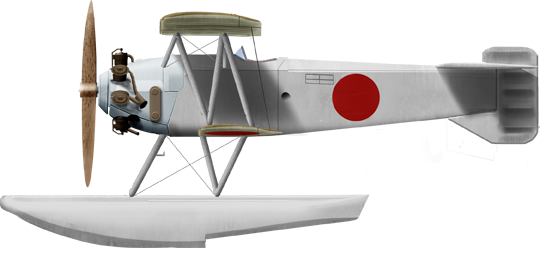
Yoshoko 2-Go proto 1929
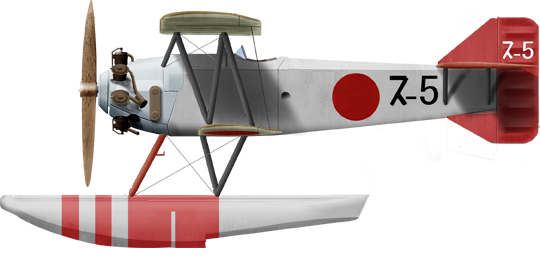
Yokosuka serial (Kawanishi) E6Y-1, 1933
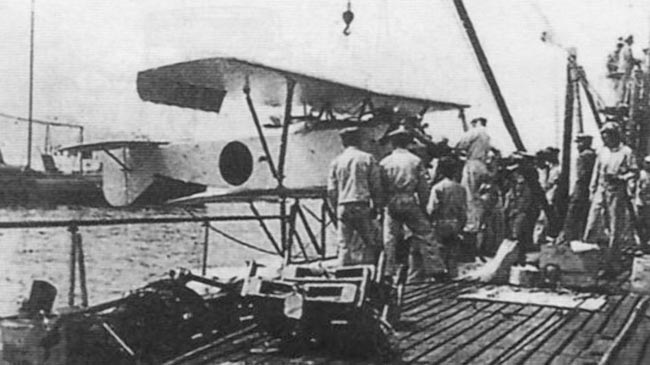
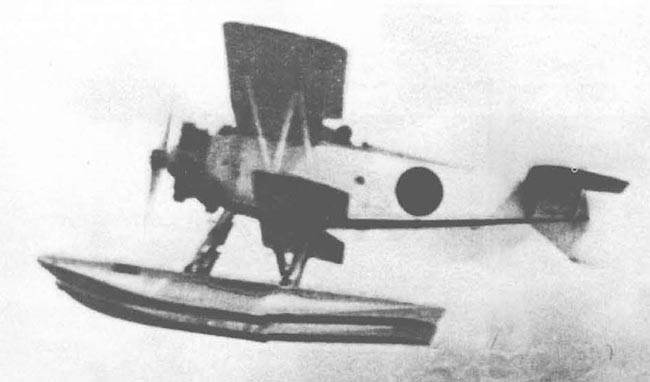
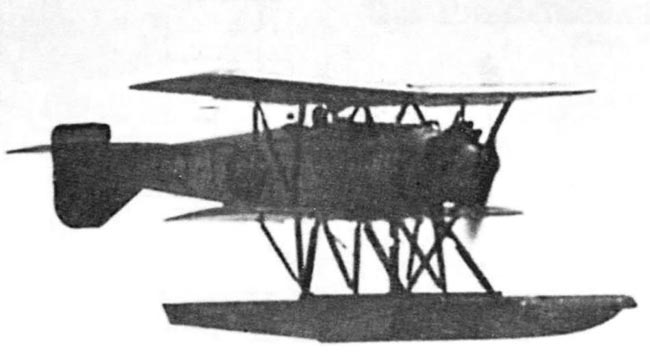
Note: Above: Prototype Yoshoko Go-2
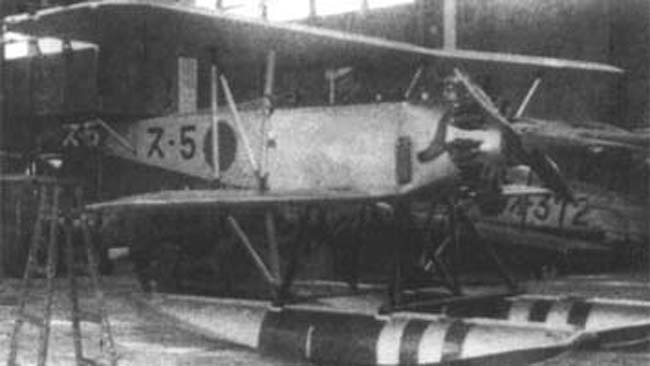
Serial E6Y1
Read more
Books
Boyd, Carl; Yoshida, Akihiko (2002). The Japanese Submarine Force and World War II. NIPCarpenter, Dorr; Polmar, Norman (1986). Submarines of the IJN. London: Conway Maritime Press.
Geoghegan, John (2013). Operation Storm: Japan's Top Secret Submarines and Its Plan to Change the Course of World War II. Crown Publishers.
Marriott, Leo (2006). Catapult Aircraft: Seaplanes That Flew From Ships Without Flight Decks. Barnsley: Pen and Sword.
Mikesh, Robert C.; Abe, Shorzoe (1990). Japanese Aircraft 1910-1941. London: Putnam.
Passingham, Malcolm (February 2000). "Les hydravions embarqués sur sous-marins". Toute l'aéronautique et son histoire
Polmar, Norman (2011). Aircraft Carriers: A History of Carrier Aviation and Its Influence on World Events 1946-2006. Potomac Books.
Volkov, Dale (2014). "E6Y". Уголок неба (in Russian).
Links
pacificeagles.netairwar.ru
aeroplanes.fr/
historyofwar.org
scribd.com
j-aircraft.com
secretprojects.co.uk
ja.wikipedia.org
en.wikipedia.org
3D and model kits
scalemates.com- Lohner E (1913)
- Macchi M3 (1916)
- Macchi M5 (1917)
- Macchi M7 (1918)
- Ansaldo ISVA (1918)
- Short S.38 (1912)
- Sopwith Baby (1916)
- Short 184 (1916)
- Fairey Campania (1917)
- Sopwith Cuckoo (1917)
- Felixstowe F.2 (1917)
- Gotha WD.2 (1914)
- Friedrichshafen FF 33 (1916)
- Albatros W4 (1916)
- Albatros W8 (1918)
- Hanriot HD.2
- Grigorovich M5 (1915)
- Grigorovich M9 (1916)
- Grigorovich M11 (1917)
- IJN Farman MF.7
- IJN Yokosho Type Mo
- Yokosho Rogou Kougata (1917)
- Yokosuka Igo-Ko (1920)
- Curtiss N9 (1916)
- Curtiss H4 (1916)
- Curtiss H12 (1917)
- Curtiss H16 (1918)
- Aeromarine 39
- Vought VE-7
- Douglas DT (1921)
- NAF/Curtiss TS-1 (1922)
- Boeing FB.5 (1923)
- Boeing F4B (1928)
- Vought O2U/O3U Corsair (1928)
- Grumman FF (1931)
- Akron class airships (1931)
- Curtiss F9C Sparrowhawk (1931)
- Curtiss F11C Goshawk (1932)
- Curtiss BF2C Goshawk (1933)
- Blackburn Blackburn (1922)
- Supermarine Seagull (1922)
- Fairey Flycatcher (1923)
- Hawker Horsley (1925)
- Blackburn Ripon (1926)
- Fairey IIIF (1927)
- Fairey Seal (1930)
- LGL-32 C.1 (1927)
- Fokker T.II (1921)
- Fokker T.III (1923)
- Caspar U1 (1921)
- Dornier Do J Wal (1922)
- Rohrbach R-III (1924)
- Mitsubishi 1MF (1923)
- Mitsubishi B1M (1923)
- Yokosuka E1Y (1923)
- Nakajima A1N (1927)
- Nakajima E2N (1927)
- Mitsubishi B2M (1929)
- Nakajima A2N (1930)
- Nakajima A4N (1935)
- CANT 18
WW1
✠ K.u.K. Seefliegerkorps:
 Italian Naval Aviation
 RNAS
RNAS
 Marineflieger
 French Naval Aviation
 Russian Naval Aviation
 IJN Air Service
 USA
USA
Interwar
 Interwar US
 Interwar Britain
 Interwar France
 Interwar Netherlands
 Interwar Germany
Interwar Japan
 Interwar Italy
- Grumman F2F (1933)
- Curtiss SOC seagull (1934)
- Grumman F3F (1935)
- Northrop BT-1 (1935)
- Consolidated PBY Catalina (1935)
- Grumman J2F Duck (1936)
- Brewster/NAF SBN-1 (1936)
- Curtiss SBC Helldiver (1936)
- Vought SB2U Vindicator (1936)
- Brewster F2A Buffalo (1937)
- Douglas TBD Devastator (1937)
- Vought Kingfisher (1938)
- Curtiss SO3C Seamew (1939)
- K-class Blimps (1939)
- Douglas SBD Dauntless (1939)
- Grumman F4F Wildcat (1940)
- F4U Corsair (NE) (1940)
- Brewster SB2A Buccaneer (1941)
- Grumman TBF/TBM Avenger (1941)
- Consolidated TBY Sea Wolf (1941)
- Grumman F6F Hellcat (1942)
- Curtiss SB2C Helldiver (1942)
- Curtiss SC Seahawk (1944)
- Grumman F7F Tigercat (1944)
- Grumman F8F Bearcat (1944)
- Ryan FR-1 Fireball (1944)
- Douglas AD-1 Skyraider (1945)
- Fleet Air Arm
- Hawker Osprey (1932)
- Fairey Swordfish (1934)
- Blackburn Shark (1934)
- Supermarine Walrus (1936)
- Fairey Seafox (1936)
- Blackburn Skua (1937)
- Short Sunderland (1937)
- Blackburn Roc (1938)
- Fairey Albacore (1940)
- Fairey Fulmar (1940)
- Grumman Martlet (1941)
- Hawker sea Hurricane (1941)
- Brewster Bermuda (1942)
- Fairey Barracuda (1943)
- Fairey Firefly (1943)
- Grumman Tarpon (1943)
- Grumman Gannet (1943)
- Supermarine seafire (1943)
- Blackburn Firebrand (1944)
- Hawker Sea Fury (1944)
- Coastal Command
- Vickers Wellington (1937)
- IJN aviation
- Yokosuka E6Y (1930)
- Aichi D1A "Susie" (1934)
- Mitsubishi A5M "Claude" (1935)
- Nakajima A4N (1935)
- Yokosuka B4Y "Jean" (1935)
- Mitsubishi G3M "Nell" (1935)
- Nakajima E8N "Dave" (1935)
- Kawanishi E7K "Alf" (1935)
- Nakajima B5N "Kate" (1937)
- Kawanishi H6K "Mavis" (1938)
- Aichi D3A "Val" (1940)
- Mitsubishi G4M "Betty" (1940)
- Mitsubishi A6M "zeke" (1940)
- Nakajima E14Y "Glen" (1941)
- Nakajima B6N "Jill" (1941)
- Mitsubishi F1M "pete" (1941)
- Aichi E13A Reisu "Jake" (1941)
- Kawanishi E15K Shiun "Norm" (1941)
- Nakajima C6N Saiun "Myrt" (1942)
- Yokosuka D4Y "Judy" (1942)
- Kyushu Q1W Tokai "Lorna" (1944)
 Luftwaffe
- Heinkel 114 (1935)
- Arado 196 (1937)
- Me109 T (1938)
- Blohm & Voss 138 Seedrache (1940)
 Italian Aviation
- Savoia-Marchetti S.55
- IMAM Ro.43/44
- CANT Z.501 Gabbiano
- CANT Z.506 Airone
- CANT Z.508
- CANT Z.511
- CANT Z.515
 French Aeronavale
- GL.300 (1926-39)
- CAMS 37 (1926)
- Levasseur PL.5 (1927)
- Potez 452 (1935)
- Loire 210 (1936)
- Loire 130 (1937)
- LN 401 (1938)
 Soviet Naval Aviation
- Shavrov SH-2 (1928)
- Tupolev TB-1P (1931)
- Beriev MBR-2 (1930)
- Tupolev MR-6 (1933)
- Tupolev MTB-1 (1934)
- Beriev Be-2 (1936)
- Polikarpov I16 naval (1936)
- Tupolev MTB-2 (1937)
- Ilyushine DB-3T/TP (1937)
- Beriev Be-4 (1940)
 Swedish Naval Aviation
- SAAB B17S
-
 Skoda Š-328V
  R-XIII Idro
 Fokker C.XI W (1934)
 Rogožarski PVT-H (1938)
WW2
 ☍ USNA
- De Havilland Sea Vixen
- Hawker Sea Hawk
- Supermarine Scimitar
- Blackburn Buccaneer
- Hawker Sea Harrier
- Douglas A4 Skyhawk
- Grumman F9F Panther
- Vought F8 Crusader
- McDonnell-Douglas F-4 Phantom-II
- North Am. A5 Vigilante
- TU-142
- Yak 38 forger
☢ Cold War
✧ NATO
Fleet Air Arm
 US Navy
☭ Warsaw Pact
Merch
Seafire Mark 45; HMS Pretoria Castle
Zeros vs its aversaries
Aichi D3A “Val” Junyo
Mitsubishi A5M poster
F4F wildcat
Macchi M5
SBD Dauntless Coral Sea
SBD Dauntless USS Enterprise
SBD-4 CV22