Hansa-Brandenburg KDW
 Marine-Fliegerabteilung: 58 floatplane fighters manufactured 1916-1918. In service until 1918
About Hansa-Brandenburg
Hansa und Brandenburgische Flugzeugwerke (Hansa-Brandenburg) was a relatively short-span German aircraft manufacturer made famous during WW1, and created in May 1914: The Brandenburgische Flugzeugwerke from Liebau was purchased by Camillo Castiglioni, and moved to Brandenburg an der Havel. Brandenburg's chief designer was Ernst Heinkel already, and talented as he was, he kept his post, funding postwar Heinkel Flugzeugwerke. By the Autumn of 1915, Hansa-Brandenburg became the largest aircraft manufacturer in Germany with a capital of 1,500,000 Marks. There were three factories with 1,000 employees at Rummelsburg Plant, Berlin, and Wandsbek plant in Hamburg, in addition to Brandenburg an der Havel. Hambug gave the company an immediate access to the sea as seaplanes soon became its speciality.Castiglioni was Austrian, and also managed a prosperous trade with the Austro-Hungarian aviation corps. The company specialized not only on floatplane fighters but also versatile reconnaissance aircrafts. However it was unable postwar to adapt to the civilian market, and became bankrupt by 1919 although Finland and Norway continued production under licence for a time. Best sellers of the company were land-based models such as the B.I Recce biplane (1914) (c600 made), C.I Recce biplane (1914) (1318 made), the D.I fighter (1916) (122), and G.I Bomber (1917)(50). But it's really with floatplanes or flying boats that the company thrived: In all, not massive quantities (698 total) but many models all with the "W" (for Wasser/recce or floatplane) identification prefix. Like the model W (1914) Recce floatplane (77), the W.12 (1917) Floatplane fighter (181), W.13 (1917) Flying-boat bomber (130), W.19 (1918) Recce floatplane (55), W.29 (1918) Fighter Floatplane (Monoplan) (78), W.33 (1918) Fighter Floatplane (Monoplan) (26). There were exceptions like the CC (1916) Flying-boat fighter (73), GW (1916) Floatplane torpedo-bomber (20) and the present KDW (1916) Floatplane fighter.
Design
Development
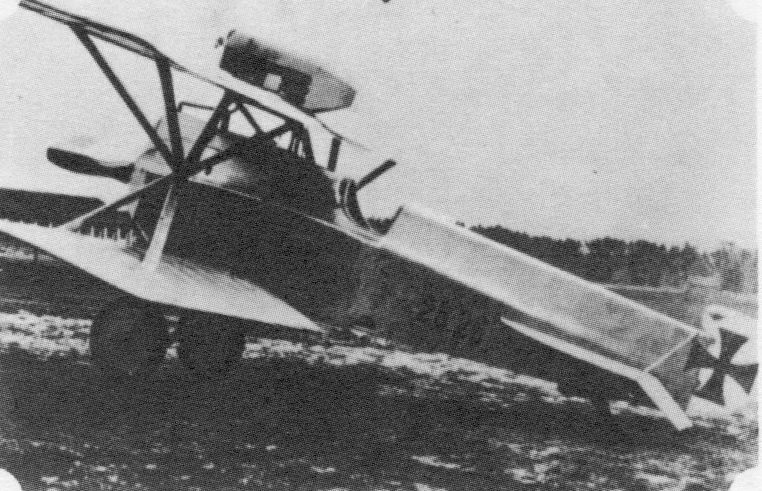 The KDW was certainly not the first seaplane in service from the company with the Navy. They were adaptation of the successful Hansa-Brandenburg B.I landplane. The first "W" was a conventional three-bay biplane with unstaggered wings of equal span, pilot and observer in tandem open cockpits and the undercarriage replaced by short twin pontoons. Only 27 were made, followed by the revised NW with a Mercedes D.III engine and GNW with a Mercedes D.III engine. These reconnaissance models, very comparable to the Gotha WD2 were also allegedly used by the Ottoman Air Force.
But the true roots of the KDW came out as a complement to another model proposed almost in parallel, the CC (1916) Flying-boat fighter. Indeed the company tested both configurations, but the latter was more requested by the Austro-Hungarian Navy. The initials meant "Camillo Castiglioni" which was the driving force behind the order. The model was to be a competitor to the Macchi M.3 in the Adriatic. However in the end, the German Navy still obtained half the order. Whereas the KDW was a floatplane fighter for the Kaiserliches Marine, the first from the company.
To achieve this the best possible way, Hansa-Brandenburg in 1916 simply took under the leadership of Ersnt Heinkel, the successful KD (Kampf Doppeldecker), or D.I in German service. This sturdy but not performing model was still licence-made in Austria as the Phönix D1 for the Kaiserliche und Königliche Luftfahrtruppen or K.u.K. Luftfahrtruppen. This single seat, single engine biplane was of wooden construction, with plywood fuselage skin and dopted fabric for the wings and tails, however it was unusual for its "Star-Strutter" arrangement for its interplane struts, yest still four Vee struts in the centre of the wing bay, all profiled steel tubes.
The prototype was ordered on June 8, 1916, was delivered to the Seaplane Testing Command (Seeflugzeug-Versuchskommando) in Warnemünde for evaluation on September 10 (serial number 784), accepted on September 11, 1916. The first batch comprised #914 and #1067 delivered in March 1917. Firther orders were passed on September 12, 1916 (delivered January 29, accepted February 7, 1917), then on November 3, 1916 with a first delivery from March 20, 1917, acceptance 5 days later. Production ended in early 1918.
However the Hansa-Brandenburg KDW was criticized for its too deep fuselage, resulting in a poor forward view for the pilot and the the small rudder resulted in poor lateral stability. It was difficult to fly for rookie pilots. Armament was also criticized for the time with a single Schwarzlose machine gun, unsynchronized, so it was fitted in a fairing on the upper wing and firing over the propeller. Introduced in the Autumn 1916, in all 122 were made of the "Spider" and despite its limitations it was well used by aces such as Godwin Brumowski and Frank Linke-Crawford.
When submitted this request for a Nordsee naval station point-based seaplane fighter, Ernst Heinkel just borrowed this design just swapping the undercarriage for a pair of floats and was able to submit a design at the same time as the land-based model. Based on prospective performances, the Jagdeinsitzer Wasser was approved for production, a first prototype flew in September 1916 with a few changes. It was approved and a serie of 58 were produced until the end of the war, albeit delivery rate was lethargic, to the level of a workshop.
From mid-1916 onwards, the KDW operated between the North Sea and Adriatic until 1918. By 1917, however, it was largely already obsolete, inferior to the Albatros W.4 and Hansa-Brandenburg W.12.
Specifics and Changes

Borrowing the D.I meant most its characteristics remained the same: It kept the trademark "star strutter" wing bracing with four vee struts, two facing up, two facing down, joined by their vertices at a point midway between the upper and lower wings making for a unique eight-arm star. The model was thus nickname "Wasser Spinne" (water spider). The greatest change however was a small increase in wingspan due to the drag of the twin-float chassis. To counteract the keel effect resulting from these floats, a vertical tailfin area was added below, and later above, the fuselage.
However it still inherited the poor lateral stability of the D.I and deep fuselage, so handling was not great, and the pilots lacked visibility, which for a fighter/scout was not ideal. It was difficult to control, for example returning from a bank to vertical flight and the fuselage still blanketed the small tailfin and rudder. Stability and control remained very poor, more so with the floats and it was very difficult to recover from a spin. Like the previous model also, the first an a unsynchornized single machine gun. However the model was improved during its two-year production span.
The KDW measured 8 m (26 ft 3 in) overall for a wingspan of 9.22 m (30 ft 4 in) (versus 8.5 m/27 ft 11 in on the D.I). Having no floats, the D.I was also shorter at 6.35 m (20 ft 10 in). It was also taller at 3.30 m (11 ft 0 in) versus 2.79 m (9 ft 2 in) and its wing area augmented to 29.15 m² compared to 23.95 m2 (257.8 sq ft). The ailerons was 1.85 m² in surface, and the elevators from 1.08 to 1.10 m², the rudder from 0.52–0.65 m² so pretty small. Without surprise, the KDW was also heavier, at 760 kg empty and 1040-1045 kg (2,293 lb) at take-off (versus 672 kg/1,482 lb and 920 kg/2,028 lb)).
It could be equiped by a water-cooled 6-cylinder inline engine—Benz Bz III in standard, but Mercedes D III or Maybach Mb III initially for a take-off power of 150 hp (approx. 110 kW) up to 160 hp (approx. 120 kW) in latter batches making for a top speed at 172–175 km/h (107 mph, 93 kn) at sea level. The climb rate to 1000m was 4:30 min versus 3 minutes on the D.I. It went down to an anemic 11–14 min to 2000 m and 21:30 min to 3000 m, certanly not interceptor matter. Service ceiling was anyway tested slightly above 4000 m (13,000 ft), 1,000m less than the D.I. Range was 500–540 km however or 3h versus a bit less on the D.I. thanks to a fel tank ranging from 169l and later 174l. It had a wooden 2-bladed propeller of 2.75 m diameter with a pitch of 1.8. All versions but the last had a single had MG 08/15 Schwarzlose machine gun 7.92 mm (.315 in).
Variants
First production Batch
The first production model, reaching units in early 1917, saw the added, unbraced part of the upper wing flexing when the ailerons were actuated, countering the effet. The engine was the same as the D.I, 150 hp (110 kW) Benz Bz.III. One fixed Spandau machine gun mounted on the starboard side of the nose.Second production Batch
To address this issue, these had light steel-tube vee braces added outboard of the star struts to stiffen the outer upper wing. First with Daimler’s Mercedes D IIIa.Third production Batch
Same as above, it seems there were no changes compared to the 2nd batch. In total these three batches represented only 23 seaplane. Also Daimler’s Mercedes D IIIa engine.4th production Batch
Summoned to do better, the rate was augmented for the last two batches for 35 total, including 15 for this one. The 4th batch differed by having the 160 hp (120 kW) Maybach Mb.III engine. However it still had the same unsynchronized machine gun. It had the same issue as the others, positioned out of their reach of the pilot, and thus impossible to clear stoppages.5th production Batch
This last batch was the best production wise with 20 machines delivered from October 1917 to February 1918, completely obsolete at the time. However for the first time, they received two synchronized Spandau machine guns on either side of the cockpit. The final serie also was fitted with the 160 hp Maybach Mb III engine.As for numbers, #748 was the prototype. 783/784 were the first two of the pre-production batch (1st batch) with #912–921 (10 aircraft) for the second batch, #1067–1076 (also 10) for the third, #1380–1394 for the 4th batch (15) and #1554–1573 for the 5th batch (20).
Evolution
-W 11 variant was constructed powered by a 200 hp Benz Bz IV engine (3 made).-W 16 variant prototype powered by a 160 hp U III rotary engine
-W 25 variant featuring conventionally braced wings, also prototype.
⚙ specifications | |
| Length: | 8 m (26 ft 3 in) |
| Height: | 3.35 m (11 ft) |
| Wingspan: | 9.25 m (30 ft 4 in) |
| Empty weight: | 760 kgs |
| Gross weight: | 1040-1045 kgs |
| Powerplant: | Benz Bz.III 6-cyl. water-cooled inline piston engine 112 kW (150 hp) |
| Maximum speed: | 172 km/h (107 mph, 93 knots) |
| Range: | 500-540 km (335 miles, 291 nm.) |
| Endurance: | 2 hrs 30 mins |
| Ceiling: | 4,000 m (13,000 ft) |
| Crew | 1 pilot |
| Armament | Early batches: 1x Schwarzlöze 8mm, see notes. |
Gallery
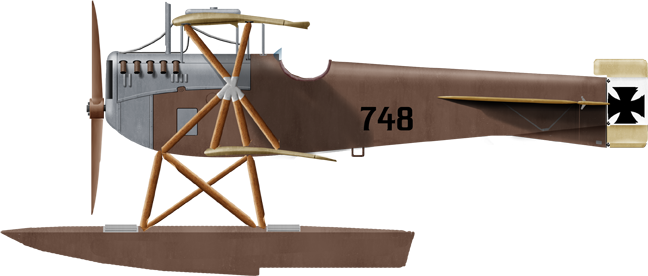
DKW number 748, prototype
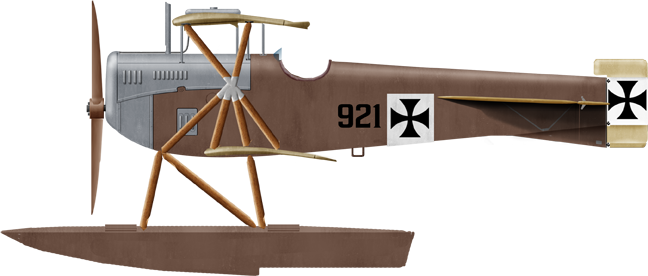
DKW number 921 (2nd batch), stained wood, clear-doped fabric
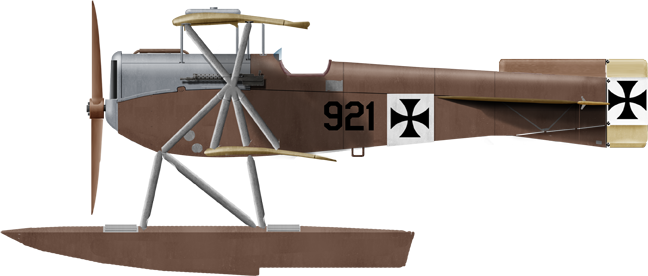
The same apparently modified as prototype for the 5th batch.
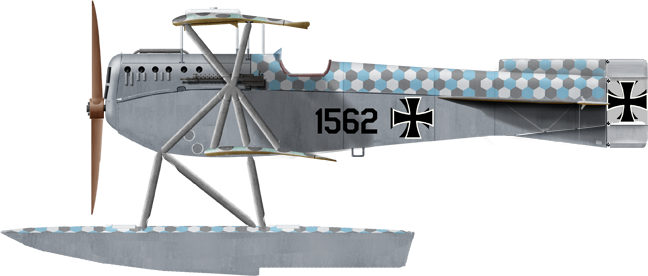
Late production (last batch) number 1562 with the new standard KM tricolor printed fabric camo
Gallery
The D.I fighter
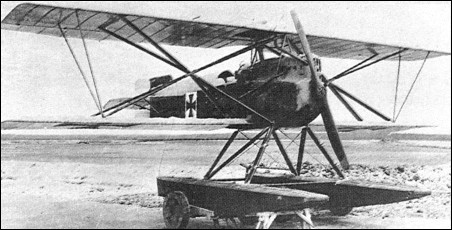
Early Batch model
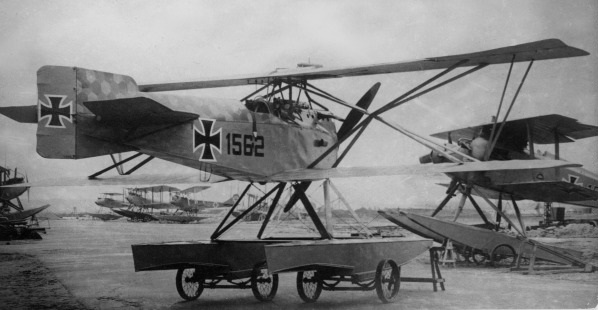
4th Batch model N°1562 with camouflage
Read More/Src
Books
Angelucci, Enzo; Matricardi, Paolo (1977). World Aircraft: Origins-World War I. Maidenhead, UK: Sampson Low.Gray, Peter; Thetford, Owen (1970). German Aircraft of the First World War (second ed.). London: Putnam.
Gleim, Irvin N.; Gleim, Garrett W. (2006). Pilot Handbook (eighth ed.). Gainesville, Florida: Gleim.
Herris, Jack (2012). German Seaplane Fighters of WWI: A Centennial Perspective on Great War Seaplanes. Great War Aviation Centennial Series. Vol. 2.
Imrie, Alex (1989). German Naval Air Service. London: Arms and Armour.
Jackson, Robert (2005). The Encyclopedia of Military Aircraft. Bath, UK: Paragon. p. 185.
Owers, Colin A. (2015). Hansa-Brandenburg Aircraft of WWI: Volume 2–Biplane Seaplanes. Great War Aviation Centennial Series. Vol. 18.
Atlas deutscher und ausländischer Seeflugzeuge. S. 144/145, abgerufen am 13. März 2024.
Jörg Biber: Das Seeflugzeug-Versuchs-Kommando Warnemünde. Media Script, Berlin 2023
Links
valka.cz airwar.ru/ aviastar.org Atlasdeutscheru00Germ de.wikipedia.org en.wikipedia.orgVideos
Video: Hansa-Brandebnburg models by Dr Alex ClarkeModel Kits
On scalemates3D
- Lohner E (1913)
- Macchi M3 (1916)
- Macchi M5 (1917)
- Macchi M7 (1918)
- Ansaldo ISVA (1918)
- Short S.38 (1912)
- Sopwith Baby (1916)
- Short 184 (1916)
- Fairey Campania (1917)
- Sopwith Cuckoo (1917)
- Felixstowe F.2 (1917)
- Gotha WD.2 (1914)
- Friedrichshafen FF 33 (1916)
- Albatros W4 (1916)
- Albatros W8 (1918)
- Hanriot HD.2
- Grigorovich M5 (1915)
- Grigorovich M9 (1916)
- Grigorovich M11 (1917)
- IJN Farman MF.7
- IJN Yokosho Type Mo
- Yokosho Rogou Kougata (1917)
- Yokosuka Igo-Ko (1920)
- Curtiss N9 (1916)
- Curtiss H4 (1916)
- Curtiss H12 (1917)
- Curtiss H16 (1918)
- Aeromarine 39
- Vought VE-7
- Douglas DT (1921)
- NAF/Curtiss TS-1 (1922)
- Boeing FB.5 (1923)
- Boeing F4B (1928)
- Vought O2U/O3U Corsair (1928)
- Grumman FF (1931)
- Akron class airships (1931)
- Curtiss F9C Sparrowhawk (1931)
- Curtiss F11C Goshawk (1932)
- Curtiss BF2C Goshawk (1933)
- Blackburn Blackburn (1922)
- Supermarine Seagull (1922)
- Fairey Flycatcher (1923)
- Hawker Horsley (1925)
- Blackburn Ripon (1926)
- Fairey IIIF (1927)
- Fairey Seal (1930)
- LGL-32 C.1 (1927)
- Fokker T.II (1921)
- Fokker T.III (1923)
- Caspar U1 (1921)
- Dornier Do J Wal (1922)
- Rohrbach R-III (1924)
- Mitsubishi 1MF (1923)
- Mitsubishi B1M (1923)
- Yokosuka E1Y (1923)
- Nakajima A1N (1927)
- Nakajima E2N (1927)
- Mitsubishi B2M (1929)
- Nakajima A2N (1930)
- Nakajima A4N (1935)
- CANT 18
WW1
✠ K.u.K. Seefliegerkorps:
 Italian Naval Aviation
 RNAS
 Marineflieger
 French Naval Aviation
 Russian Naval Aviation
 IJN Air Service
 USA
Interwar
 Interwar US
 Interwar Britain
 Interwar France
 Interwar Netherlands
 Interwar Germany
 Interwar Japan
 Interwar Italy
- Grumman F2F (1933)
- Curtiss SOC seagull (1934)
- Grumman F3F (1935)
- Northrop BT-1 (1935)
- Consolidated PBY Catalina (1935)
- Grumman J2F Duck (1936)
- Brewster/NAF SBN-1 (1936)
- Curtiss SBC Helldiver (1936)
- Vought SB2U Vindicator (1936)
- Brewster F2A Buffalo (1937)
- Douglas TBD Devastator (1937)
- Vought Kingfisher (1938)
- Curtiss SO3C Seamew (1939)
- K-class Blimps (1939)
- Douglas SBD Dauntless (1939)
- Grumman F4F Wildcat (1940)
- F4U Corsair (NE) (1940)
- Brewster SB2A Buccaneer (1941)
- Grumman TBF/TBM Avenger (1941)
- Consolidated TBY Sea Wolf (1941)
- Grumman F6F Hellcat (1942)
- Curtiss SB2C Helldiver (1942)
- Curtiss SC Seahawk (1944)
- Grumman F7F Tigercat (1944)
- Grumman F8F Bearcat (1944)
- Ryan FR-1 Fireball (1944)
- Douglas AD-1 Skyraider (1945)
- Fleet Air Arm
- Hawker Osprey (1932)
- Fairey Swordfish (1934)
- Blackburn Shark (1934)
- Supermarine Walrus (1936)
- Fairey Seafox (1936)
- Blackburn Skua (1937)
- Short Sunderland (1937)
- Blackburn Roc (1938)
- Fairey Albacore (1940)
- Fairey Fulmar (1940)
- Grumman Martlet (1941)
- Hawker sea Hurricane (1941)
- Brewster Bermuda (1942)
- Fairey Barracuda (1943)
- Fairey Firefly (1943)
- Grumman Tarpon (1943)
- Grumman Gannet (1943)
- Supermarine seafire (1943)
- Blackburn Firebrand (1944)
- Hawker Sea Fury (1944)
- Coastal Command
- Vickers Wellington (1937)
- IJN aviation
- Yokosuka E6Y (1930)
- Aichi D1A "Susie" (1934)
- Mitsubishi A5M "Claude" (1935)
- Nakajima A4N (1935)
- Yokosuka B4Y "Jean" (1935)
- Mitsubishi G3M "Nell" (1935)
- Nakajima E8N "Dave" (1935)
- Kawanishi E7K "Alf" (1935)
- Nakajima B5N "Kate" (1937)
- Kawanishi H6K "Mavis" (1938)
- Aichi D3A "Val" (1940)
- Mitsubishi G4M "Betty" (1940)
- Mitsubishi A6M "zeke" (1940)
- Nakajima E14Y "Glen" (1941)
- Nakajima B6N "Jill" (1941)
- Mitsubishi F1M "pete" (1941)
- Aichi E13A Reisu "Jake" (1941)
- Kawanishi E15K Shiun "Norm" (1941)
- Nakajima C6N Saiun "Myrt" (1942)
- Yokosuka D4Y "Judy" (1942)
- Kyushu Q1W Tokai "Lorna" (1944)
 Luftwaffe
- Heinkel 114 (1935)
- Arado 196 (1937)
- Me109 T (1938)
- Blohm & Voss 138 Seedrache (1940)
 Italian Aviation
- Savoia-Marchetti S.55
- IMAM Ro.43/44
- CANT Z.501 Gabbiano
- CANT Z.506 Airone
- CANT Z.508
- CANT Z.511
- CANT Z.515
 French Aeronavale
- GL.300 (1926-39)
- CAMS 37 (1926)
- Levasseur PL.5 (1927)
- Potez 452 (1935)
- Loire 210 (1936)
- Loire 130 (1937)
- LN 401 (1938)
 Soviet Naval Aviation
- Shavrov SH-2 (1928)
- Tupolev TB-1P (1931)
- Beriev MBR-2 (1930)
- Tupolev MR-6 (1933)
- Tupolev MTB-1 (1934)
- Beriev Be-2 (1936)
- Polikarpov I16 naval (1936)
- Tupolev MTB-2 (1937)
- Ilyushine DB-3T/TP (1937)
- Beriev Be-4 (1940)
 Swedish Naval Aviation
- SAAB B17S
-
 Skoda Š-328V
 R-XIII Idro
 Fokker C.XI W (1934)
 Rogožarski PVT-H (1938)
WW2
 ☍ USNA
- De Havilland Sea Vixen
- Hawker Sea Hawk
- Supermarine Scimitar
- Blackburn Buccaneer
- Hawker Sea Harrier
- Douglas A4 Skyhawk
- Grumman F9F Panther
- Vought F8 Crusader
- McDonnell-Douglas F-4 Phantom-II
- North Am. A5 Vigilante
- TU-142
- Yak 38 forger
☢ Cold War
✧ NATO
Fleet Air Arm
 US Navy
☭ Warsaw Pact
Merch
Seafire Mark 45; HMS Pretoria Castle
Zeros vs its aversaries
Aichi D3A “Val” Junyo
Mitsubishi A5M poster
F4F wildcat
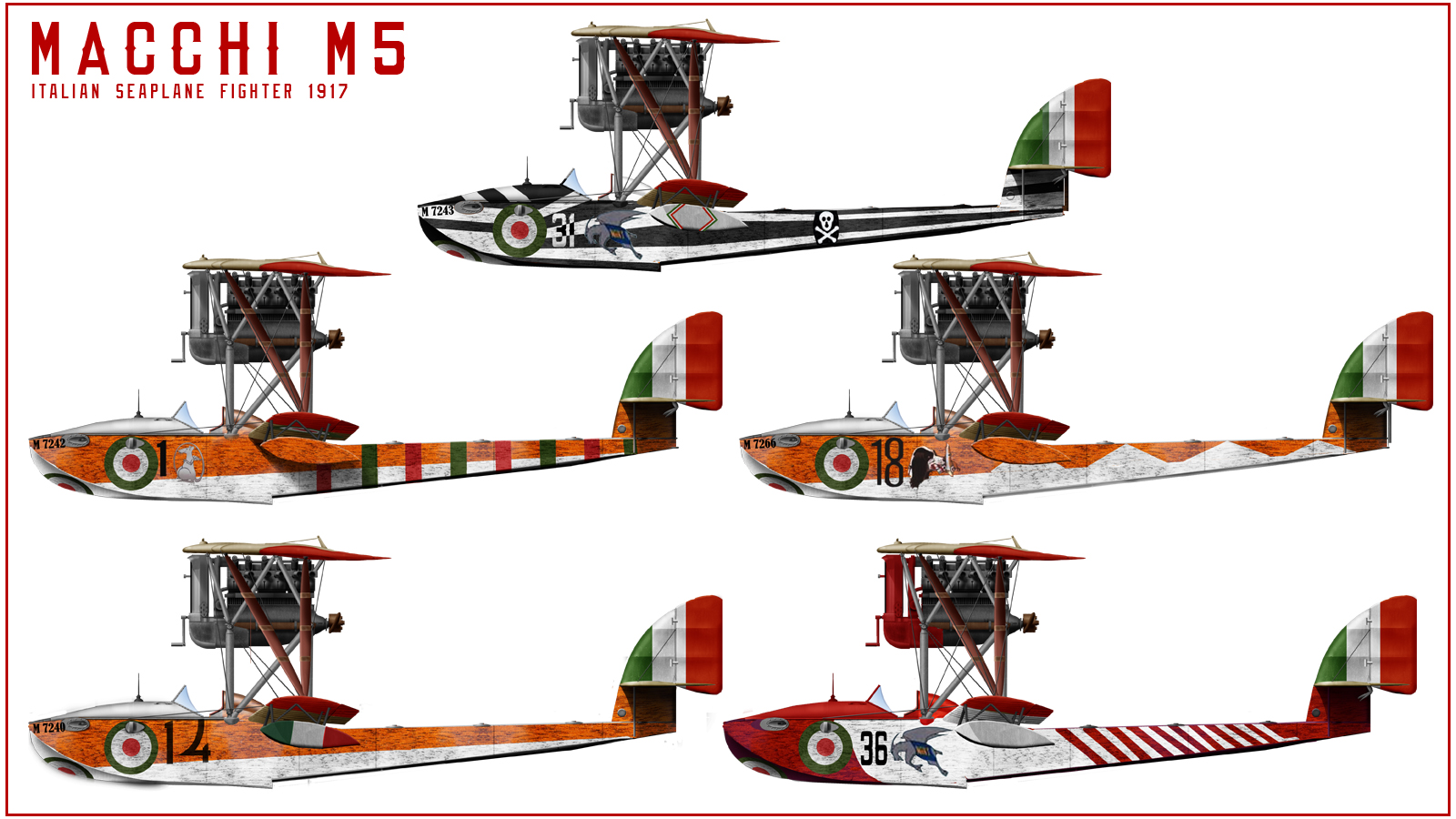
Macchi M5
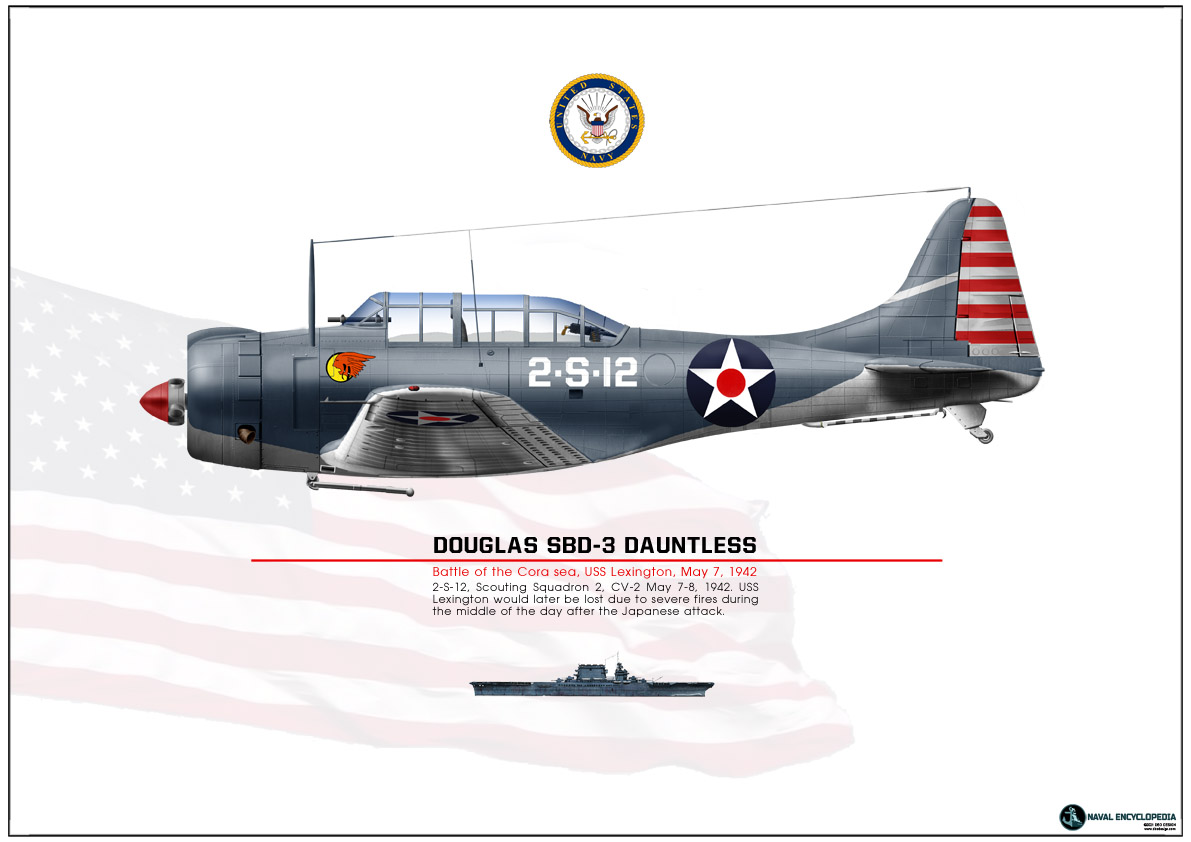
SBD Dauntless Coral Sea
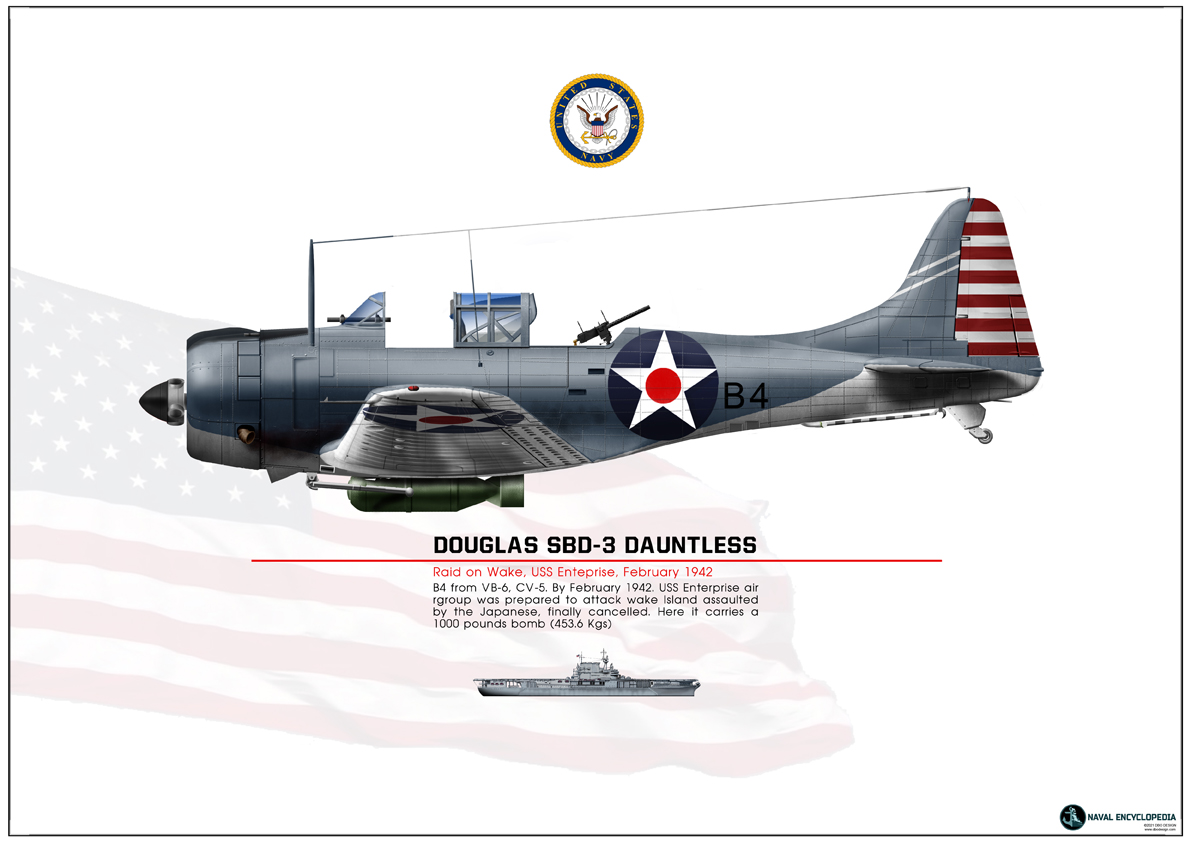
SBD Dauntless USS Enterprise
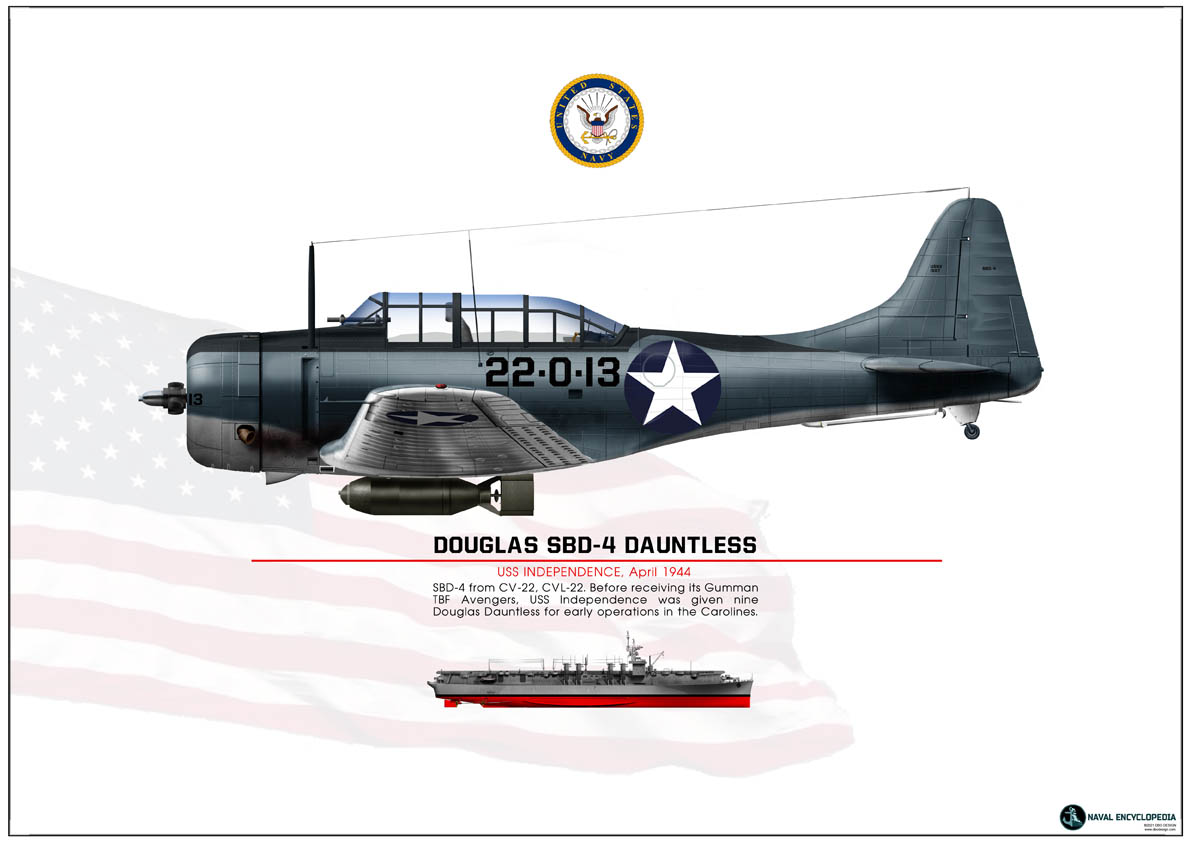
SBD-4 CV22