
Grumman F7F Tigercat (1944)
 1943-46 Heavy Naval Fighter: 364 built.
Genesis

A successor of the rejected XP-50 prewar "escort fighter", the new XP-65 tried to answer that question that remained problematic for naval planners juggling with carrier aircraft which had the performances OR the range and rarely both. Single-engine fighters like the F6F and soon upcoming F8F had the performances, but not the range, and big birds like the Helldivers and more so, the Avanger, had the range, but not the performances to escape fighter on the "last mile" of their mission, close to their objective, precisely where enemy fighters would be defending.
The question of range already had been there in the mid-1935 when nearly all national aviations started to question the same issue of escorting bombers to their destination. The multirole escort, high performances twin-engine aircraft was already worked out then, and if they had the range, they lacked each time the performances to outclass enemy single engine fighter which rremained more agile and had better performances across the board, albeit in range, provided they defended their area and were vectored in correctly.
The German Me-110 was a good example of a failure, as was the Me 210 afterwards. The British also tried it and succeeded once, with the De Havilland Mosquito, the "wooden wonder" that defied any pronostics. It showed to all in 1942 that if made with gusto, a twin-engine model could to what it promised, but the paradox was it never was used as escort fighter and rather as a "commando bomber" and reconnaissance model.
If the RAF soon adopted the new bird, another, very fast and heavily armed model arrived almost at similar results, the Bristol Beaufighter, which was used by the Fleet Air Arm, as was the Sea Mosquito and in 1945, the Sea Hornet, the most fighter-like, twin-engine pure carrier fighter Britain ever had. Back to the US and in 1942, the Army had its own twin-engine wonder fighter, the P38 Lighning.
Development of the F7F
The XF5F (1938)
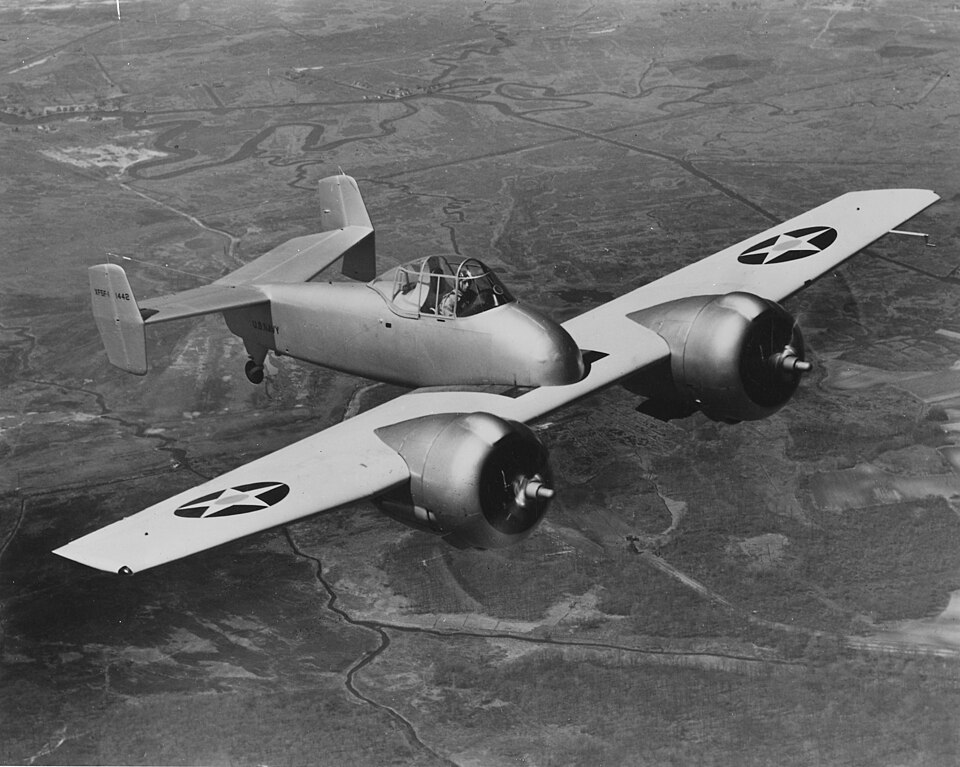
The early genesis of the program could be found in the XF5F-1 (photos). The model in the line between the F4F wildcat and F6F hellcat never materialized as a production model for a reason: The Grumman XF5F Skyrocket was a private venture proposal from Grumman in 1938. This was a clear departure of his previous single-engine fighter. The idea there was that a twin engine carrier fighter, lightweight (under 10,000 lbs max TO) and powered by two 1,200 hp Wright R-1820 engines, with propellers geared to rotate in opposite directions to cancel out torque, would have procured not only high speed but also outstanding climb rate. This was an interceptor for which there was no requirement, but which first flew on 1 April 1940, showing Engine cooling problems, oil cooling ducts and cockpit revisions, and four 0.5 in (12.7 mm) machine guns instead of the proposed 20mm cannon, new engine nacelles, new spinners for propellers and extended fuselage.

Grumman test pilot "Connie" liked it. It was measured at 383 mph (616 km/h, 333 kn) at sea level, climbed at 4,000 ft/min (20 m/s). Later it was pitted against a Spitfire, a Warhawk and a Hurricane, a Corsair and a Wilcat (among others) by navy pilot LCDR Crommelin for official tests. It decribed it as a "dream", leaving them all in the dust. However the Navy still wanted many modifications thaough delayed the program and added much weight, and more flight tests were not completed until 15 January 1942. In the meantime, Grumman started work already on the more advanced XF7F-1. Further testing with the XF5F-1 now that it was clear the Navy preferred the F6F, easier and cheaper to produce. The XF5F-1 prototype continued to be used in various tests. It never saw its landing gear problems cured until struck after a belly landing on 11 December 1944.
The XP50 (1939)
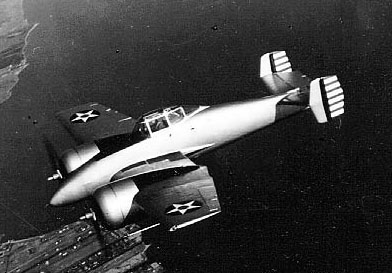 The XP-50, the second "skyrocket", had notably a completely new and refined fuselage, narrower, pointier, and a H type tail for extra stability but dimensions and power remained about the same. Grumman indeed "recycled" the XF5F for a land-based USAAC contest for a twin-engine "heavy interceptor". The USAAC ordered a prototype on 25 November 1939, the XP-50, but it lost to the Lockheed XP-49. The latter was the ancestor of the P38 Lightning... The XP50 introduced a few novelties apart those described above, like its Wright R-1820-67/69 9-cyl. air-cooled radial engines rated 1,200 hp (895 kW) each being given a turbo-supercharger. It had a tricycle landing gear and provisions for self-sealing fuel tanks and pilot armor, armed (planned) with two 20 mm (.79 in) cannon and two .50 in (12.7 mm) HMGs.
However at its test flight on 18 February 1941, on its turbo-supercharger exploded, distintegrating the engine and the wing in the process. Test pilot Robert Hall bailed out and the XP-50 plunged into Smithtown Bay, Long Island Sound. That did not impressed the army, and despite its blistering speed of 424 mph (680 km/h, 368 kn) at 25,000 ft (7,620 m) and climbing at 5,000 ft/min (25 m/s), it lost to the XP49 which managed "only" 406 mph (653 km/h, 353 kn) at 15,000 ft (4,570 m) and 3,300 ft/min (16.8 m/s) but won based on its greater apparent reliabilit and even more promising innovations. Needless to say, the P38 became legendary in the Pacific, "owning" it like the F6F and F4U.
The XP-65 (1941)

Following the disapointment of Grumman as the Navy ignored twice its twin-engine fighter, the company embarked on a new design, a more modern fighter incorporating the best features of the XF5F and XP-50. The Model G-51 (factory name) was completed as early in May 1941. 5 days after the XP-50 crash, base don the latter's promises and Grumman's reassurance, the Air Force ordered two prototypes designated XP-65. Grumman then immediately wanted its revenge over the Navy and ordeted to develop a carrier-based version, albeit it was somehwat on the back burner. After some time, with its heavy workload with Navy orders, the Air Force chose Lockheed's XP-38 fighter as it could not see Grumman capable of mass-building its new twin-engine model P-65 alongside the F6F and TBM.
G-51 and XF7F-1
The first sketches for the new carrier-based fighter version of the now defunct XP-65 were already drawn by 1940. In December there was an informal proposal by some top brass in the Navy to design this new aircraft for the Navy anyway. The development team was then led by Dean Hutton, and Bob Hall as a test pilot and talented designer. By 1941, the team was joined by Gordon Israel also an engineer and pilot. All that practical experience was infused in the ergonomics and many automated features. Given the larger size of the aircraft, the team felt free to innnovate.
The Model G-51 project was at the root of both the land-based and naval fighter, and had all the DNA of the Skyrocket but Grumman retained the lessons of especially the XF5F, which fuselage was way too light and narrow to mount all the niceties of a workable, operational navy aircraft. Thus, the new aircraft was made significantly larger and heavier. The Air Force remained interested, as it had plenty of space to fly it, but the Navy yet needed to prove its adoptiion of its crowded and limited decks. So Grumman PR team prepare a set of arguments:
First, the design proposed improved performance characteristics, whether that was top speed, climb rate or range, the latter being especially important in the Pacific between its distances and lack of airfields. This was in 1940, the primary naval zone by then.
Second: Its increased weight and size was not a burden as long as it an unusually powerful armament for a carrier-based fighter, booting the defensive capabilities of the fleet.
Third: Its twin-engine design ensured redundancy and thus, safety. Fourth: This model was also developed with the anticipated Midway-class aircraft carriers developed at the time, with 45,000 tons and a much larger flight deck.
This was convincing enough for the Navy contract awarded a contract on June 30, 1941, calling for the construction of two prototypes XF7F-1. Serial numbers wiuld be 03549-50. The first was to be delivered within 480 days after signing, the second 30 days later for a total cost or R&D and for the prototypes estimated at $1,077,000, not including engines and propellers, provided by the Navy as usual.
XF7F-1 Design

F7F-3 "bad kitty" folding wings hydraulic hinges detail.
The prototype XF7F-1 thus was a single-seat, mid-wing monoplane, powered by two Wright XR-2600 engines rated for 1,800 hp each and driving counter-rotating Curtiss Electric variable-pitch propellers. Meaning they were spinning left or right and thus counter-balanced their respective torque. The model also had a tricycle landing gear, given the weight this time was mostly forward of the wings, and it had well protected self-sealing fuel tanks as asked for the Navy, and optional cockpit armor, as well as the traditional and signature Grumman's folding wings with the "sto-bar" system hydraulically operated. The final armament was however as the Navy wanted, back to four 0.50-caliber machine guns in the wing roots, two in the nose, each provided with 400 rounds. The Navy insisted on a top speed of no less than 430 mph (700 km/h) (For reference the Hellcat was 611 kph. The F4U Corsair was faster at 718 kph but not Carrier-qualified), with a ceiling of 35,500 ft (10,670 m), and range of 1,000 mi (1,600 km), for a maximum takeoff weight of 16,500 lb (7,560 kg).
The first XF7F prototype flew at the New York University and designers started to reconsider their chosen configuration. Initially this was a mid-wing monoplane, and now they started working on a high-wing monoplane, with the engine nacelle axes lowered below the wing. More design refinements and tests went on for more than a year, and by mid-1943, Grumman still discussed with the Navy about the replacement of the Wright engines by more powerful Pratt & Whitney R-2800-22 "Double Wasp" which had also a smaller frontal area. Protracted negotiations on this and other changes led to countless delays so that the program dragged on until the XF7F even started official tests by the end of October 1943. By then the F6F Hellcat was produced in numbers and had replaced the F4F on all carriers, whereas its successor the F8F Bearcat was already on the works...
Final Development

The F7F was was designed as a cantilever, high-wing monoplane. It used all-metal construction and had a classic, semi-monocoque fuselage with two-spar folding wing. The fuselage's shape had been refined through countless NACA tests, but had a constant caracteristic, it was quite narrow, just slightly expanded from the shoulder's width of the pilot. The first model was also a single-seat only model, with a glassed cockpit with good visibility. In the wings, slab-sided according to Grumman's ways, were two 18-cylinder, twin-row air-cooled Pratt & Whitney R-2800-22W engines. They produced 2,100 horsepower each, and drove Hamilton Standard Super Hydromatic variable-pitch propellers. Seen from the front, the fuselage was much slender than these, wrapped in NACA hoods.
The Navy's initial requirement for contra-rotating propellers was abandoned however. Indeed the reaction torque for a 10 tonnes aircraft was now insignifican. This also much simplified the work of flight mechanics and logistic chain. The wings in their final form had a NACA 23015 profile at the root, 23012 profile at the tip and they folded hydraulically using not the "sto-bar" signature sysem but a more classic upward folwing on hinges system, which also was simpler, but calculated to fit all hangars in USN service. The landing gear as well as the flaps, arresting hook, and weapons reloading system were hydraulically powered.

F3N in flight
Rudder, elevator, ailerons had in-flight adjustable trim tabs, and the only part of the design that was still fabric-covered. The landing gear was tricycle due to the weight balance forward which was a first in the US Navy. This slender nose landing gear retracted into the forward fuselage, the main landing gear, which bore the brunt of the landing impact, retracted into the engine nacelles. The armament was discussed a lot and settled on a classic combination of four 0.50 Colt-Browning heavy machine guns, a type well known in the Navy, with 400 rounds provided for each, all mounted in the lower nose, two per side and staggered to avoid interference. This was completed by four more of the same, now supplied by with 200 rounds each and mounted in the wing roots. That made for a ten-strong steel hail, giving that they were capable of 450 rounds a minute.
In addition of the rim-less bubble canopy, it was, customary to Grumman's practices, high-mounted so to provide excellent visibility when landing, enhanced by the pointy nose and absence of forward engine. On the sides also the position allowed to see clear of the engine's hoods. That canopy was made of three sections, all of armored glass. There was also an armour plate behind the pilot's head in the seat. In all, between the fuselage and its three self-sealing tanks, capacity was 1,590 liters, added to two 568-liter drop tank optional in the wings. The latter had no built-in fuel tanks. Overall, the X7F7-1 looked fabulous, far better than previous two-engines Grumman prototyps and especially the ungainly XF5F skyrocket.
Flight Tests and Corrections
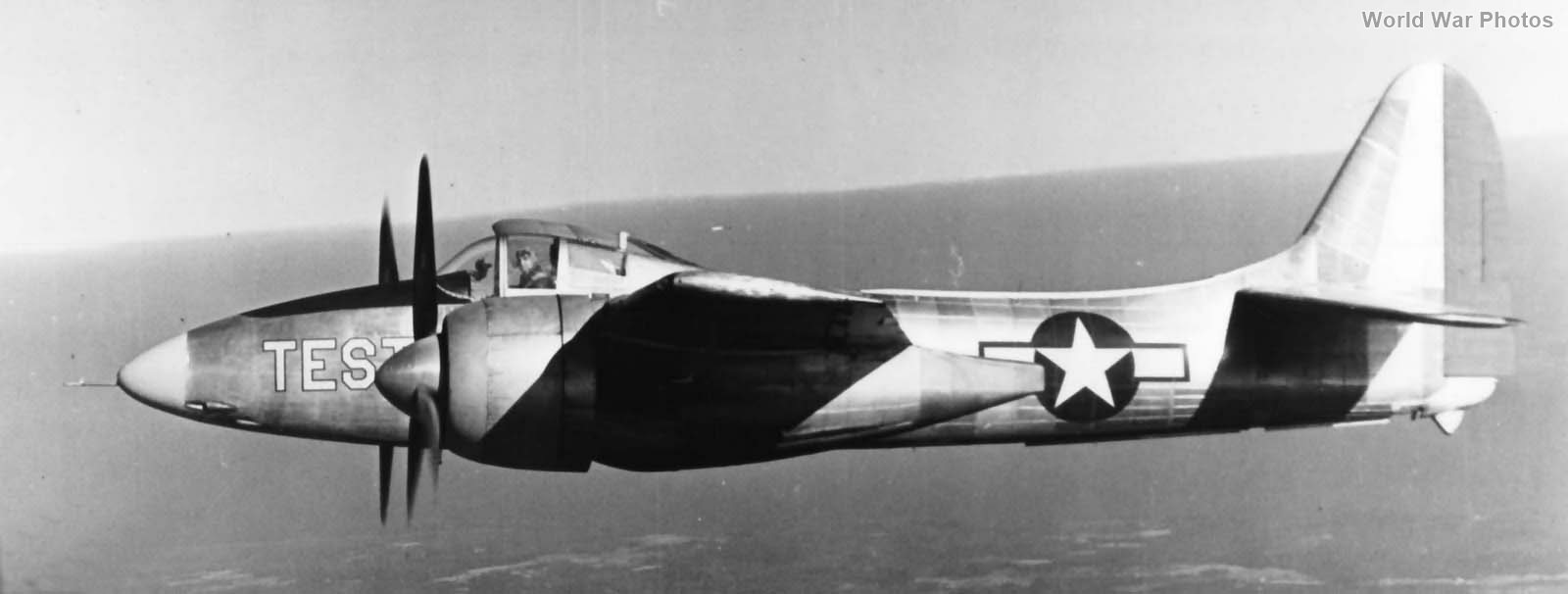
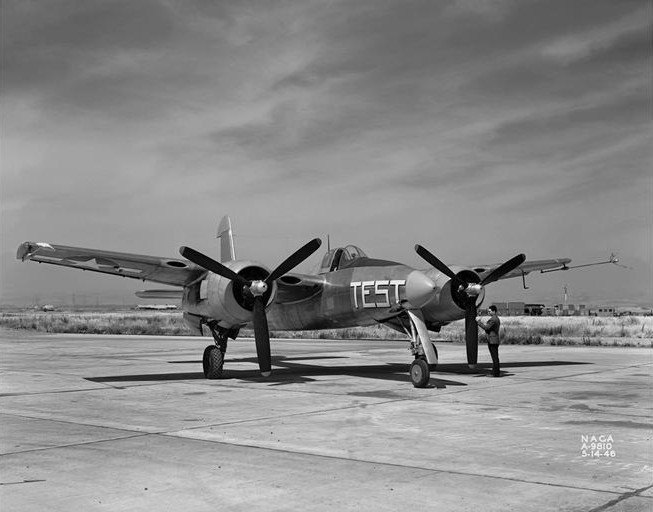
Testing of the silver livery first model, was conducted by Bob Hall. It was superb, with a white nose tip, black top nose, red tail, and "TEST" in stencils forward, and had its machine guns in place to teast realistc loads, albeit not provided with ammunitions to avoid issues. Hall marvel at the new bird and its graceful shapes, made the necessary ground checks, then made run-ups on the runway for the first day of testings. The same happened the next two days, noting the general behaviour and engine's stance at various regimes. Then at last on November 2nd, he reached a speed exceeding takeoff speed, to discover he had lifted off the ground, forced to cut off the throttle and land at the very end of the runway. This short hop, not planned, lasted 15 seconds but counted as the maiden flight date.
The noise of two 2,000hp Pratt & Whitney R-2800-10B engines just outside the thin canopy was most impressive. I never made a first flight that was as powerfully soul-stirring as the first flight I made in the XF7F-1 one day before my first anniversary at Grumman. Even my first flights in jets weren’t as memorable. It was mind-boggling to keep this eight-gun fighter in a 30-degree climb until it attained its service ceiling. In comparison, the soon-to-be-famous six-gun F6F-3 Hellcat fighter I had been testing suddenly seemed like an elderly pussycat.
On November 3rd, the XF7F-1 made at last its planned, official flight. Hall marvel at its sane behaviour with gentle moves, for 20 minutes in the air, before landing safely. Next flight tests were more technical and demanding, with Hall starting to "brutalize" the prototype, with company and other Navy pilots taking turns. This resulted of the discovery of many serious problems. Well before this already at the NACA Research Center, engineers already speculated about odd spin characteristics. This was confirmed by test pilot Corky Meyer when going from a normal spin to a flat spin accoridng to the flight plan. In a simulated (short) deck landing replicated on the airfield, the Y-shaped arrestor hook unbalanced the rear fuselage and exceeded design limits in that phase, especially if the hook was not centered on the arrestor cable.
The force led to skin deformation and failure of the hook itself. Stability when using a single-engine, accoridng to the redundancy proposed to the Navy, was not a success either, and the flight was "inadequate". The hydraulically powered rudder was also pootly designed and not powerful enough, the Tigercat was "stiff" pas certain speeds at certain angles. Further testings took a new boost with the arrival of the second prototype, which took off on March 2, 1944, revealing severe engine overheating. The NACA cowling was deemed inadequate and had to be reworked.

 However all this took time, added to past delays, so the US Navy, in dire need of a new carrier-based fighter, ordered a first batch of 500 anyway. They became the F7F-1 "Tigercat". The name was suggested by Grumman and accepted as unofficial standard. When that order fell, testing was not yet completed. The many noted deficiencies and high takeoff weight eventually led to a critical decision, barring it to operate from aircraft carriers, or at least from the existing Essex class fleet carriers, despite having the longest and largest deck off all US carriers in inventory. This called into question its futurel albeit Grumman knew about the Midway class then in construction and argued the model would be fully operational when the latter will be completed. But like the F4U before it, the Navy forbade the use of this new fighter on its decks.
And so, like the F4U, the F7F had it's "consolation prize", as there were no limitations for land use, it immediately interested the US Marine Corps which lacked precisely a long-range aircraft for close support. In addition to its nose and wings armament it could carry up to 2,087 kg of bombs and rockets. After some discussions, the Navy accepted to assignthe first 500 built to land-based Marine squadrons and transfer Corsair fighters to aircraft carriers instead, the latter used also for this role and now, thanks to the adoption of British practice, qualified for carrier use. The first prototype continued until it crashed on May 1, 1944, recovered and decommissioned on August 31.
The second was flown to Morffitt Field, California for a real-size wind tunnel testing at NACA, at its Ames Laboratory, just built. She was the second prototype tested there. This enabled much more accurate results unlike models and helped curing the engine overheating issue by simply removing the propeller spinners along with many minor design changes. The whole program ended in February 1945, and the prototype returned to the Naval Test Center to be modified and resume flyingwith all modifications entering the production planning. Tests went on to determine performance under various loads, externally mounted, from external fuel tanks to even Mk.13 torpedoes to make it capable of anti-ship attacks. It was eventually decommissioned on November 30, 1946. Meanwhile production went on in the next iterations.
Design specifics

General conception
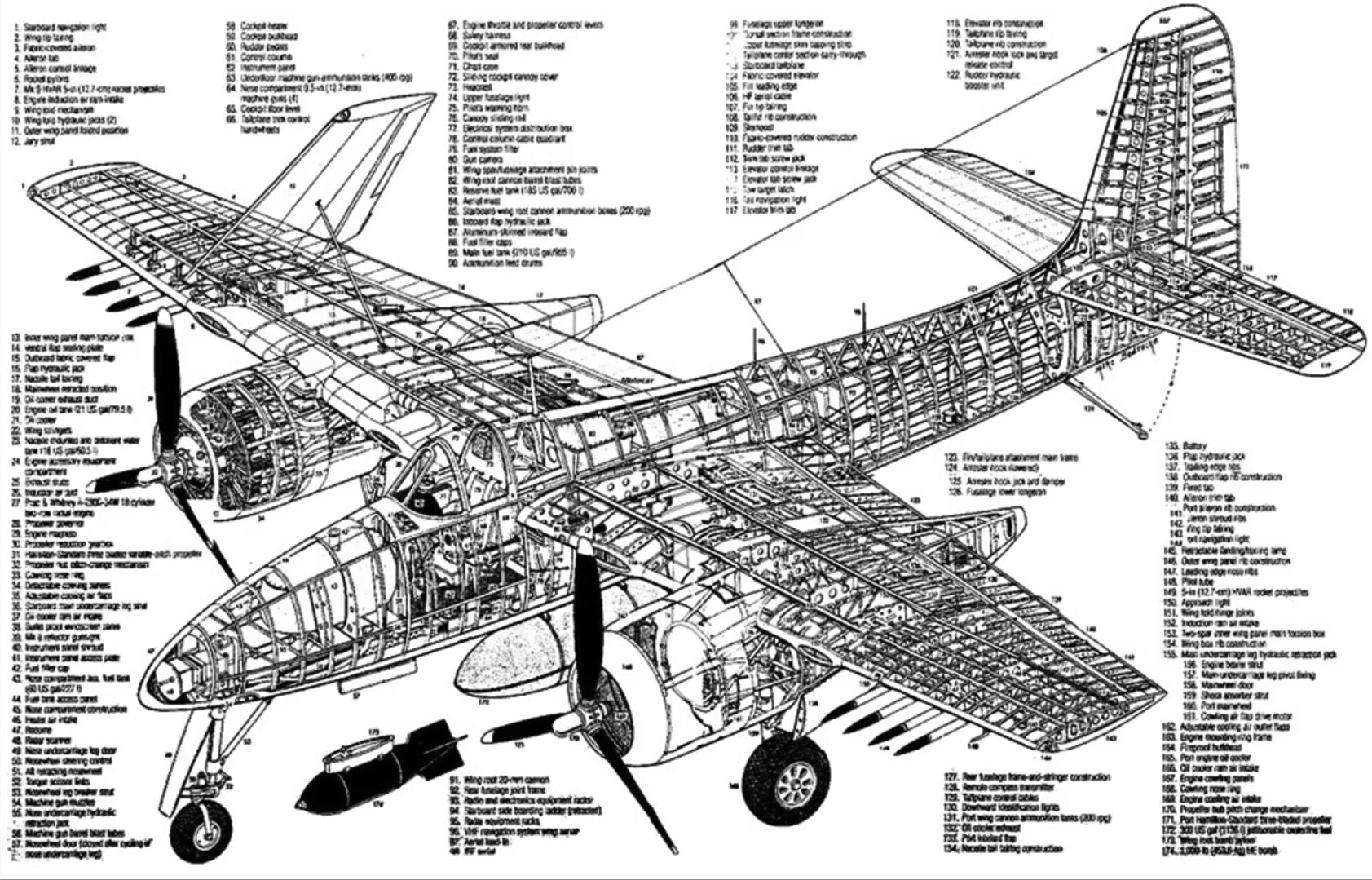
The Tigercat kept its configuration like the prototype, initially single-seat, all-metal with cantilever mid-wing configuration in which the slender fuselage, semi-monocoque, had a thick, stressed-skin structure. It was setup for planned breakage into three sections. The nose was the first, housing the four-gun battery and ammunition, plus the nose landing gear well. The middle section had the pilot's cockpit, and its armored backrest, reinforced forward screen, also of armoured glass in the canopy visor, and armored underbelly, to completely protect the pilot from all angles. The canopy was designed to slid rearward for entry and exit via the wings. Behind the armored backrest, fuel tanks were located as well as the standard radio set, oxygen and fire-fighting equipment. The radio mast was located behind the canopy on dorsal fuselage. The tail boom was hollow and ended the dorsal fin. The vertical stabilizer was integral and its tail boom made of a two-spar design, interating in its bottom a massive steel spar to carry the hydraulically operated "stinger" landing hook, and its deflection drive. Its shape and attachement was well refined after tests.

The wing had a classic two-spar design, with an additional rear spar. The engine nacelles had a fairly high aspect ratio, and had well refined shaped tails, being located approximately at midspan, followed by the folding cut. The outer sections of the wings had four flap sections. The leading edges also had four oil radiators with individual oval air intakes to solve overheating issues. The only wing mounted fuel tanks were two caissons located between the main spars of the fixed wing section. Wings cannons and ammunition were in the wing roots with the usual interruptor gear to avoid hiuting the propeller. Hydraulically operated, the wings needed a few seconds to fold up or down, secured automatically by brackets.
The horizontal tail was single-spar as seen above and had a reinforced leading edge acting as the end of the dorsal fin for extra stability. Elevators and ailerons were metal-covered, but the rudder integrated some fabric cover to spare weight. All control channels also as seen above, kept the same adjustable trim tabs, with the ailerons fitted with breakaway tabs. Apart the nosewheel which was smaller, the main landing gear was cantilevered, retracting hydraulically and rotating back into the fuselage of the nacelles, flush. They were single-wheel but the nose landing gear had a shimmy damper. Thus no wheel tail existed, albeit there was a reinforced fixed bump to absorb potentially nose-up tail hits when landing.
Engines & Performances

The powerplant as seen above were a pair of Pratt & Whitney R-2800-27 "DoubleWasp" 18-cylinder, air-cooled, twin-row radial engines producing 2,100 horsepower each, with three-bladed Hamilton Standard constant-speed propellers. They had two advantages, the double row made the overall diameter smaller, while output was augmented, however the tradeoff was greater cooling requirements as one row was masked by the other. The Pratt & Whitney R-2800 Double Wasp became widely used on many models in the Second World War, so that simplified logistics considerably. Displacement was 46 litres (2,800 cubic inches) and the twon row of nine cylinders were arranged around the crankcase like in previous designs, with the first serie capable of 2,000 horsepower, later improved with supercharging and better fuel systems. The R-2800 was reliabled at all regimes, and made the delight of pilots on Martin B-26 Marauder, F7F cousin, the Grumman F8F Bearcat, as well as the "jug" the massively legendary Republic P-47 Thunderbolt... Or the Vought F4U Corsair. So for the USMC it was ideal.

Performance-wise, the F7F was much more heavier than previous Grumman prototypes at 10 tonnes. If its general profile and slender fuselage helped with an excellent air flow and arodynamic qualities overall, the combined output of 4,200 hp helped it, combined with its 3-bladed Hamilton constant-speed fully-feathering propellers to reach a top speed of 460 mph (740 km/h, 400 kn), still remarkable for its time, making a fast pair with the corsair. Both were average dogfighters compared to the legendary Zero so they could use the same speed-based tactics. The F7F had a good service ceiling of 40,400 ft (12,300 m), about the same albeit lower than the Corsair, for an otherwise fantastic honorable rate of climb of 4,530 ft/min (23.0 m/s), versus 2,890 ft.min for the F4U, and a better range at 1,200 mi (1,900 km, 1,000 nmi) versus 1,005 nmi. It could be augmented further with external fuel tanks, 150 gallons each. For the internal reserve, it was of 45 gallons for combat return and emergency reserve, for 1,426 total.
Armament
Temco-Ford Mark 12
Armament included in the final version four 20mm Temco-Ford Mk.12 cannons (150 rounds per gun) in the wings roots, four 12.7mm Browning M-2 machine guns (320 rounds per gun). The Temco-Ford was rarely used in the USN as a heavy duty aircraft ordnance, it was mostly used by Army gunships. Also called the "Colt Mark 12 cannon" postwar, it derived from the Hispano HS 404 in short supply back in 1937-39. Designed by Marc Birkigt it was a lighweight, aircraft friendly alternative to the Oerlikon, and an answer to the German Rheinmetall MG 151. The Temco-Ford Mk.12 was an ancestor of the Colt Mark 12 and based directly on the HS.404, manufactured under licence. So their specifics were alike, 49 kg (108 lb) in weight overall for a length of 2.52 m (8 ft 3 in), 1.7 m (5 ft 7 in) for the barrel aline, and firing 20×110mm cartidge 20 mm (0.79 in) rounds, while being Gas operated. The rate of fire was around 700-750 rounds/min for a muzzle velocity of 840–880 m/s (2,800–2,900 ft/s). It ised in that case a belt system for 150 rounds total.Browning M2 HMGs
In the nose were the four additional M2 Browning HMGs, 0.5 inch caliber or 12.7 mm for 90 barrel lenght, with the aircraft version AN/M2 weighting 28 kg (62 lb), 24 lb (11 kg) for the barrel alone. It was shorter than the ground version at 1,429 mm (56.3 in) for a 910 mm (35.8 in) barrel and could fire at 750–850 rounds/min at 2,910 ft/s (890 m/s) (M33 ball), 78 ft (24 m) from muzzle. In flight the max range of 1,800 m (2,000 yd) was mostly for ground support, with a max range of 7,400 m (8,100 yd). Like the Cannons, they were belt-fed, for 320 rounds each. The nose had traps for easy reload and further panels enable the full replacement of the gun. There were special air intakes to force cold air on the barrels when firing in flight.Other payloads

In 1945, the USMC used the F7F-1 for ground support, and thus, there were external racks under the outer wings, to carry a variety of payloads, like eight 127mm (5 inches) HVAR unguided rockets. Undetr the fuselage were other attachement points for a single 300 gallons drop tank or a bomb up to 454 kg (1,000 lb), suspended. The advantage of the twin-engine configuration means the F7F could be used for diver bombing, albeit there are little records of that use, if any. In later variants, like the recce and radar-equipped ones, the machine guns in the nose were removed entirely. In Korea, when the occasion arose, with their four cannons, even these versions showed as much deadly as any others.
Variants

XP-65: Proposed USAAF pursuit fighter
XF7F-1: Prototype, two built
F7F-1 Tigercat Pratt & Whitney R-2800-22W radial: 34 built
F7F-1N: 1 seat Night fighter, APS-6 radar
XF7F-2N: Night-fighter prototype: 1
F7F-2N: 2-seat night fighter, 65 built
F7F-2D: Converted F7F-2N as drone control aircraft with extra F8F Bearcat windshield.
F7F-3: 1-seat fighter-bomber, Pratt & Whitney R-2800-34W, enlarged tailfin: 189 built
F7F-3N: 2-seat night fighter: 60 built
F7F-3E: F7F-3s converted into electronic-warfare (EW) aircraft.
F7F-3P: F7F-3 converted into photo-reconnaissance aircraft.
F7F-4N: 2-seat night-fighter, tailhook and naval equipment: 12 built
Specifications F7F | |
| Crew: | 1 pilot |
| Dimensions: | 45 ft 4 in x 51 ft 6 in x 16 ft 7 in (13.82 x 15.70 x 5.05 m) |
| Wing area: | 455 sq ft (42.3 m2) |
| Airfoil: | root: NACA 23015; tip: NACA 23012 |
| Weight: Light | 16,270 lb (7,380 kg) |
| Weight: Max TO | 25,720 lb (11,666 kg) |
| Engines: | 2× Pratt & Whitney R-2800-34W Double Wasp 18-cyl. AC radial 2,100 hp (1,600 kW) |
| Propellers: | 3-bladed constant-speed fully-feathering propellers |
| Performances: | Top speed: 460 mph (740 km/h, 400 kn) Service ceiling: 40,400 ft (12,300 m) Rate of climb: 4,530 ft/min (23.0 m/s) |
| Range: | 1,200 mi (1,900 km, 1,000 nmi) |
| Armament - MGs | 4× 20 mm AN/M3 cannon, 4× 0.5 in M2 Browning HMG |
| Armament - Bombs | 2× 1,000 lb bombs/8× 5-in rockets/torpedo UF or napalm/fuel tank |
| Sensors | AN/APS-19 radar |
Service

The first production F7F-1 (No. 80259), was delivered to the Naval Air Experimental Unit in Philadelphia, for its first necessary deck landing trials. It was to be joined by one early production aircraft of the batch of 500 just ordered. In August 1944, comparative trials of the Tigercat and Corsair in Philadelphia showed the former superior in speed, but less agile. However, on performance, controllability, and good cockpit visibility even ergonomics it was proven superior. However carrier deck tests were not brillant. So muc so than like the Corsair it was decided to ban its use on carriers. Anyway the Corsair went through the same issue and was eventually granted deck qualifications with flying colors after the adoption of british methods. So the USN could complete its F4F (soon to be replaced by the F8F) with the F4U as a specialized attack model. The F7F was no longer required and the USMC as seen above, declared its interest.
Thus, the first combat unit ever to receive the F7F, was Marine Refresher Squadron VMF-911, based at Sherry Point. This first unit was responsible for pilot training. But the Tigercat was still waited in the Pacific War and the Navy decided to change its procurement, eventually the whole serie of 500 was cancelled for only 35. The F7F-1 Tigercats of the later production batch arrived with pilots newly trained at VMF-911 just before the end of the war. As its riole was redundant with the F4U, it was found best to use it in a new role, reconaissance. This implifed removing the nose machine guns, replmaced by HD cameras. By the way, the eccentric Howard Hugues worked on the XF-11 twin-boom recce aicraft order in 1943, but only making its first flight on 7 July 1946. So in between the USMC had the Tigercat.
One USMC photographic reconnaissance squadron with the new warbird (or cat) was VMP-354, using one of the -3P variants. They were the first to arrive in Guam in May, 1945n to be forward deployed to Ulithi, Peleliu and Okinawa, flying operational sorties the last few weeks of the war. They were permanently transferred to Yontan Airfield, Okinawa in July 1945, to start operations until mid-August 1945. VMP-354 spent its time looking for potential invasion beaches for Operation Downfall in Southern Kyushu, later cancelled after the atomic bombs drops and reddition of 15 August.
Others from their home base MCAS Eagle Lake, Texas, would receive the first F7F-2Ns. They were also sent to Guam in July 1945, deployed in August from Okinawa. They only flew a few days before the 15 of August. Without purpose, the F7F was still desirable as the program leading to both the Hugues XF-11 and Republic XF-12 Rainbow was cancelled as surplus to USAAF requirements. The F7F would be the eyes of the USMC. Also, the serie of night fighters that were also developed, filled a niche, with their new nose containing a radar and 2 seats, one more for the radar operator. It was well tailored for the job, more than the F6FN. Also in 1945, the Fleet Air Arm evaluated the Tigercat. Two bearing the serial numbers TT346 and TT349 were evaluated but rejected in favor of a naval version of the de Havilland Hornet, judged lighter, nimbler and superior in all areas.
As the years passed, production for these specialized variants went on despite USN cancellations, now mainly for the USMC, before the USN adopted in turn these specialized versions for its land bases. The F7FN would be the only one carrier-qualified ultimately, postwar. One source states the F7F-2N was tested as early as April 1945 on USS Antienam for the very first official qualifications, but most would be performed on USS Shangri-La in Feb. 1946 (F7F-3N), USS Tarawa in december (3N), USS Kearsage in Sept. 1947 (4N) and USS valley Forge in November 1947 (4N) from the following units: VF(N)-52, VMF(N)-534, VMF(N)-533, VCN-1 and 2.
USMC night-fighter squadron VMF(N)-513 was still flying the F7F-3N in the early stages of the Korean War. They flew night interdiction and classic fighter missions. They managed to shoot down two Polikarpov Po-2 biplanes, as the only combat use ever of the aircraft. But surprisingly its long career was with the USN, not the USMC with old F7F-2Ns modified as done controllers for advanced combat training with their iconic twin bubble canopies, the upper, rear one (from an F8F) for the drone controller. It was also common to the F7F-2D used for pilot transitioning. Amazingly, the ones that lasted the longest, until the 1970s were modified F7F-2D with their bright colors that, in addition to their underwing drones, also ironically guided F6Fs drones to their doom. Officially, apart these variants, the F7F was retired, declared "limited standard" in 1952, killed by the new jet-powered Grumman Panthers.
Last bu not least, the name "Tomcat" was chosen at first by Grumman. It was proposed to the BuAer, only for the latter to turn it down, tersely noting that "The name "Tomcat" is unacceptable. It denotes feline promiscuity". "Tigercat" was deemed acceptable as substitute. One reason perhaps was that three admirals were also "Toms", Moorer, Connelly and Walker were in charge of naval air units. Thirty years later, the culture changed enough to make it acceptable for Grumman’s last true fighter and a legend of its own.
Gallery
Author's illustrations: Types and liveries
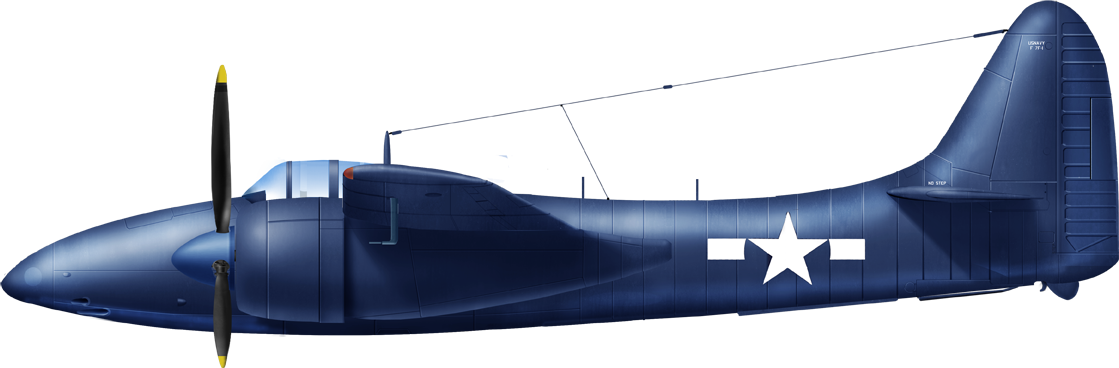
F7F-1 in trials still with its spinners, early 1945.
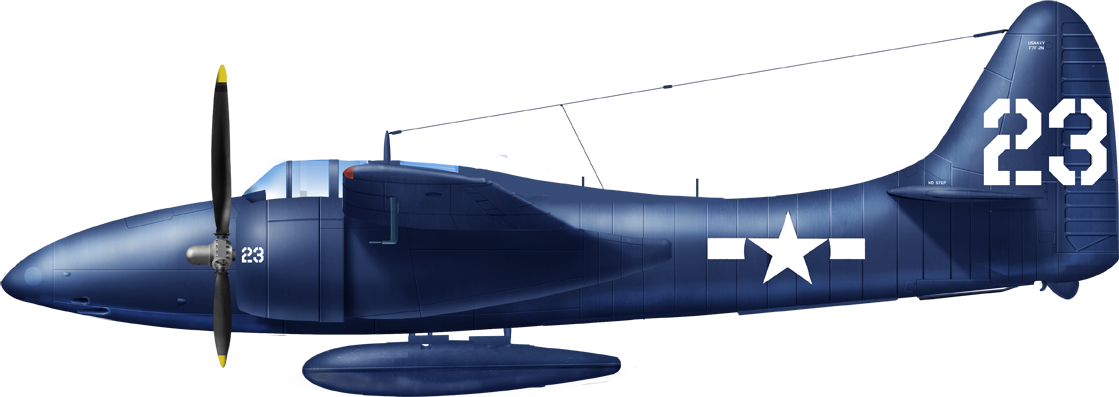
F7F-2N Buno 80569 VF(N)-52 USS Antienam 1945
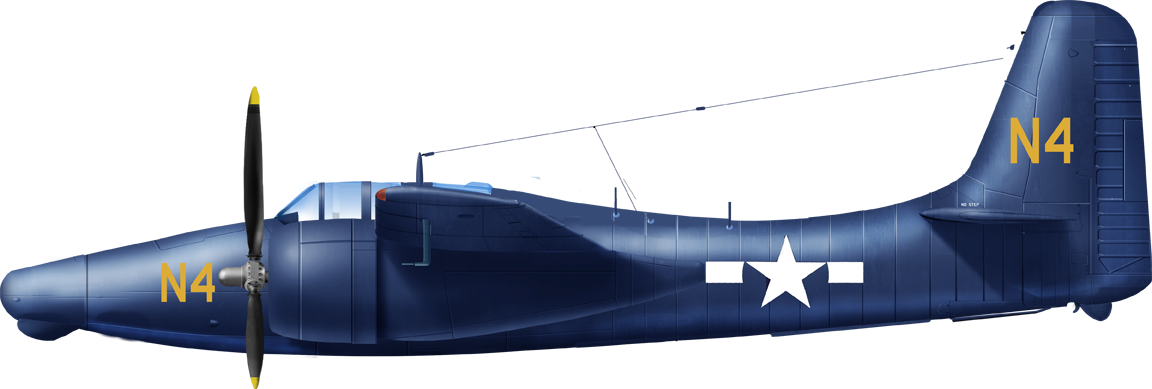
F7F-3N VMF(N)533 Tarawa Dec.1946
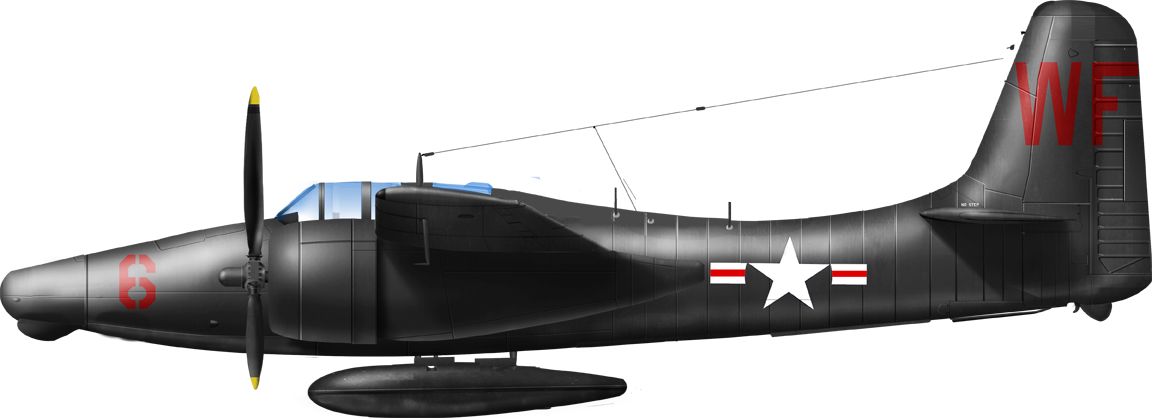
F7F-3N VMF-513 Pyongtaek Korea 1952
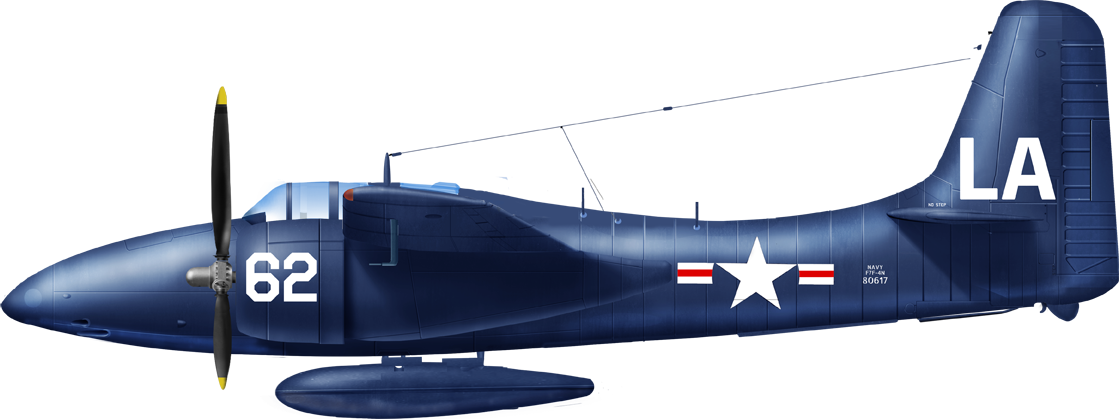
F7F-4N VCN2 USS Kearsage Sept.1947
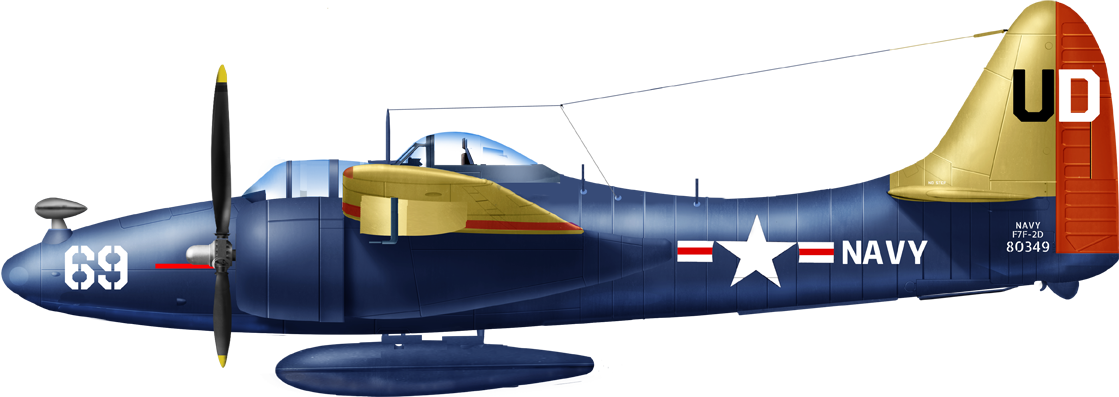
F7F-2D drone command model, USN, 1960s
Additional photos
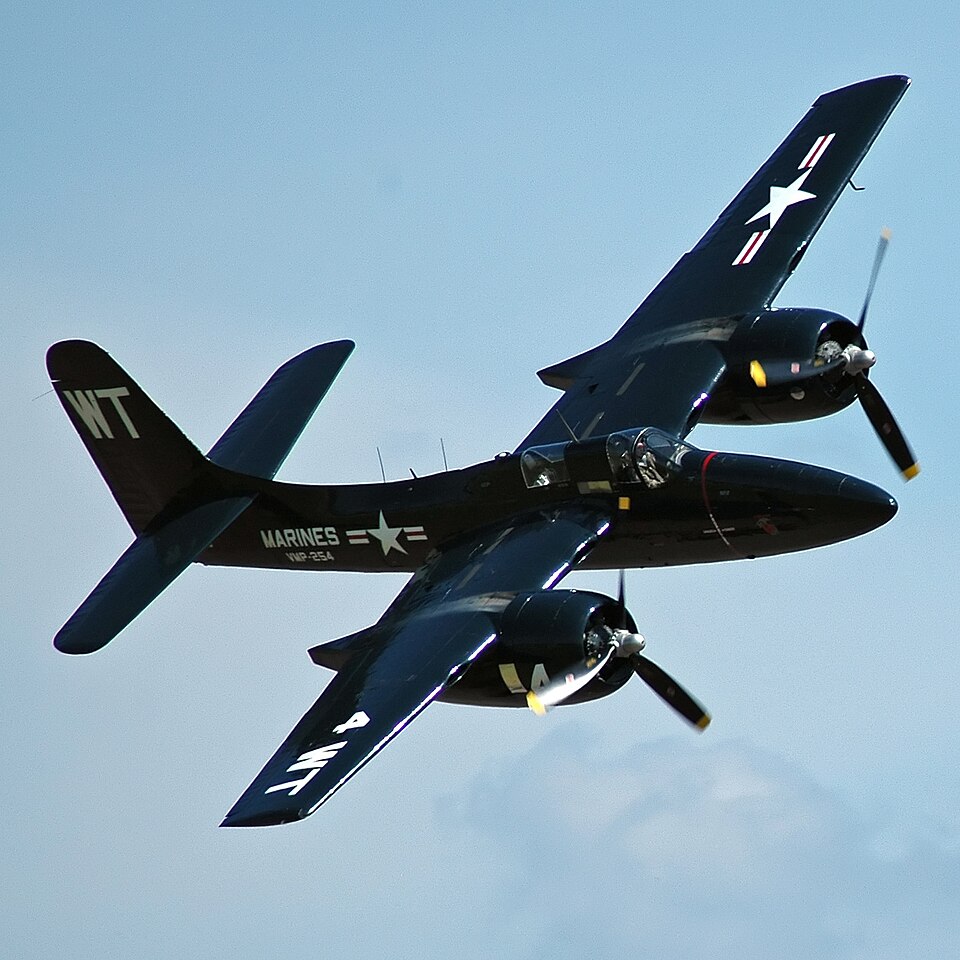
F7F-3P
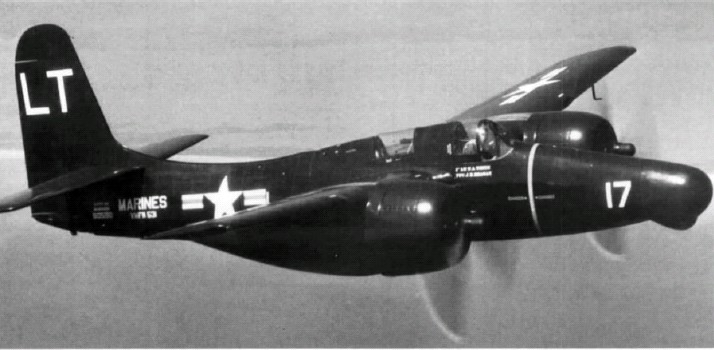
F7F-3N VMF(N)-531
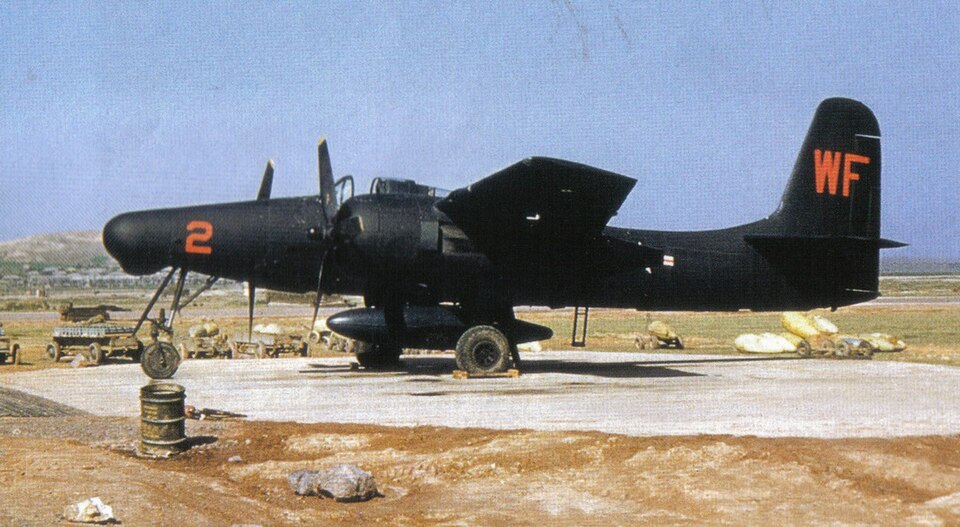
F7F-3N VMF(N)(513 Wonsan, Korea 1952
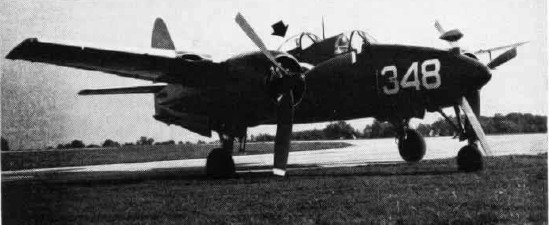
F7F-2F Drone control plane
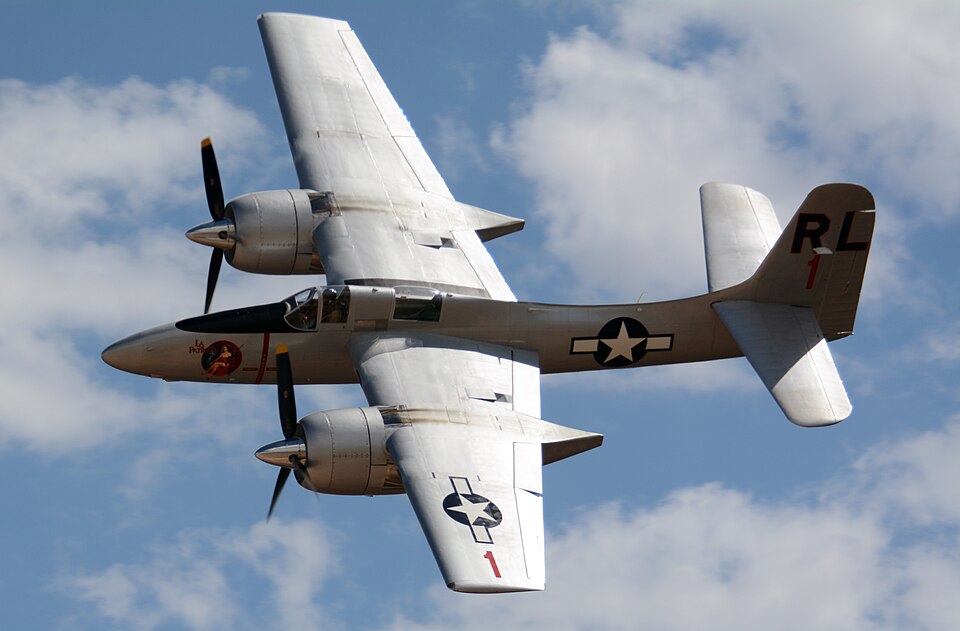
F7F buno N747MX La Patrona 2014 Reno Air Races


Marine Corps night fighter squadron VMF(N)-513 flying F7F-3N Tigercats saw action in the early stages of the Korean War, flying night interdiction and fighter missions and shooting down two Polikarpov Po-2 biplanes.This was the only combat use of the aircraft. Most F7F-2Ns were modified to control drones for combat training, and these gained bubble canopies over the rear cockpit for the drone controller.


U.S. Air Force - Grumman F7F-2D Tigercat - Code (352) – of the 4756th Drone Squadron – Caring Radio Controlled Drones
Books

Links
worldwariiaviation.orgww2aircraft.net
steeljawscribe.com
istory.navy.mil
tailhooktopics.blogspot.com
ww2aircraft.net/
militaryplanes.co.uk
aviastar.org
skytamer.com
airwar.ru
aviadejavu.ru
wings-aviation.ch
jetsprops.com/
airwingmedia.com
wardrawings.be
The model corner
scalemates.com/aviationmegastore.com
britmodeller.com
Video
On IHYLSGrumman F7F Tigercat | Restoring And Flying The Wonderful Aircraft: Dronescape
- Lohner E (1913)
- Macchi M3 (1916)
- Macchi M5 (1917)
- Macchi M7 (1918)
- Ansaldo ISVA (1918)
- Short S.38 (1912)
- Sopwith Baby (1916)
- Short 184 (1916)
- Fairey Campania (1917)
- Sopwith Cuckoo (1917)
- Felixstowe F.2 (1917)
- Gotha WD.2 (1914)
- Friedrichshafen FF 33 (1916)
- Albatros W4 (1916)
- Albatros W8 (1918)
- Hanriot HD.2
- Grigorovich M5 (1915)
- Grigorovich M9 (1916)
- Grigorovich M11 (1917)
- IJN Farman MF.7
- IJN Yokosho Type Mo
- Yokosho Rogou Kougata (1917)
- Yokosuka Igo-Ko (1920)
- Curtiss N9 (1916)
- Curtiss H4 (1916)
- Curtiss H12 (1917)
- Curtiss H16 (1918)
- Aeromarine 39
- Vought VE-7
- Douglas DT (1921)
- NAF/Curtiss TS-1 (1922)
- Boeing FB.5 (1923)
- Boeing F4B (1928)
- Vought O2U/O3U Corsair (1928)
- Grumman FF (1931)
- Akron class airships (1931)
- Curtiss F9C Sparrowhawk (1931)
- Curtiss F11C Goshawk (1932)
- Curtiss BF2C Goshawk (1933)
- Blackburn Blackburn (1922)
- Supermarine Seagull (1922)
- Fairey Flycatcher (1923)
- Hawker Horsley (1925)
- Blackburn Ripon (1926)
- Fairey IIIF (1927)
- Fairey Seal (1930)
- LGL-32 C.1 (1927)
- Fokker T.II (1921)
- Fokker T.III (1923)
- Caspar U1 (1921)
- Dornier Do J Wal (1922)
- Rohrbach R-III (1924)
- Mitsubishi 1MF (1923)
- Mitsubishi B1M (1923)
- Yokosuka E1Y (1923)
- Nakajima A1N (1927)
- Nakajima E2N (1927)
- Mitsubishi B2M (1929)
- Nakajima A2N (1930)
- Nakajima A4N (1935)
- CANT 18
WW1
✠ K.u.K. Seefliegerkorps:
 Italian Naval Aviation
 RNAS
RNAS
 Marineflieger
 French Naval Aviation
 Russian Naval Aviation
 IJN Air Service
 USA
USA
Interwar
 Interwar US
 Interwar Britain
 Interwar France
 Interwar Netherlands
 Interwar Germany
 Interwar Japan
 Interwar Italy
- Grumman F2F (1933)
- Curtiss SOC seagull (1934)
- Grumman F3F (1935)
- Northrop BT-1 (1935)
- Consolidated PBY Catalina (1935)
- Grumman J2F Duck (1936)
- Brewster/NAF SBN-1 (1936)
- Curtiss SBC Helldiver (1936)
- Vought SB2U Vindicator (1936)
- Brewster F2A Buffalo (1937)
- Douglas TBD Devastator (1937)
- Vought Kingfisher (1938)
- Curtiss SO3C Seamew (1939)
- K-class Blimps (1939)
- Douglas SBD Dauntless (1939)
- Grumman F4F Wildcat (1940)
- F4U Corsair (NE) (1940)
- Brewster SB2A Buccaneer (1941)
- Grumman TBF/TBM Avenger (1941)
- Consolidated TBY Sea Wolf (1941)
- Grumman F6F Hellcat (1942)
- Curtiss SB2C Helldiver (1942)
- Curtiss SC Seahawk (1944)
- Grumman F7F Tigercat (1944)
- Grumman F8F Bearcat (1944)
- Ryan FR-1 Fireball (1944)
- Douglas AD-1 Skyraider (1945)
- Fleet Air Arm
- Hawker Osprey (1932)
- Fairey Swordfish (1934)
- Blackburn Shark (1934)
- Supermarine Walrus (1936)
- Fairey Seafox (1936)
- Blackburn Skua (1937)
- Short Sunderland (1937)
- Blackburn Roc (1938)
- Fairey Albacore (1940)
- Fairey Fulmar (1940)
- Grumman Martlet (1941)
- Hawker sea Hurricane (1941)
- Brewster Bermuda (1942)
- Fairey Barracuda (1943)
- Fairey Firefly (1943)
- Grumman Tarpon (1943)
- Grumman Gannet (1943)
- Supermarine seafire (1943)
- Blackburn Firebrand (1944)
- Hawker Sea Fury (1944)
- Coastal Command
- Vickers Wellington (1937)
- IJN aviation
- Yokosuka E6Y (1930)
- Aichi D1A "Susie" (1934)
- Mitsubishi A5M "Claude" (1935)
- Nakajima A4N (1935)
- Yokosuka B4Y "Jean" (1935)
- Mitsubishi G3M "Nell" (1935)
- Nakajima E8N "Dave" (1935)
- Kawanishi E7K "Alf" (1935)
- Nakajima B5N "Kate" (1937)
- Kawanishi H6K "Mavis" (1938)
- Aichi D3A "Val" (1940)
- Mitsubishi G4M "Betty" (1940)
- Mitsubishi A6M "zeke" (1940)
- Nakajima E14Y "Glen" (1941)
- Nakajima B6N "Jill" (1941)
- Mitsubishi F1M "pete" (1941)
- Aichi E13A Reisu "Jake" (1941)
- Kawanishi E15K Shiun "Norm" (1941)
- Nakajima C6N Saiun "Myrt" (1942)
- Yokosuka D4Y "Judy" (1942)
- Kyushu Q1W Tokai "Lorna" (1944)
 Luftwaffe
- Heinkel 114 (1935)
- Arado 196 (1937)
- Me109 T (1938)
- Blohm & Voss 138 Seedrache (1940)
 Italian Aviation
- Savoia-Marchetti S.55
- IMAM Ro.43/44
- CANT Z.501 Gabbiano
- CANT Z.506 Airone
- CANT Z.508
- CANT Z.511
- CANT Z.515
 French Aeronavale
- GL.300 (1926-39)
- CAMS 37 (1926)
- Levasseur PL.5 (1927)
- Potez 452 (1935)
- Loire 210 (1936)
- Loire 130 (1937)
- LN 401 (1938)
 Soviet Naval Aviation
- Shavrov SH-2 (1928)
- Tupolev TB-1P (1931)
- Beriev MBR-2 (1930)
- Tupolev MR-6 (1933)
- Tupolev MTB-1 (1934)
- Beriev Be-2 (1936)
- Polikarpov I16 naval (1936)
- Tupolev MTB-2 (1937)
- Ilyushine DB-3T/TP (1937)
- Beriev Be-4 (1940)
 Swedish Naval Aviation
- SAAB B17S
-
 Skoda Š-328V
  R-XIII Idro
 Fokker C.XI W (1934)
 Rogožarski PVT-H (1938)
WW2
 ☍ USNA
- De Havilland Sea Vixen
- Hawker Sea Hawk
- Supermarine Scimitar
- Blackburn Buccaneer
- Hawker Sea Harrier
- Douglas A4 Skyhawk
- Grumman F9F Panther
- Vought F8 Crusader
- McDonnell-Douglas F-4 Phantom-II
- North Am. A5 Vigilante
- TU-142
- Yak 38 forger
☢ Cold War
✧ NATO
Fleet Air Arm
 US Navy
☭ Warsaw Pact
Merch
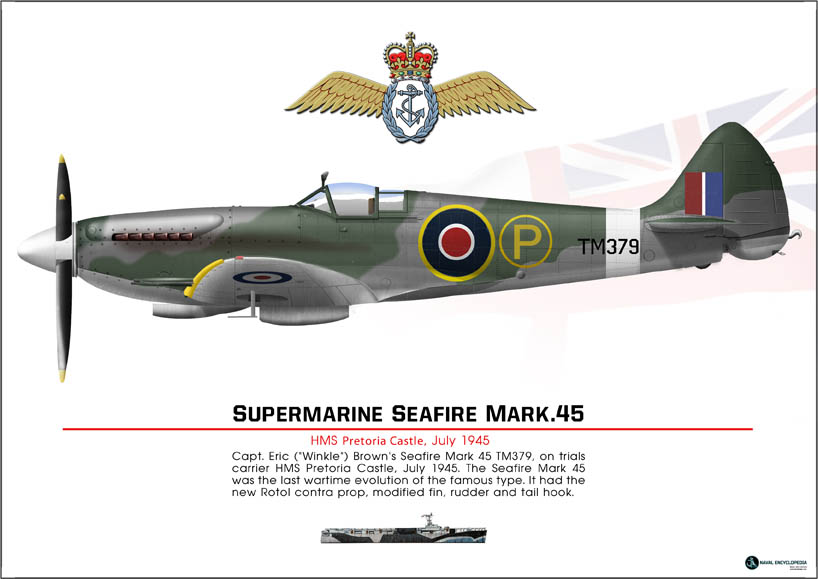
Seafire Mark 45; HMS Pretoria Castle
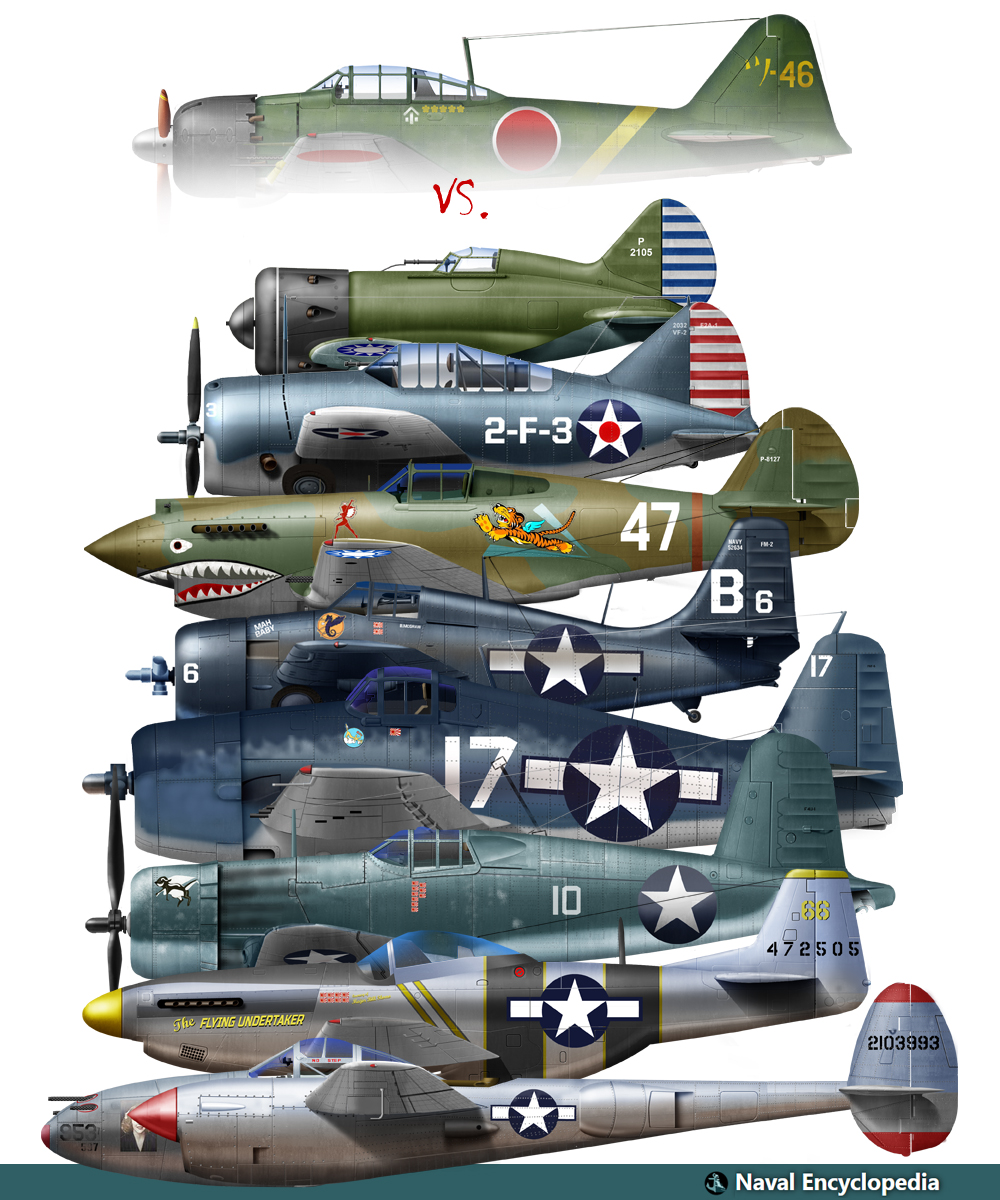
Zeros vs its aversaries
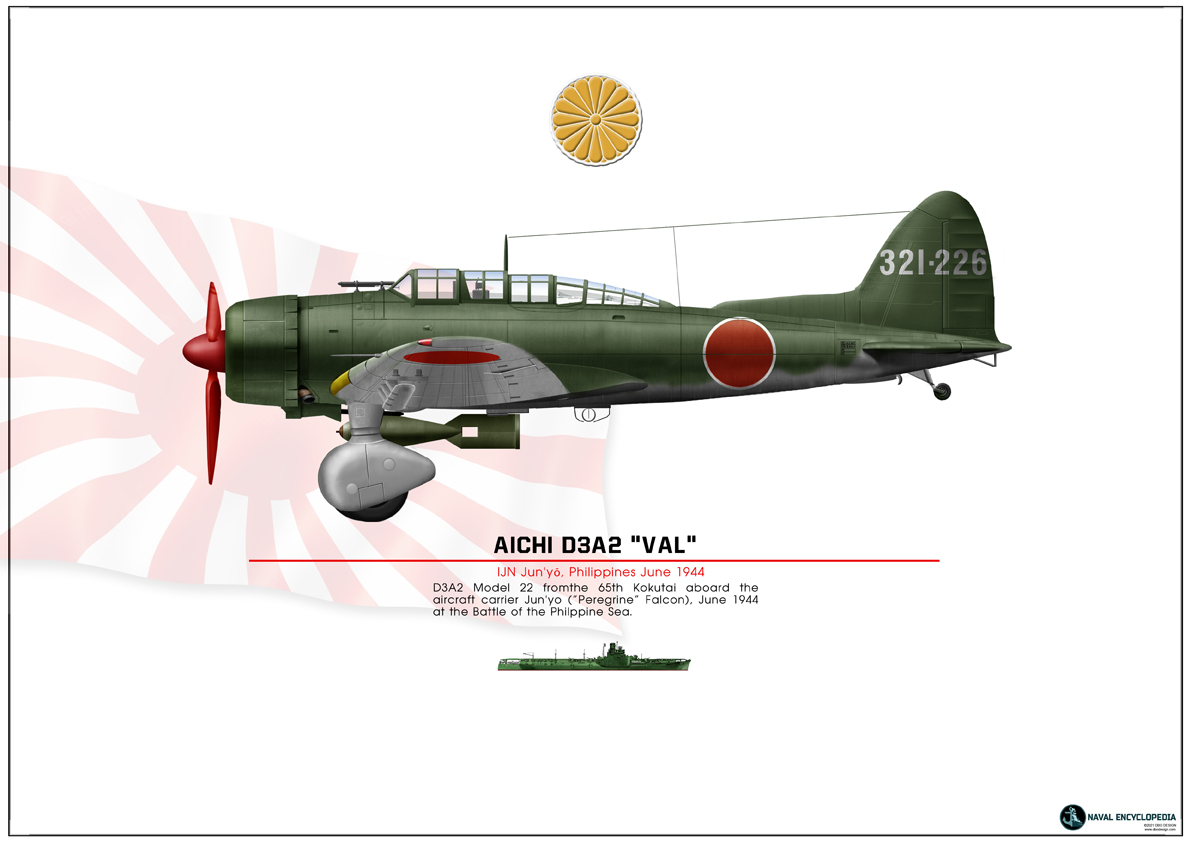
Aichi D3A “Val” Junyo
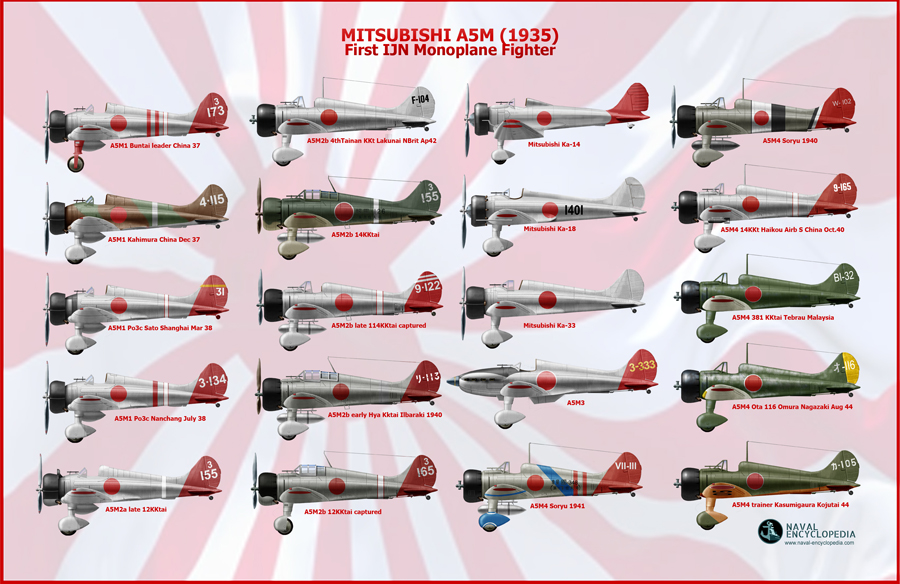
Mitsubishi A5M poster
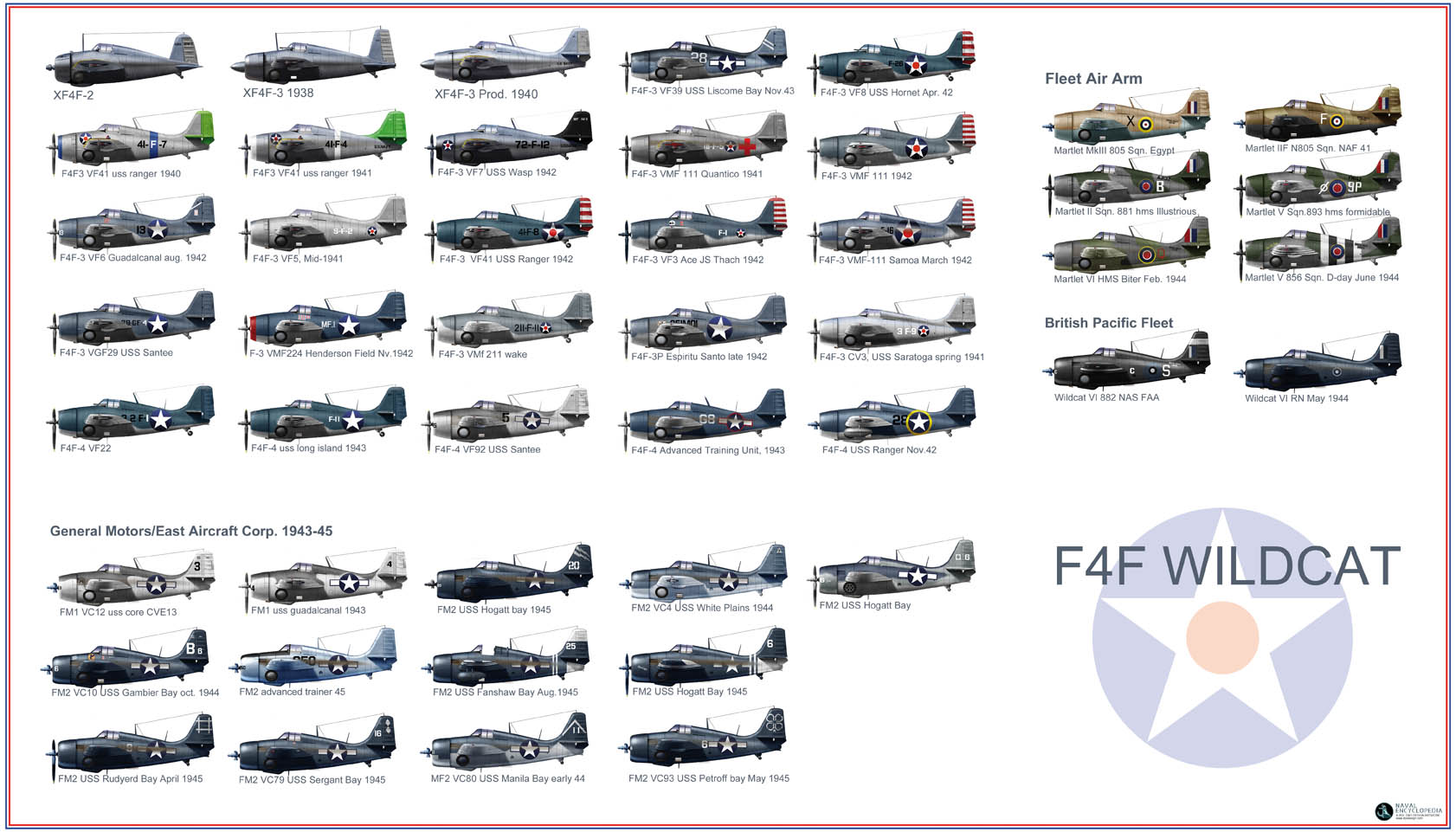
F4F wildcat
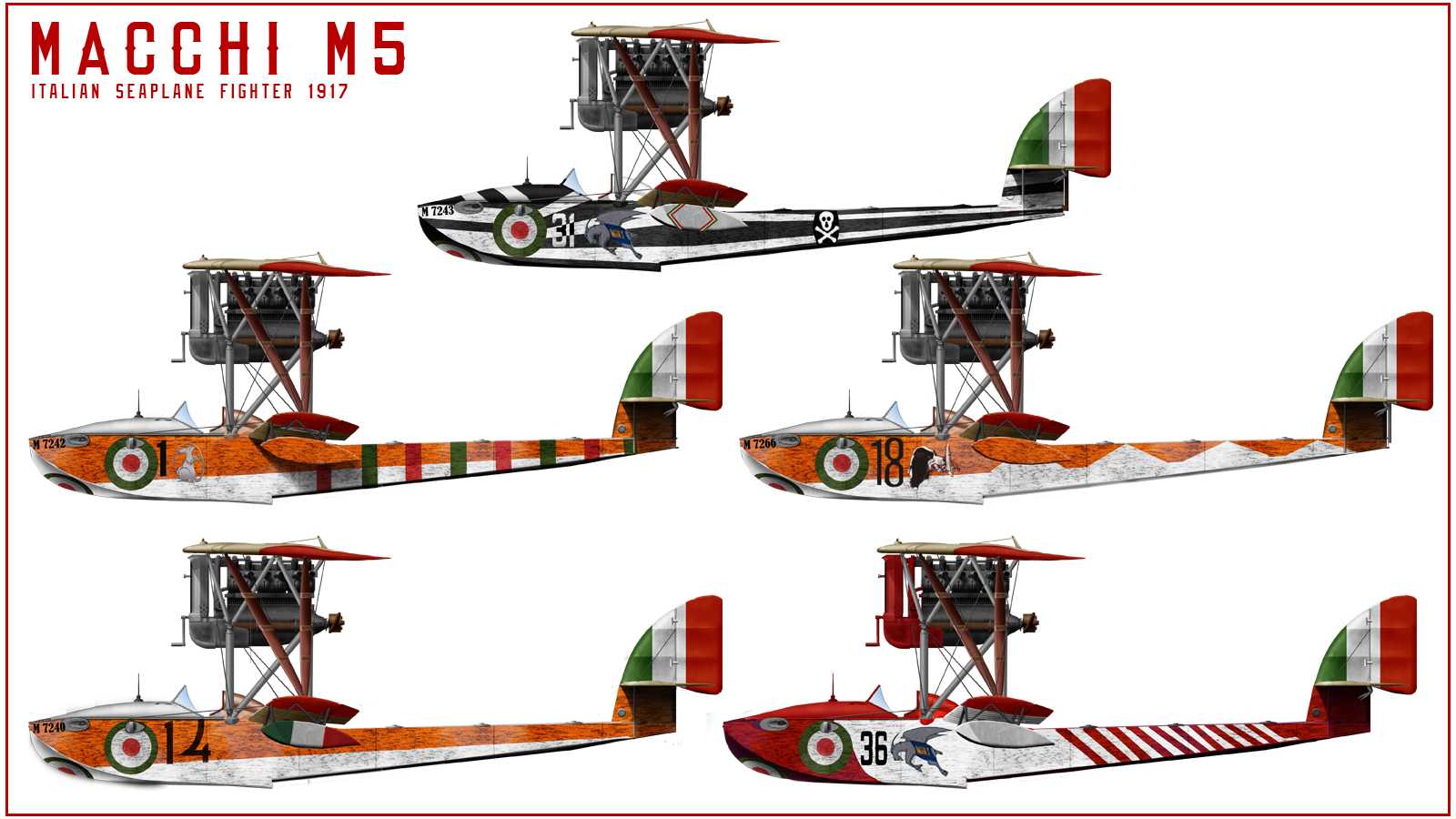
Macchi M5
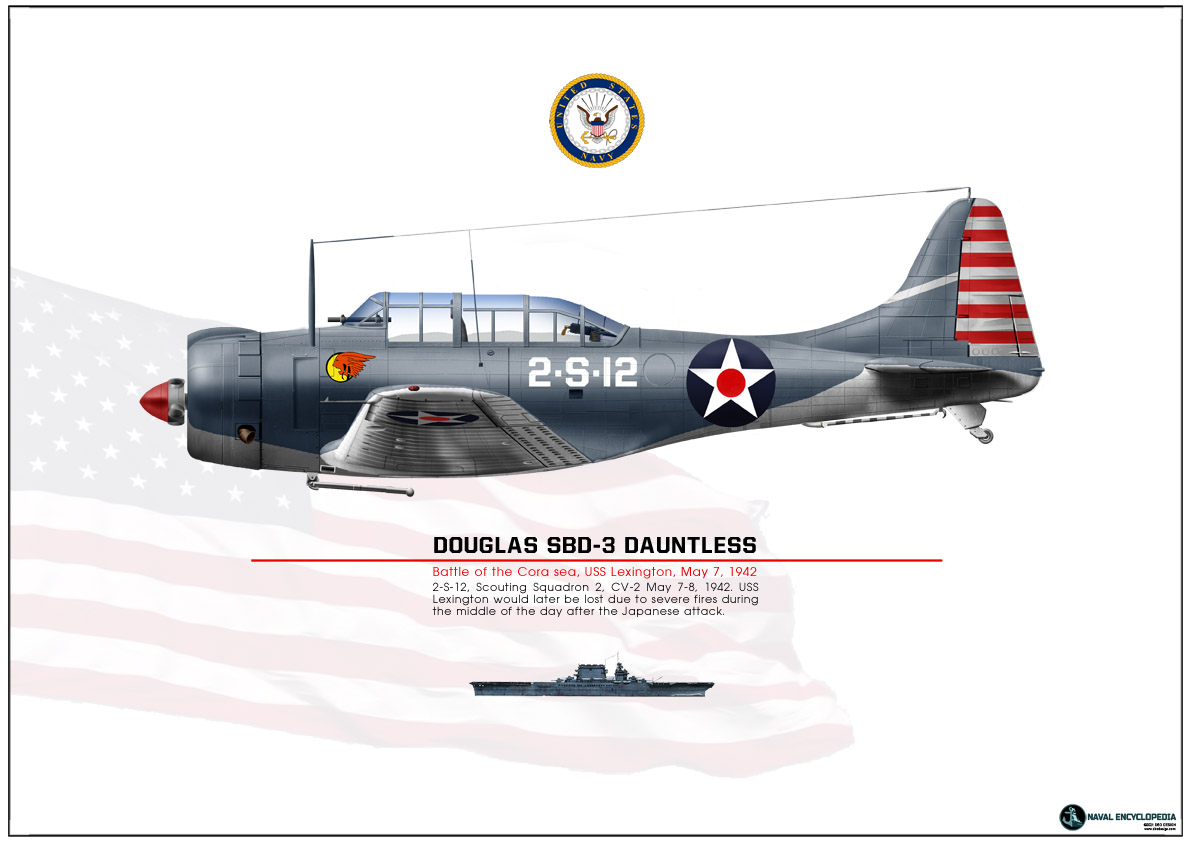
SBD Dauntless Coral Sea
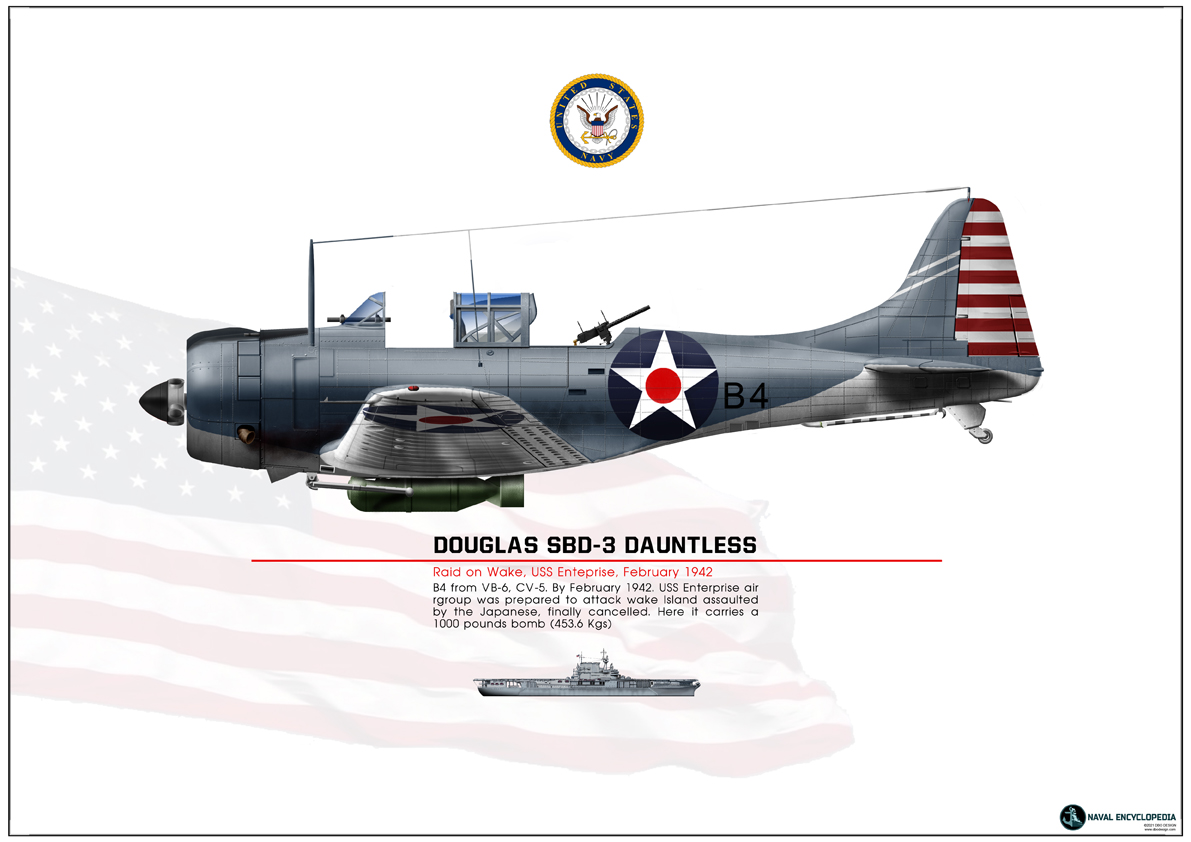
SBD Dauntless USS Enterprise
SBD-4 CV22