Heinkel He 114 (1936)
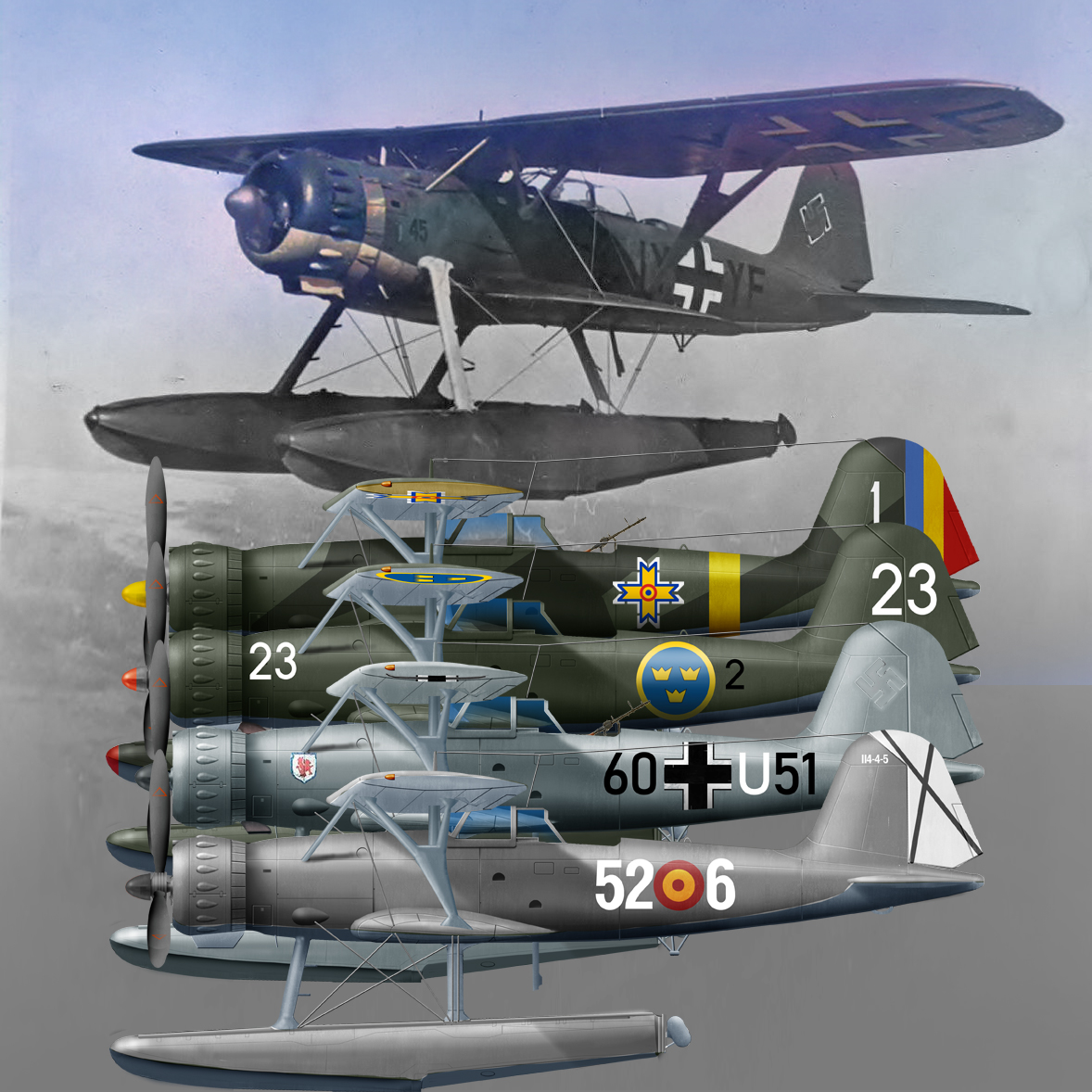
 Observation Floatplane, c118 produced 1935-39.
Development
That summer of 1935, Ernst Heinkel started development of a 2-seat seaplane to replace his own He.60 floatplane in existing squadrons for short range reconnaissance and coastal aviation at large. As it progressed, it received the name He.114. This had been on the demand of the Ministry of Aviation (Reichsluftfahrtministerium – RLM). The He 60 has nothing to do with the He 59, also a floatplane, but a large, 2-engine coastal seapmane bomber and long range reconnaissance biplane.
The Heinkel 42, precedessor of the H 60 (pinterest)
The He 60 (in service by 1933) shared only a few elements with the near-contemporary He-51 fighter (1934) and it proceeded from a long line of seaplanes, from the HD.14 of 1924. The full history of Heinkel seaplanes will be exposed in the generic WW2 Luftwaffe page. Long story short, the He 60 was the first standard catrapulted models on the first cruisers of the Kriegsmarine from 1933 onwards, the five Köln class, as well as the Deustchland class so equipped, and the Scharnhorst class in their early carrer. 361 were built in 8 variants, also exported to Bulgaria, and the Spanish Air Force, active until c1943 in the Luftwaffe alone. But in 1939 they were NOT replaced as expected by the He 114. Why ?

The Heinkel 60 was the standard 1930s ship-based observation seaplane of the Luftwaffe for the Kriegsmarine (pinterest)
Thus, as good as it was, the He 60 was considered outdated by 1935, so the RLM issued to Heinkel a request for the same and in 1939, two prototypes were completed. The original BMW 132 radial engine was not available so the first prototype D-UBAM flew in September 1936 powered by a Daimler Benz inline DB-600A rated for 900 hp. Rresults were disappointing: It was difficult to control both on water or when airborned, and the second prototype (V2) D-UGAT had its tail and ailerons revised, and it was powered by a 740 hp Jumo 210 E, flying by December. Soon, it was catapult launching capabilities of this aircraft. It had some modifications in comparison to the first prototype, like having a larger tail and redesigned floats. Despite some improvements, catapulted from SMS Gneisenau and proved "not suited".

D-IHDG (V4) in flight (pinterest)
Still, Ernst Heinkel being Ernst Heinkel, quite influent with the RLM, he was granted more prototypes: V3 D-IDEG had a 880 hp BMW 132 K/D, new floats and a glazed "shield" as cosckpit, fying in April 1937, but still disappointing in performance. Then V4 D-IHDG flew in August 1937, with many modifications like new wing’s edges, floats and to match more realistic conditions, fitted with a defensive LMG. Then came V5 D-IQRS, again with new floats reinforced enough to be used as skis, on ice. Some sources suggested there were V6 and V7, both with two machine guns, the second in the nose and racked for two 50 kg (110 lb) bombs. Production was finally approved on heinkel's reputation, with ten preseries. See production and fate below.
The list of modifications were considerable. V1 had hydrodynamic performance noted "mediocre", unstable and creating a lot of spray even at low speed, whereas on light seas, the floats dug deep into the water, and the entire seaplane wobbled a lot. The pilot did not even tried high speed. Flight data was poor, but handling was not abysmal. The pilot compained of its small windsield, which could not stop water spray from entering the cockpit and making him blind. V3 received a sliding canopy which solved that issue, and the entire design of the float, from the keel to the flanks and nose were redone. V4 had its wingtips trimmed, span was reduced from 13.8 to 13.6m. To cure the water spray projection, the new floats had concave bottom and a slope inward. V1 tested also heavily keeled floats. However in a test water landing, with strong lateral loads, it crashed.

Official tests at Travemünde forced the Technical Department to issue prototype orders also to Arado and Focke-Wulf. V5 was basically a V3 with trimmed tips. Still the He 114 A-0 preserie was ordered for further tests. The last regular prototype, V8 D-IDEG prefigurated the He.114a-1 with its BMW-132K engine and three-blade variable pitch propeller. Catapult-launches were discontinued after a serie showing catastrophic structural failures, cracks and other issues. The model was just too weakly reinforced for that stress. The 4th in the preserie (A-0) had its fuselage much strenghtened, with new calculations made, and was tested as He.114 V9 (D-IHDG) on catapult at Travemünde. Despite all this, produciton started at Heinkel on the A-1. V2 resuemed its catapult trials with the Kriegsmarine in 1936. Still it had the tendency of wobbling immediately after hitting the water and engineers tried to increased the float's keel, with a dual keel belly. New practical tests were done on the recent battleship KMS Gneisenau, but were disappointng. The floats were soon replaced again. V2 was later put to He.114a standards at Heinkel.
Production
A total of 33 He.114a-1 were delivered, tested first on the Weser with BMW-132N engines rated for 865hp. Some received two-bladed propellers due to shortages. The first arrived at the Naval Aviation School in June 1937. Next the He.114a-2 appeared, with a reinforced fuselage taking V9 modifications into account, plus certifications for catapult launches. Their floats had a wider keel to improve stability, new cockpit canopy, longer but lower to reduce drag. The He.114a-2 had the new BMW-132N, engine at first but the production standard was the BMW-132K with a three-bladed propeller 3.3m wide. The He 114A-1 with its BMW 132Dc was used for training only. The He 114A-2 was the main production shipborne version, but production figures are unknown. This was not the first version reserved to the Luftwaffe.Indeed, after the "B" versions for export, the Luftwaffe order new series of the He 114C-1 (14 built) and the rare C-2 (4 built) designed exclusively for commerce raiders. This was the very last version developed by Heinkel.
Design of the He 114
General Layout

The He 114 might be average for its general agility and performances, but it was still an elegant desquiplane with lower stub wings, generally good aerodynamics, and all-metal construction. The lower planes were semi-elliptical, with a wingspan of 6 meters. The upper wing was more of a rectangular shape with two spars, three sections each, the central one attached above the fuselage thanks to N-shaped racks. They were attached by Y shaped box struts. crucially for the Kriegsmarine, the wings folded back.
The fuselage had a traditional circular cross-section and was monocoque. The crew comprised the pilot, seating just below the cutout in the upper wing, and observer behind, on open air and with a ring mount for an LMG. The two floats were placed on a couple of inverted "V" pole struts, both with steps for the crew to climb in. They were all-metal with compartimentation to limit puncture flooding, had all the bells and whistles of a boat inside waterproof compartments (like anchors, inflatable buoys, flares, survival kits...) and water rudders actioned by the pilot via wiring. The semi-open cockpit recalled that of the Henschel 126.
Powerplant
The power plant for the prototype initially was not Heinkel's choice and came from the technical department as the BMW-132Dc, a development of the licensed Hornet as a 9-cylinder, air-cooled radial model, which was however unavailable so as seen above a Daimler-Benz DB-600A 12-cylinder, liquid-cooled 960hp enline model was used. It drive on later versions a 3-bladed metal Hamilton type, with small spinner. That was a lot of power, and despite this, performances were lack luster.The V2 had the Jumo-210Ea, the V3 had the ВМW-132D, the V4 had the BMW-132K, and the V5 flew with a BMW-132D, then V6-7 had the BMW-132K. They had a normal supply of gasoline overall up to 640 liters, without even speaking of the float tanks, two times 550 liters (1100 liters) and a grand total of 1740 liters, enough for 920 km (570 mi, 500 nmi) which was not stellar either.
The limited output of their engine and heavy weight resulted in a 0.20 kW/kg (0.12 hp/lb) ratio. Top speed was 335 km/h (208 mph, 181 kn) making them easy prey for any fighter of the day, and their service ceiling was pretty poor at 4,900 m (16,100 ft), so no chance to evade any interception either. In case on enemy fighter was spotted they could try to cliumb higher, but at a rate at best of 5.5 m/s (1,080 ft/min), 1,000 m (3,300 ft) in 4 minutes 30 seconds, so they were toast anyway.
Armament
Defensive armament consisted of one MG-15 machine gun on an Arado mount at the rear of the cab with eight 75-round magazines. Under the lower wing were holders for two 50kg bombs. The floats had seven watertight compartments that could be used as fuel tanks as seen above.Variants
By counting all known variants but the A-2, we arrive to 91 He-114 made.- He 114A-0: 656 kW (880 hp) BMW 132Dc engine (10 pre-production)
- He 114A-1: Training version, 656 kW (880 hp) BMW 132Dc engine (33)
- He 114A-2: Main production shipborne version (c50).
- He 114B-1: Export version of the A-2 for Sweden (12)
- He 114B-2: Export version of A-2 for Romania (6)
- He 114B-3: Export version for Romania (12)
- He 114C-1: Reconnaissance Luftwaffe model (14)
- He 114C-2: Unarmed shipborne Kriegsmarine commerce raider model (4).
Specifications He-114A-2 | |
| Crew: | 2: Pilot, Observer |
| Lenght | 11.65 m (38 ft 3 in) |
| Wingspan | 13.6 m (44 ft 7 in) |
| Height | 5.23 m (17 ft 2 in) |
| Wing area | 42.3 m2 (455 sq ft) |
| Wing loading | 86.8 kg/m2 (17.8 lb/sq ft) |
| Empty weight | 2,300 kg (5,071 lb) |
| Gross Weight | 3,670 kg (8,091 lb) |
| Propulsion | BMW 132K 9-cylinder air-cooled radial piston engine, 716 kW (960 hp) |
| Power/mass | 0.20 kW/kg (0.12 hp/lb) |
| Propeller | 3-bladed metal Hamilton type, small spinner |
| Top speed | 335 km/h (208 mph, 181 kn) |
| Service ceiling | 4,900 m (16,100 ft) |
| Rate of climb | 5.5 m/s (1,080 ft/min), 1,000 m (3,300 ft) in 4 minutes 30 seconds |
| Range | 920 km (570 mi, 500 nmi) |
| Ferry range | Uknown |
| Gun Armament | 1× 7.92 MG 15 flexible mount, 2× 7.92 MG 17 nose |
| Armament underwing | 2x 50 kg (110 lb) bombs |
The He 114 Exports and Action
In the Kriegsmarine
He 114 tested on the Gneisenau in 1937, this was the only occurence it ever happened. The seaplane was showcased during the fleet parade that took place near the Kiel Fjord, for a visit of Adolf Hitler and his guest, Admiral Horthy. src facebook, Knorr + Hirth/Süddeutsche Zeitung Photo CC
Pilots still didn't liked the He.114 both when swimming and in the air in 1936, and despite numerous improvements, they never cured its fundamental flaws. In the summer of 1937, the first experimental Arado 196 flew, and were lighyears ahead in all compartments. Thus, the RLM, woefully disappointed with the He.114, decided to keep the He.60 as interim bird until the Arado seaplane entered service.
Heinkel was now back to square one with an ongoing production for a seaplane the Kriegsmarine refused. The only opeation was to sell it abroad. The He.114a-2 was assigned to one of the coastal aviation squadrons to impress potential buyers still, showcasing its suitability. In 1938 the only unit which operated the He 114 was the 1./Ku.Fl.Gr.506, but the very next year, all were returned to the Weser, to be prepared for export. None took part in WW2 under German colors. Hienkel was free to sell it as this asset was considered "no longer confidential". The remainder not exported were used by four German commerce raiders, KMS Atlantis (2), KMS Widder (2) until replaced by Arados.

The great Winner: The Arado 196.
 In Swedish Service
The export version of the A-2 was designated "B" and was sold at low price with a short delivery time. The Swedes signed a contract for 12 He.114B-1 in November 1939, delivered in 1939-40. They were used in "flotilla-2" under the designation S-12 (for "Spaning", Reconnaissance). But only stayed active for three years. Bad for the Atlantic and North sea, it was far better suited to the conditions off Swedish coastline. A further 27 purchased some later. However with the invasion of April 1940, deliveries stopped, these orders were requisitioned by the Luwftaffe, leaving Sweden with none.
However later, an agreement was found, and twelve used and dismantled ones were delivered to the Workshops at Västerås, having a complete overhaul before service and entering the 2nd Squadron, Wing F 2 at Hägernäs. They had a BMW 132 K engine rated for 830 hp of 330 kph, and were defended by a MG.34 7,9 mm. With the new SAAB S 17BS entering frontline service, S 12 ended in training from 1943 and some were lost. In 1945, the six remaining ended as target tugs.
 In Romanian Service
The Romanian government also ordered twelve He.114b-2s, and another twelve fitted with two MG-17 synchronous machine guns in the nose for strafing attacks. They were converted from He.114a-2 according to Romanian requirements and designated He.114c-1. But before delivery, the Luftwaffe requisitioned them before Operation Barbarossa, the invasion of the Soviet Union in 1./SAGr.125. They were used with the He.60 along the Baltic coast and Gulf of Finland. Late 1941, 1./SAGr.125 was renamed and re-equipped, with other models (Arada) so that these He.114c-1 coild be transferred to Romania. They served in the Black Sea with the 101st and 102nd coastal reconnaissance squadrons until replaced by the Ar.196a-3 by late 1943.
 In Spanish Service
Denmark by April 1, 1940 ordered four He.114s for delivery in June-August. In between the German army invaded Denmark s part of Opertation Weserübung and occupation of the country. However these four aircraft were not used by the Luftwaffe either and transferred to Spain, used in the Second World War. Only three were delivered however, to replace obsolete He.60s on ships. Their fate is unknown.
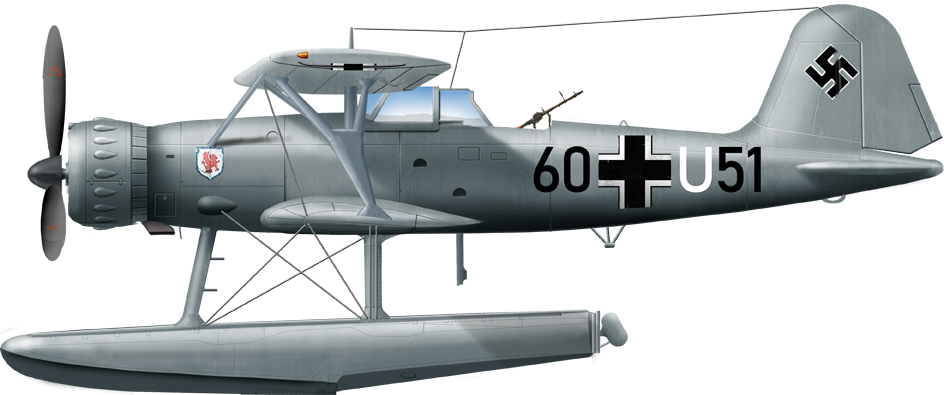
Heinkel 114A-2 of Kü.Flgr. 506, Baltic Coast 1938
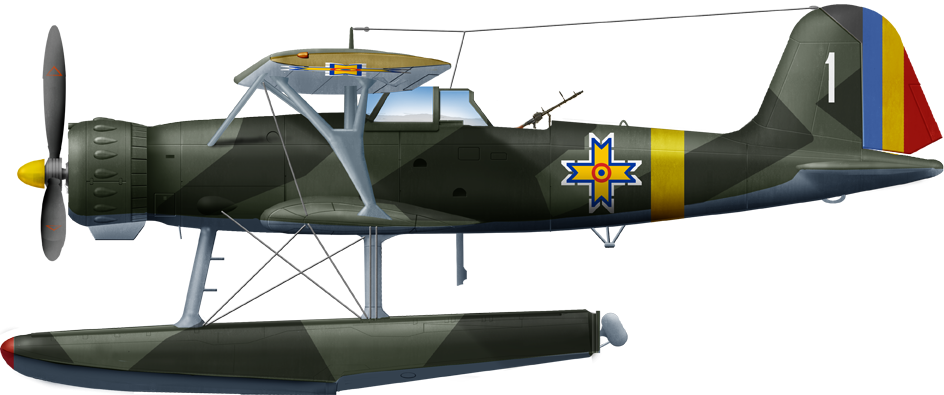
Romanian A-2, Constanta, 1942
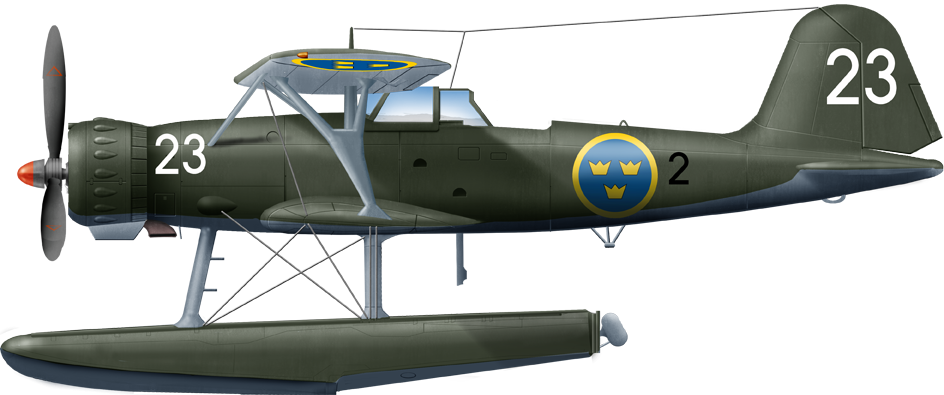
Swedish S12, 1944
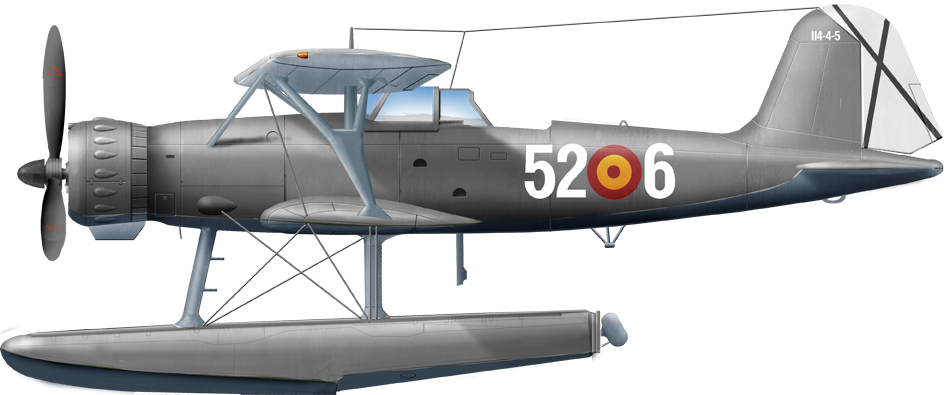
A2 from the Spanish Flotilla de Aeronaves de la Armada (FLOAN), 1945


For all: Pinterest
Sources
D-IDEG on the raider KMS Atlantis
aeropedia.com.au/
ww2aircraft.net
defensa.com/
9thflottilla.de
aviastar.org
alchetron.com
airpages.ru
Heinkel carrier borne aircraft project
plane-encyclopedia.com
en.wikipedia.org
super-hobby.com
- Lohner E (1913)
- Macchi M3 (1916)
- Macchi M5 (1917)
- Macchi M7 (1918)
- Ansaldo ISVA (1918)
- Short S.38 (1912)
- Sopwith Baby (1916)
- Short 184 (1916)
- Fairey Campania (1917)
- Sopwith Cuckoo (1917)
- Felixstowe F.2 (1917)
- Gotha WD.2 (1914)
- Friedrichshafen FF 33 (1916)
- Albatros W4 (1916)
- Albatros W8 (1918)
- Hanriot HD.2
- Grigorovich M5 (1915)
- Grigorovich M9 (1916)
- Grigorovich M11 (1917)
- IJN Farman MF.7
- IJN Yokosho Type Mo
- Yokosho Rogou Kougata (1917)
- Yokosuka Igo-Ko (1920)
- Curtiss N9 (1916)
- Curtiss H4 (1916)
- Curtiss H12 (1917)
- Curtiss H16 (1918)
- Aeromarine 39
- Vought VE-7
- Douglas DT (1921)
- NAF/Curtiss TS-1 (1922)
- Boeing FB.5 (1923)
- Boeing F4B (1928)
- Vought O2U/O3U Corsair (1928)
- Grumman FF (1931)
- Akron class airships (1931)
- Curtiss F9C Sparrowhawk (1931)
- Curtiss F11C Goshawk (1932)
- Curtiss BF2C Goshawk (1933)
- Blackburn Blackburn (1922)
- Supermarine Seagull (1922)
- Fairey Flycatcher (1923)
- Hawker Horsley (1925)
- Blackburn Ripon (1926)
- Fairey IIIF (1927)
- Fairey Seal (1930)
- LGL-32 C.1 (1927)
- Fokker T.II (1921)
- Fokker T.III (1923)
- Caspar U1 (1921)
- Dornier Do J Wal (1922)
- Rohrbach R-III (1924)
- Mitsubishi 1MF (1923)
- Mitsubishi B1M (1923)
- Yokosuka E1Y (1923)
- Nakajima A1N (1927)
- Nakajima E2N (1927)
- Mitsubishi B2M (1929)
- Nakajima A2N (1930)
- Nakajima A4N (1935)
- CANT 18
WW1
✠ K.u.K. Seefliegerkorps:
 Italian Naval Aviation
 RNAS
RNAS
 Marineflieger
 French Naval Aviation
 Russian Naval Aviation
 IJN Air Service
 USA
USA
Interwar
 Interwar US
 Interwar Britain
 Interwar France
 Interwar Netherlands
 Interwar Germany
 Interwar Japan
 Interwar Italy
- Grumman F2F (1933)
- Curtiss SOC seagull (1934)
- Grumman F3F (1935)
- Northrop BT-1 (1935)
- Consolidated PBY Catalina (1935)
- Grumman J2F Duck (1936)
- Brewster/NAF SBN-1 (1936)
- Curtiss SBC Helldiver (1936)
- Vought SB2U Vindicator (1936)
- Brewster F2A Buffalo (1937)
- Douglas TBD Devastator (1937)
- Vought Kingfisher (1938)
- Curtiss SO3C Seamew (1939)
- K-class Blimps (1939)
- Douglas SBD Dauntless (1939)
- Grumman F4F Wildcat (1940)
- F4U Corsair (NE) (1940)
- Brewster SB2A Buccaneer (1941)
- Grumman TBF/TBM Avenger (1941)
- Consolidated TBY Sea Wolf (1941)
- Grumman F6F Hellcat (1942)
- Curtiss SB2C Helldiver (1942)
- Curtiss SC Seahawk (1944)
- Grumman F7F Tigercat (1944)
- Grumman F8F Bearcat (1944)
- Ryan FR-1 Fireball (1944)
- Douglas AD-1 Skyraider (1945)
- Fleet Air Arm
- Hawker Osprey (1932)
- Fairey Swordfish (1934)
- Blackburn Shark (1934)
- Supermarine Walrus (1936)
- Fairey Seafox (1936)
- Blackburn Skua (1937)
- Short Sunderland (1937)
- Blackburn Roc (1938)
- Fairey Albacore (1940)
- Fairey Fulmar (1940)
- Grumman Martlet (1941)
- Hawker sea Hurricane (1941)
- Brewster Bermuda (1942)
- Fairey Barracuda (1943)
- Fairey Firefly (1943)
- Grumman Tarpon (1943)
- Grumman Gannet (1943)
- Supermarine seafire (1943)
- Blackburn Firebrand (1944)
- Hawker Sea Fury (1944)
- Coastal Command
- Vickers Wellington (1937)
- IJN aviation
- Yokosuka E6Y (1930)
- Aichi D1A "Susie" (1934)
- Mitsubishi A5M "Claude" (1935)
- Nakajima A4N (1935)
- Yokosuka B4Y "Jean" (1935)
- Mitsubishi G3M "Nell" (1935)
- Nakajima E8N "Dave" (1935)
- Kawanishi E7K "Alf" (1935)
- Nakajima B5N "Kate" (1937)
- Kawanishi H6K "Mavis" (1938)
- Aichi D3A "Val" (1940)
- Mitsubishi G4M "Betty" (1940)
- Mitsubishi A6M "zeke" (1940)
- Nakajima E14Y "Glen" (1941)
- Nakajima B6N "Jill" (1941)
- Mitsubishi F1M "pete" (1941)
- Aichi E13A Reisu "Jake" (1941)
- Kawanishi E15K Shiun "Norm" (1941)
- Nakajima C6N Saiun "Myrt" (1942)
- Yokosuka D4Y "Judy" (1942)
- Kyushu Q1W Tokai "Lorna" (1944)
 Luftwaffe
- Heinkel 114 (1935)
- Arado 196 (1937)
- Me109 T (1938)
- Blohm & Voss 138 Seedrache (1940)
 Italian Aviation
- Savoia-Marchetti S.55
- IMAM Ro.43/44
- CANT Z.501 Gabbiano
- CANT Z.506 Airone
- CANT Z.508
- CANT Z.511
- CANT Z.515
 French Aeronavale
- GL.300 (1926-39)
- CAMS 37 (1926)
- Levasseur PL.5 (1927)
- Potez 452 (1935)
- Loire 210 (1936)
- Loire 130 (1937)
- LN 401 (1938)
 Soviet Naval Aviation
- Shavrov SH-2 (1928)
- Tupolev TB-1P (1931)
- Beriev MBR-2 (1930)
- Tupolev MR-6 (1933)
- Tupolev MTB-1 (1934)
- Beriev Be-2 (1936)
- Polikarpov I16 naval (1936)
- Tupolev MTB-2 (1937)
- Ilyushine DB-3T/TP (1937)
- Beriev Be-4 (1940)
 Swedish Naval Aviation
- SAAB B17S
-
 Skoda Š-328V
  R-XIII Idro
 Fokker C.XI W (1934)
 Rogožarski PVT-H (1938)
WW2
 ☍ USNA
- De Havilland Sea Vixen
- Hawker Sea Hawk
- Supermarine Scimitar
- Blackburn Buccaneer
- Hawker Sea Harrier
- Douglas A4 Skyhawk
- Grumman F9F Panther
- Vought F8 Crusader
- McDonnell-Douglas F-4 Phantom-II
- North Am. A5 Vigilante
- TU-142
- Yak 38 forger
☢ Cold War
✧ NATO
Fleet Air Arm
 US Navy
☭ Warsaw Pact
Merch
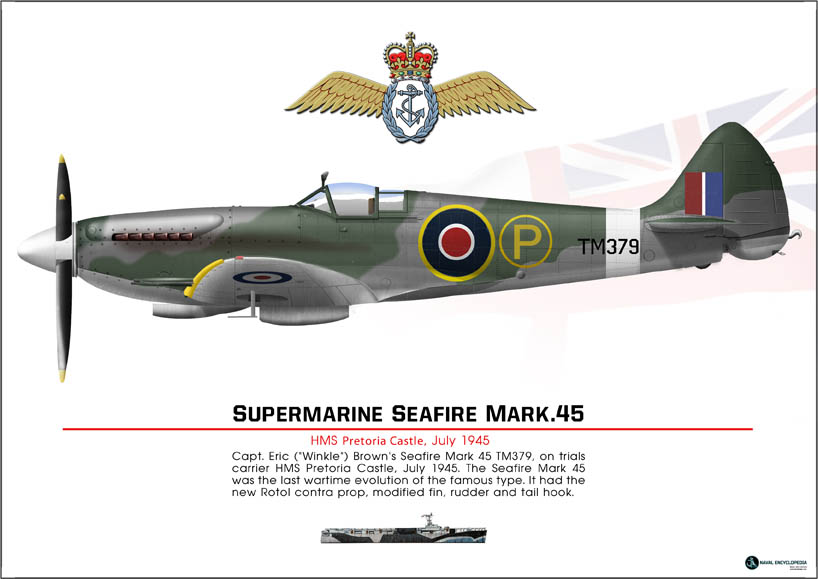
Seafire Mark 45; HMS Pretoria Castle
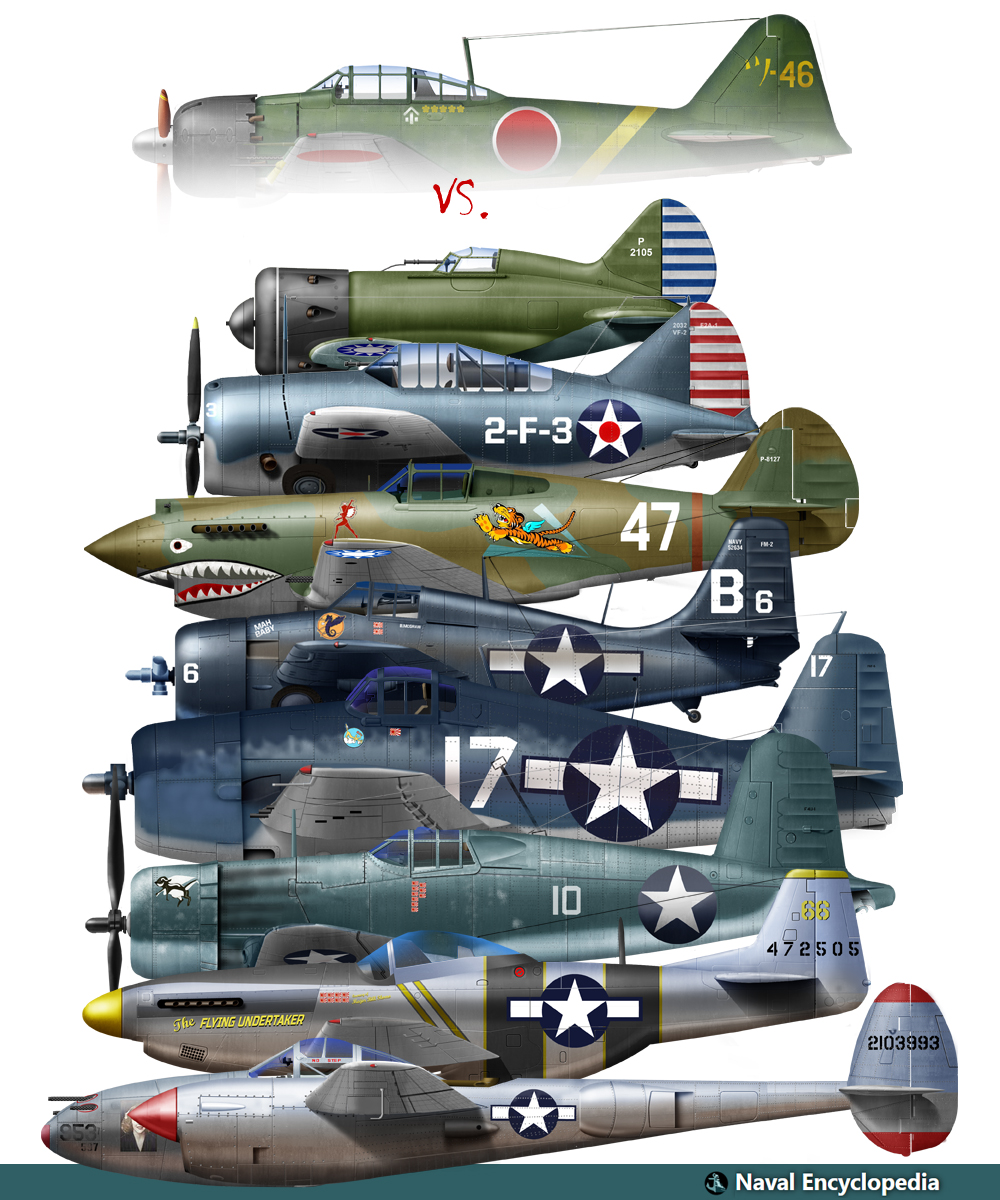
Zeros vs its aversaries
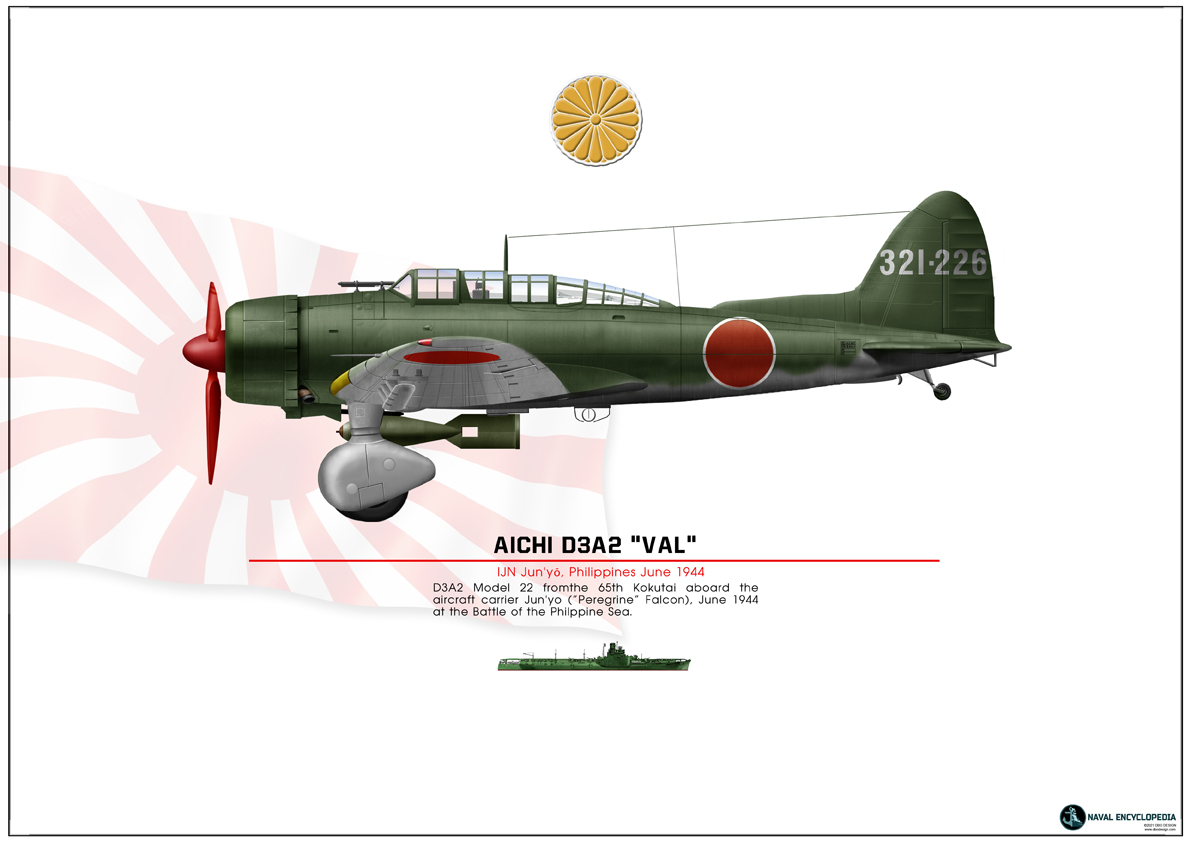
Aichi D3A “Val” Junyo
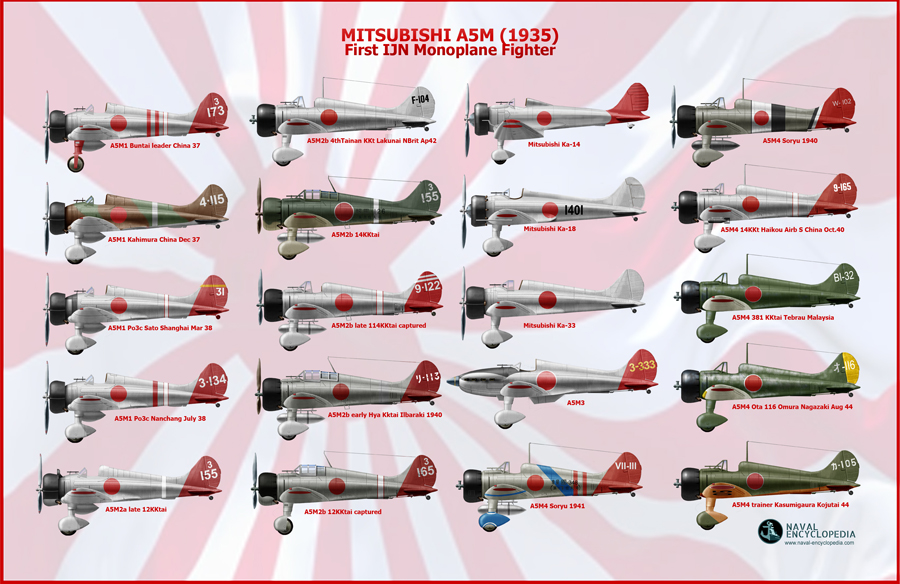
Mitsubishi A5M poster
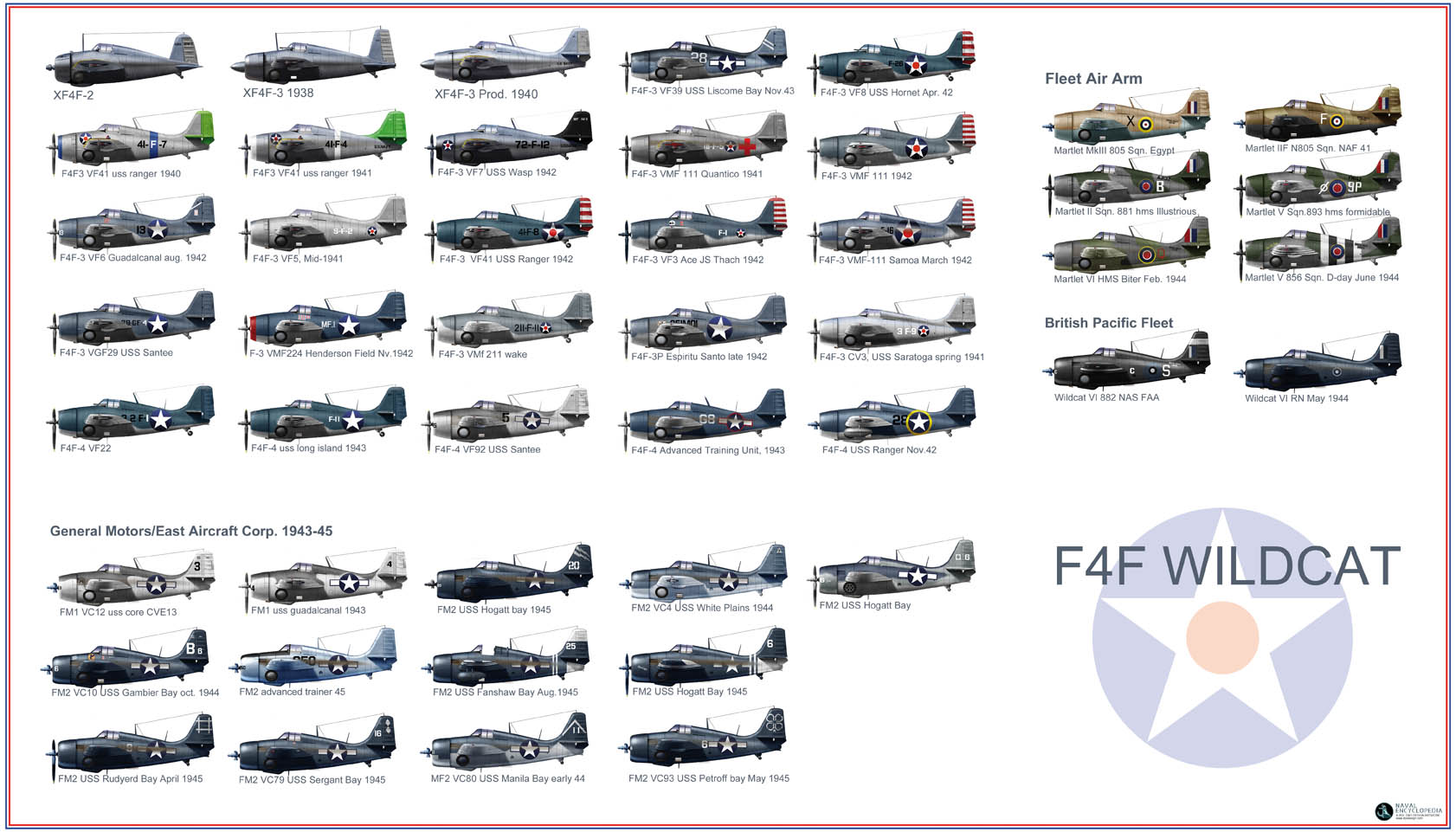
F4F wildcat
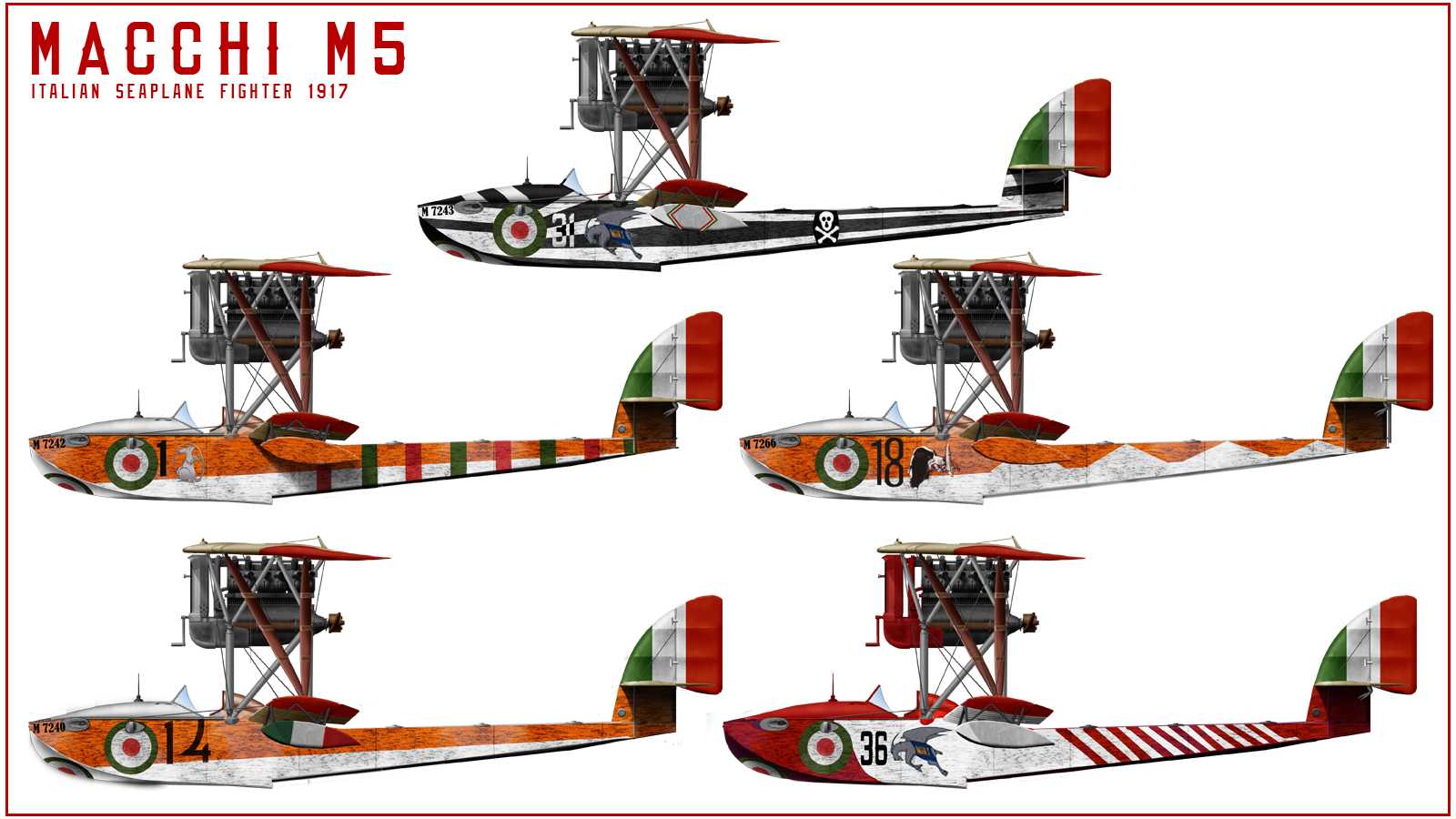
Macchi M5
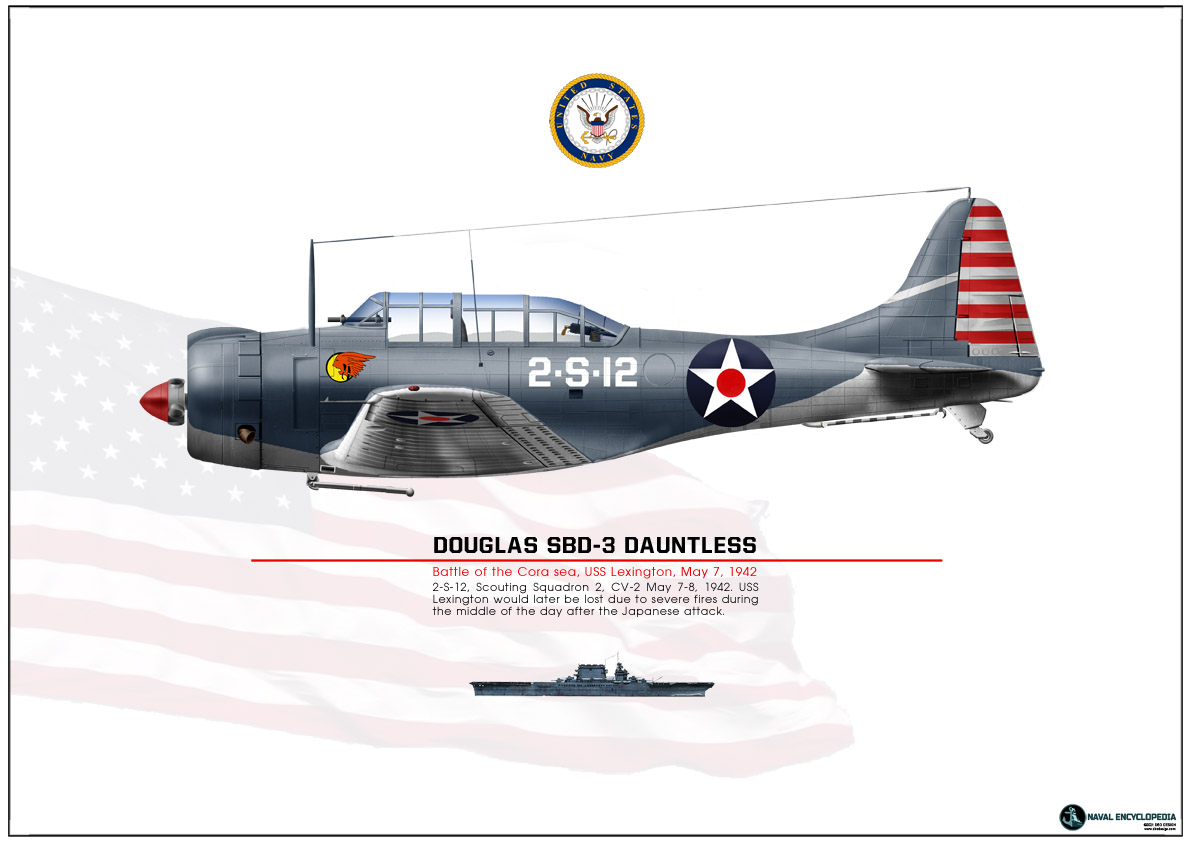
SBD Dauntless Coral Sea
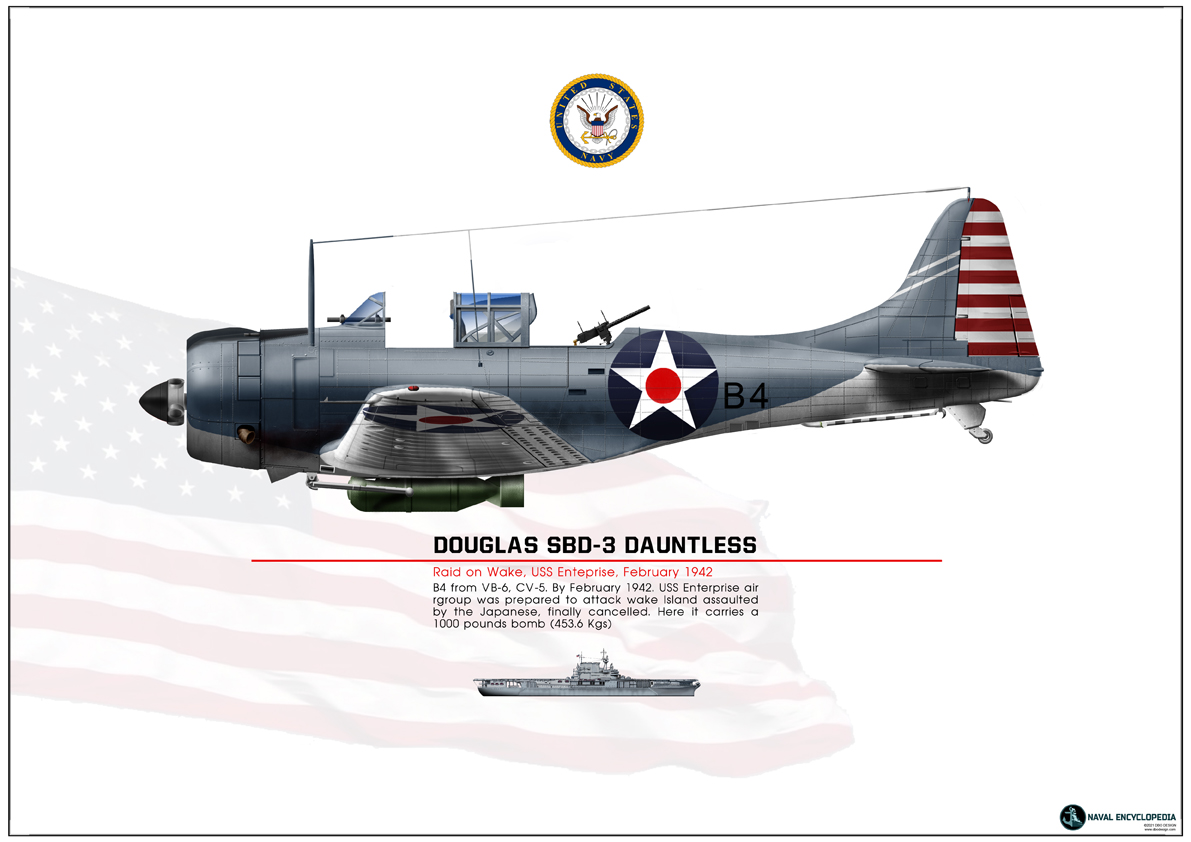
SBD Dauntless USS Enterprise
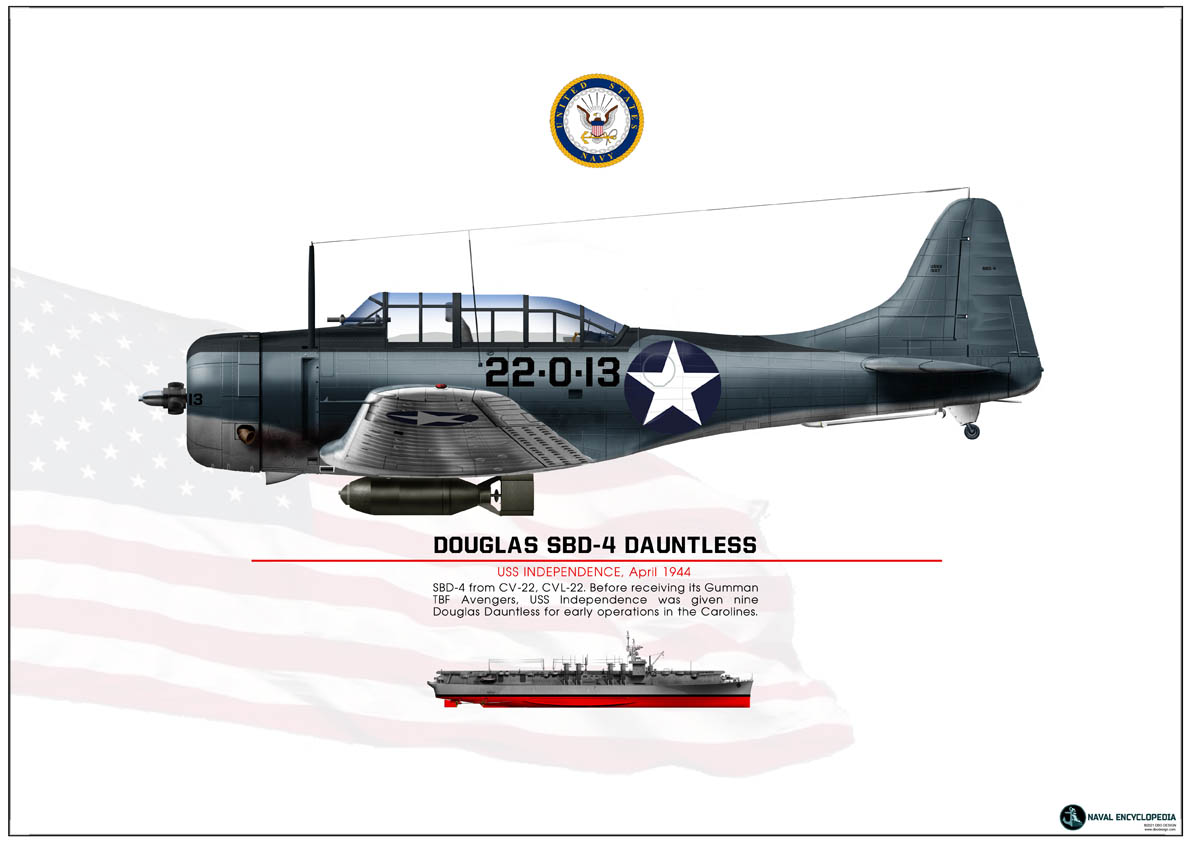
SBD-4 CV22