Curtiss BF2C Goshawk (1933)
 USN Carrier Dive Bomber Fighter 1934-1936 (164 built)
Curtiss last naval fighter
The Curtiss BF2C Goshawk (Model 67) was a 1930s naval land-based biplane fighter that was the last of a long series made by the Curtiss for the Navy. It was also distribtuted internationally as the Model 68 Hawk III. Developed from the very similar F11C-2 featuring a land-based undercarriage, the latter was used by several squadrons in the Navy, was considered sturdy enough for carrier operations, but the undercarriage was also a source of drag. Thus the USN, wanted, if possible that Curtiss integrated a retractable undercarriage on the F11C-2 as it possessed development potential. Grumman, which had some experience back then on these, was tasked to to procure a retractable landing gear to match the Curtiss Goshawk.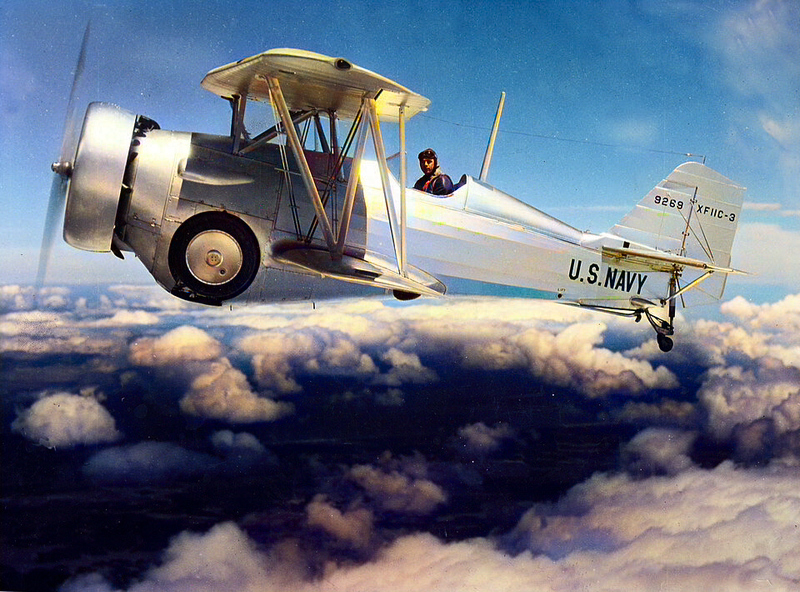
Prototype XF11C-3 colorized
This variant had still the same wooden wing with a flat-bottomed Clark Y airfoil. It was first tested as the XF11C-3 by the Navy, internally the Curtiss Model 67. Its main gear retraction system was inspired by the Grover Loening system of the Grumman XFF-1 prototype. It was simple, rugged, but manually operated. The prototype was tested by the USN in May 1933 with a Wright R-1820-80 radial engine (700 hp/520 kW) and showed 17 mph (27 km/h) faster but with a decrease in maneuverability. For production the wing was replaced by an all-metal frame biconvex NACA 2212 airfoil. The XBF2C-1 (or Model 67A) as tested was was thought to be tough enough to be used as figher and doubling as dive bomber.
⚠ Note: This post is in writing. Completion expected in September 2026.

In the ensuing weeks of testing however a slew of issues appeared and thus, only 27 of the final BF2C were ordered by the Navy. It was deployed from late 1934 to VB-5B, on USS Ranger (green tail). However performances were mediocre and the manually lowered landing gear was a major distraction for the pilots which also needed to keep sight with the flight deck, a task already made difficult by the long nose. The very production machine flew by October 1934 and the last by December. But in 1935, after barely a year in operation, and with alternatives proposed by Grumman itself, the FF and its announced F2F fighter which flew already in 1934 as the XF2F-1 and was demonstrated to the Navy, not only Grumman soon became its primary supplier of the USN, but the BF2C Goshawk became the last Curtiss fighter of the USN.
 Only 27 of these, retired after unflattering Comparisons with the F2F in early 1935. In 1936, the B2FC was relegated to its Naval Air Station. There, the BF2C-1 Goshawk was still the primary aircraft flown by VB-5B, but the Navy had been fed up with its "Vibration" Issue coming from its landing gear and wing structure during steep dive-bombing runs. Following a fatal structural failure during an exercise, the U.S. Navy entirely withdrew the BF2C-1 from frontline fleet service after only a few months of operations. It seems they were parked for training, until a better model, also from Curtiss, the SBC Helldiver biplane, showed more potential as dive bomber.
The last Navy "Hawk"

Curtiss XF11C-3
Until December 1932, Curtiss and Boeing were the primary suppliers of single-seat carrier-based fighters to the U.S. Navy. Initially, when the Navy operated the USS Langley and fielded just two carrier-based fighter squadrons, there was virtually no competition between the two firms. The military purchased aircraft in small quantities from both, aiming to support both alternative sources equally. But the situation changed in 1927, with the commissioning of the new, large and fast USS Lexington and Saratoga. Each could accommodate up to 90 aircraft verus at best 34 on Langley. These became the first true fleet carriers, arguably ones of the best worldwide. The number of carrier-based fighter thus squadrons tripled, and so the Navy’s minimum fighter requirements, estimated at 120–150 aircraft. As the cost of a fighter at the time ranging from $13,000 to $15,000 (Boeing F4B-1 $15,000. Curtiss P-6E $13,000), the total contract value could exceed $2 million.
For this new lucrative contract Curtiss and Boeing turned into ruthless rivals and in the end Boeing won with its F4B-1. and the onset of the Great Depression in 1929 dealt the final blow to Curtiss. Boeing remained with an absolute monopoly and sold the Navy more than 230 F4Bs of various models. Then Grumman entered the chat by December 1932. It started to challeng Boeing's position through the FF-1 all-metal carrier-based fighter with retractable landing gear. The latter was designed by the company.
So by 1933, as Grumman worked already on ts F2F fighter, Curtiss had Navy officials praising the promising F11C Goshawk fighter. 29 modified ones were to be ordered as F11C-2 and to consolidate its position and expand deliveries, Curtiss decided to purchase Grumman's retractable landing gear, into the F11C design. This became the "Curtiss Model 67". The Navy followed this development and approved of it. Engineers were assigned the 5th production F11C-2 (serial 9269). Its main landing gear installed was the same as the design patented by Grumman without much change but to fit the Curtiss model. The wheels retracted into dedicated recesses underbelly, which forced the adoption of a bulgy appendice past the engine.
This was the only way, and broke the streamliness for lowring the drag. The pilot had to operate it, through a chain drive from a cockpit handle. To accommodate these recesses and retraction mechanism plus the landing gear proper, the forward fuselage was much deepened, and its structural weight took 104.4 kg. Balance was reclaculated and for this, the upper wing was shifted slightly forward. The other novelty was a semi-enclosed cockpit, thanks to a small sliding canopy. The pilots usually hated enclosed cockpits, but this one could be left open and gave any good visibility all around.
So 1934, a similar canopy was installed on the BFC-2 fighter-bomber variant. By the spring of 1933, he Navy designated the final prototype XF11C-3 after which it made its first flight in April 1933. On next May 27, it was handed over to the Navy for final evaluation trials, from which a report from naval pilots recorded notably a takeoff weight of 2,181 kg and top speed of 348 km/h, altitude of 2,439 m thanks to its 700 hp Wright R1820-80 9-cylinder air-cooled radial with standard Hamilton all-metal fixed-pitch propeller. Curtiss worked on a ground-adjustable pitch propeller for better flight performance but it was never done. The XF11C-3 outperformed the former F11F-2, by 22.5 km/h in top speed tanks to the lower drag and more powerful engine.
Trials led to modifications such as controllable trim tabs plcaed on the ailerons and rudder and new flights showed all major issues had been ironed out. Thus by February 26, 1934 at last, the Navy ordered twenty-seven F11C-3, to be deployed on the brand new aircraft carrier USS Ranger. However, plans were for Boeing F4B-4 aircraft as fighters and the Curtiss were instead rebranded as fighter-bombers (BF2C-1). For this, the upper wings, with its original wooden structural framework was replaced with a lighter metal one. There was a new mounting point that could be used to release either a 227 kg bomb or 189-liter fuel tank. This new recess sat between the landing gear retraction fairings. There was no fork enabling to sling the bomb below the propeller's radius though, so the dives were never full vertical but always at an angle where gravity took care of the bomb's path,clearning the propeller's arc.
Curtiss's "Flying Jackhammer"
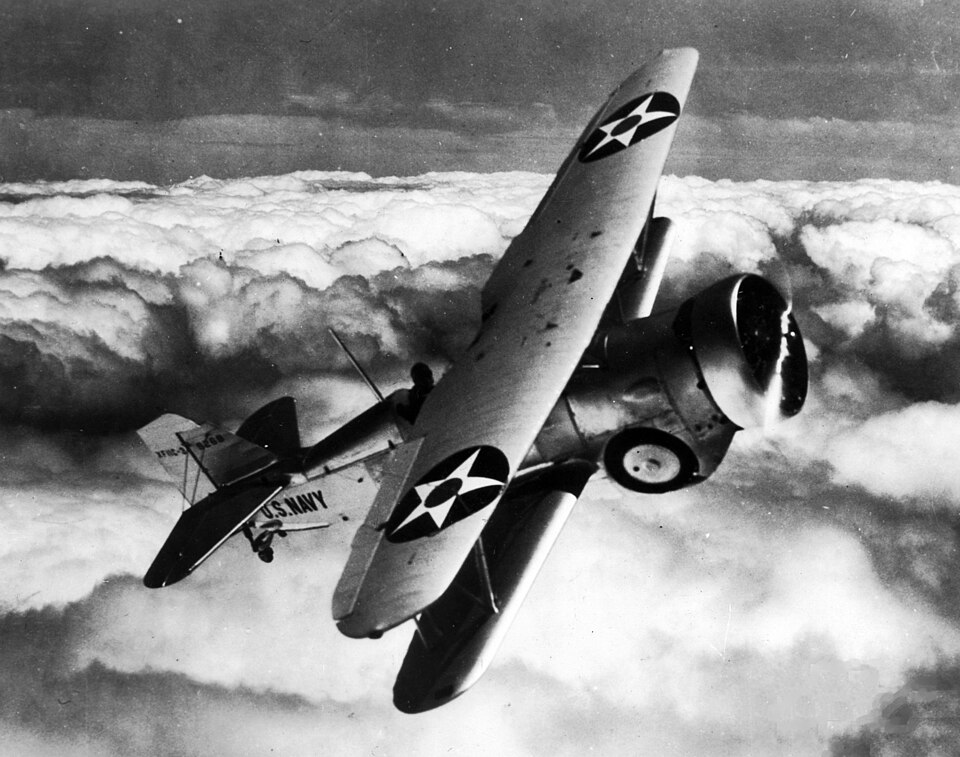
XF11C-2 in flight
However Curtiss was never far away for bad news. In flight testing on September 24, 1934 at NAS Hampton Roads (Virginia), the sole XFB2C-1 crashed on takeoff after an engine failure. The Navy did not reported on this badly as it had previous logged some 254 hours testing. So the order was maintained and the first left the factory floor on October 7, 1934 with its final engine, a R1820-04 radial engine rated for 700 hp at 2,438 meters. Each unit cost the Navy (and American taxpayers) $18,000 and the engine itself represented a third of it.
The first arrived at VB-5B belonging to USS Ranger, the first landings and take-offs for qualifications being performed in November 1934. This was the first time the Navy had a versatile aircraft, capable of operating in the same mission as fighter and dive-bomber. In the fighter configuration its takeoff weight was 2,068 kg for a top speed was 362 km/h but when carrying a bomb it took 241 kg, and was still able to reach 346 km/h.
However if Navy tests pilots were please with the model on land, with enough rotations on USS Ranger, a report lambasted the model. Pilots roasted the Goshawk. They expressed their frustration on the report on a major issue:
In cruising flight, wings would vibrate so much the BF2C-1 received the nickname of "flying jackhammer". This was never identified in flight tests and could only be reproduced in dedicated trials. In the end, it was solved. The liquid-cooled V1570 inline engine mounted in front had its airflow affecting the airframe but the tests proceeded with a smaller, earlier engine and these oscillations never occur. There was a resonance between natural frequencies of the engine and wings.
The second issue was common to it and the earlier model, and was related to the poor view from the cockpit, notably to land on any deck. An issue solved by Grumman and partly solved by Curtiss on the SBC dive bomber.
The third issue was a tail assembly vibration when a load was carried on the centerline pylon. This was fixed with an annular airflow stabilizer mounted ahead, looking like a retractable oil cooler.
To fix the wing vibration issue, Curtiss engineers attached weights to the wingtips to alter the harmonic oscillation frequencies. But flight tests showed that now the overloaded struts and bracing wires started to to fail. The test pilot had to land quickly to avoid all cables to part. Curtiss then proposed to swap the new metal-structured wings for export models (Hawk III) wooden wings which never shown such oscillation. However the Navy reclined at the cost of such conversion. Months went on as all this happened, and in between the Navy ordered a large batch of Grumman F3F fighters. Plus, the Navy ordered from Curtiss a deidicated dive bomber, the SBC Helldiver (the first one).
Design of the BF2C-1 Goshawk

Plans sets src
The aircraft was a classic single-engine, single-seat, sesquiplane of mixed construction, like the previous model, but now featuring retractable landing gear. The fuselage was divided into three main sections closed by bulkheads, fireporoof forward past de engiune, middle with the cockpit and aft (tail). The fuselage had the same truss structure featured by Curtiss fighters, consisting of welded steel tubing. There were duralumin L-section stringers as longitudinal members on the center add aft of the fuselage sections for rigidity as the forward section was all metal.
The engine, instruments, fuel, oil system were part of the same main forward engine mount. The engine was enclosed also in a quick-release duralumin NACA-type cowling, well profiled. Just before the cockpit were installed the main the oil tank and two fuel tanks, and both either sides and below in a profile bulge were located the main landing gear retraction wells, as well as two Browning 0.3 inches machine guns with ammunition boxes. This was a budy section.
The landing gear retraction and extension mechanism was located inside a structural bulkhead and between there was a central recess with mounts for an external fuel tank or a 227 kg bomb used in dive bomber configuration. There were quick-release duralumin panels for access to the machine guns, as well as nearby oil and fuel tanks, and others to access the main landing gear retraction mechanism.
Now the cockpit had a classic raised seat with some equipments below and parachute above, and the pilot saw through a forward 3-faced windscreen made of Plexiglas. Through the central one was the adjustable, long telescopic sight mounted on two struts ahead for the pilot to aim. His head was protected on both sides by a canopy section sliding rearward for access, or just whenthe pilot wanted to for better visibility. There was thus a fully enclosed cockpit, useful in altitude and winter. The height-adjustable seat consisted was framed in duralumin and the headrest had a soft and leather-covered cushion. However there was no neck armor protection.
The main landing gear comprised pyramidal style tubes assemblies down to the roadwheels, and the tubes had oleo-pneumatic shock absorbers. The retraction and extension system was activated by the pilots in both sense, after taking off and before landing by pulling the gear legs using a chain drive operated by hand crank on the left side. This was a long operation that forced the pilot to dive inside the cockpit and miss his forward view. The wheels were stowed into dedicated recesses and the gear struts were attached to a reinforced structural bulkhead doubling as firewall. The tires had pneumatic shoe brakes. At the rear was a free-swiveling tailwheel with rubber shock absorption. It was normally faired over.
Instrumentation was located on the central instrument panel plus lower central panel with classic controls and equipment largely borrowed to the previous model's instrument panel, such as most indicators, and active elements like the throttle lever, stabilizer incidence control wheel, the latter placed on the sidewalls. Inside the fuselage, past the cockpit, it was framed in duralumin but fabric-covered and the upper portion of the tail section met the pilot's headrest section. The dorsal spine covering this area was made of very thin duralumin panels. Navy standard equipment included a survival kit, an inflatable rubber raft completed with canisters for food and drinking water supplies, signal flares all beneath a removable panel. The Radio was installed in the lower part of the aft compartment under a rectangular, quick-release access hatch to the left.
Lifting surfaces
 The aircraft was configured as a biplane of unquel span wings (sequiplane) with an all-metal structure, upper wing with their center section and outer panels in all-metal (originally wood) and internal structure making from two spars plus a series of ribs. The wing spars were of the duralumin box-girder type, long to make but rigid, flexible and very light. The ribs were plain metal. There were compartments at the wingtips of this upper wing with flotation bags containers in rubberized fabric to maintain the aircraft after a forced water landing. They were inflated from compressed air valve to the right of his seat. The trailing edge of the upper wing's center section also had cutout for upward visibility.
The lower wing was smaller and had right and left panels, overly similar in construction but having two reinforced sections to support racks for 45-kg bombs. The upper and lower wings were interconnected by two N-struts with more between the fuselage and upper wing. There was a Pitot tube for airspeed on the right wing strut. There was full wing bracing with paired steel cables forming X. Only the upper wings had ailerons, control used a rigid linkage system with push-rods from the lower wing. If the the wings were fabric-covered, ailerons had a duralumin skin.
The tail mixed elements: The structure and its framework made of spars and ribs was all in aluminum alloy. The tail surfaces were fabric-covered. The rudder also had aerodynamic horn balancing. There were trim tabs on the rudder and elevators. The stabilizerhad its incidence angle adjusted back to base via a screw. Stabilizer and fin were braced with tension cables and control was cable-operated.
Engine & Performances
The aircraft's engine was the Wright R-1820-04 Cyclone, a nine-cylinder air-cooled engine but it mostly lacked an exhaust manifold, with each cylinder equipped with an individual exhaust stack directing exhaust gases away in the airflow. There was a throttle lever on the left side. The propeller was al all-metal two bladed variable-pitch Hamilton Standard. Fuel stored as seen above in front of the cockpit but in two unprotected tanks for 418 liters total. A hit in them and the pilot was likely to be greeted by a wall of flames, despite the bulkhead.The forward lower tank had a capacity of 209 liters, behind the main structural bulkhead protecting them from the engine's heat. The rear upper tank was the same in capacity, but locally further aft and slightly above the forward tank, but not interconnected and with separate filler necks. Fuel was consumed alternately both in flight to keep balance. In addition they wree placed to the center of gravity. So handling characteristics remained the same even with tanks half full or almost empty. Most USN fighters also carried the optional 189-liter belly drop tank alternative to a 227 kg bomb. There was a 34-liter oil tank behind the engine and forward of the fuel tanks.
The BF2C-1 had a max speed of 362 km/h (225 mph), and a range of 917 km or 570 miles. It had a Ceiling of 39,500 ft (12,000 m) and a Climb Rate of 2,303 ft/min (11.70 m/s) light on trials. All this was degraded in full bomber configuration of course.
Armament
The BF2C-1 was armed with two 0.3 inches of 7.62mm air-cooled Browning light machine guns. They could carry underbelly a single 215 kg of 227 kgs bomb or up to four 53kg bombs under wings. The machine guns were synchronized in the fuselage with ther Colt-Browning ammunition supply of 600 rounds. The four optional underwing bomb racks could accomodate from 45.3 kg to 52.6 kg bombs, complementary of the single 227 kg bomb on the under-fuselage hardpoint in dive bomber configuration. This made for a total of five bombs and up to 435 kgs, nothing to scoff at for such a small model. However as we saw, dive bombing was quite rare, and mostly was tested only and never performed in practice exercises due to severe vibrations. The export Hawk III seemingly never used this option and was used only as a fighter. Which is a pain as the Thai Air Force for example could have dive bombed to oblivion the French fleet at Kho Chang in 1941, made of a light cruiser and a few avisos and older vessels.⚒ Curtiss BF2C specifications 1934 | |
| Dimensions | Wingspan 9.60 m (32 ft 6 in), fuselage 7.01 m (23 ft); Height 3.30 m (11 ft 10 in) |
| Wing area | 24.34 m2 (261.99 sq ft) |
| Weight, empty | 1,529 kg (3,371 lb) |
| Weight, Max TO | 2,066 kg (4,555 lb) |
| Propulsion | Wright R-1820-04 Cyclone 9-cyl. AC radial: 700 hp |
| Propeller | 2-bladed constant-speed propeller |
| Speed, max. | 362 km/h (225 mph) |
| Ceiling | 39,500 ft (12,000 m) |
| Climb Rate | 2,303 ft/min (11.70 m/s) |
| Range | 917 km (570 miles) |
| Wing load | 17.4 lb/sq ft (or 84.8 kg/m²) based on its gross weight |
| Power/mass | 0.17 hp/lb (or 278 W/kg) on its gross weight |
| Armament: | 2 × 0.3 in (8 mm) Browning MGs, Bombs/drop tank (3 racks) |
| Crew: | One Pilot |
The Goshawk in the U.S. Navy
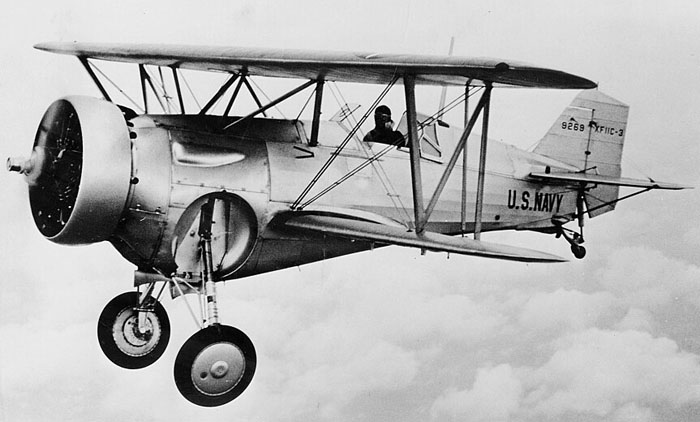
F11C Goshawk
As seen above, 27 Curtiss BF2-C Goshawk were ordered, and deployed on USS Ranger as fighter bombers in on VB-5 from October 1934. In addition to their central payload harpoint, and two 0.30 cal. Browning machine guns furing though the propeller arc they had two more hardpoints for 500 lb (230 kg). But as soon as carrier pilots flew it, they noted serious issues. The wing vibration was so bad, pilots were constantly adjusting the output to avoid resonance with the engine, and no standard cruise speed could be sustained as they would result in such shaking the flighter would just dislocate itself apart. That, plus the underpylon vibration issue, the bad visibility when landing, and the issue of manually lowering the undercarriage, which kept the pilot busy at a critical phase, made it unpopular very quickly. The served just for a couple of months before being withdrawn. Boeings F4Bs took their place until the F3F came in.
No more BF2C-1s were ordered. They were being reassigned to shore-based units. In comparison the older F4B-4 was still better in many areas. The remainder operated on land; at the naval air station for training, with the last withdrawn from service from VB-5B in February 1935. The F4B-4 was soon itself replaced by the Grumman F3F. The underdog company had definitely solidified its entry as primary provider of the Navy, dethroning Boeing and Curtiss. Still, this was a failure overall for Curtiss (one of many to come, that with cripple the company's reputation after WW2).
This had serious repercussions as the Navy Department expressed its frustation as Curtiss being not able to provide a carrier-based fighter meeting operational standards. Curtiss still was not done and in 1935, proposed the BF2C-1 for training but the conversion was rejected. The previous fixed undercarriage model also had issues of its own. By contrast the Grumman F2F and F3F had everything the Navy wanted and needed. The comparison was damning.
Exports: The Hawk III's success
But what Curtiss lost to the Navy, it gained on the export market. Indeed, the "land-based" F11C-3 was distributed as the "Hawk III". It had no arresting hook, the new three-bladed propeller and a simpler, cheaper wooden wing structure with metal was used for the aileron frames but was powered by the same Wright SR-1820F-53 engine used in the F11C-2. It was never designed for sive bombing but was sold as capable to do so. By April 1935, a single F11C-3 was sold to Turkey for evaluation, but rejected. The latter purchased previously its Hawk II with fixed undercarriage. Deliveries of 24 aircraft to Thailand (Siam) from August 1935 was its greates achievement. The next year in 1936, Argentina in turn purchased ten of these. The same year, Cutiss continued to propose upgraded variants of its bird of prey, with the Model 79 Hawk IV demonstrator. It had now a completely enclosed cockpit and 790 hp (590 kW) R-1820-F56 engine, but never saw success.Chinese Hawk IIIs
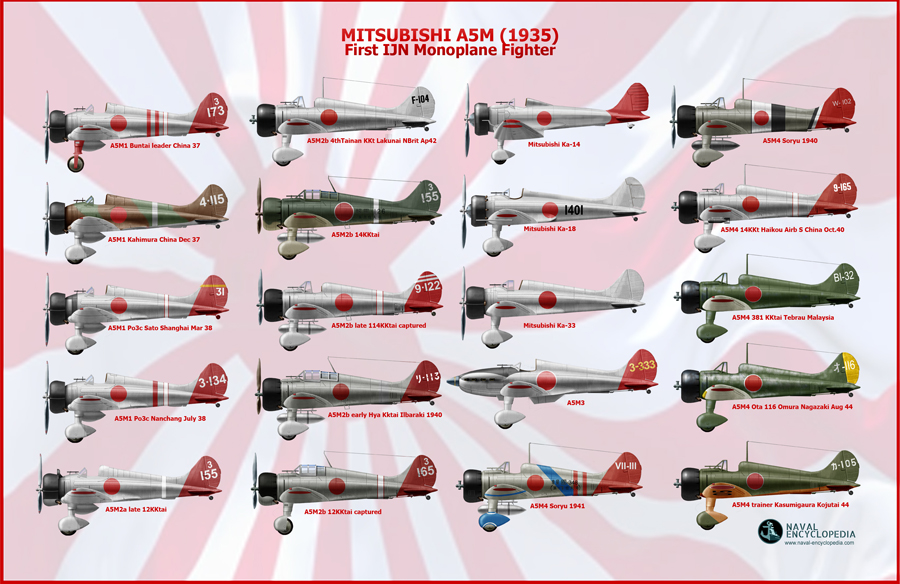
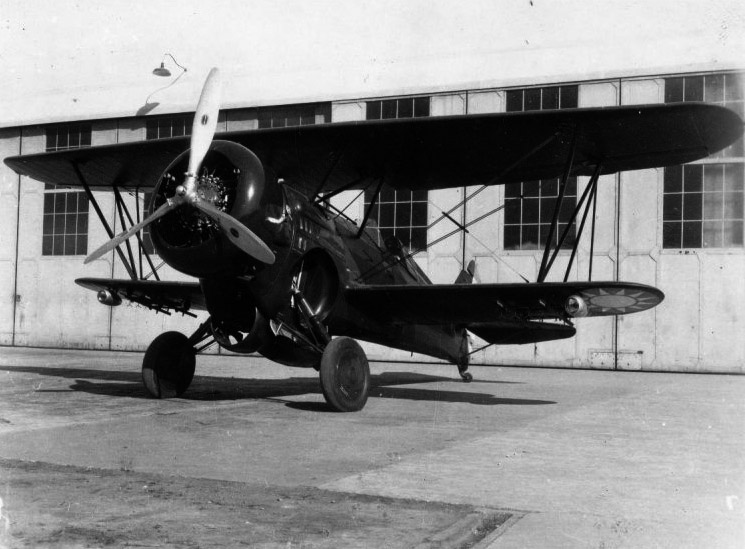 The Model 68 Falcon III thus had wood/Clark Y wings, a 770 hp (570 kW) R-1820-F53 engine, and its best customer overall was China. China acquired the largest number of Hawk IIIs starting in 1936. In all 102 were delivered. They arrived disassembled and were assembled by local aviation workshops. The result was sometimes not great and they had issues, but the pilots were pleased with their performances. From August 1937 indeed they started to duel with both IJA (Imperial Japanese Armed force) IJN (Navy) models. They took a big part in the Battle of Shanghai and Nanjing, and were viewed as the Patriot Chinese Flying corps' as "cutting edge interceptor" that did well ongside the Falcon IIs, Boeing Model 281 Peashooters and Fiat CR.32s. Col. Gao Zhihang for example shot two Mitsubishi A5M "Claude" over Nanjing in an afternoon on 12 October on his model number "IV-I" as wing Commander.
On August 14, Chinese Hawk IIIs engaged a force 13 times their size and managed to down many Japanese bombers. The first day of the war, Hawk IIIs shoot down three Mitsubishi Type 96 "Nell" (G3M2) bombers at once flying without fighter escort, lacking self-sealing fuel tanks. Against the latest Japanese fighters however, the Hawk III was hard-pressed, often due to a Japanese huge numerical advantage. Good pilots could holed their area against prececessors of the A5Ms like the Nakajima A3M, but already the Nakajima Type 95 (A4N1) nearly a ton lighter and 30 hp more powerful managed to out-turn the Hawk in every engagement and gained complete air dominance in a couple of months. When the A5M arrived in turn en masse, they completed this close to shore, the IJN assigned repsonsibility, when IJA fighters like the Nakajima Ki-27 "nate" completed this dominance inland. Only when USSR provided I-16, I-15, and I-153s the situation started to redess, and all remaining Hawk III fighters were relegated to training. Mos were destroyed by 1941.
Thai Hawk IIIs
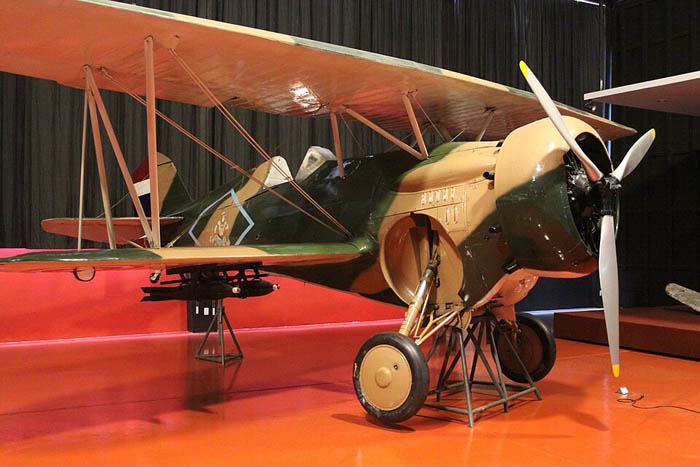
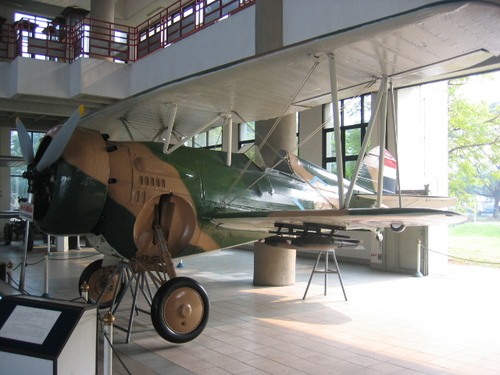 In mid 1935, Thailand put ordered 24 Curtiss Falcon IIIs for 63,900 Baht each as well as paid a construction licence. The initial 12 Hawk IIIs were shipped to Thailand in August that year, and 12 more arrived later, named "Contender Type 10". In addition Thailand managed to build in a workshop fifty additional Hawk IIIs from 1937 to 1939. And unlike the Argentinian ones, they saw action, against the French in the Franco-Thai War and after that intercepting incoming Japanese aircraft by December 194 when the country was occupied, turned into a client state. The Hawk III remained active until modern Japanes emodels were purchased, and they were turned to local flying schools. A portion was still used by 1949. One of these, KH-10 was saved from scrapping and sent to the Royal Thai Aviation Museum, the only surviving Hawk III and by extension, BF2C Goshawk.
Gallery
Illustrations
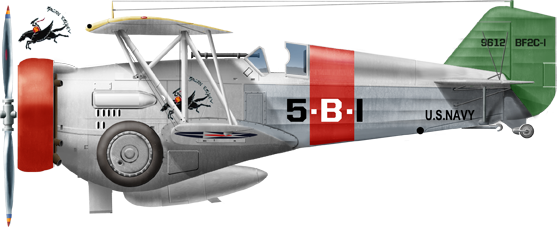
Goshawk of VB-5 flight leader, Buno 9612 USS Ranger.
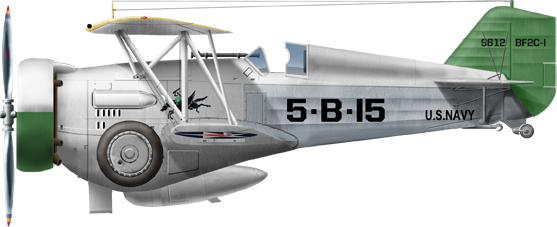
Another of the same.
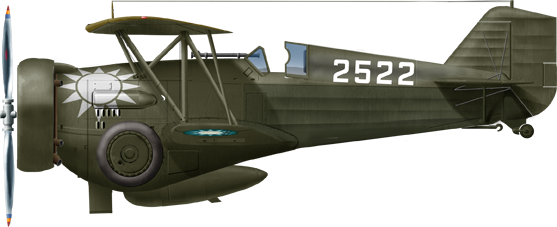
Hawk III of the ROCAF battle of Shanghai 1937
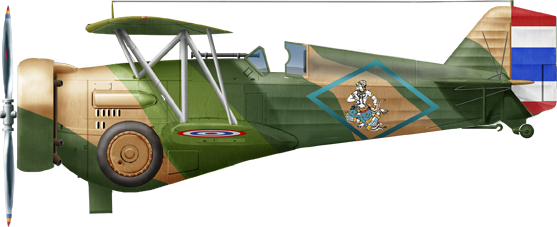
Hawk III of the Royal Thai AF in 1940
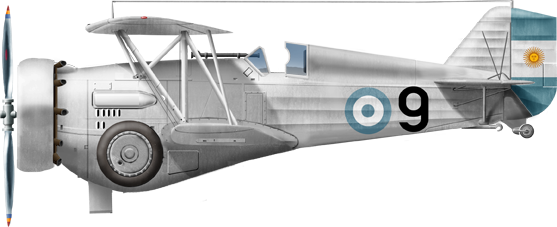
Hawk III Sqn.1 Fight Rgt.2 Argentinian AF 1938-39
Photos

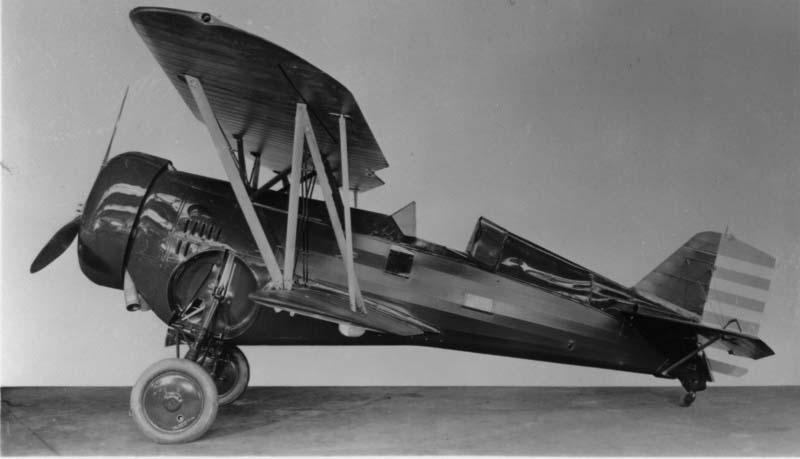
XFIIC-3 prototype
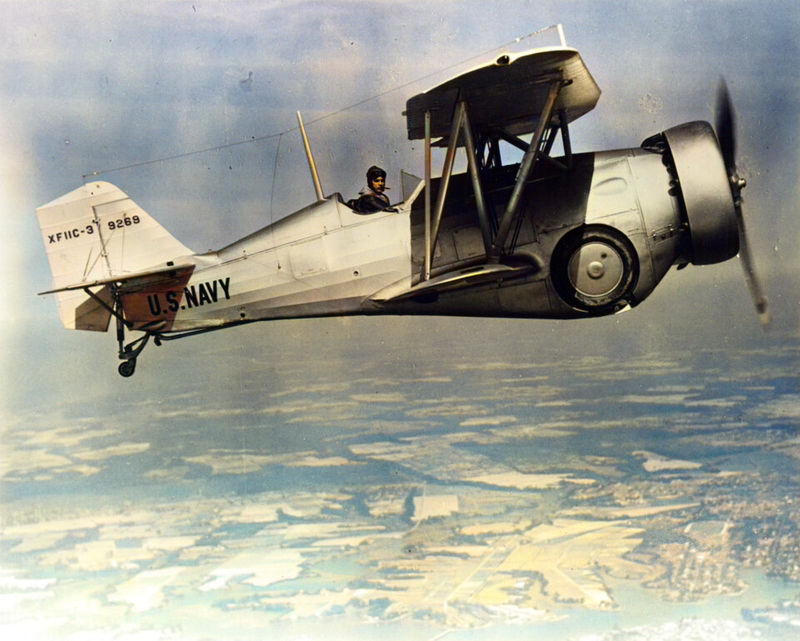
Same colorized
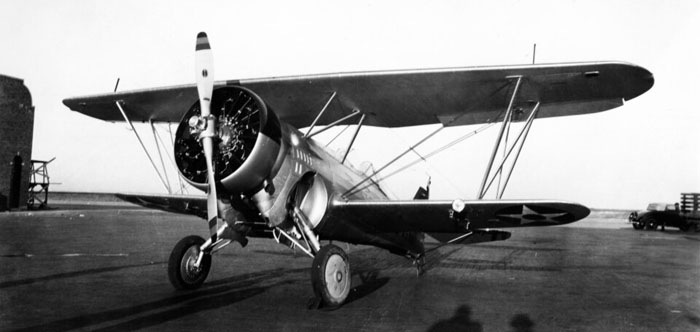
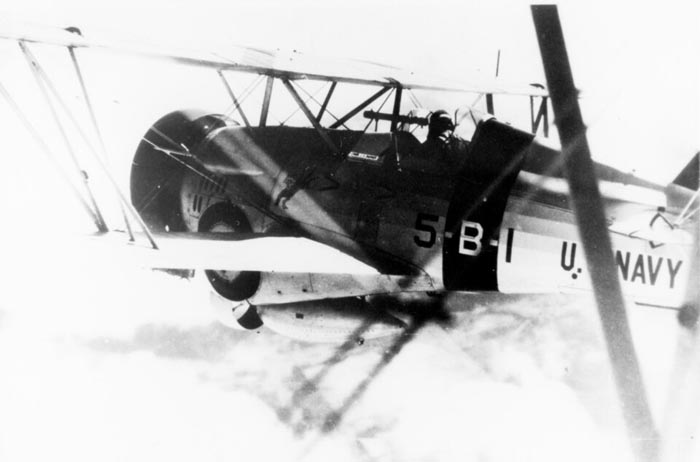
Navy BF2C-1 at an unknown NAS
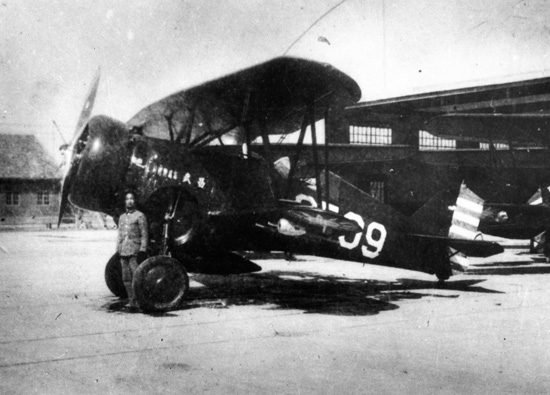
Chinese ROCAF Hawk III
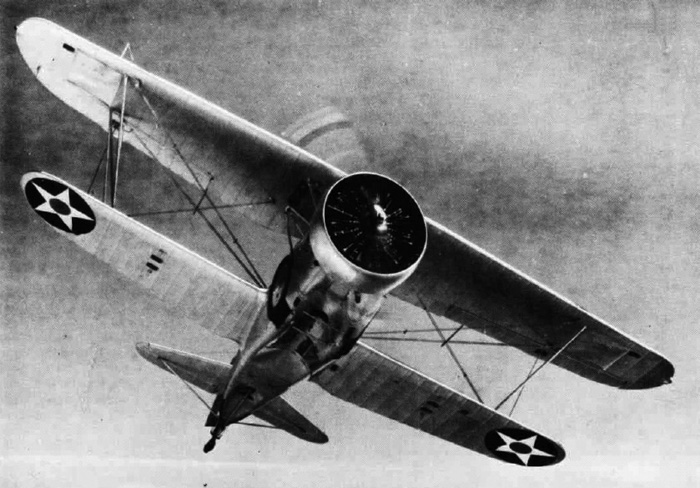
XF11C-3, seen from below, shoing its underbelly recess for a bomb or external fuel tank
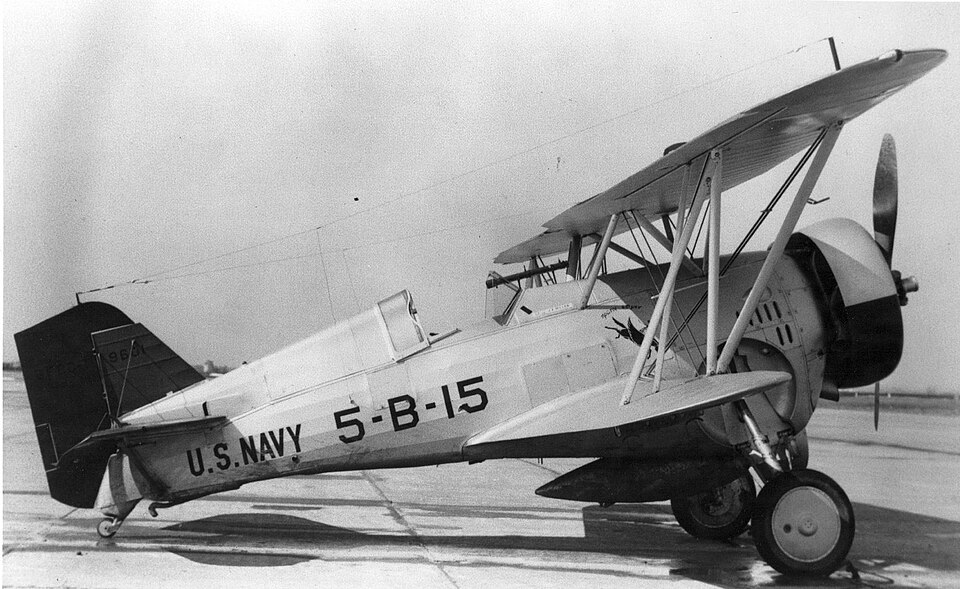
Navy Curtiss BF2C-1 from VB-5B (N°601) pennant 5-B-15, tested on USS Ranger 1935
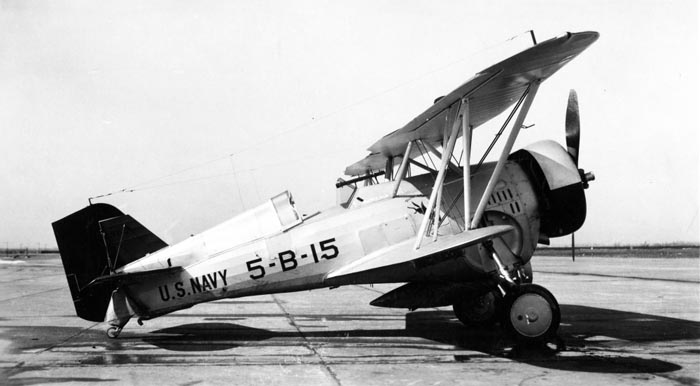
Same
Hawk III
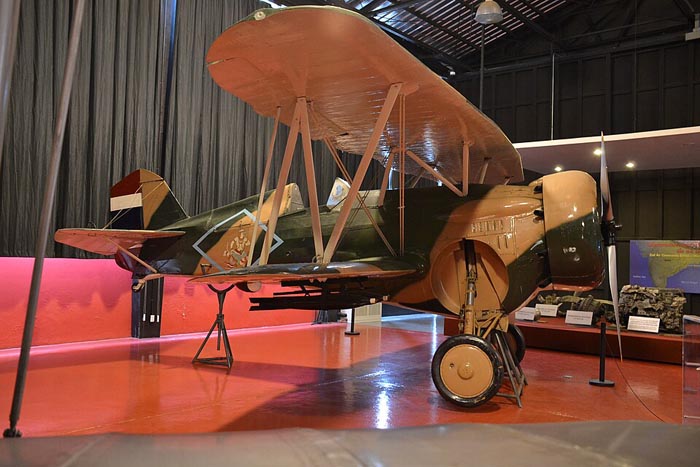
Both below: Preserved Thai Hawk III (licence made)
Links
alchetron.comaviastar.org
airwar.ru/
p40hawksnest.com
maynardsgarage.com on the Hawk IV or 1936 model 78, the last.
tracesofwar.nl
warthunder.com
olddogsplanes.com
modelingmadness.com
- Lohner E (1913)
- Macchi M3 (1916)
- Macchi M5 (1917)
- Macchi M7 (1918)
- Ansaldo ISVA (1918)
- Short S.38 (1912)
- Sopwith Baby (1916)
- Short 184 (1916)
- Fairey Campania (1917)
- Sopwith Cuckoo (1917)
- Felixstowe F.2 (1917)
- Gotha WD.2 (1914)
- Friedrichshafen FF 33 (1916)
- Albatros W4 (1916)
- Albatros W8 (1918)
- Hanriot HD.2
- Grigorovich M5 (1915)
- Grigorovich M9 (1916)
- Grigorovich M11 (1917)
- IJN Farman MF.7
- IJN Yokosho Type Mo
- Yokosho Rogou Kougata (1917)
- Yokosuka Igo-Ko (1920)
- Curtiss N9 (1916)
- Curtiss H4 (1916)
- Curtiss H12 (1917)
- Curtiss H16 (1918)
- Aeromarine 39
- Vought VE-7
- Douglas DT (1921)
- NAF/Curtiss TS-1 (1922)
- Boeing FB.5 (1923)
- Boeing F4B (1928)
- Vought O2U/O3U Corsair (1928)
- Grumman FF (1931)
- Akron class airships (1931)
- Curtiss F9C Sparrowhawk (1931)
- Curtiss F11C Goshawk (1932)
- Curtiss BF2C Goshawk (1933)
- Blackburn Blackburn (1922)
- Supermarine Seagull (1922)
- Fairey Flycatcher (1923)
- Hawker Horsley (1925)
- Blackburn Ripon (1926)
- Fairey IIIF (1927)
- Fairey Seal (1930)
- LGL-32 C.1 (1927)
- Fokker T.II (1921)
- Fokker T.III (1923)
- Caspar U1 (1921)
- Dornier Do J Wal (1922)
- Rohrbach R-III (1924)
- Mitsubishi 1MF (1923)
- Mitsubishi B1M (1923)
- Yokosuka E1Y (1923)
- Nakajima A1N (1927)
- Nakajima E2N (1927)
- Mitsubishi B2M (1929)
- Nakajima A2N (1930)
- Nakajima A4N (1935)
- CANT 18
WW1
✠ K.u.K. Seefliegerkorps:
 Italian Naval Aviation
 RNAS
RNAS
 Marineflieger
 French Naval Aviation
 Russian Naval Aviation
 IJN Air Service
 USA
USA
Interwar
Interwar US
 Interwar Britain
 Interwar France
 Interwar Netherlands
 Interwar Germany
 Interwar Japan
 Interwar Italy
- Grumman F2F (1933)
- Curtiss SOC seagull (1934)
- Grumman F3F (1935)
- Northrop BT-1 (1935)
- Consolidated PBY Catalina (1935)
- Grumman J2F Duck (1936)
- Brewster/NAF SBN-1 (1936)
- Curtiss SBC Helldiver (1936)
- Vought SB2U Vindicator (1936)
- Brewster F2A Buffalo (1937)
- Douglas TBD Devastator (1937)
- Vought Kingfisher (1938)
- Curtiss SO3C Seamew (1939)
- K-class Blimps (1939)
- Douglas SBD Dauntless (1939)
- Grumman F4F Wildcat (1940)
- F4U Corsair (NE) (1940)
- Brewster SB2A Buccaneer (1941)
- Grumman TBF/TBM Avenger (1941)
- Consolidated TBY Sea Wolf (1941)
- Grumman F6F Hellcat (1942)
- Curtiss SB2C Helldiver (1942)
- Curtiss SC Seahawk (1944)
- Grumman F7F Tigercat (1944)
- Grumman F8F Bearcat (1944)
- Ryan FR-1 Fireball (1944)
- Douglas AD-1 Skyraider (1945)
- Fleet Air Arm
- Hawker Osprey (1932)
- Fairey Swordfish (1934)
- Blackburn Shark (1934)
- Supermarine Walrus (1936)
- Fairey Seafox (1936)
- Blackburn Skua (1937)
- Short Sunderland (1937)
- Blackburn Roc (1938)
- Fairey Albacore (1940)
- Fairey Fulmar (1940)
- Grumman Martlet (1941)
- Hawker sea Hurricane (1941)
- Brewster Bermuda (1942)
- Fairey Barracuda (1943)
- Fairey Firefly (1943)
- Grumman Tarpon (1943)
- Grumman Gannet (1943)
- Supermarine seafire (1943)
- Blackburn Firebrand (1944)
- Hawker Sea Fury (1944)
- Coastal Command
- Vickers Wellington (1937)
- IJN aviation
- Yokosuka E6Y (1930)
- Aichi D1A "Susie" (1934)
- Mitsubishi A5M "Claude" (1935)
- Nakajima A4N (1935)
- Yokosuka B4Y "Jean" (1935)
- Mitsubishi G3M "Nell" (1935)
- Nakajima E8N "Dave" (1935)
- Kawanishi E7K "Alf" (1935)
- Nakajima B5N "Kate" (1937)
- Kawanishi H6K "Mavis" (1938)
- Aichi D3A "Val" (1940)
- Mitsubishi G4M "Betty" (1940)
- Mitsubishi A6M "zeke" (1940)
- Nakajima E14Y "Glen" (1941)
- Nakajima B6N "Jill" (1941)
- Mitsubishi F1M "pete" (1941)
- Aichi E13A Reisu "Jake" (1941)
- Kawanishi E15K Shiun "Norm" (1941)
- Nakajima C6N Saiun "Myrt" (1942)
- Yokosuka D4Y "Judy" (1942)
- Kyushu Q1W Tokai "Lorna" (1944)
 Luftwaffe
- Heinkel 114 (1935)
- Arado 196 (1937)
- Me109 T (1938)
- Blohm & Voss 138 Seedrache (1940)
 Italian Aviation
- Savoia-Marchetti S.55
- IMAM Ro.43/44
- CANT Z.501 Gabbiano
- CANT Z.506 Airone
- CANT Z.508
- CANT Z.511
- CANT Z.515
 French Aeronavale
- GL.300 (1926-39)
- CAMS 37 (1926)
- Levasseur PL.5 (1927)
- Potez 452 (1935)
- Loire 210 (1936)
- Loire 130 (1937)
- LN 401 (1938)
 Soviet Naval Aviation
- Shavrov SH-2 (1928)
- Tupolev TB-1P (1931)
- Beriev MBR-2 (1930)
- Tupolev MR-6 (1933)
- Tupolev MTB-1 (1934)
- Beriev Be-2 (1936)
- Polikarpov I16 naval (1936)
- Tupolev MTB-2 (1937)
- Ilyushine DB-3T/TP (1937)
- Beriev Be-4 (1940)
 Swedish Naval Aviation
- SAAB B17S
-
 Skoda Š-328V
  R-XIII Idro
 Fokker C.XI W (1934)
 Rogožarski PVT-H (1938)
WW2
 ☍ USNA
- De Havilland Sea Vixen
- Hawker Sea Hawk
- Supermarine Scimitar
- Blackburn Buccaneer
- Hawker Sea Harrier
- Douglas A4 Skyhawk
- Grumman F9F Panther
- Vought F8 Crusader
- McDonnell-Douglas F-4 Phantom-II
- North Am. A5 Vigilante
- TU-142
- Yak 38 forger
☢ Cold War
✧ NATO
Fleet Air Arm
 US Navy
☭ Warsaw Pact
Merch
Seafire Mark 45; HMS Pretoria Castle
Zeros vs its aversaries
Aichi D3A “Val” Junyo
Mitsubishi A5M poster
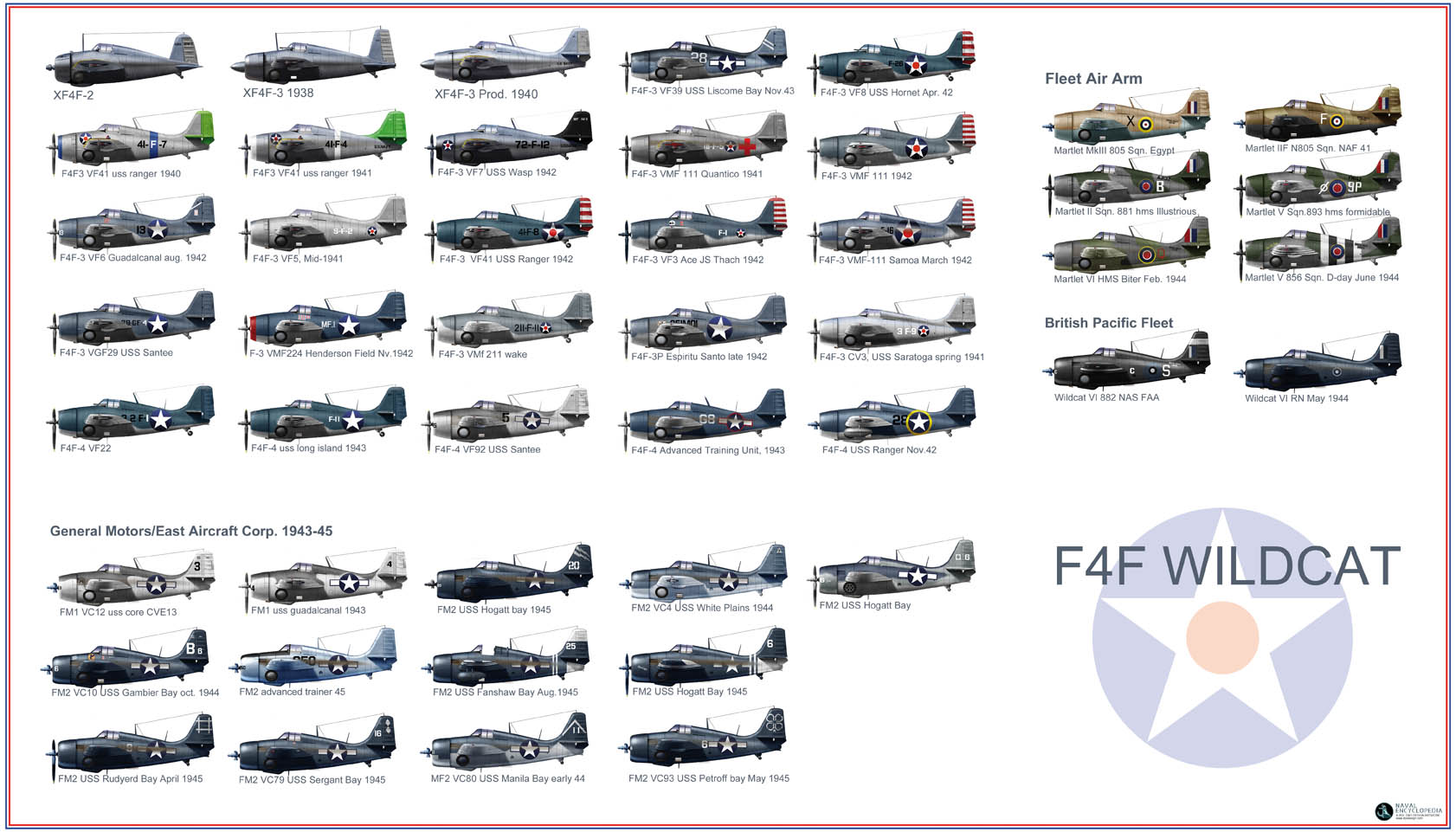
F4F wildcat
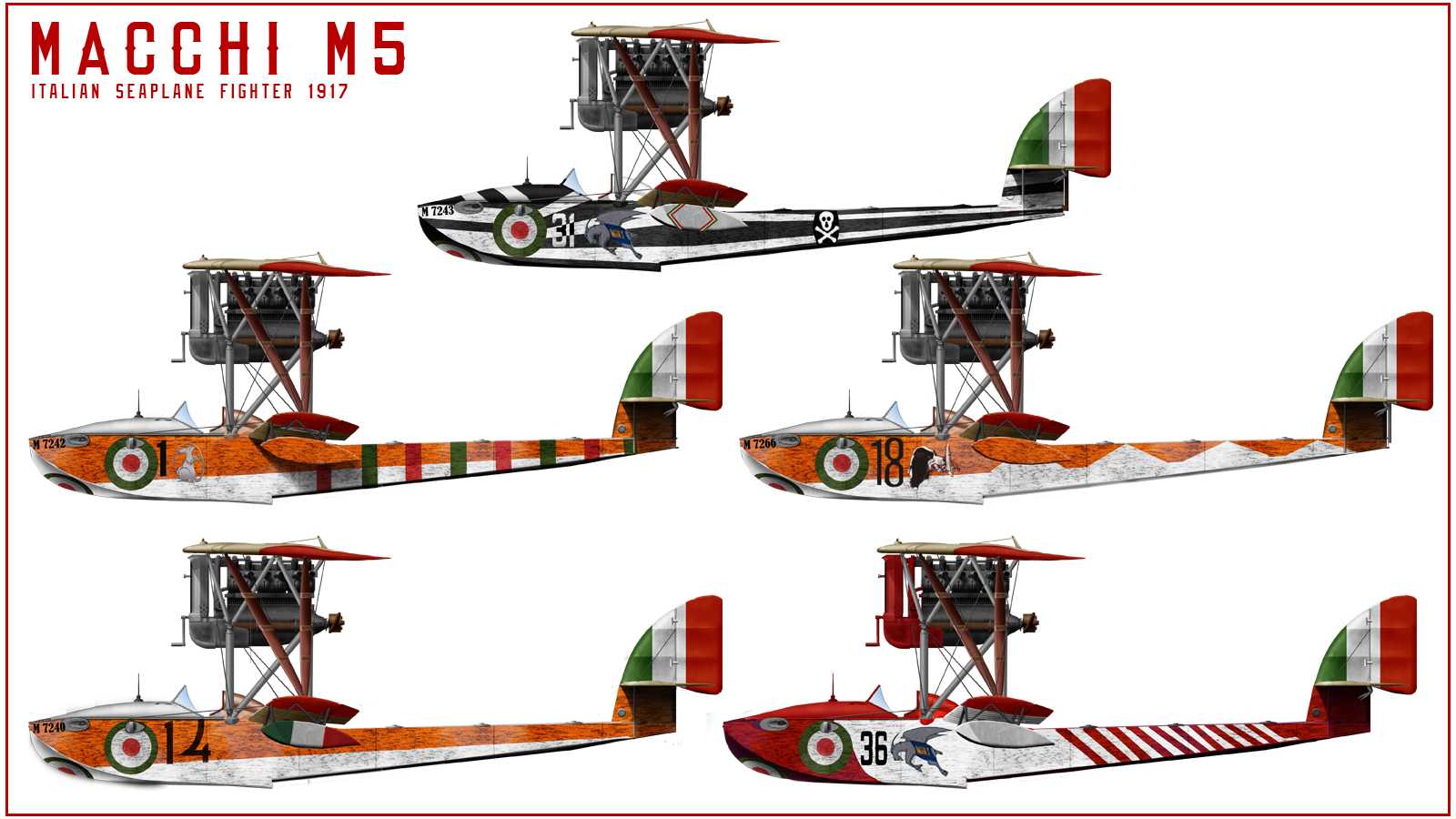
Macchi M5
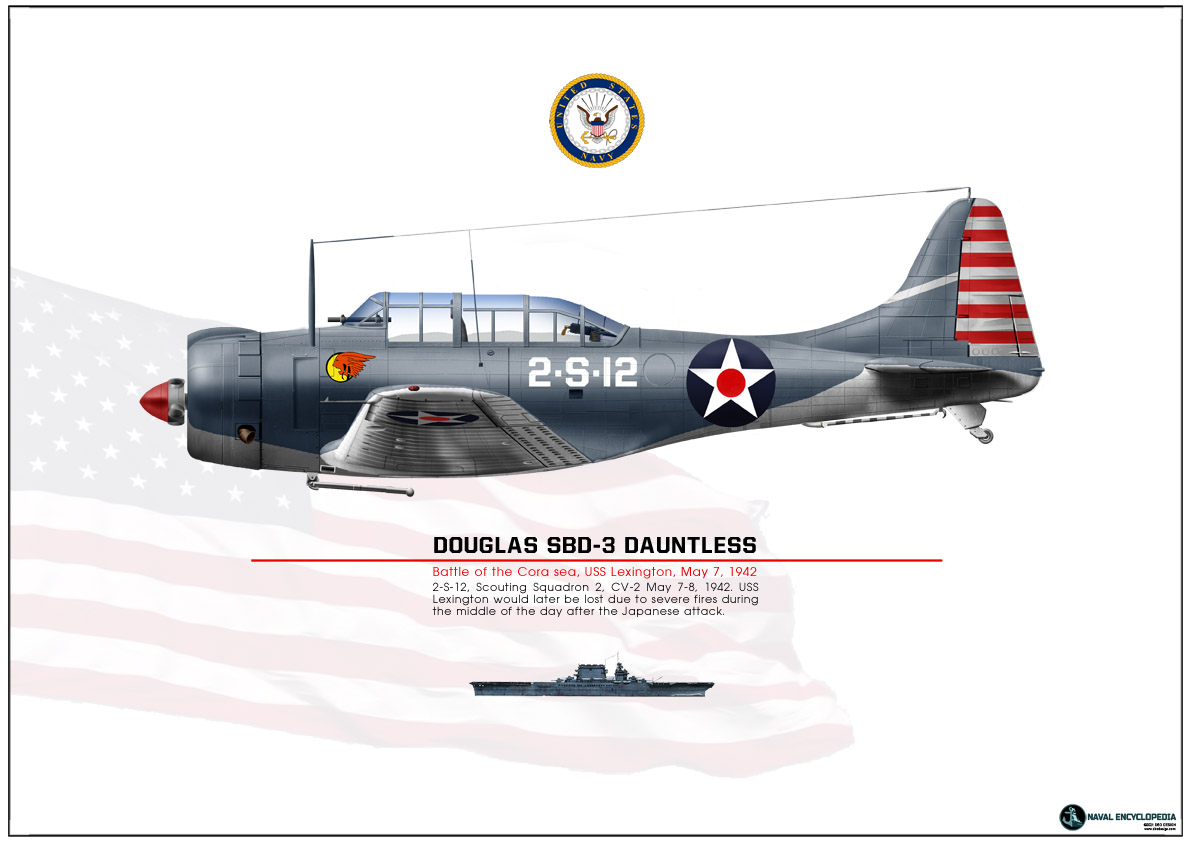
SBD Dauntless Coral Sea
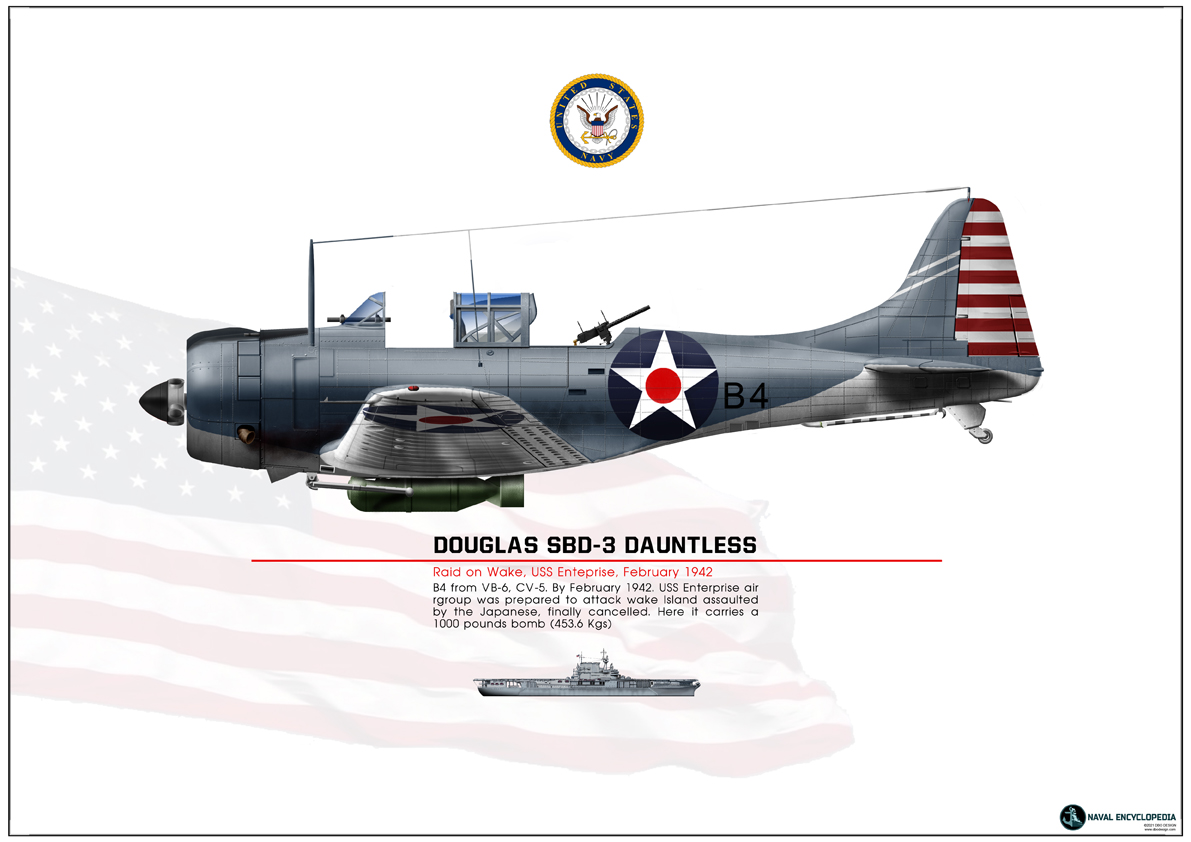
SBD Dauntless USS Enterprise
SBD-4 CV22