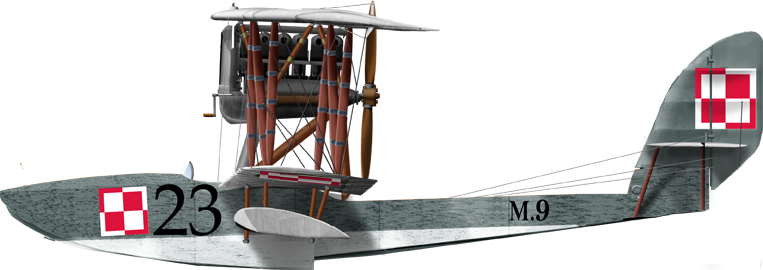
Macchi M9 (1918-24)
 Regia Aeronautica, c30 built
The Macchi seaplane bomber
The history of Macchi flying boats went back to the time were produced fighters for the Italian Royal Aviation (Regia Aeronautica) under licence, the "Nieuport-Macchi" in Varese. Thius brought a great deal of expertise to the company, confident enough, after receiving a captured Austrian Lohner L observation seaplane to create their own L.1 and L.2 in 1915, and from there the M.3 single-seat observation biplane in 1916 with remarkable performances for its category category, it was an observation model, but which could carry bombs and was agile and fast enough to act as fighter if required. The formular was pushed further with the Macchi M.5 from 1917, which was mass-produced until the end of the war. The M.5 could reach 200 kph and in terms of altitude or climb rate, became a natural seaplane fighter, on of the best in that category for WWI. To the point it was also adopted by the USMC in 1918. By that time, Macchi ruled the Adriatic. This success fuelled more designs like the experimental M.6 and the M.7, a general improvement across the board.
Thanks to more and more powerful engines, Alessandro Tonini, who took up the role of chief designer at Nieuport-Macchi, proposed the adoption of a 250 hp Isotta Fraschini V.6 engine for its new seaplane fighter, the M.7, starting from the Macchi M.5 as a base but only sharing its appearance, albet sighly more compact. The hull and wing were completly new and somehwat inspired by Hanriot models. The M.7 prototype was delivered in July 1918 at the Venice seaplane station, then 260th Squadron reaching routinely 210 km/h in straight line, a world record a the time for any seaplane and it earned an order for 1,005. However it was also understood back in 1917 that Macchi could propose more utilitarian models such as the M8. The growing use of combined operations with torpedo boats, destroyers, MAS-Boats, and floatplanes on Austro-Hungarian bases along the coast showed that the offensive capacity of the M5 already was limited. The M3 could indeed only carry four light bombs and so the M5, as the future M7. But these were quite small "hand held" bombs, no more than grenades with a tail.
The power of the new engines, if used not for raw speed, but instead to lift heavier loads and conduct Tonini to bring about the Macchi M.8, A two-seat reconnaissance and bomber flying boat developed in 1917 from the earlier lineage, the M5, as a base. From there was developed the Macchi M9, based on the M7 fighter instead but with a brand new hull, and at last the Macchi M.12, the heaviest twin-seat flying boat bomber ever design by Tonini, which came out basically in the winter of 1918. Needldess to say the end of the war in November saw a drastic reduction in orders. Both the promising M7 fighter and its sidekick, the M9 and M12 bombers were axed.
Predecessor: The Macchi M8 (1917)

The Macchi M8 was a move towards a large hull, for a 2-seat reconnaissance/bomber flying boat when developed by Tonini in 1917. It was directly evolved from the earlier Macchi M.3 and M.5 lineage, scaling up the airframe to accommodate a two-man crew and a heavier payload for maritime patrol. It was primarily operated by the Italian Royal Navy (Regia Marina) for anti-submarine patrols and coastal reconnaissance in the Adriatic Sea. The United States Navy also operated a small fleet of Macchi M.8s from its naval air stations in Italy (such as Porto Corsini) for patrol and training duties. Postwar, several M.8s were converted for civilian use, becoming early commercial passenger seaplanes.
It was powered by an Isotta Fraschini V.4B inline engine rated for 170 hp in the same pusher layout and in addition of a 7.7 mm (.303 in) Fiat-Revelli machine gun on a flexible ring mount in the nose it could also carry four 50 kg (110 lb) bombs or two light 100 kgs (220 Lb) depth charges under the wings. Overall, only 57 of the M8 were manufactured, from late 1917 to late 1918, and Sweden purchased many, now surplus postwar. The remainder were retained by the Corpo Aeronautico Militare for instruction. The fate of those used by the USMC is unclear, but they were probably left in the Adriatic, returned to Italy postwar.
The Macchi M9 Genesis
The M9 was designed as a much improved version of the M8 based instead not on the M3/M5 but on the brand new M7. The hull resembled still the one of M8s, but it introduced a number of innovations, having extra rigidity to carry a heavier bomb load. When accepted for production by late 1918, some 300 were ordered. Initially it was operated by the Navy's Air Service () with approximately 16 aircraft delivered prior to the Armistice in November 1918. They were followed by another 14 or so after the war ended, hence the 30 often referred as a total. They remained in service beyond 1920, when the air arm was redesignated as the Forza Aerea della Regia Marina. However given the limited needs of this new peacetime service, conversions and exports started soon.Like the M7 fighter, the M9 bomber arrived way too late to give good accounts of itself. Operations started indeed by October. Several raids and an ambitious air-sea attack on Pola was planned for late November and then cancelled. A later version, designated the M.9bis, was produced for the civil market, featuring a compartment for two passengers and cargo transport. At least two served in that capacity for a new line in Switzerland.
Design
 Characterized by its traditional appearance for Macchi models, the M.9 as designed by Tonini needed to be more rugged than the M8 and introduced a Warren truss structure as struts, and to brace the wings, replacing the conventional arrangement. This feature became standard in subsequent Macchi models. It still featured a central hull with a wooden framework covered in plywood panels. There was an open cockpit for the pilot and observer protected by a windshield and tandem seats forward of the wings. Slightly offset to the right was located an optional open cocpit position that could be manned by the Observer for a better field of vision, and equipped with a ring mount for a machien gun for defence as well.
At the rear, the hull ended with a cruciform tail unit with a tall vertical fin and braced horizontal stabilizers. The Macchi M9 had a sesquiplane configuration, the lower wing was smaller than the upper one. Only the lower wing had the two traditional stabilizer floats attached to the underside via a tubular strut frame. The two wings were interconnected by wooden Warren truss, reinforced with steel wire bracing, attached to the central hull by a pylon with V struts. The nacelle countained the 6-cylinder inline Fiat A.12 engine in a pusher configuration. There was a two-blade, fixed-pitch wooden propeller as well.
Engine & Perfomances
Instead of the Isotta Fraschini V.6 of the M7, the M9 had a very powerful and torque efficient Fiat A.12 engine. This massive six-cylinder, liquid-cooled, in-line aircraft engine had a ma massive displacement of 21.7 litres (21,706 cc) with a bore and stroke of 160 mm × 180 mm and power output from 245 to 300 hp, later upgraded up to 320 hp in the A.12 bis variant. Approx. 417 to 600 kg depending on configuration and accessories and 13,260 units of these were manufactured between 1916 and 1919. This engine powered a world land speed record, on the Fiat Mefistofele racing car built by Ernest Eldridge, cranking up 145.89 mph (234.79 km/h) in 1924.
Armament:
As seen above, the Macchi M9 could be armed with a single light machine gun in its ring mount, likely the Villar Perosa, SIA Modello 1918, Fiat-Revelli M1914. This was completed by four 25 kgs bombs under wings (on racks between the fuselage and floats), for a total of 100 kgs.Detailed specs
Specs M9 | |
| Crew: | 2, pilot and observer |
| Fuselage Lenght | 9.40 m (30 ft 10 in) |
| Wingspan | 15.40 m (50 ft 6 in) |
| Height | 3.25 m (10 ft 8 in) |
| Wing area: | 48.5 m2 (521 sq ft) |
| Empty weight: | 1,250 kg (2,750 lb) |
| Gross weight: | 1,800 kg (3,960 lb) |
| Powerplant: | Fiat A.12 , 208 kW (280 hp) |
| Propeller: | 2-bladed fixed-pitch wooden propeller |
| Maximum speed: | 188 km/h (118 mph, 103 kn) |
| Endurance: | c3+ hours |
| Service ceiling: | 5,500 m (18,050 ft) |
| Time to altitude: | Unknown |
| Armament | 1 Hull fwd LMG, 100 kgs bombs. |
Exports

Polish M9 N°23931 In 1919, as part of a military propaganda mission aimed at promoting Italian aircraft production in South America, an M9 was presented to Brazilian authorities. Brazil decided to purchase five for its new flight school, the Força Aeronaval. To marke the occasion it was planned a Rio de Janeiro–Buenos Aires flight but it failed. These Brazilian models remained in service until 1923. Two more M9s were also transferred to Argentina, assigned to the Aviación Naval Argentina, used as maritime patrol aircraft, first ever in Argentina, for a few more years. And there was the Polish case.
 Poland
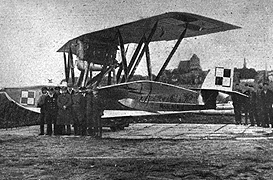 Polish Navy: Purchased for the Naval Aviation Base in Puck in 1919-1920.
Outside the Corpo Aeronautico Militare... mostly used for competition, and the initial model was also soon used for training only. In 1921, Poland purchased nine units for the Morski dywizjon lotniczy (naval aviation division of the Navy, the Polska Marynarka Wojenna based at Puck naval base. These were shipped to the port of Danzig that same year. Subsequently, in 1923, Centralne Warsztaty Lotnicze (CWL) started to maintain all Italian aircraft purchased, started to build five additional ones to supplement the existing fleet, remaining in service until 1926. More on the sources below.
Polish Navy: Purchased for the Naval Aviation Base in Puck in 1919-1920.
Outside the Corpo Aeronautico Militare... mostly used for competition, and the initial model was also soon used for training only. In 1921, Poland purchased nine units for the Morski dywizjon lotniczy (naval aviation division of the Navy, the Polska Marynarka Wojenna based at Puck naval base. These were shipped to the port of Danzig that same year. Subsequently, in 1923, Centralne Warsztaty Lotnicze (CWL) started to maintain all Italian aircraft purchased, started to build five additional ones to supplement the existing fleet, remaining in service until 1926. More on the sources below.
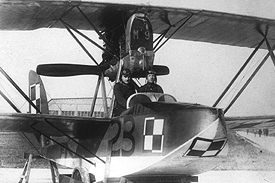
 Argentina
Two used by the Aviación Naval Argentina, for maritime patrol until c1925-26.
 Brazil
Five joined the Serviço de Força Aeronaval, part of the Aviação Militar, for the Navy. They were used by the local flight school until 1923.
Ad Astra Aero
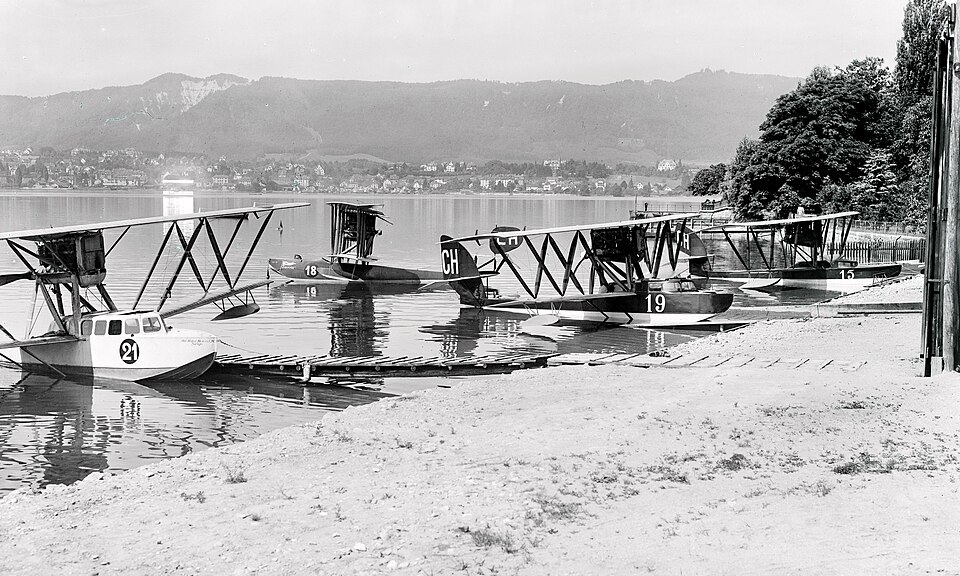
Frick & Co., founded in September 1919 and quickly renamed Ad Astra Aero, acquired two Macchi M.9bis flying boats. This civilian version of the Macchi M.9, produced in four examples after the First World War, had an enclosed cabin with two passenger seats. These two Macchi M.9bis were registered CH-19 (c/n 3049) and CH-20 (c/n 3047) in 1920. There were at least the known following:
-Ad Astra-Aero CH-19 (c/n 3049) powered by an Isotta-Fraschini 250 PS (N° 6205) immatriculated from 03/02/1920 to 12/10/1923 and based at Zürichhorn, dismantled.
Ad Astra-Aero CH-20, c/n 3047 powered by a Fiat A 12bis 300 PS (N° 10224) immat. from 08/04/1920 to 02/02/1923, based at Locarno, returned to Macchi for modifications and from July 21, 1922, reutned as school plane and destroyed in a hangar fire in Lausanne.
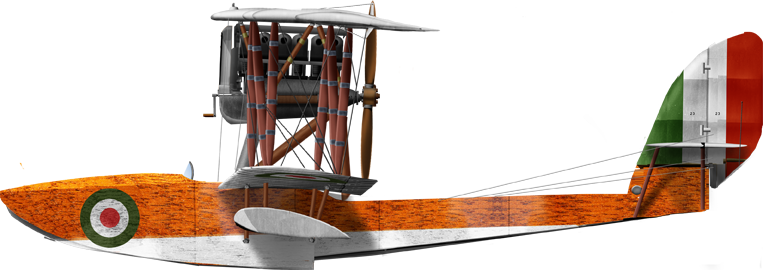
Italian Macchi M9 bomber tested in the final days, November 1918.
Polish M9 from Naval Base Puck, 1923.
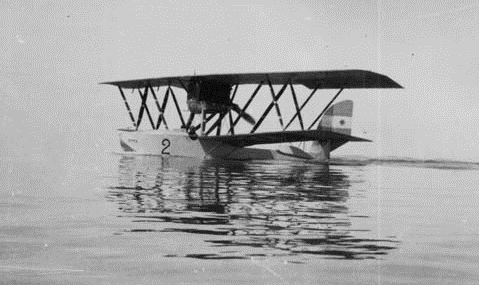
M9 of the Argentines

Unknown model

From the defunct wings palette, 2 views of the M9
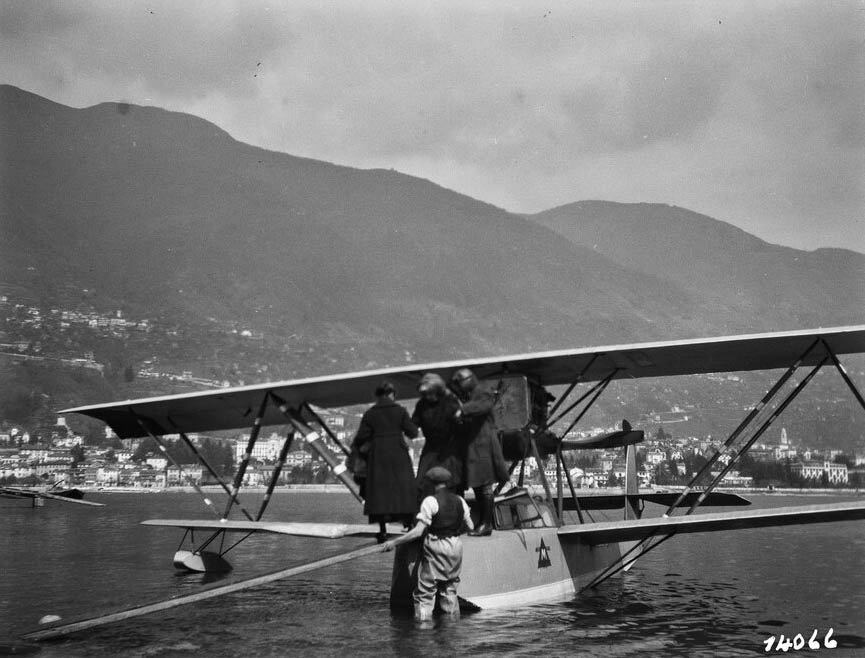
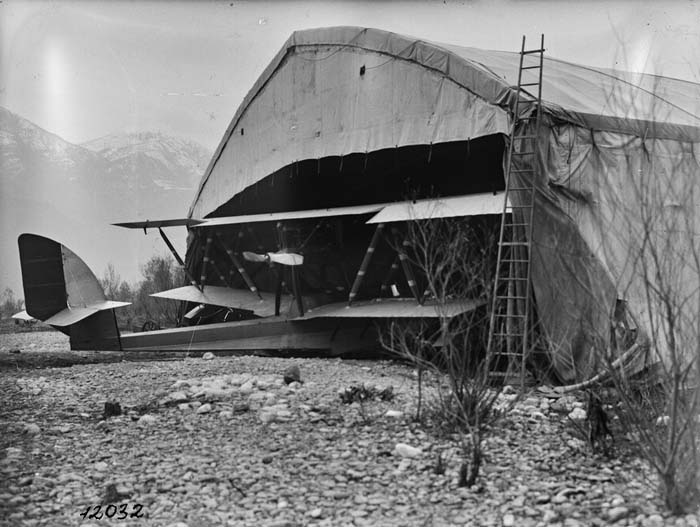
CH-NB_Archive_Rudolf_Zinggeler
References
Angelucci, Enzo. The Rand McNally Encyclopedia of Military Aircraft, 1914-1980. San Diego, California: The Military Press, 1983.Nelcarz, Bartolomiej and Robert Peczkowski. White Eagles: The Aircraft, Men and Operations of the Polish Air Force 1918–1939. Ottringham, UK: Hikoki Publications, 2001.
Grey, C.G. Jane's All the World's Aircraft 1919. London: Sampson Low Marston, 1969 (reprint).
Taylor, Michael J. H. Jane's Encyclopedia of Aviation. London: Studio Editions, 1989.
en.wikipedia.org
hydroretro.net
airwar.ru
en.wikipedia.org
commons.wikimedia.org
flyingmachines.ru
samolotypolskie.pl
www.naval.com.br/
histarmar.com.ar
On scalemates.com
Polish one
- Lohner E (1913)
- Macchi M3 (1916)
- Macchi M5 (1917)
- Macchi M7 (1918)
- Ansaldo ISVA (1918)
- Short S.38 (1912)
- Sopwith Baby (1916)
- Short 184 (1916)
- Fairey Campania (1917)
- Sopwith Cuckoo (1917)
- Felixstowe F.2 (1917)
- Gotha WD.2 (1914)
- Friedrichshafen FF 33 (1916)
- Albatros W4 (1916)
- Albatros W8 (1918)
- Hanriot HD.2
- Grigorovich M5 (1915)
- Grigorovich M9 (1916)
- Grigorovich M11 (1917)
- IJN Farman MF.7
- IJN Yokosho Type Mo
- Yokosho Rogou Kougata (1917)
- Yokosuka Igo-Ko (1920)
- Curtiss N9 (1916)
- Curtiss H4 (1916)
- Curtiss H12 (1917)
- Curtiss H16 (1918)
- Aeromarine 39
- Vought VE-7
- Douglas DT (1921)
- NAF/Curtiss TS-1 (1922)
- Boeing FB.5 (1923)
- Boeing F4B (1928)
- Vought O2U/O3U Corsair (1928)
- Grumman FF (1931)
- Akron class airships (1931)
- Curtiss F9C Sparrowhawk (1931)
- Curtiss F11C Goshawk (1932)
- Curtiss BF2C Goshawk (1933)
- Blackburn Blackburn (1922)
- Supermarine Seagull (1922)
- Fairey Flycatcher (1923)
- Hawker Horsley (1925)
- Blackburn Ripon (1926)
- Fairey IIIF (1927)
- Fairey Seal (1930)
- LGL-32 C.1 (1927)
- Fokker T.II (1921)
- Fokker T.III (1923)
- Caspar U1 (1921)
- Dornier Do J Wal (1922)
- Rohrbach R-III (1924)
- Mitsubishi 1MF (1923)
- Mitsubishi B1M (1923)
- Yokosuka E1Y (1923)
- Nakajima A1N (1927)
- Nakajima E2N (1927)
- Mitsubishi B2M (1929)
- Nakajima A2N (1930)
- Nakajima A4N (1935)
- CANT 18
WW1
✠ K.u.K. Seefliegerkorps:
 Italian Naval Aviation
 RNAS
RNAS
 Marineflieger
 French Naval Aviation
 Russian Naval Aviation
 IJN Air Service
 USA
USA
Interwar
 Interwar US
 Interwar Britain
 Interwar France
 Interwar Netherlands
 Interwar Germany
 Interwar Japan
 Interwar Italy
- Grumman F2F (1933)
- Curtiss SOC seagull (1934)
- Grumman F3F (1935)
- Northrop BT-1 (1935)
- Consolidated PBY Catalina (1935)
- Grumman J2F Duck (1936)
- Brewster/NAF SBN-1 (1936)
- Curtiss SBC Helldiver (1936)
- Vought SB2U Vindicator (1936)
- Brewster F2A Buffalo (1937)
- Douglas TBD Devastator (1937)
- Vought Kingfisher (1938)
- Curtiss SO3C Seamew (1939)
- K-class Blimps (1939)
- Douglas SBD Dauntless (1939)
- Grumman F4F Wildcat (1940)
- F4U Corsair (NE) (1940)
- Brewster SB2A Buccaneer (1941)
- Grumman TBF/TBM Avenger (1941)
- Consolidated TBY Sea Wolf (1941)
- Grumman F6F Hellcat (1942)
- Curtiss SB2C Helldiver (1942)
- Curtiss SC Seahawk (1944)
- Grumman F7F Tigercat (1944)
- Grumman F8F Bearcat (1944)
- Ryan FR-1 Fireball (1944)
- Douglas AD-1 Skyraider (1945)
- Fleet Air Arm
- Hawker Osprey (1932)
- Fairey Swordfish (1934)
- Blackburn Shark (1934)
- Supermarine Walrus (1936)
- Fairey Seafox (1936)
- Blackburn Skua (1937)
- Short Sunderland (1937)
- Blackburn Roc (1938)
- Fairey Albacore (1940)
- Fairey Fulmar (1940)
- Grumman Martlet (1941)
- Hawker sea Hurricane (1941)
- Brewster Bermuda (1942)
- Fairey Barracuda (1943)
- Fairey Firefly (1943)
- Grumman Tarpon (1943)
- Grumman Gannet (1943)
- Supermarine seafire (1943)
- Blackburn Firebrand (1944)
- Hawker Sea Fury (1944)
- Coastal Command
- Vickers Wellington (1937)
- IJN aviation
- Yokosuka E6Y (1930)
- Aichi D1A "Susie" (1934)
- Mitsubishi A5M "Claude" (1935)
- Nakajima A4N (1935)
- Yokosuka B4Y "Jean" (1935)
- Mitsubishi G3M "Nell" (1935)
- Nakajima E8N "Dave" (1935)
- Kawanishi E7K "Alf" (1935)
- Nakajima B5N "Kate" (1937)
- Kawanishi H6K "Mavis" (1938)
- Aichi D3A "Val" (1940)
- Mitsubishi G4M "Betty" (1940)
- Mitsubishi A6M "zeke" (1940)
- Nakajima E14Y "Glen" (1941)
- Nakajima B6N "Jill" (1941)
- Mitsubishi F1M "pete" (1941)
- Aichi E13A Reisu "Jake" (1941)
- Kawanishi E15K Shiun "Norm" (1941)
- Nakajima C6N Saiun "Myrt" (1942)
- Yokosuka D4Y "Judy" (1942)
- Kyushu Q1W Tokai "Lorna" (1944)
 Luftwaffe
- Heinkel 114 (1935)
- Arado 196 (1937)
- Me109 T (1938)
- Blohm & Voss 138 Seedrache (1940)
 Italian Aviation
- Savoia-Marchetti S.55
- IMAM Ro.43/44
- CANT Z.501 Gabbiano
- CANT Z.506 Airone
- CANT Z.508
- CANT Z.511
- CANT Z.515
 French Aeronavale
- GL.300 (1926-39)
- CAMS 37 (1926)
- Levasseur PL.5 (1927)
- Potez 452 (1935)
- Loire 210 (1936)
- Loire 130 (1937)
- LN 401 (1938)
 Soviet Naval Aviation
- Shavrov SH-2 (1928)
- Tupolev TB-1P (1931)
- Beriev MBR-2 (1930)
- Tupolev MR-6 (1933)
- Tupolev MTB-1 (1934)
- Beriev Be-2 (1936)
- Polikarpov I16 naval (1936)
- Tupolev MTB-2 (1937)
- Ilyushine DB-3T/TP (1937)
- Beriev Be-4 (1940)
 Swedish Naval Aviation
- SAAB B17S
-
 Skoda Š-328V
 - R-XIII Idro
 Fokker C.XI W (1934)
 Rogožarski PVT-H (1938)
WW2
 ☍ USNA
- De Havilland Sea Vixen
- Hawker Sea Hawk
- Supermarine Scimitar
- Blackburn Buccaneer
- Hawker Sea Harrier
- Douglas A4 Skyhawk
- Grumman F9F Panther
- Vought F8 Crusader
- McDonnell-Douglas F-4 Phantom-II
- North Am. A5 Vigilante
- TU-142
- Yak 38 forger
☢ Cold War
✧ NATO
Fleet Air Arm
 US Navy
☭ Warsaw Pact
Merch
Seafire Mark 45; HMS Pretoria Castle
Zeros vs its aversaries
Aichi D3A “Val” Junyo
Mitsubishi A5M poster
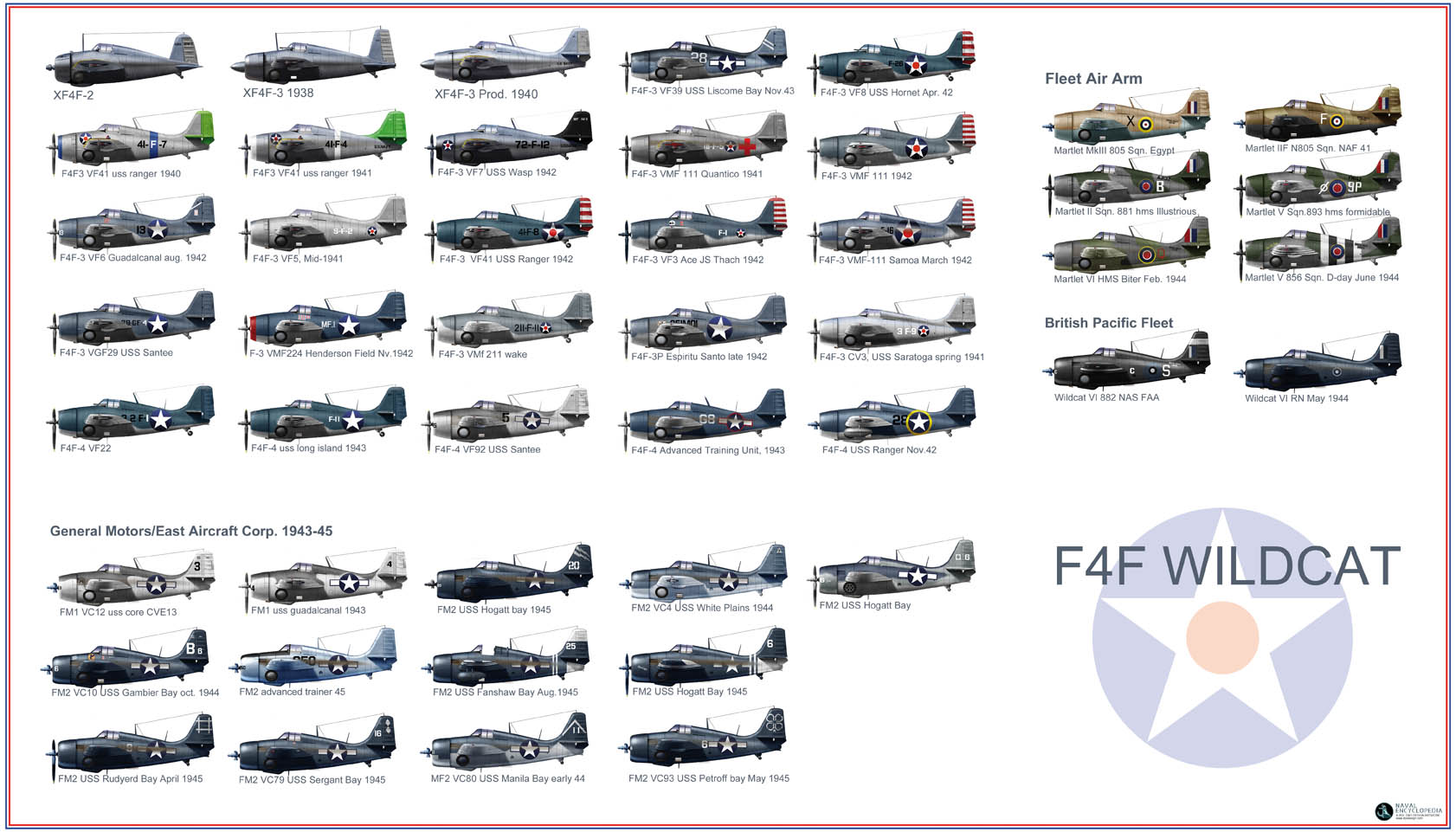
F4F wildcat
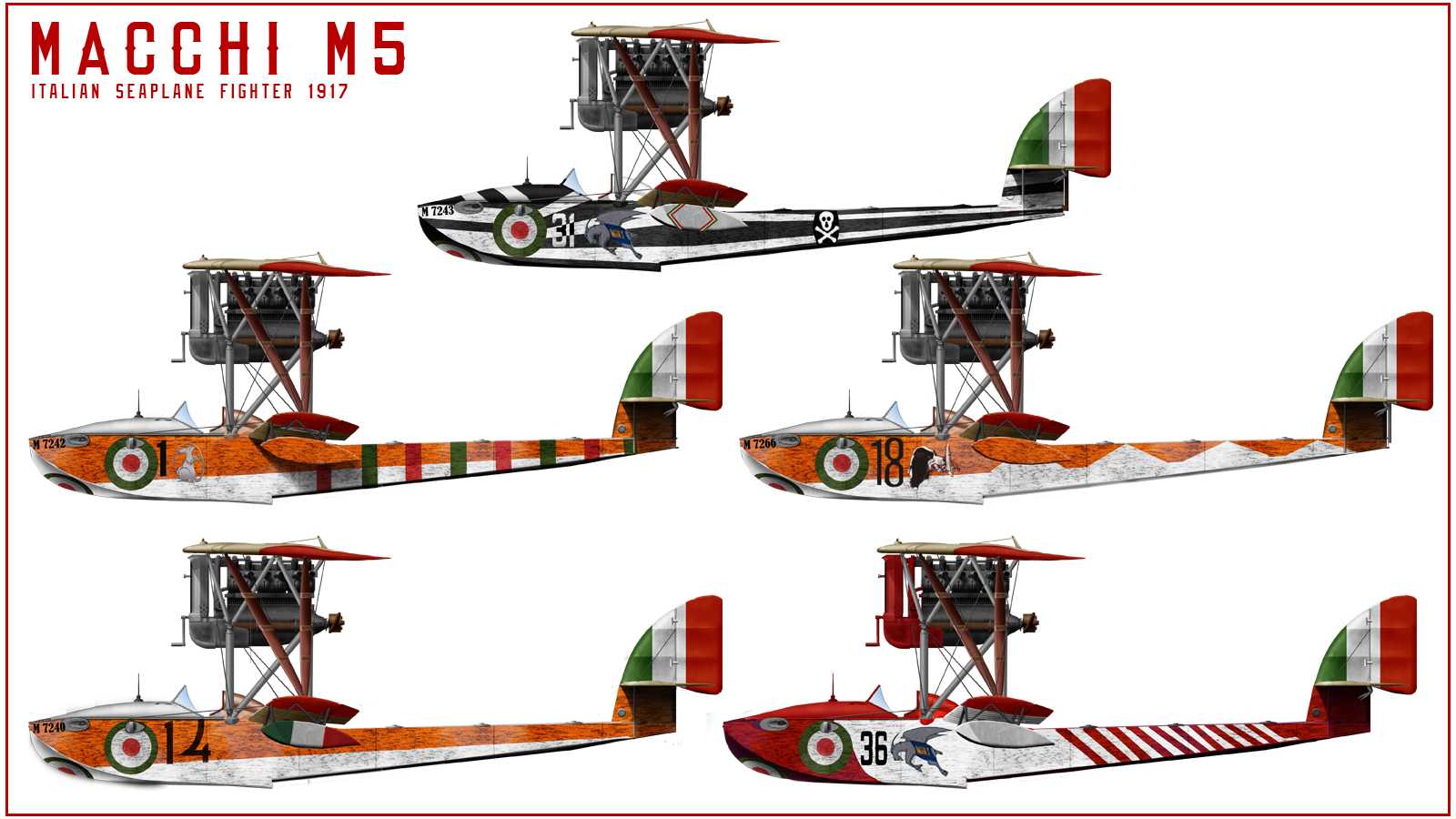
Macchi M5
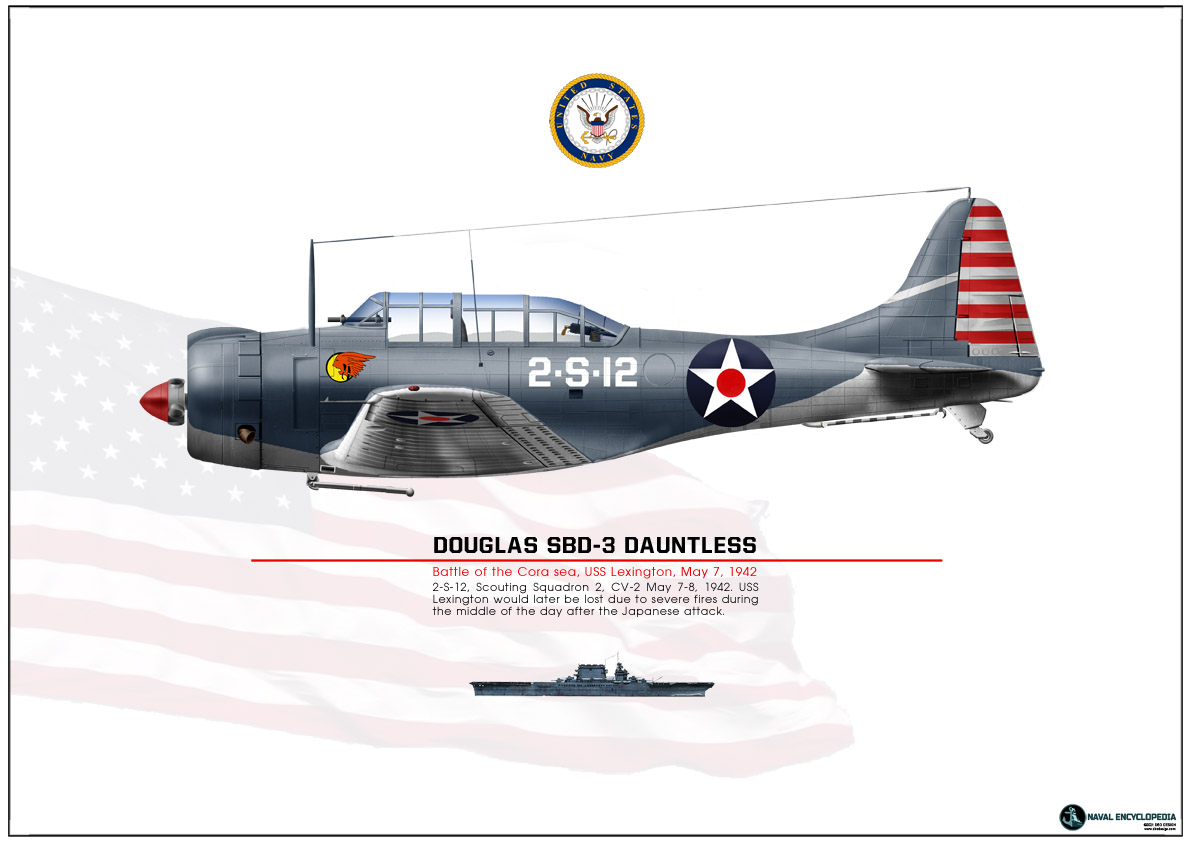
SBD Dauntless Coral Sea
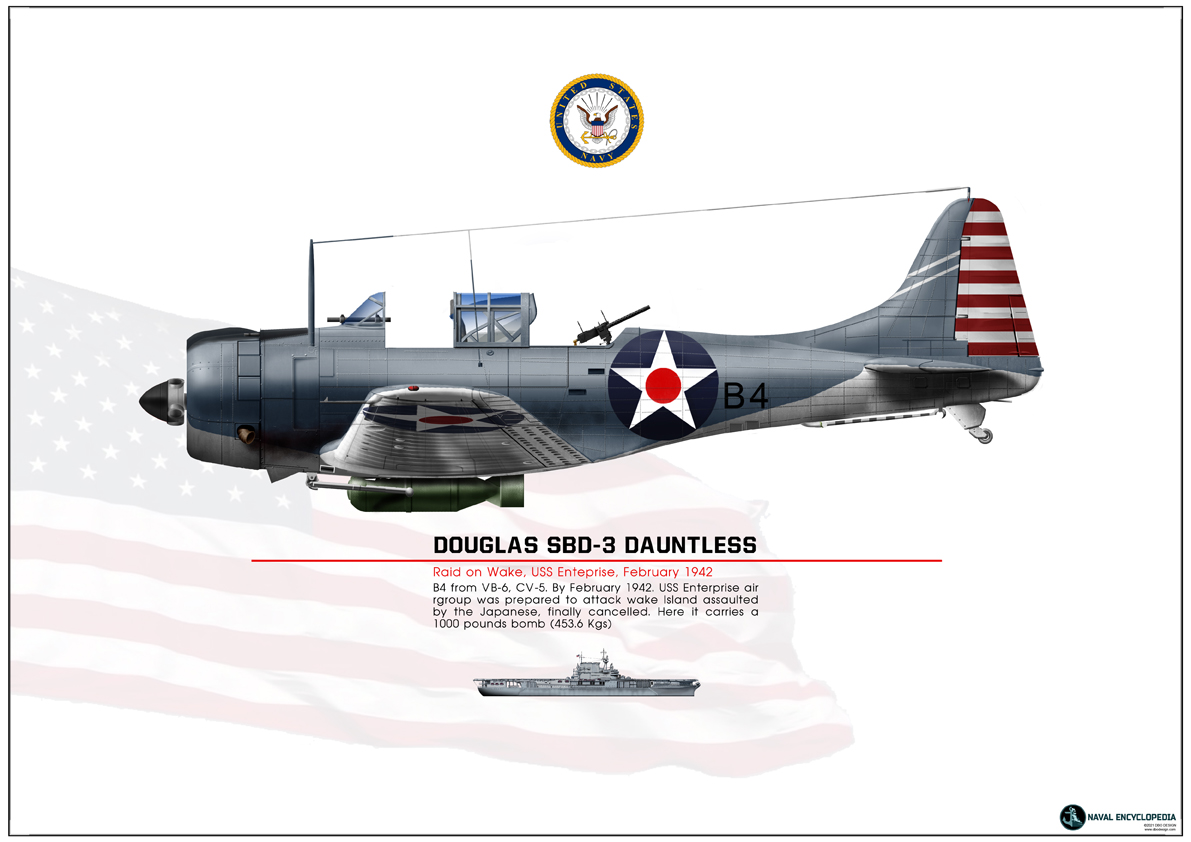
SBD Dauntless USS Enterprise
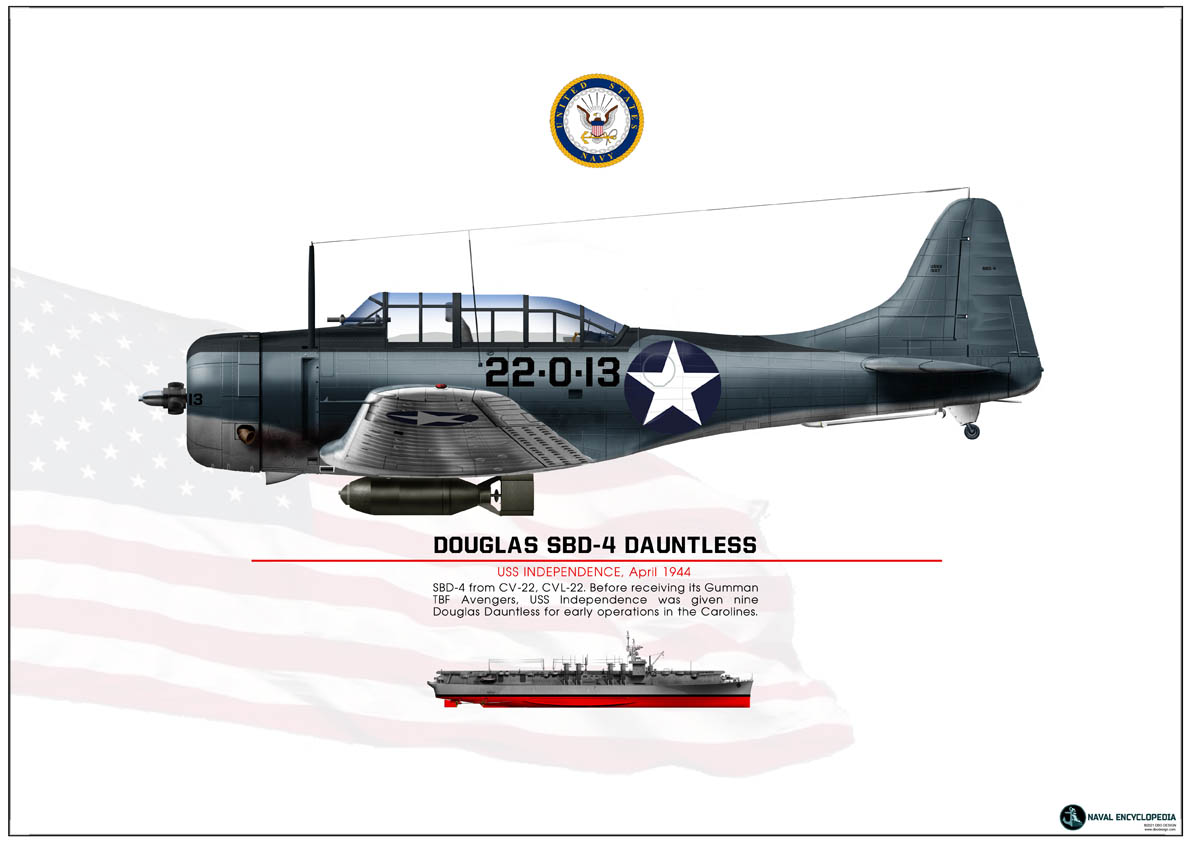
SBD-4 CV22