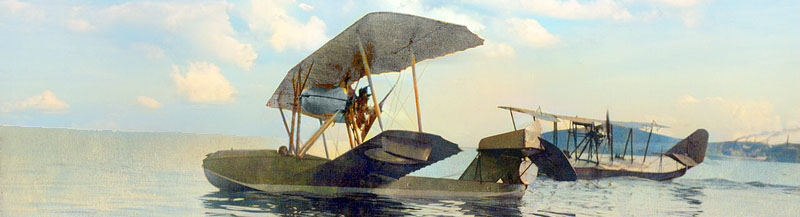
 Grigorovich M11
Russian Imperial navy, c60-74 built 1916-1917.
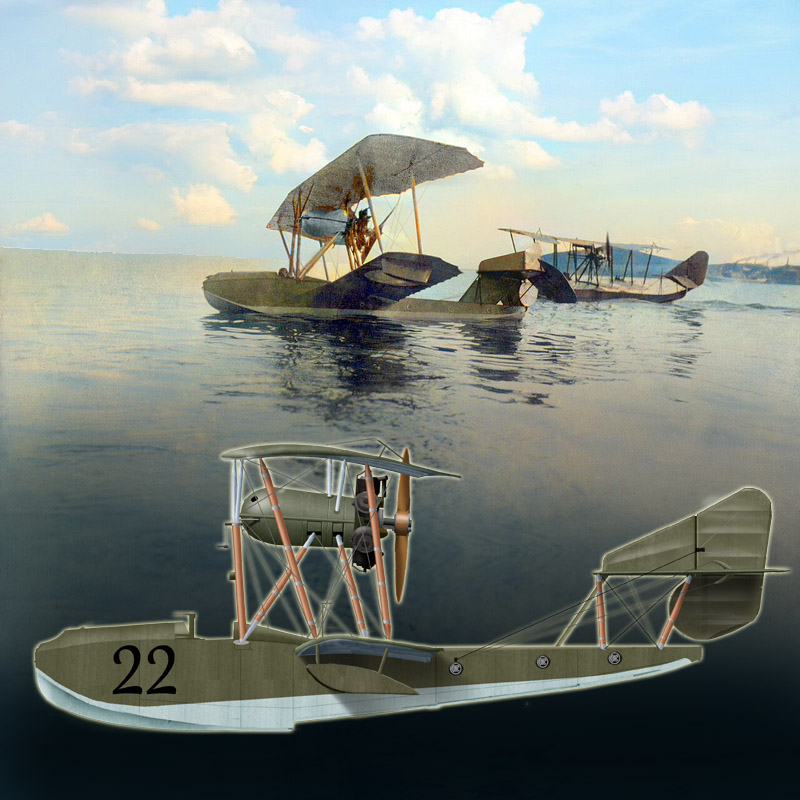
The first M11 produced were 2-seater for training but the bulk of the 60 made before the serie was cancelled, were single seaters. An improvement called the M12 failed and overall, the Grigorovich M11 was used only a few months between November 1916 and the summer of 1917, doomed by its poor seaworthiness and limited speed and performances in general, sub-par for a seaplane fighter.
Predecessors: Grigorovich M5, and M9
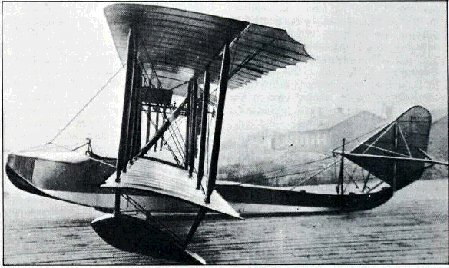 The lineage started with the M-3, not entirely successful as a prototype, a developement and slightly modified M-2 with a 100 hp Gnome-Monosoupape engine and a new wing profile. No better performances but better seaworthiness. Next came the M-4, a modified version with same engine but new wing profile. The hull was modified again to "unstick" faster, and its stabilizer had a screw lift. It was promising and used as the base for the first production model, the M-5 flying boat.
Designed in the spring of 1915 to face the German Empire, as well as the Austro-Hungarian and Ottoman Empires in the Baltic and Black Sea it was compared to the foreign Curtiss Model K or French FBA flying boats. D. P. Grigorovich made the M5 fly in April, the first greenlighted for production in a brand-new facility. 183 were delivered and from July 1915 to June 1917 alone, 71 entered service for the Black Sea Fleet, 60 to flying schools. They were still flying in the Civil War for perhaps 300 aircraft, mostly used for training from 1916.
The new standard indeed was the M9 type, latter called ShCh M-9, short for Shchetinin M-9 which retook the development. The M9 adopted the powerful Salmson P9 engine provided by the French, which forced many rearrangements of the structure and strenghtening. Maiden flight was on January 9, 1916 at Baku. On September 17, 1916, Polish test pilot Jan Nagórski made the world's first loop with a flying boat. Grigorovich by then headed the S.S. Shchetinin and M.A. Shcherbakov plants in Petrograd.
The Navy insisted for a larger aircraft for long-range reconnaissance and bombing and after a preserie of 30 production of the remainder of M9 went from April 1916 to mid-1917, for a total of 212, 100 sent to the Black Sea, 86 to the Baltic. Its true succeessor was the M-15. The M11/12 were entirely alternative developments and smaller, single-seat fighter flying boats which are the object of today's article.
Development of the M11
The performances of the M9 made obvious that if modified to be a proper naval fighter, the model would be the equivalent of the Italian Macchi. So Grigorovich, partly based from direct feedback from pilots and partly afteran unofficial request from the admiraty, worked on a more compact variant of the M9 that could be used as fighter/reconnaissance model. Original conceived as a two-seater, still, the prototype M-11 (The M10) was built in 1916 at the Shchetinin factory in Petrograd. Previous entry, the M10 was already designed as a smaller, scaled-down variant of the successful Grigorovich M-5 to be a naval fighter, so it was not the first attempt. It reached prototype stage powered by a Gnome Monosoupape rotary engine but did not enter mass production. It was found lacking rididity, the M9 was provided with.For Russian pilots the Baltic theater was characterized by frequent encounters against German seaplanes so the Naval Department contacted Grigorovich for a seaplane capable of escorting M-9s in their reconnaissance missions, engaging in active fighter patrols if required. To meet these requirements, Grigorovich designed a compact version of its M9, with a new hull, as a twin-seater for training and single-seatern powered by the 100 hp Gnome-Monosoupape engine of the M9.
Designated M-11, it was built from July 1916. Flight tests were performed by naval pilot (Midshipman) Alexander Prokofiev-Seversky who later emigrated in the USA after the revolution, like Sikorsky. He went to found the Seversky company and being an advisor to Presidents Roosevelt and Truman in aviation matters. But back in November 1916, he authored the manual "Assembly and Adjustment of the M-11 Flying Boat" for next pilots and officers operating the model. By December, he designed and tested skis for the M-11 and did the same for the M-15 reconnaissance aircraft, both using similar suspended skis. The M11 tested in this configuration in February 1917 and this was generalized.
Design of the Grigorovich M11
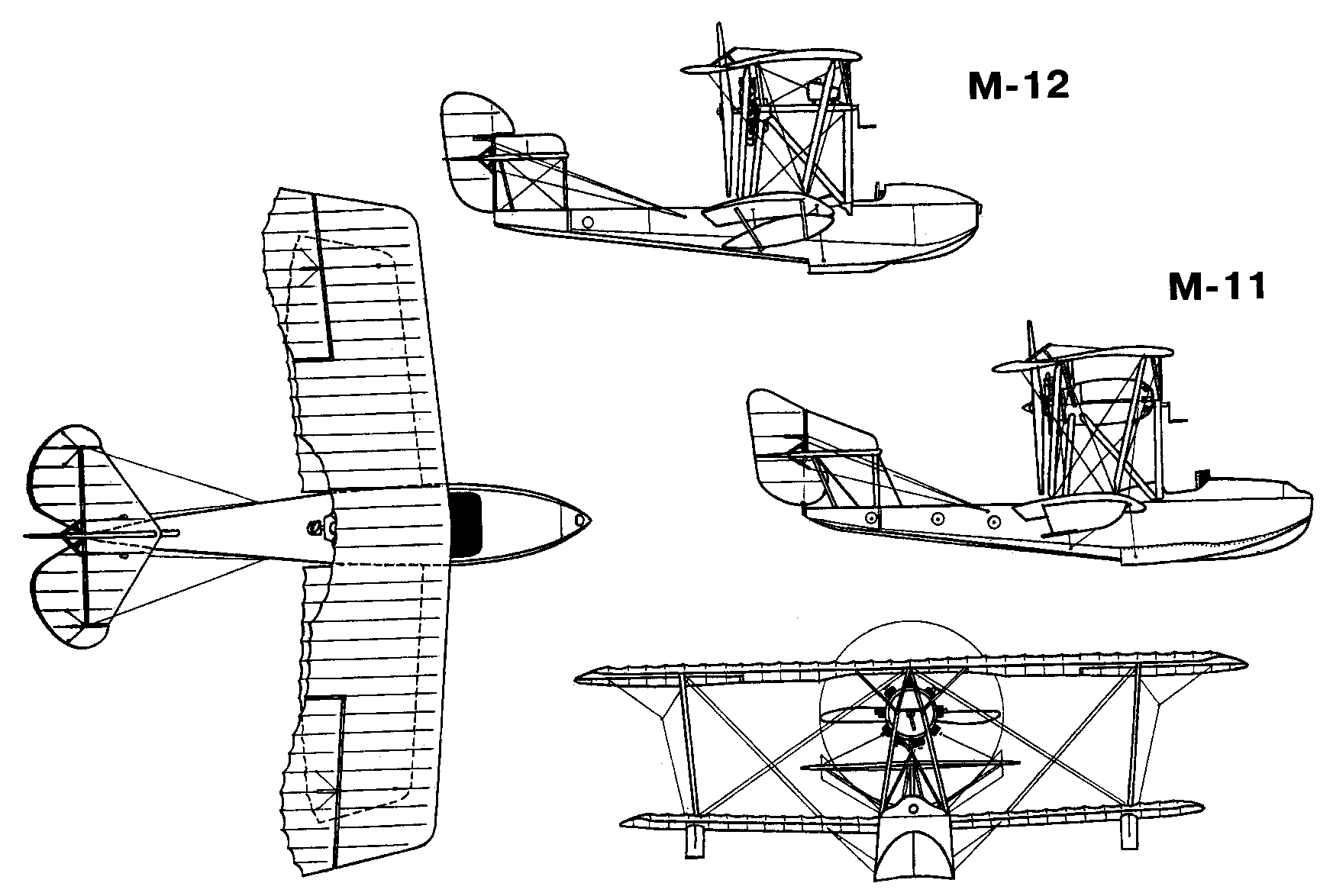
The M-11 remained a biplane with a 100-hp (75-kW) Gnome Monosoupape rotary engine and pusher propeller strut-mounted and suspended below the upper wing. The initial two-seaters built had poor performance and were only used as trainers and Grigorovich developed a single-seat version powered a 110-hp (82-kW) Le Rhone engine with a forward-firing machine-gun. Originally 100 M-11s had been ordered but this was cut to 60 when pilots reporting poor handling on water. M-11s were robust enough to be equipped with skis and operate from snow and ice (two skis fitted under the forward fuselage and a single ski under the tailplane) making them more versatile in winter for the Baltic as seen above.
To improve water handling, an improved variant was developed as the M-12 with a re-designed hull reduced weight. Climb rate was improved but its top speed fell 8 km /h below the M-11 on trials, so only a few machines were built. For the first time, the pilot was provided some armor protection around the hull. The new flying boat featuring a shallow V-bottom, reworked step, but its side floats were at first similar, then attached directly to the lower wing without a gap.
Powerplant:
The engine was the same engine (100 jp Le Rhone for the 2-seat M11) as the M9, and for extra performances was capped by a distinctive egg-shaped fairing. The sing-seater adopted the improved Le Rhône rotary piston 82 kW (110 hp). It was coupled with the same wooden 2-bladed propeller fixed-pitch in a pusher configuration. Top Speed at sea level was now of 48 km/h (92 mph, 80 kn) and it could stay aloft for 2 hours 42 minutes.Armament
Armament consisted of a single fixed machine gun mounted ahead of the pilot. To protect critical components, the aircraft featured 4–6 mm thick armor plating positioned in front of both the engine and the pilot. Steel strips along the leading edges were also used to reinforce the wing struts.⚙ specs. | |
| Empty Weight | 676 kg (1,490 lb) |
| Gross Weight | 926 kg (2,041 lb) |
| Lenght | 7.60 m (24 ft 11.25 in) |
| Wingspan | 8.75 m (28 ft 8.5 in) |
| Height | 3.12 meters |
| Wing Area | 26 m2 (279.87 sq ft) |
| Engine | Le Rhône rotary piston 82 kW (110 hp) |
| Propeller | 2-bladed fixed-pitch pusher propeller |
| Top Speed, sea level | 148 km/h (92 mph, 80 kn) |
| Range/Autonomy | 2 hours 42 minutes |
| Climb Rate | |
| Ceiling | 3000 m (9,800 m) |
| Armament | 7.62mm (0.3 in) Maxim machine-gunin the nose |
| Crew | 1 pilot |
Production & Reception
- M-11 (two-seat): Small numbers built for training use.
- M-11 (single-seat): Production variant, 60 built.
- M-12: Improved version, a few made.
Operators
 Imperial Russian Navy
 Finnish Air Force
 Russian SFSR: Red Army and Soviet Naval Aviation
Grigorovich M12
The two-seater M-12 was designed and built without armor plating, with gunner forward.The nose was shorter, and the tail modified. The Navy long struggled to decide which aircraft to favor. This was shown by a telegram sent by Dudorov to the Main Shipbuilding Directorate on November 19, 1916:"Given the ongoing debate regarding the qualities of the single-seat and two-seat aircraft, and the impossibility of precisely determining their comparative merits, I request that the total order for aircraft with engines be split 50/50 between single-seat fighters and two-seat models for the Baltic Sea."But eventually its speed was found inferior, albeit it climbed a bit faster. Seaworthiness for both was questionable at best. Achieving 135–140 km/h with a better refined hull came at the cost of handling at sea with a takeoff only possible in calm seas or with very low waves. At some point the right wing would dip into the water due to the torque and it was also felt in flight, the pilot had to compensate for it at all times and they ended long missions quite exhausted.
There were famous comparative tests of the Baltic Sea Fleet with a captured Albatros seaplane which revealed:
"...Shchetinin’s M-11 fighter, powered by a Monosoupape engine, holds only a very slight speed advantage—insufficient to allow for free maneuvering—which significantly hampers its ability to attack..."The Germans by 1917 had seaplanes with more powerful engines and two nose machine guns, outperforming and out-gunning the M-11 and M-12 in every respect. From the second half of 1916 and May 1917, the Shchetinin factory manufactured and delivered 61 M-11 and M-12 as registered by the War Department. 36 aircraft to the Black Sea, 1 to the flight school in Baku, the remainder to the Baltic. By mid-1917, fifteen M-11s were left operational in the Baltic, four left in the Black Sea which saw a massive attrition by accidents or combat losses.
Combat Records, Grigorovich M11
Its production was cut short to 60 until the revolution of 1917 with outher sources stating 74 were made. It might included 2-seater trainers and M12s. It entered service gradually by the autumn (2 seaters retained for training) and winter of 1916-17 (1 seater) and saw significant action, being distributed heavenly between the Baltic and black sea fleet. Those use din the Baltic this winter were soon equipped with a set of three skis suspended by leaf springs when it was realized they were study enough for operations on snow and ice. Pilots however complained on poor performances when swimming, it was sluggish to control and did not stay on stable course when taking off or landing.Its le Rhone engine also proved finnicky for hard Russian winter conditions. Pilots appreciated its agility while in flight, albeit the climb rate was low and made it a poor interceptor, it had no chance getting to a Zeppelin for example. However its range was an appreciable 2 hours 40 minutes. So in partice the M11 was considered like a "solo reconnaissance model with dogfighting abilities". As it was designed as an escort fighter, that objective was filled.
But overall, in actual combat operations, M-11 and M-12 saw limited use due to its poor seaworthiness. The Navy abandoned the model by the summer of 1917 and with the collapse of the Russian Empire and cessation of hostilities, they quickly disappeared from service when pilots could choose better machines. Some still flew during the civil war, especially in the winter. The M11 was still fast and agile while in flight, and managed to get a few victories for those in the Baltic, including one piloted by Polish-born Russian ace Jan Nagurski which in 1916.
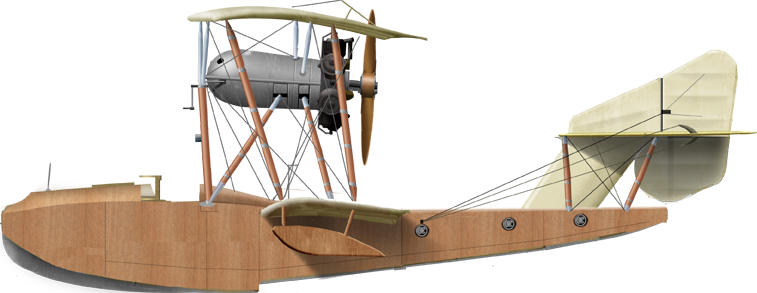
Early M11 model, unpainted, with early floats types
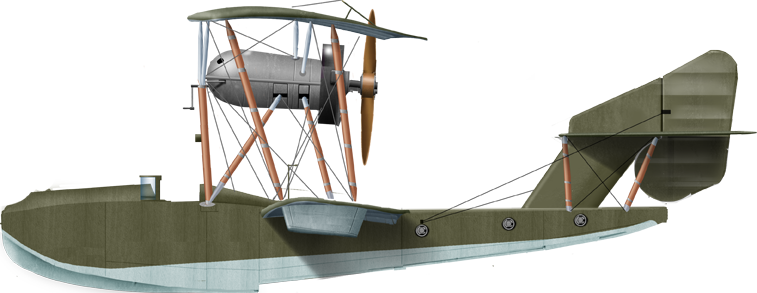
Unmarked Green Model, late float types 1916
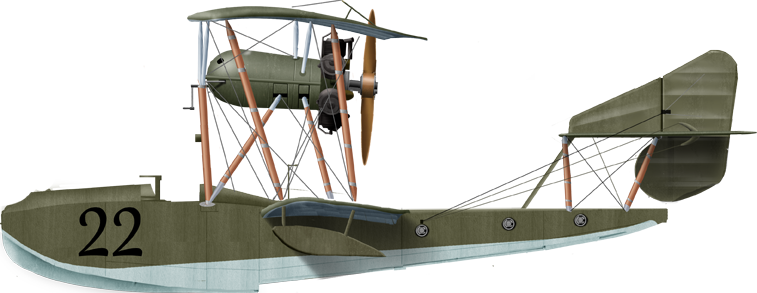
Model "22" Black sea fleet early float types
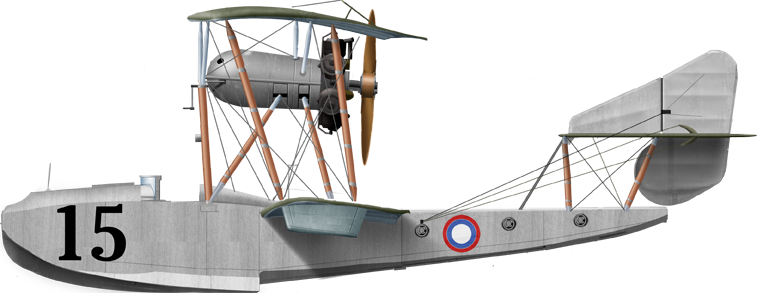
Model '15' in Navy Grey, 1917.
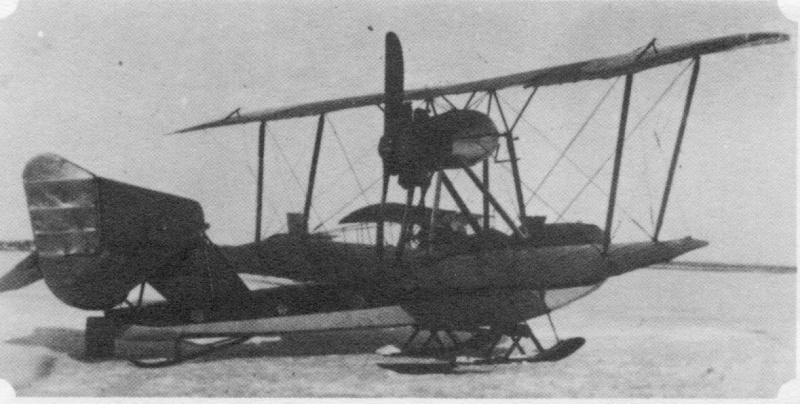
M11 with skis in April 1917
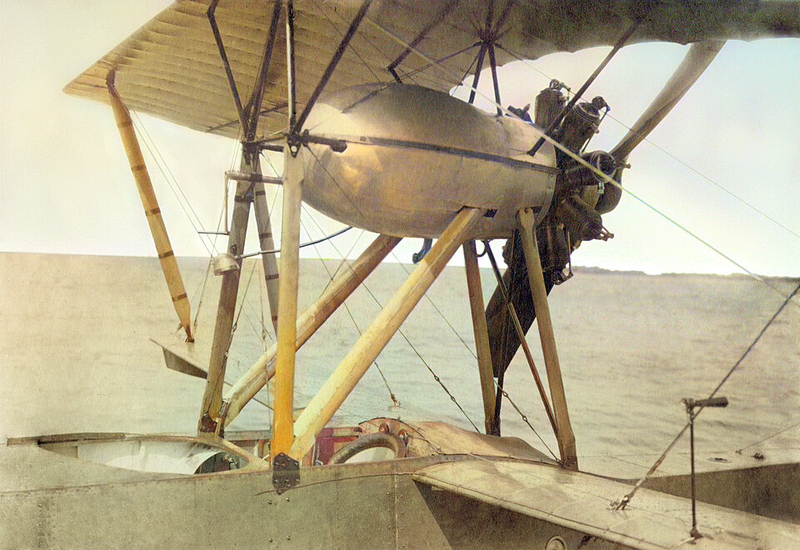
Aviation Officers School Grigorovich M11 2-seater detail
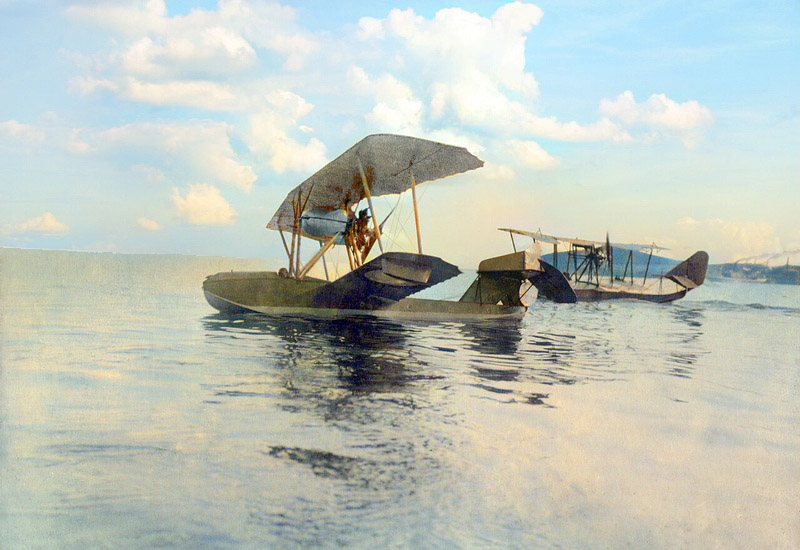
Same, ongoing
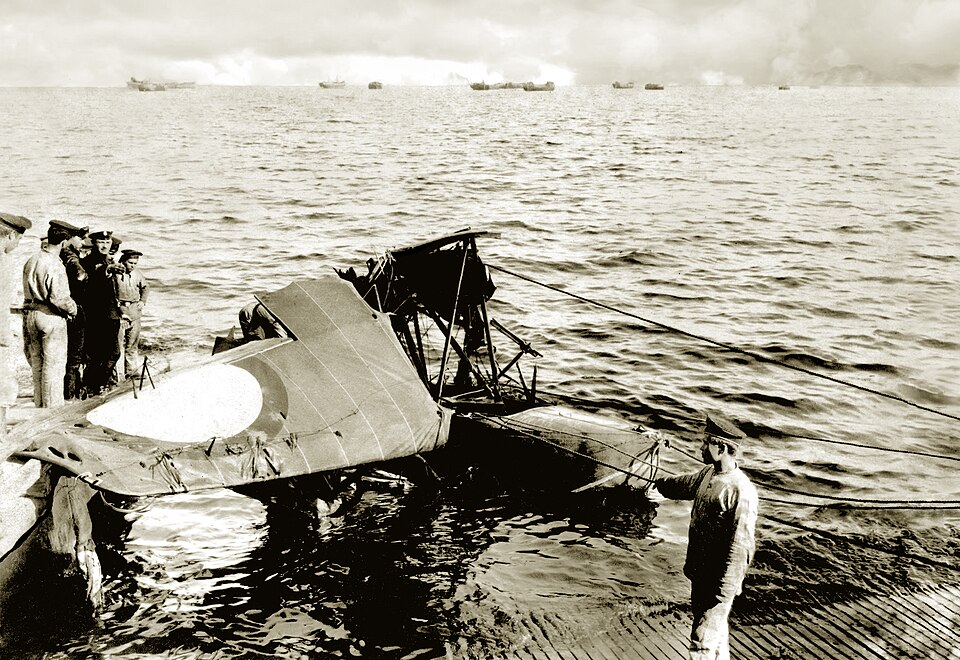
Same, damaged

"Grigorovich M-11" flown by Lieutenant Jan Nagurski during its historic first combat victory, 12 August 1916. IA created from Pinterest. Note the numerous errors, as the red star (roundels required) ww2 camo, wrong tail, ring MG...

Model in 1916. Few were painted in Grey, this was mostly for baltic M11s
Sources
ecured.cukpi.ua
aviastar.org
wio.ru
Grigorovich_M-9
warhistory.org
flyingmachines.ru
secretprojects.co.uk
airwar.ru
On commons.wikimedia.org
ecured.cu
scalemates.com
Mikhail Maslov. Dmitry Grigorovich's Aircraft.
Heinonen, Timo (1992). Thulinista Hornetiin – 75 vuotta Suomen ilmavoimien lentokoneita (in Finnish). Tikkakoski: Keski-Suomen ilmailumuseo.
"Grigorovich Flying Boats". Russian aviation in WW1 and Civilian War (in Russian and English).
Shavrov VB History of Aircraft Designs in the USSR to 1938 — 3rd. — Moscow: Mashinostroenie, 1985.
Durkota, Darcey & Kulikov (1995). The Imperial Russian Air Service - Famous Pilots and Aircraft of World War 1. Flying Machines Press.
Gunston, Bill (1995). The Osprey Encyclopedia of Russian Aircraft from 1875 - 1995. Osprey Aerospace.
Heinonen, Timo: Thulinista Hornetiin - Keski-Suomen ilmailumuseon julkaisuja 3, Keski-Suomen ilmailumuseo, 1992
Kulikov, Victor (December 1996). "Le fascinante histoire des hydravions de Dimitry Grigorovich" Avions FR
The Osprey Encyclopedia Of Russian Aircraft 1875-1995
Herbert Leonard Russian and Soviet fighters 1915-1950
- Lohner E (1913)
- Macchi M3 (1916)
- Macchi M5 (1917)
- Macchi M7 (1918)
- Ansaldo ISVA (1918)
- Short S.38 (1912)
- Sopwith Baby (1916)
- Short 184 (1916)
- Fairey Campania (1917)
- Sopwith Cuckoo (1917)
- Felixstowe F.2 (1917)
- Gotha WD.2 (1914)
- Friedrichshafen FF 33 (1916)
- Albatros W4 (1916)
- Albatros W8 (1918)
- Hanriot HD.2
- Grigorovich M5 (1915)
- Grigorovich M9 (1916)
- Grigorovich M11 (1917)
- IJN Farman MF.7
- IJN Yokosho Type Mo
- Yokosho Rogou Kougata (1917)
- Yokosuka Igo-Ko (1920)
- Curtiss N9 (1916)
- Curtiss H4 (1916)
- Curtiss H12 (1917)
- Curtiss H16 (1918)
- Aeromarine 39
- Vought VE-7
- Douglas DT (1921)
- NAF/Curtiss TS-1 (1922)
- Boeing FB.5 (1923)
- Boeing F4B (1928)
- Vought O2U/O3U Corsair (1928)
- Grumman FF (1931)
- Akron class airships (1931)
- Curtiss F9C Sparrowhawk (1931)
- Curtiss F11C Goshawk (1932)
- Curtiss BF2C Goshawk (1933)
- Blackburn Blackburn (1922)
- Supermarine Seagull (1922)
- Fairey Flycatcher (1923)
- Hawker Horsley (1925)
- Blackburn Ripon (1926)
- Fairey IIIF (1927)
- Fairey Seal (1930)
- LGL-32 C.1 (1927)
- Fokker T.II (1921)
- Fokker T.III (1923)
- Caspar U1 (1921)
- Dornier Do J Wal (1922)
- Rohrbach R-III (1924)
- Mitsubishi 1MF (1923)
- Mitsubishi B1M (1923)
- Yokosuka E1Y (1923)
- Nakajima A1N (1927)
- Nakajima E2N (1927)
- Mitsubishi B2M (1929)
- Nakajima A2N (1930)
- Nakajima A4N (1935)
- CANT 18
WW1
✠ K.u.K. Seefliegerkorps:
 Italian Naval Aviation
 RNAS
RNAS
 Marineflieger
 French Naval Aviation
 Russian Naval Aviation
 IJN Air Service
 USA
USA
Interwar
 Interwar US
 Interwar Britain
 Interwar France
 Interwar Netherlands
 Interwar Germany
 Interwar Japan
 Interwar Italy
- Grumman F2F (1933)
- Curtiss SOC seagull (1934)
- Grumman F3F (1935)
- Northrop BT-1 (1935)
- Consolidated PBY Catalina (1935)
- Grumman J2F Duck (1936)
- Brewster/NAF SBN-1 (1936)
- Curtiss SBC Helldiver (1936)
- Vought SB2U Vindicator (1936)
- Brewster F2A Buffalo (1937)
- Douglas TBD Devastator (1937)
- Vought Kingfisher (1938)
- Curtiss SO3C Seamew (1939)
- K-class Blimps (1939)
- Douglas SBD Dauntless (1939)
- Grumman F4F Wildcat (1940)
- F4U Corsair (NE) (1940)
- Brewster SB2A Buccaneer (1941)
- Grumman TBF/TBM Avenger (1941)
- Consolidated TBY Sea Wolf (1941)
- Grumman F6F Hellcat (1942)
- Curtiss SB2C Helldiver (1942)
- Curtiss SC Seahawk (1944)
- Grumman F7F Tigercat (1944)
- Grumman F8F Bearcat (1944)
- Ryan FR-1 Fireball (1944)
- Douglas AD-1 Skyraider (1945)
- Fleet Air Arm
- Hawker Osprey (1932)
- Fairey Swordfish (1934)
- Blackburn Shark (1934)
- Supermarine Walrus (1936)
- Fairey Seafox (1936)
- Blackburn Skua (1937)
- Short Sunderland (1937)
- Blackburn Roc (1938)
- Fairey Albacore (1940)
- Fairey Fulmar (1940)
- Grumman Martlet (1941)
- Hawker sea Hurricane (1941)
- Brewster Bermuda (1942)
- Fairey Barracuda (1943)
- Fairey Firefly (1943)
- Grumman Tarpon (1943)
- Grumman Gannet (1943)
- Supermarine seafire (1943)
- Blackburn Firebrand (1944)
- Hawker Sea Fury (1944)
- Coastal Command
- Vickers Wellington (1937)
- IJN aviation
- Yokosuka E6Y (1930)
- Aichi D1A "Susie" (1934)
- Mitsubishi A5M "Claude" (1935)
- Nakajima A4N (1935)
- Yokosuka B4Y "Jean" (1935)
- Mitsubishi G3M "Nell" (1935)
- Nakajima E8N "Dave" (1935)
- Kawanishi E7K "Alf" (1935)
- Nakajima B5N "Kate" (1937)
- Kawanishi H6K "Mavis" (1938)
- Aichi D3A "Val" (1940)
- Mitsubishi G4M "Betty" (1940)
- Mitsubishi A6M "zeke" (1940)
- Nakajima E14Y "Glen" (1941)
- Nakajima B6N "Jill" (1941)
- Mitsubishi F1M "pete" (1941)
- Aichi E13A Reisu "Jake" (1941)
- Kawanishi E15K Shiun "Norm" (1941)
- Nakajima C6N Saiun "Myrt" (1942)
- Yokosuka D4Y "Judy" (1942)
- Kyushu Q1W Tokai "Lorna" (1944)
 Luftwaffe
- Heinkel 114 (1935)
- Arado 196 (1937)
- Me109 T (1938)
- Blohm & Voss 138 Seedrache (1940)
 Italian Aviation
- Savoia-Marchetti S.55
- IMAM Ro.43/44
- CANT Z.501 Gabbiano
- CANT Z.506 Airone
- CANT Z.508
- CANT Z.511
- CANT Z.515
 French Aeronavale
- GL.300 (1926-39)
- CAMS 37 (1926)
- Levasseur PL.5 (1927)
- Potez 452 (1935)
- Loire 210 (1936)
- Loire 130 (1937)
- LN 401 (1938)
 Soviet Naval Aviation
- Shavrov SH-2 (1928)
- Tupolev TB-1P (1931)
- Beriev MBR-2 (1930)
- Tupolev MR-6 (1933)
- Tupolev MTB-1 (1934)
- Beriev Be-2 (1936)
- Polikarpov I16 naval (1936)
- Tupolev MTB-2 (1937)
- Ilyushine DB-3T/TP (1937)
- Beriev Be-4 (1940)
 Swedish Naval Aviation
- SAAB B17S
-
 Skoda Š-328V
  R-XIII Idro
 Fokker C.XI W (1934)
 Rogožarski PVT-H (1938)
WW2
 ☍ USNA
- De Havilland Sea Vixen
- Hawker Sea Hawk
- Supermarine Scimitar
- Blackburn Buccaneer
- Hawker Sea Harrier
- Douglas A4 Skyhawk
- Grumman F9F Panther
- Vought F8 Crusader
- McDonnell-Douglas F-4 Phantom-II
- North Am. A5 Vigilante
- TU-142
- Yak 38 forger
☢ Cold War
✧ NATO
Fleet Air Arm
 US Navy
☭ Warsaw Pact
Merch
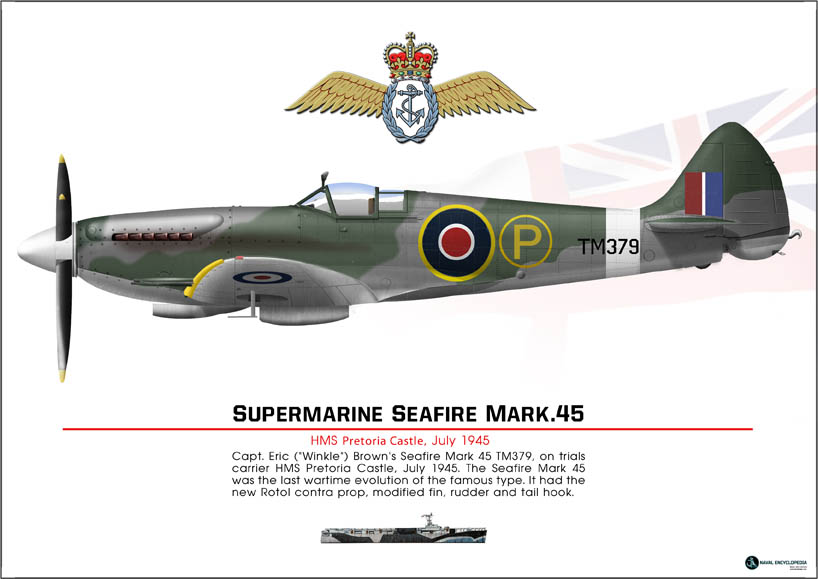
Seafire Mark 45; HMS Pretoria Castle
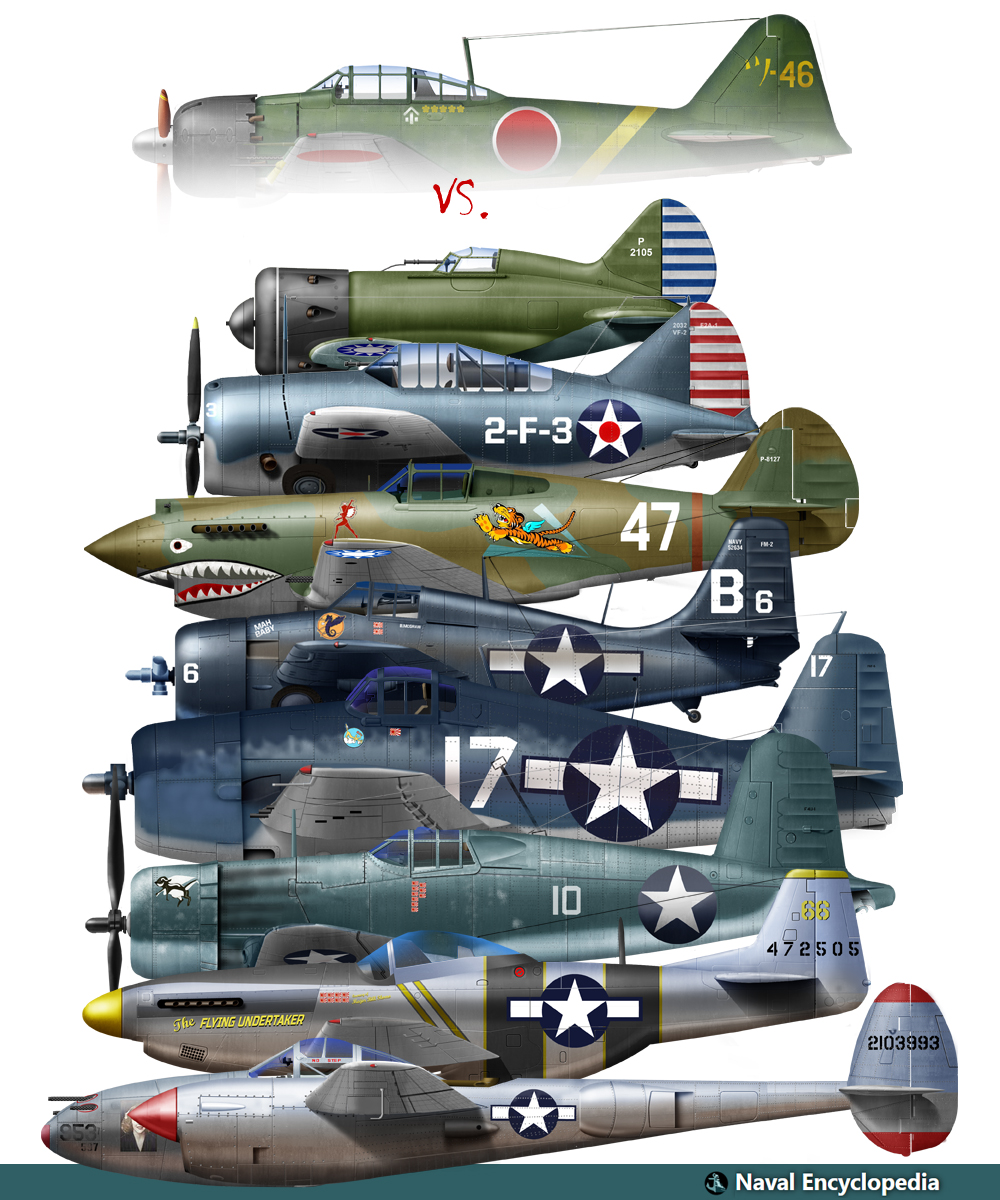
Zeros vs its aversaries
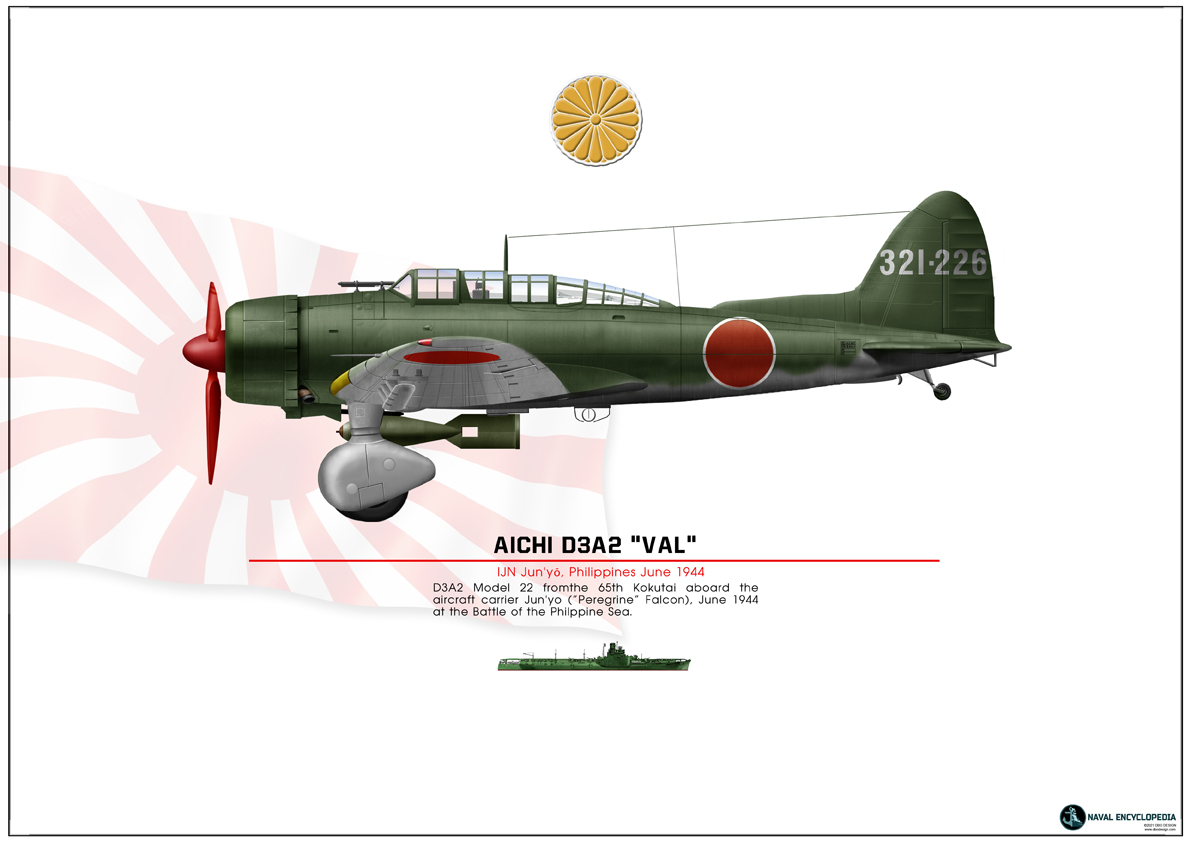
Aichi D3A “Val” Junyo
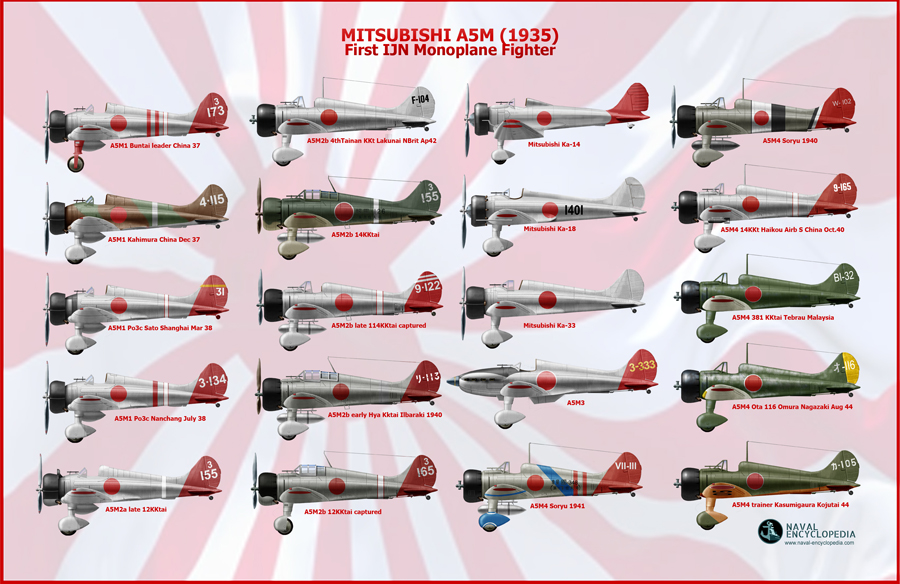
Mitsubishi A5M poster
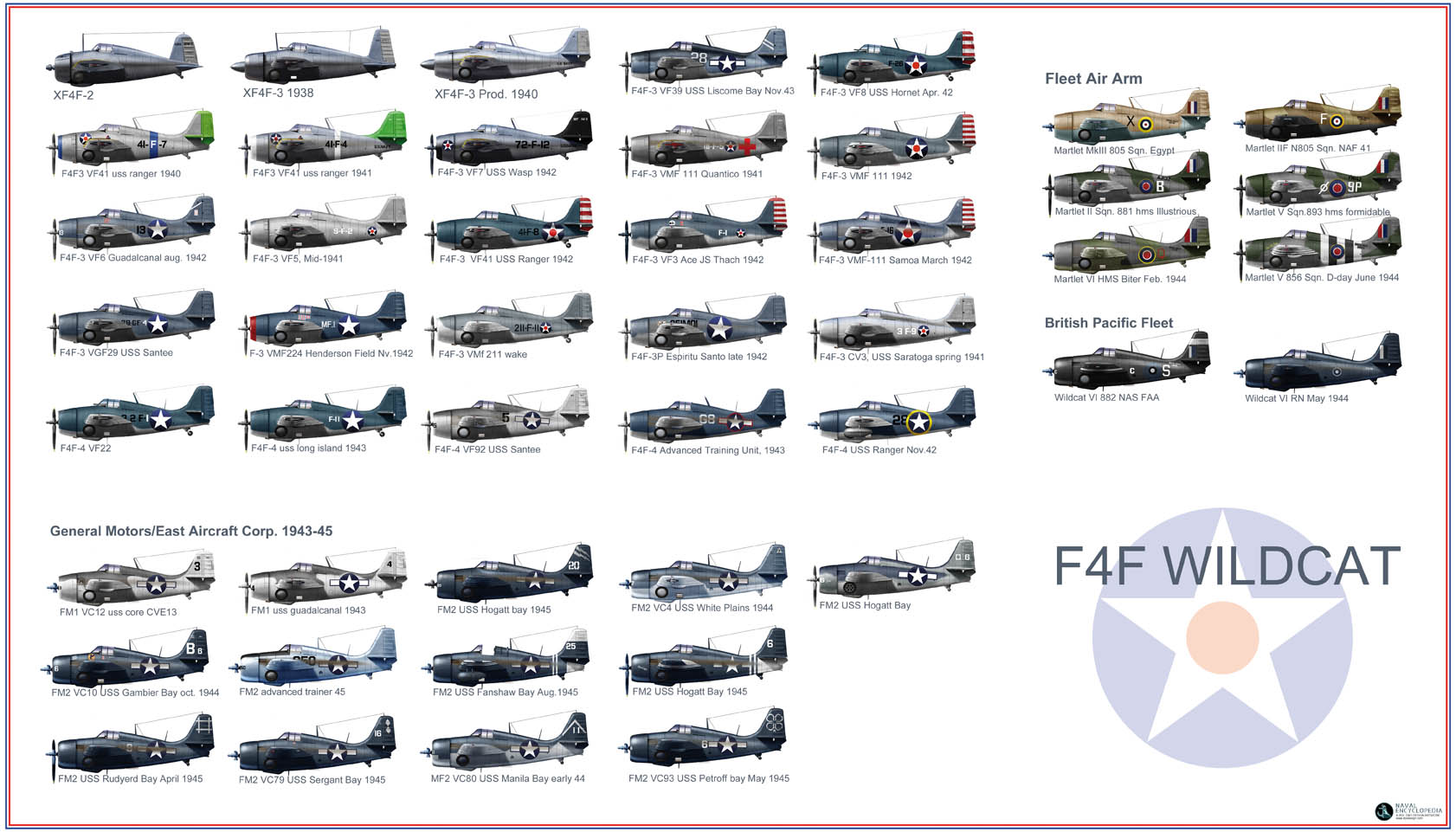
F4F wildcat
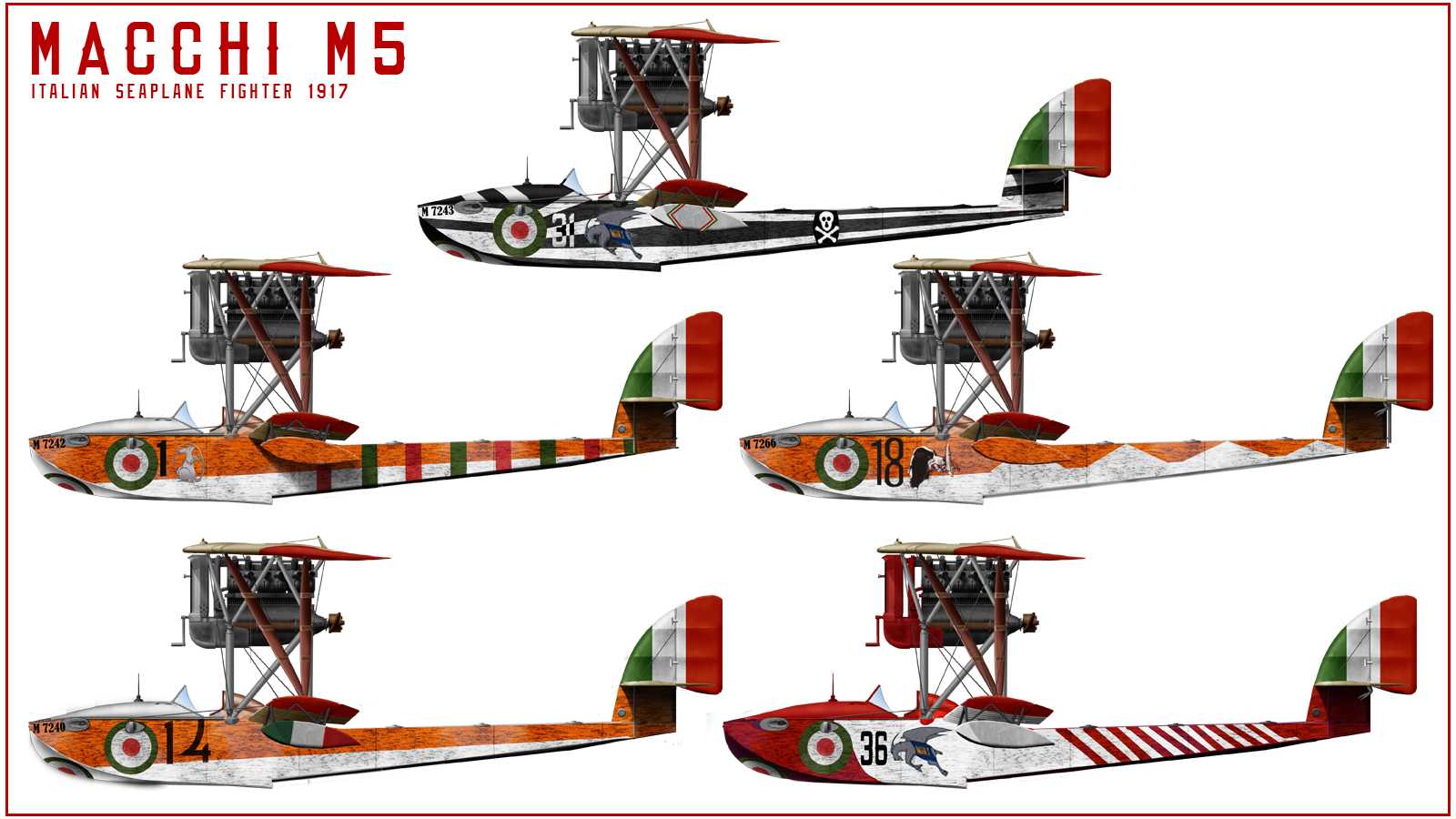
Macchi M5
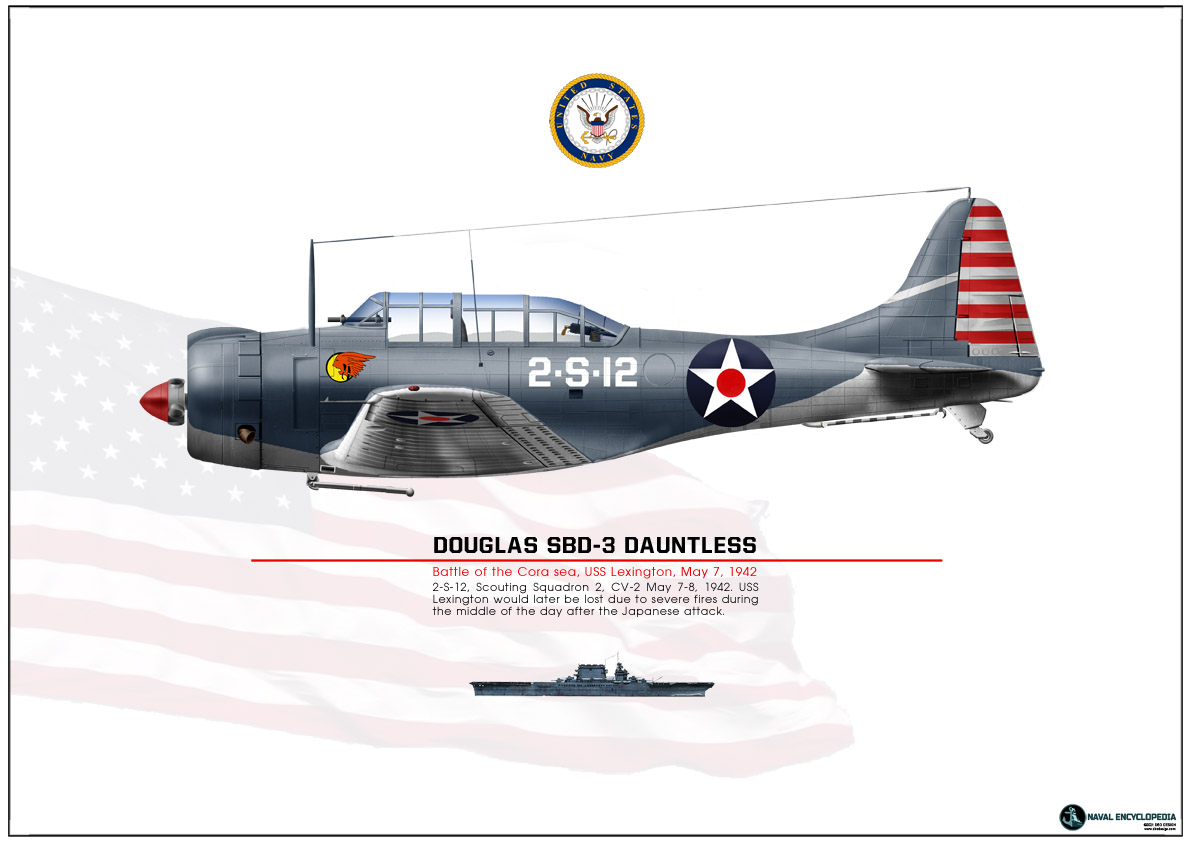
SBD Dauntless Coral Sea
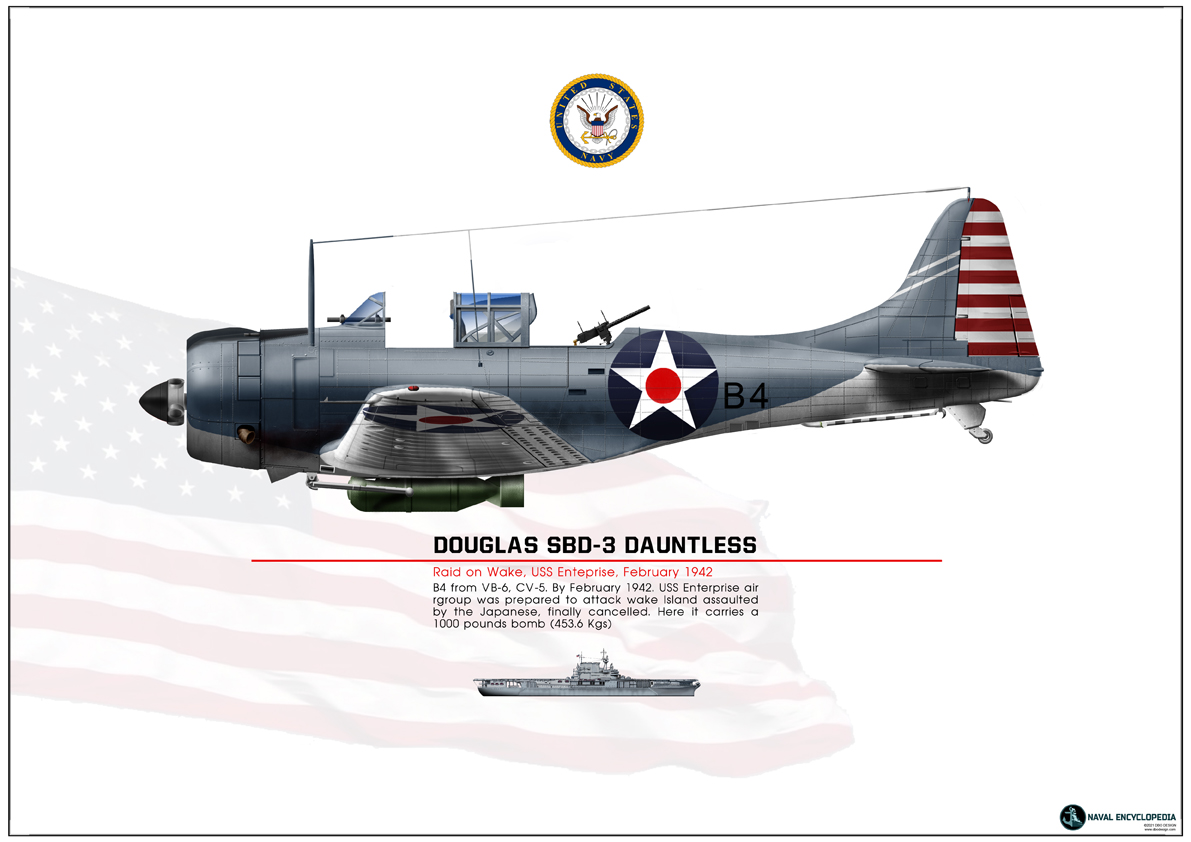
SBD Dauntless USS Enterprise
SBD-4 CV22