Hawker Nimrod (1933)
 RNAS/FAA, 92 built.
Development
Back in 1926 the Air Ministry specification N.21/26 was intended to produce a successor to the Fairey Flycatcher. The latter flew since four years already which was long for such replacement, at least for RAF standards. In 1932, the Flycatcher was seen largely as obsolete, specially for speed. Some RAF officers who flew it by then joked that it could have been out-run by a sprightly fly. In 1924 the Fleet Air Arm had been established on April 1 within the RAF, comprising RAF personnel and aircraft and despite "Dual Control" under the Balfour Committee agreement for observers to be mostly naval officers, and split percentage of pilots from the Royal Navy and RAF school, this created a complex, clashing chains of command which also reflected on procurement. Before a full independence and return to Admiralty Control in 1939, the Air Ministry prioritized funding for the RAF's land-based bomber commands, and so the Fleet Air Arm suffered from severe underfunding and received hand-me-down or obsolete aircraft designs compared to the US Navy and Imperial Japanese Navy. Notably, the Flycatcher was retained way too long in service.Clearly in the timespan between the Flycatcher and Sea Gladiator in 1938, which only saw the Nimrod as intermediate 1930s model, the RAF sported the Sopwith Snipe, A.W. Siskin, Gloster Grebe, Hawker Woodcock, Gloster Gamecock, Bristol Bulldog, Hawker Fury, Hawker Demon, Gloster Gauntlet... and Gladiator. So at the time the Fury was introduced, reflecting on the Nimrod, the FAA was left with a model barely equivalent to the Siskin.
The 1928 Hawker Hoopoe
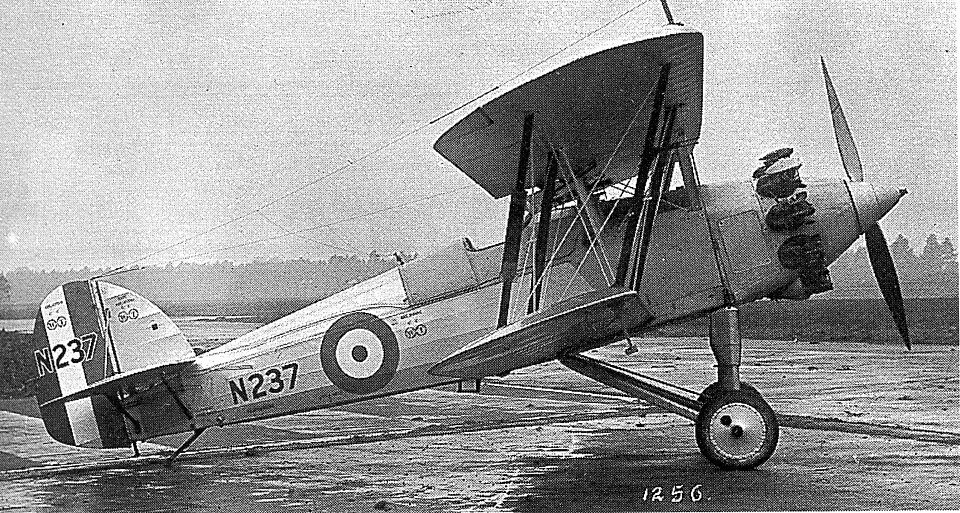
The FAA staff in addition was sceptic of the models proposed, perhaps due to less efforts by manufacturers over these less lucrative contract. None of the aircraft designed to this specification were selected. The trials of 1928, only retained the radial-engined Hawker Hoopoe. It was not actually designed to N.21/26 specifications, yet was promising enough to continue developement. The now forgotten Hoopoe first flew in October 1928 (serial number N237) but went through a dizzying array of design overhauls. It started as a two-bay biplane, but Hawker later redesigned the wings into a cleaner, single-bay configuration to decrease drag.
When tested with floats at Felixstowe in 1929 as part of the FAA requirements, the initial 450 hp Bristol Mercury II engine proved severely underpowered. Hawker constantly upgraded the powerplants to save the project. It tested the 520 hp Bristol Mercury IV, shifted to a 400 hp Armstrong Siddeley Jaguar V, and finally flew with a 560 hp Armstrong Siddeley Panther III radial engine enclosed in a Townend drag-reduction ring. Hawker indeed preferred by far inline engine, yet the Navy continued to argue for radials notably due to the nature of its service.
Despite reaching 196.5 mph and being armed with two two .303-inch machine guns, interest from the Air Ministry and Admiralty faded by 1930. The RAF still preferred liquid-cooled, in-line engines like the Rolls-Royce Kestrel over the Hoopoe's air-cooled radials. Progress outpaced the prototype. Lessons learned from the Hoopoe directly influenced Sydney Camm's next naval design: the successful Hawker Nimrod, which became the Fleet Air Arm's definitive carrier fighter of the early 1930s. The Hoopoe kept flying for trials and research work until scrapped in 1932.
From the 1930 "Norn" to the Nimrod
Prototype
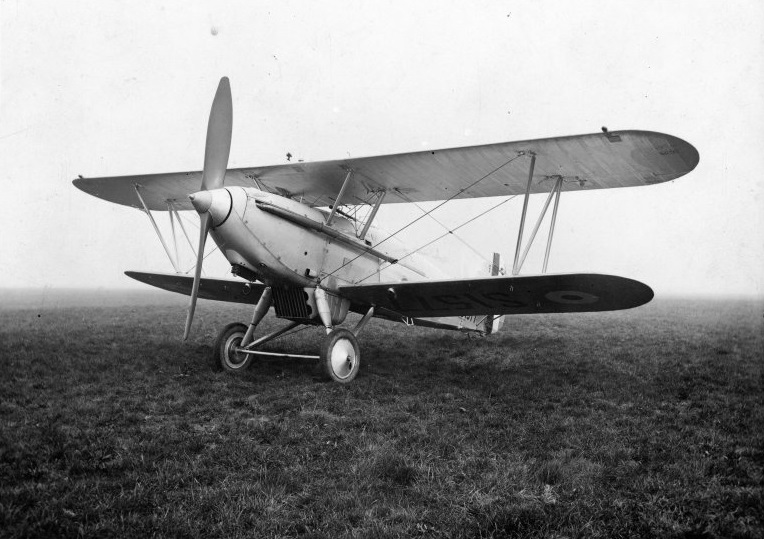
Sydney Camm indeed, which later would design the legendary Hurricane, was convinced by his experience on the Hawker Fury that the future for shipborne aircraft also lay with inline engines. He started worrk on a version intermediate between teh Hoopoe and Fury using the Rolls-Royce Kestrel. Before completion, so was convinced the RAF, which led the Air Ministry to publish specification 16/30 written around it, above the head of the FAA. The new mystery fighter was provisionally called "Norn" when flying in the first months of 1930. Trials were prositive and it received a production contract while being renamed Nimrod.
After testing in 1930, the prototype had its carrier qualifications on HMS Eagle, both sailing to Argentina, for the Buenos Aires British Empire Trade Exhibition in March 1931, hoping to sell the Hawker fighter to the Argentines. Then the Nimrod returned to RAF Martlesham Heath for final testing, followed by a production order for 35. The first Mark I rolled of the factory floor and flew on 31 October 1931. In 1932 another contract for a further 19 was signed. Hawker should be credited for an engineering feat nevertheless, that while having a top speed of 193 mph (311 km/h) it was only marginally slower than its land-based counterpart, the Hawker Fury, while being far more rugged and receiving the extra equipments characteristic of Naval service. This was notably due to the engine used.
The Navy had to renounce its historical preferrence for radials, which made sense over several factors:
-Because radial engines are air-cooled, they lack a vulnerable liquid cooling system. An aircraft could take heavy damage—even losing an entire cylinder—and still fly back to the carrier.
-Liquid-cooled aircraft required carriers to haul thousands of gallons of volatile coolants (like glycol). The Admiralty possessed a major phobia of shipboard blazes; storing less flammable coolant reduced the risk of catastrophic fires if the carrier was hit.
- Radial engines feature fewer moving parts and lack external cooling systems. Maintaining them in the cramped, pitching hangar decks of a ship was vastly easier for naval mechanics than trying to bleed or repair delicate radiator plumbing.
-Radial engines typically provided more immediate low-end torque and horsepower per pound than inline engines at low altitudes. This explosive power generation gave naval planes the rapid acceleration needed to safely lift off short wooden decks.
-While the wide, circular face of a radial engine created higher aerodynamic drag, it offered a distinct structural benefit: it was relatively short. Liquid-cooled inline engines were long and narrow, creating a lengthy nose cowling that completely blocked a pilot's forward vision during a steep, nose-high carrier landing approach. The shorter profile of a radial gave pilots a slightly better view of the deck and the landing signals officer (LSO).
The only changes while in production was the addition of a new headrest fairing to ease pilot strain during catapult launches. Only later production batched were fitted with arrestor hooks as well. The early Nimrods evolved with swept upper and lower wings, leading to the Nimrod Mark.II, in addition to their uprated Kestrel II engine and later, Kestrel Vs. Late batched of Nimrod IIs obtained a larger rudder area, to improve spin recovery if equipped with floats. Originally the Mark II was to have also a fuselage made of corrosion-resistant stainless steel, but only three were built for experimentation. The first of two orders, 27 and 33 Nimrod Mark IIs were delivered in March 1933.
Design
General conception

Structure of the Hawker Fury, giving an idea about the Nimrod.
The Nimrod overall was largely more similar to the Fury than the Hoopoe, notably because it shared an inline engine. This was a classic single-seater biplane with open cockpit, fixed undercarriage, two Vickers machine guns firing through the propeller. It had unswept and constant chord, round-tipped wings of unequal span (upper one larger, sesquiplane) but with a strong stagger, partly to enhance the pilot's view. The single bay biplane was braced with outward-leaning "N"-shaped interplane struts. The upper plane was also linked to the upper fuselage by cabane struts.
The wings had a metal structure but were fabric-covered, with metal spars and spruce ribs. They carried balanced ailerons on the upper wings. the fuselage was a Warren girder structure, mixing tubular steel and aluminium. It was surrounded by stringers defining its oval cross section. The tubular steel was not treated for corrosion on the Mark I, and only trials with such coating were done for the Mark II. Camm believed that as long as the doped fabric retained its integrity and was treated with an efficient hydrophobic coating, the structure could stay as it was.

The Nimrod also shared with the Fury its upper fuselage line, highest at the cockpit, between the trailing edges of the upper and lower planes to ease visibility forward, albeit the ppilots, accustomed to the short radials had now to take in consideration the much longer nose when landing. The tailplane was mounted on top of the fuselage. It carried split horn balanced elevators. the vertical tail had a curved shape and a deep, wide chord, as well as an unbalanced rudder extending to the keel.
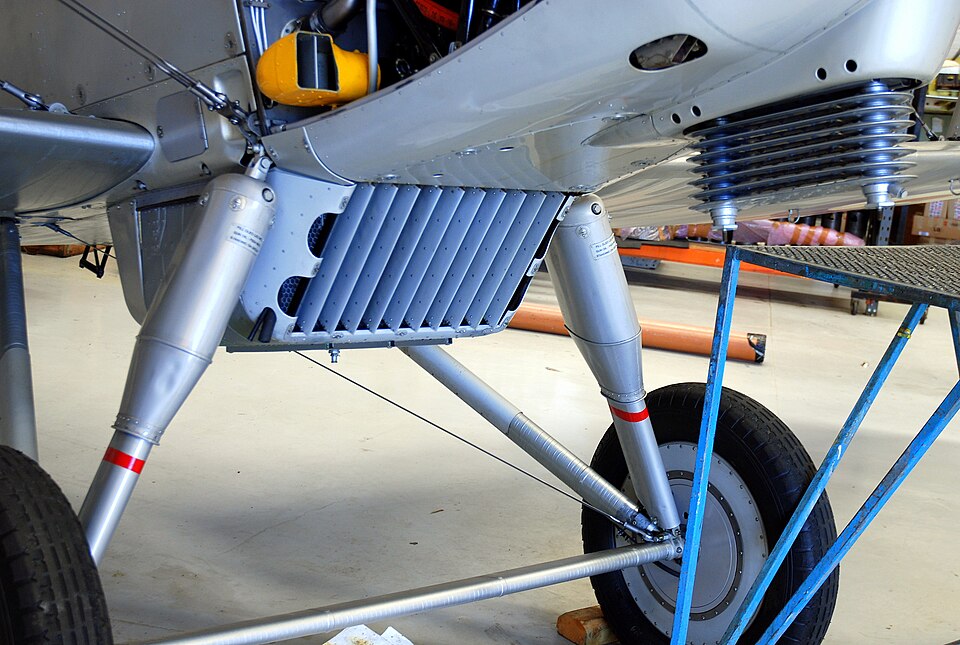
The conventional undercarriage was also similar to the Fury except more strongly built with larger dampers, yet the same cross axle type on trailing struts, and the compression legs placed almost at right angles to the fuselage. It also had an aft tailskid. The Mark Is were retrofitted with arrestor hooks. Inside the fuselage were placed a deflated raft, and survival kit for ditiching at sea.
Undercarriage and radiator
The other difference was that undercarriage was fixed in such a way to be swapped under short notice with floats. The Nimrod in some sources was designed to be catapulted. The structure was indeed also reinforced for catapulted operations. Instead, it was to be deployed on distant stations lacking airfields, like in Asia.
It had a pair of single-step, crossbraced floats mounted on N-form struts. The drag was considerable as top speed lost 25% or 47 mph (76 km/h). When developing the later Nimrod II, engineers incorporated a slightly increased rudder area to improve spin recovery when the aircraft was equipped with heavy, aerodynamic-disrupting floats indeed. However the number of models equipped with floats remained ellusive and photos excessively rare.
Engine
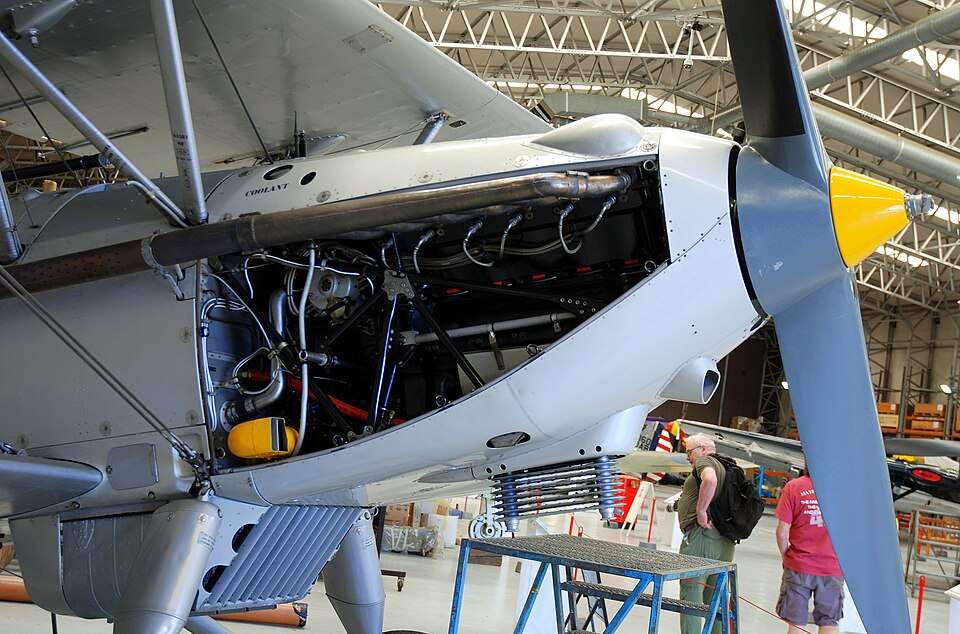
The Fury was powered by a Rolls-Royce Kestrel liquid-cooled V-12 engine, an advanced cast-block engine allowing to achieve a famously sleek aerodynamic profile. 525 hp for the Rolls-Royce Kestrel IIS and later 640 hp for the Kestrel VI. Meanwhile the Nimrod was powered by the Rolls-Royce F.9MS engine, later renamed the Kestrel IIMS, overly similar to the Kestrel II, but adaptaed to navy specifications. It was closely cowled in aluminium when the rest of the fuselage was fabric covered. The Kestrel engine also had a bath type radiator, mounted on the lower fuselage, placed between the undercarriage struts.
Armament
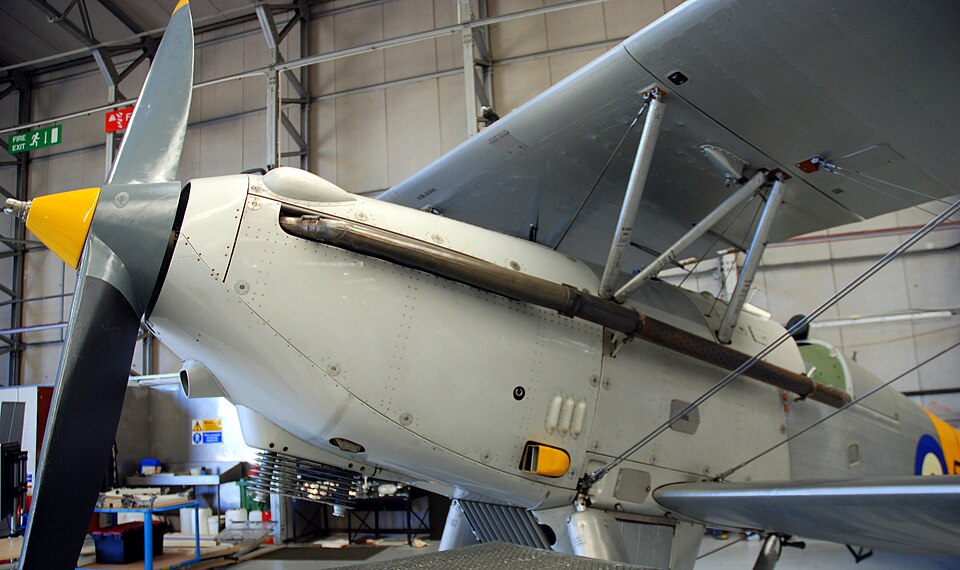
As a fighter, the Nimrod has the same arrangement as for the Fury, with a pair of machine guns mounted in the upper fuselage, between pilot and engine, and firing through the propeller using the standard interrupter gear. They were placed close enough to the pilot to be un-jammed in flight if needed. In addition, they still kept the option of carrying four 20 lb (9 kg) bombs on underwing racks.
⚙ Nimrod Mark I specifications | |
| Empty Weight | 3,110 lb (1,411 kg) |
| Max TO weight | 4,050 lb (1,837 kg) |
| Lenght | 26 ft 6 in (8.08 m) |
| Wingspan | 33 ft 7 in (10.24 m) |
| Height | 9 ft 10 in (3.00 m) |
| Wing Area | 300 sq ft (28 m2), Airfoil RAF 28. |
| Engine | Rolls-Royce Kestrel VFP V-12 liquid-cooled piston engine, 525 hp (391 kW) |
| Top Speed, sea level | 194 mph (312 km/h, 169 kn) |
| Range | 305 mi (491 km, 265 nmi) |
| Ceiling | 28,000 ft (8,500 m) |
| Armament | 2 × forward firing fixed .303 in (7.7 mm) machine guns, 80 lb bombs. |
| Crew | 1 pilot |
Service & Variants
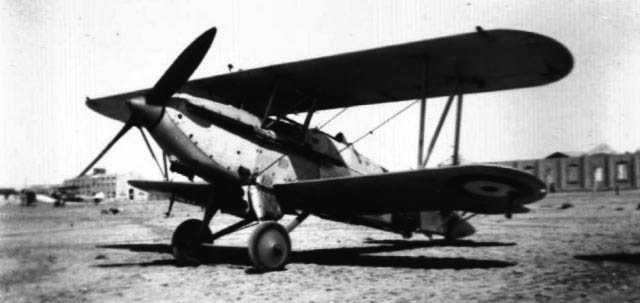
Nimrod at Al Amriya Base, Egypt, 1936
Variants
Nimrod I: FAA: 477 hp (356 kW) Rolls-Royce Kestrel IIMS piston engine: 57 built.Nimrod II: FAA: modified swept-wing version and 608 hp (453 kW) Kestrel IIS/VFp: 30 built.
Danish Nimrod: Hawker built with the Kestrel IIIS piston: 2.
Nimrodderne: Royal Danish Navy model built under licence in Denmark: 10
AXH1: Single Nimrod I supplied to the Imperial Japanese Navy Air Service for evaluation, 1934.
In FAA service
The first production Mark Is entered service in 1932, with No.408 Flight deploys from HMS Glorious. Prior to that the first batch qualified on the HMS Eagle. Others went to No.s 402 and 409 Flights soon after. Flights were then reorganised into Squadrons by early 1933, Nimrods joined No.s 801, 802 and 803 Squadrons and Nimrod Mark IIs followed in September 1934. Single models were evaluated by Japan and Portugal. Two were sold to Denmark at first, then proposed as the "Nimrodderne" pattern aircraft for a proposed licence. Thes Danish Nimrod Is had Kestrel IIIS engines and one was tested with spats.In FAA service, Nimrods were operated at least for a time in the 713, 759, 780, 781, 800, 801, 802, and 803 Naval Air Squadrons as well as No. 404 (Fleet Fighter) and No. 408 Flight FAA as well as the No. 1 Flying Training School RAF (1 FTS).
In Danish service
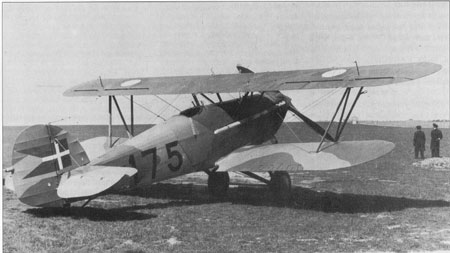 The Marinens Flyvevæsen (Royal Danish Navy Aviation) received two aircraft called Nimrødderne. A further ten were built locally under licence between 1934 and 1935 at Orlogsværftet; called L.B.V (Landbased Biplane 5). The eight survivors were German spoils of war in 1940. Other operators included the Imperial Japanese Navy Air Service received a single aircraft for evaluation, designated AXH. And then there was the Portuguese Air Force that received also a single aircraft, also for evaluation.
Amazingly, there are surviving aircraft today, both airworthy, both based at the Imperial War Museum's Duxford Aerodrome, Cambridgeshire. They are painted at the colors of the No. 802 Squadron: A Nimrod Mark I serial S1581 G-BWWK operated by The Fighter Collection, 4th production Mk. I, late 1931, first batch built. The second is a Nimrod Mark II serial K3661, G-BURZ operated by the Historic Aircraft Collection, and the penultimate FAA Nimrod, built in early 1934.
Gallery
Author's illustrations: Types and liveries
Danish Nimrødderne
Additional photos
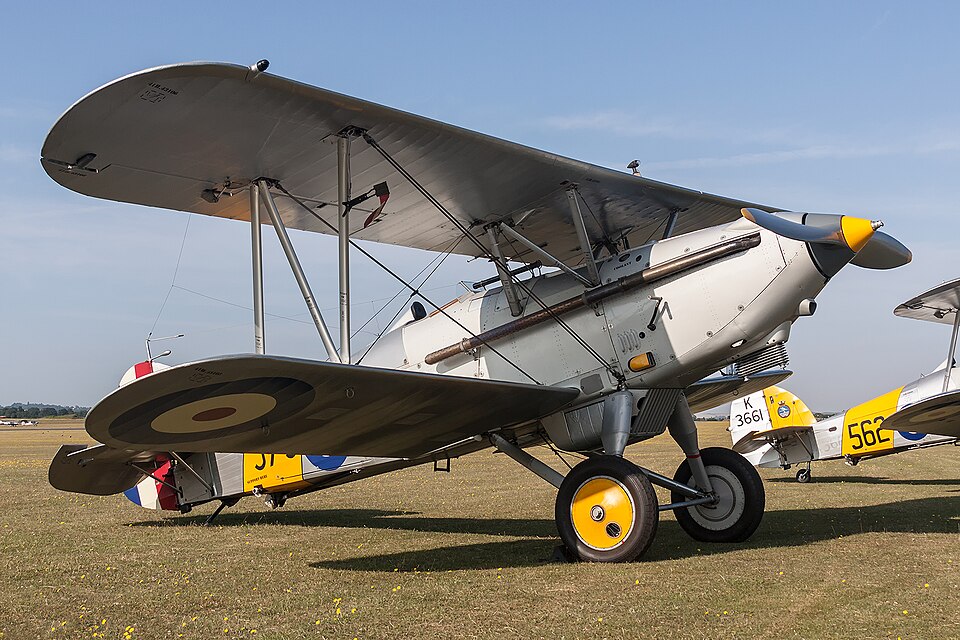
Mark I preserved
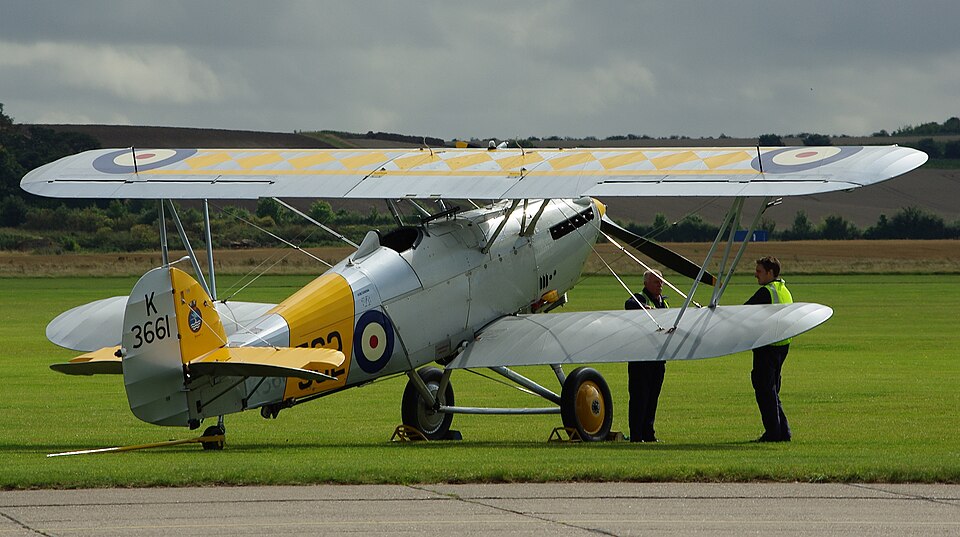
Mark II preserved
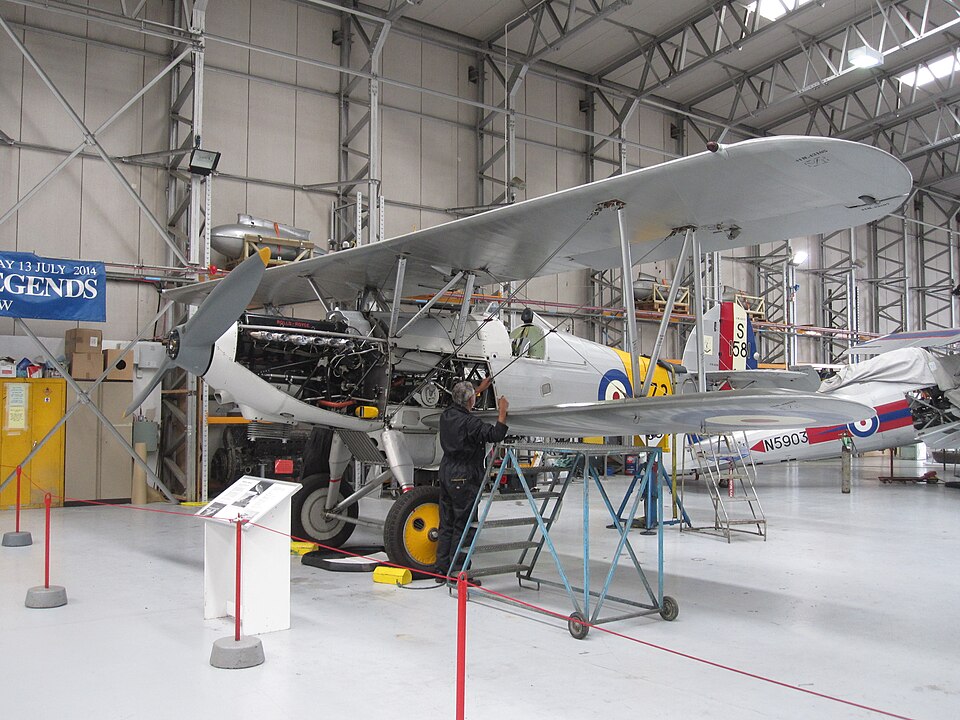
Model in restoration
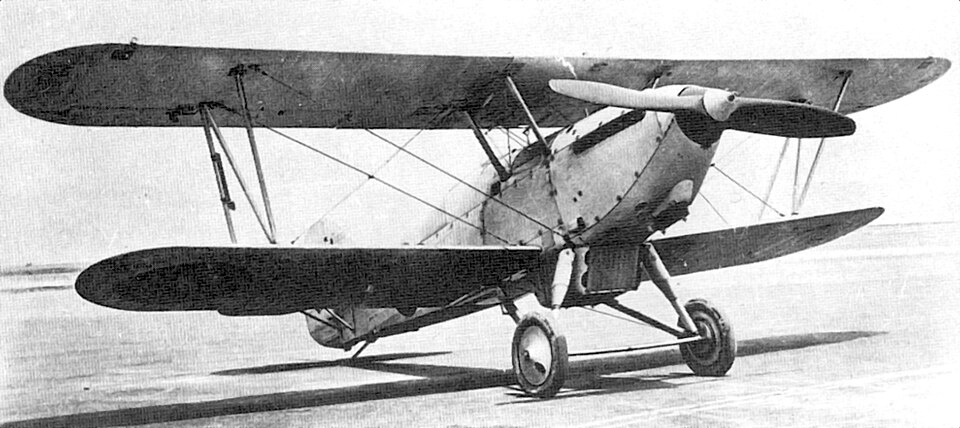
Japanese AXH
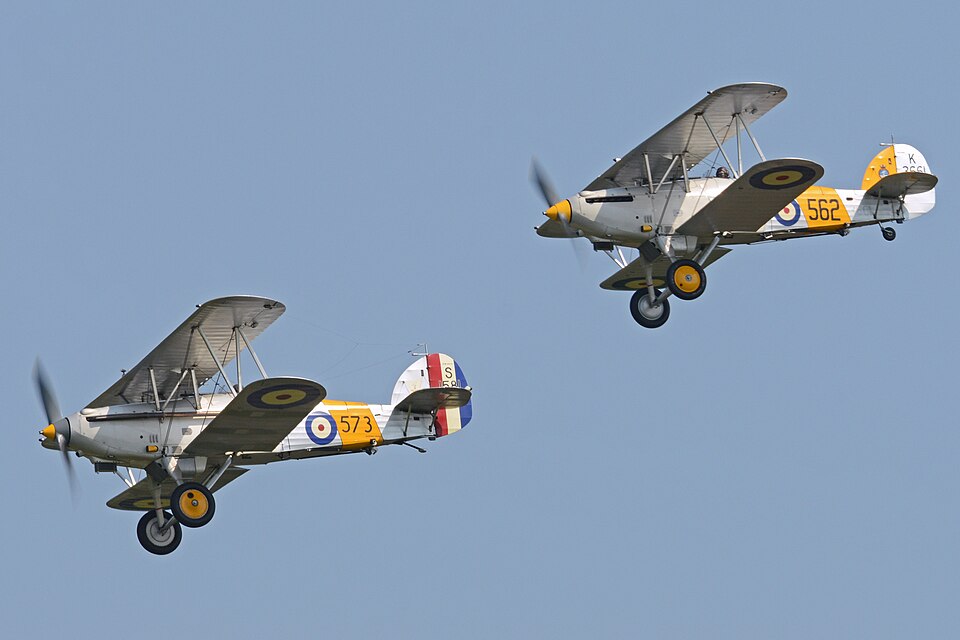
The preserved pair flying at Old Warden 5 june 2016
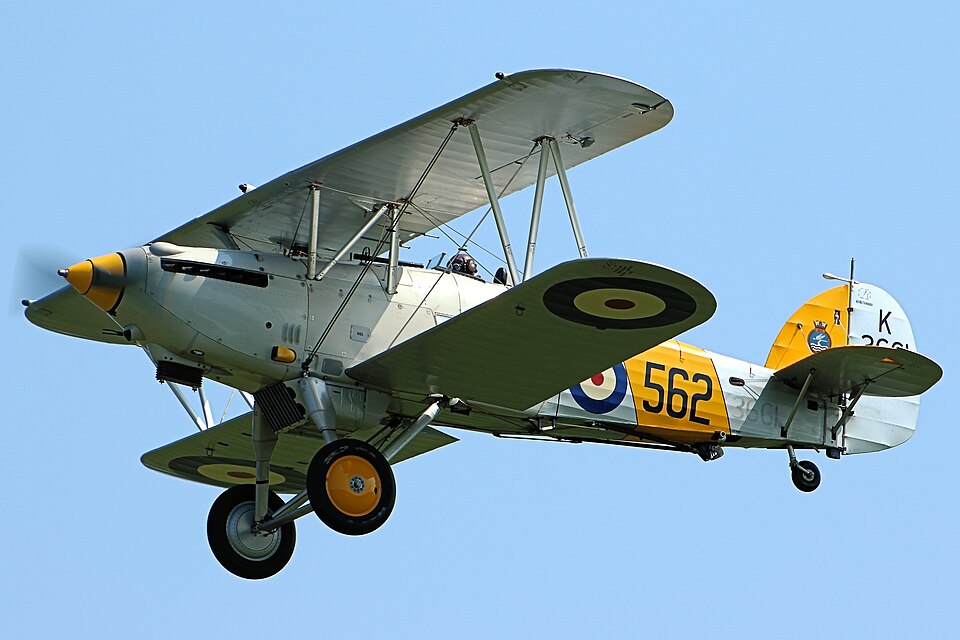
"562" at Fly Navy Day 2016
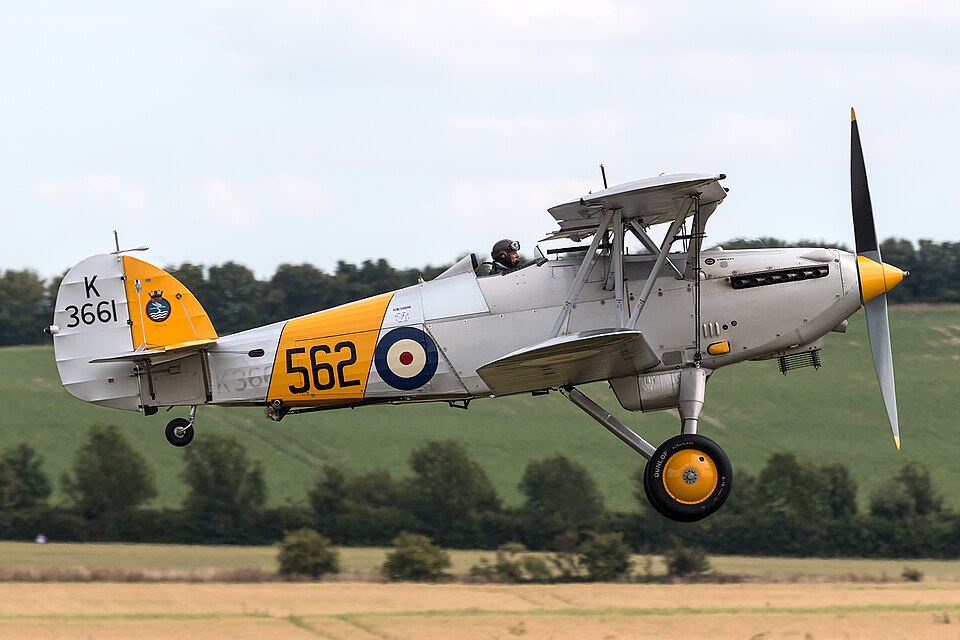
The same in flight, other side
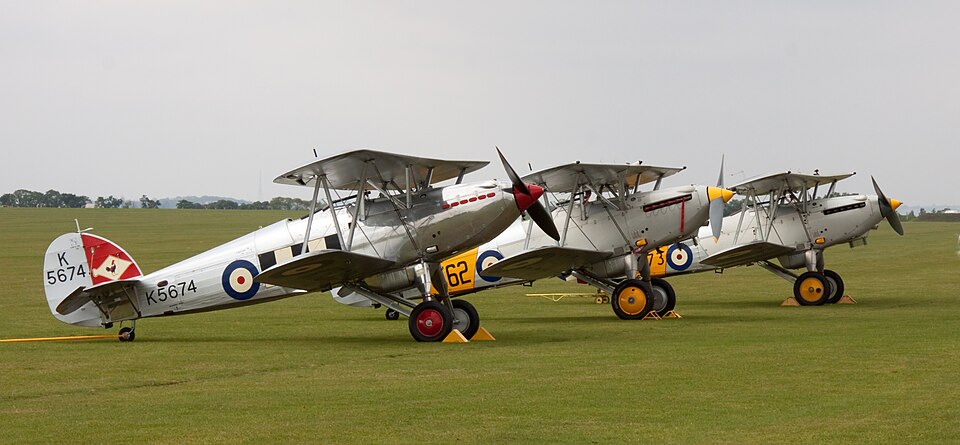
Two preserved Opsreys and a Fury.
Links and resources
Crawford, Alex. Hawker Fury & Nimrod. Sandomierz, Poland/Redbourn, UK: Mushroom Model Publications, 2007.Ellis, Ken. Wrecks & Relics. Manchester, UK: Crécy, 2010.
Hannah, Donald. Hawker FlyPast Reference Library. Stamford, Lincolnshire, UK: Key Publishing Ltd., 1982.
Holmes, Tony. Jane's Vintage Aircraft Recognition Guide. London: Harper Collins, 2005.
James, Derek N. Hawker, an Aircraft Album No. 5. New York: Arco Publishing Company, 1973.
Mason, Francis K. Hawker Aircraft since 1920. London: Putnam, 1961.
Mason, Francis K. Hawker Aircraft since 1920. London: Putnam, 1991.
classicwarbirds.co.uk
en.wikipedia.org/
justflight.com
afterburner.com.pl
haa-uk.aero
militaryplanes.co.uk
key.aero/
aviastar.org
flugzeuginfo.net
Hawker_Hoopoe
Guide to airfoil usage
Videos
The model corner
lukgraph.pl/britmodeller.com
- Lohner E (1913)
- Macchi M3 (1916)
- Macchi M5 (1917)
- Macchi M7 (1918)
- Ansaldo ISVA (1918)
- Short S.38 (1912)
- Sopwith Baby (1916)
- Short 184 (1916)
- Fairey Campania (1917)
- Sopwith Cuckoo (1917)
- Felixstowe F.2 (1917)
- Gotha WD.2 (1914)
- Friedrichshafen FF 33 (1916)
- Albatros W4 (1916)
- Albatros W8 (1918)
- Hanriot HD.2
- Grigorovich M5 (1915)
- Grigorovich M9 (1916)
- Grigorovich M11 (1917)
- IJN Farman MF.7
- IJN Yokosho Type Mo
- Yokosho Rogou Kougata (1917)
- Yokosuka Igo-Ko (1920)
- Curtiss N9 (1916)
- Curtiss H4 (1916)
- Curtiss H12 (1917)
- Curtiss H16 (1918)
- Aeromarine 39
- Vought VE-7
- Douglas DT (1921)
- NAF/Curtiss TS-1 (1922)
- Boeing FB.5 (1923)
- Boeing F4B (1928)
- Vought O2U/O3U Corsair (1928)
- Grumman FF (1931)
- Akron class airships (1931)
- Curtiss F9C Sparrowhawk (1931)
- Curtiss F11C Goshawk (1932)
- Curtiss BF2C Goshawk (1933)
- Blackburn Blackburn (1922)
- Supermarine Seagull (1922)
- Fairey Flycatcher (1923)
- Hawker Horsley (1925)
- Blackburn Ripon (1926)
- Fairey IIIF (1927)
- Fairey Seal (1930)
- LGL-32 C.1 (1927)
- Fokker T.II (1921)
- Fokker T.III (1923)
- Caspar U1 (1921)
- Dornier Do J Wal (1922)
- Rohrbach R-III (1924)
- Mitsubishi 1MF (1923)
- Mitsubishi B1M (1923)
- Yokosuka E1Y (1923)
- Nakajima A1N (1927)
- Nakajima E2N (1927)
- Mitsubishi B2M (1929)
- Nakajima A2N (1930)
- Nakajima A4N (1935)
- CANT 18
WW1
✠ K.u.K. Seefliegerkorps:
 Italian Naval Aviation
 RNAS
RNAS
 Marineflieger
 French Naval Aviation
 Russian Naval Aviation
 IJN Air Service
 USA
USA
Interwar
 Interwar US
Interwar Britain
 Interwar France
 Interwar Netherlands
 Interwar Germany
 Interwar Japan
 Interwar Italy
- Grumman F2F (1933)
- Curtiss SOC seagull (1934)
- Grumman F3F (1935)
- Northrop BT-1 (1935)
- Consolidated PBY Catalina (1935)
- Grumman J2F Duck (1936)
- Brewster/NAF SBN-1 (1936)
- Curtiss SBC Helldiver (1936)
- Vought SB2U Vindicator (1936)
- Brewster F2A Buffalo (1937)
- Douglas TBD Devastator (1937)
- Vought Kingfisher (1938)
- Curtiss SO3C Seamew (1939)
- K-class Blimps (1939)
- Douglas SBD Dauntless (1939)
- Grumman F4F Wildcat (1940)
- F4U Corsair (NE) (1940)
- Brewster SB2A Buccaneer (1941)
- Grumman TBF/TBM Avenger (1941)
- Consolidated TBY Sea Wolf (1941)
- Grumman F6F Hellcat (1942)
- Curtiss SB2C Helldiver (1942)
- Curtiss SC Seahawk (1944)
- Grumman F7F Tigercat (1944)
- Grumman F8F Bearcat (1944)
- Ryan FR-1 Fireball (1944)
- Douglas AD-1 Skyraider (1945)
- Fleet Air Arm
- Hawker Osprey (1932)
- Fairey Swordfish (1934)
- Blackburn Shark (1934)
- Supermarine Walrus (1936)
- Fairey Seafox (1936)
- Blackburn Skua (1937)
- Short Sunderland (1937)
- Blackburn Roc (1938)
- Fairey Albacore (1940)
- Fairey Fulmar (1940)
- Grumman Martlet (1941)
- Hawker sea Hurricane (1941)
- Brewster Bermuda (1942)
- Fairey Barracuda (1943)
- Fairey Firefly (1943)
- Grumman Tarpon (1943)
- Grumman Gannet (1943)
- Supermarine seafire (1943)
- Blackburn Firebrand (1944)
- Hawker Sea Fury (1944)
- Coastal Command
- Vickers Wellington (1937)
- IJN aviation
- Yokosuka E6Y (1930)
- Aichi D1A "Susie" (1934)
- Mitsubishi A5M "Claude" (1935)
- Nakajima A4N (1935)
- Yokosuka B4Y "Jean" (1935)
- Mitsubishi G3M "Nell" (1935)
- Nakajima E8N "Dave" (1935)
- Kawanishi E7K "Alf" (1935)
- Nakajima B5N "Kate" (1937)
- Kawanishi H6K "Mavis" (1938)
- Aichi D3A "Val" (1940)
- Mitsubishi G4M "Betty" (1940)
- Mitsubishi A6M "zeke" (1940)
- Nakajima E14Y "Glen" (1941)
- Nakajima B6N "Jill" (1941)
- Mitsubishi F1M "pete" (1941)
- Aichi E13A Reisu "Jake" (1941)
- Kawanishi E15K Shiun "Norm" (1941)
- Nakajima C6N Saiun "Myrt" (1942)
- Yokosuka D4Y "Judy" (1942)
- Kyushu Q1W Tokai "Lorna" (1944)
 Luftwaffe
- Heinkel 114 (1935)
- Arado 196 (1937)
- Me109 T (1938)
- Blohm & Voss 138 Seedrache (1940)
 Italian Aviation
- Savoia-Marchetti S.55
- IMAM Ro.43/44
- CANT Z.501 Gabbiano
- CANT Z.506 Airone
- CANT Z.508
- CANT Z.511
- CANT Z.515
 French Aeronavale
- GL.300 (1926-39)
- CAMS 37 (1926)
- Levasseur PL.5 (1927)
- Potez 452 (1935)
- Loire 210 (1936)
- Loire 130 (1937)
- LN 401 (1938)
 Soviet Naval Aviation
- Shavrov SH-2 (1928)
- Tupolev TB-1P (1931)
- Beriev MBR-2 (1930)
- Tupolev MR-6 (1933)
- Tupolev MTB-1 (1934)
- Beriev Be-2 (1936)
- Polikarpov I16 naval (1936)
- Tupolev MTB-2 (1937)
- Ilyushine DB-3T/TP (1937)
- Beriev Be-4 (1940)
 Swedish Naval Aviation
- SAAB B17S
-
 Skoda Š-328V
  R-XIII Idro
 Fokker C.XI W (1934)
 Rogožarski PVT-H (1938)
WW2
 ☍ USNA
- De Havilland Sea Vixen
- Hawker Sea Hawk
- Supermarine Scimitar
- Blackburn Buccaneer
- Hawker Sea Harrier
- Douglas A4 Skyhawk
- Grumman F9F Panther
- Vought F8 Crusader
- McDonnell-Douglas F-4 Phantom-II
- North Am. A5 Vigilante
- TU-142
- Yak 38 forger
☢ Cold War
✧ NATO
Fleet Air Arm
 US Navy
☭ Warsaw Pact
Merch
Seafire Mark 45; HMS Pretoria Castle
Zeros vs its aversaries
Aichi D3A “Val” Junyo
Mitsubishi A5M poster
F4F wildcat
Macchi M5
SBD Dauntless Coral Sea
SBD Dauntless USS Enterprise
SBD-4 CV22