Caproni Ca 316
 14 built 1940
Development
The caproni 316 was a reconnaissance seaplane made in Italy in World War II, intended for catapult operations from capital ships. It long-derived from the civilian Ca.306 airliner prototype of 1935, and was a modification of the Ca.310 Idro seaplane. It was provided with large pontoons underneath the engine nacelles, on streamlined pylons, with a revised nose having an extensive glazing on the ventral surface. Only fourteen were built, which joined in 1942 to the 3a Squadriglia at the Scuola Osservazione Marittima (naval observation school).The origin of the program is unclear. As any time the Navy wanted an aicraft, it had to go through the good will of the ministry of aviation, and "under the pile" for models requested by the Regia Aeronautica. The model was published as set of specifications, intended for use in the Regia Marina for reconnaissance operations, during takeoff from a catapult. It was unofficially susceptible to replace the biplane Ro.43 which had its own sets of limitations to be catapulted. One ship class in particular that was scheduled to receive the model was the new Littorio class battleships (1937). Four were planned, but only Littorio was operational by 1939 when these specifications came out. Like other ships of the RM, cruisers in particular like the Zara, Trento class and most if the Condotierri light cruisers, the usual launch catapult was located on the prow.
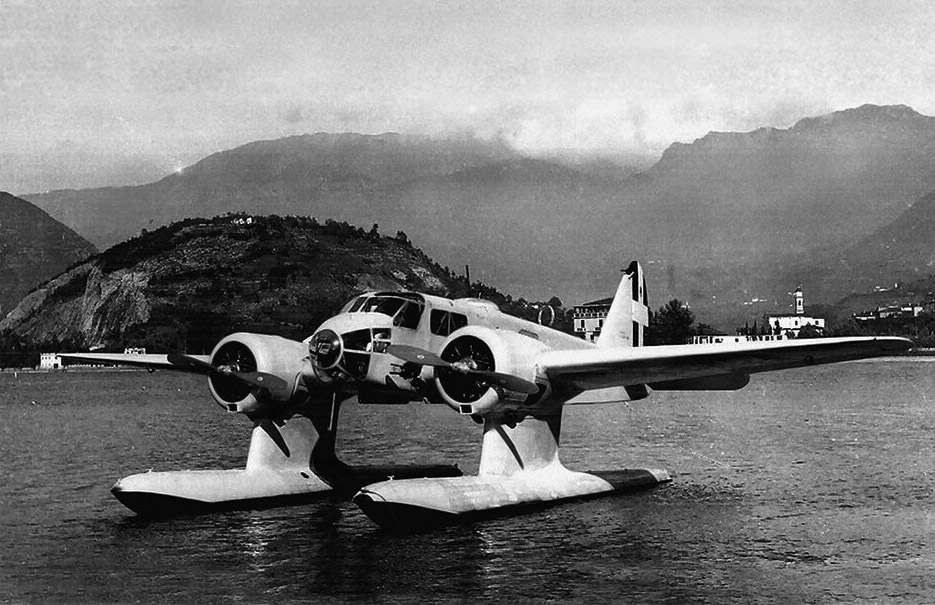
This made sense for the Italians, rather than amidship, since the catapult could be made longer, and had an uninterrupted launching arc forward. Italian naval catapults used a traditional explosive cradle as main system. The ship however needed to have a crane to recover its seaplane, albeit the way these observation models were used operationally was rather a "one way ticket". They were launched in a specific operation and had to land elsewhere, to be reinstalled in another occasion. In any case, if the specication was published in 1939 we don't known who answer in time for selection. What is certain is SA Caproni Aeronautica Bergamasca, Ponte San Pietro answered with a paper project, which was selected. Whether because it was cheaper, or because its likely competitors CANT and Savoia had already too much on their plate to come up with something suitable in time.
Caproni was the big name of Italian Aviation for bombers and in general large planes, together with Macchi for fighters. The company was famous for its Caproni twin-engine colonial bomber Ca.101, its single engine Ca.111, and its masterstroke, the 3-engined Caproni Ca.133 with over 500 produced, and then the modern, smaller CA 135 twin engine model. The latter was cheaper and delclined close to WW2 as the CA 309 Ghibli, CA 310 Libeccio and CA 311, its export CA 312, and its more modern CA 313-314. Long story short, there was a solid base with which creating a twin-float version.
The issue was precisely that to be competitive in cost and delivery time, the CA 316 that was proposed would be based on its CA 310 Idro, its first seaplane based on the best-seller CA 310. The CA 310 idro (Idrovolante) was developed by designer Cesare Pallavicino, adapting the land-based Ca.310 airframe by fitting large twin floats mounted on streamlined pylons beneath the engine nacelles. It was promoted for naval reconnaissance, featuring a modified nose with reduced glazing and carried no offensive armament. In August 1940 it was indeed evaluated by the Regia Marina as a potential catapult-launched spotter and observation aircraft to replace the aging IMAM Ro.43 biplanes on its capital ships. To "fit in", Caproni apparently took this base and shortened it, making it lighter, but the size remained overall close. And that would be an issue for the future as it was much larger than a single-engine model.
Design
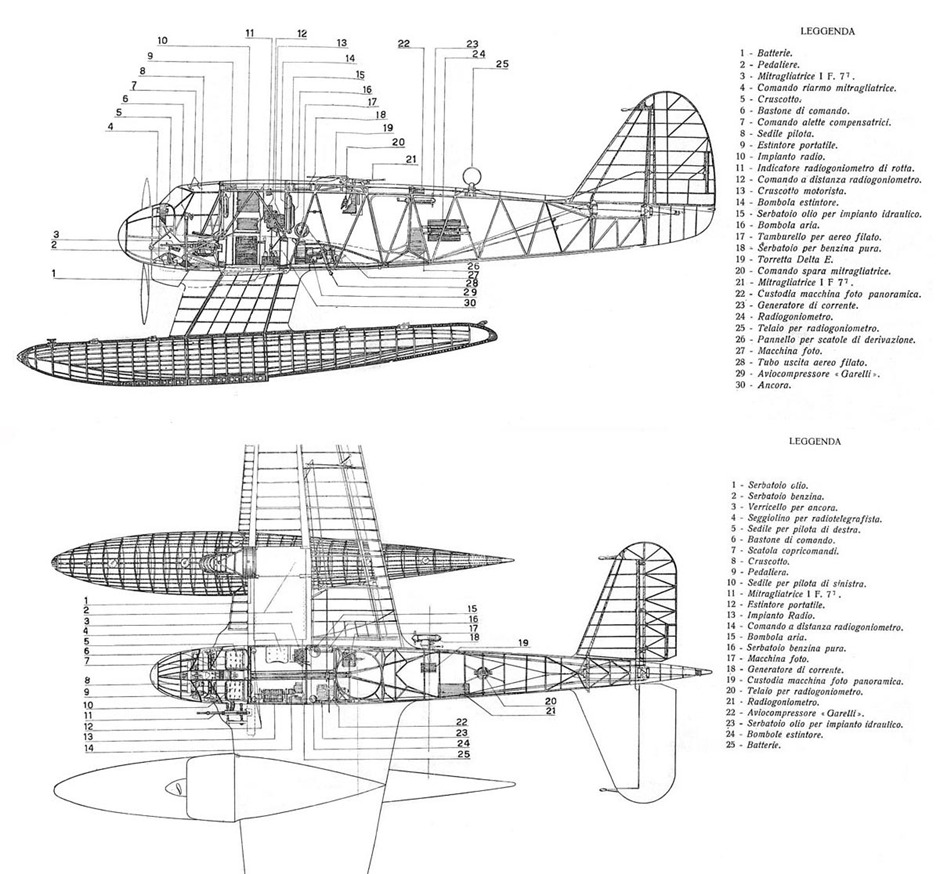
The Caproni Ca.316 was a maritime reconnaissance aircraft developed from the Ca.310 Idro floatplane. It was intended for deployment aboard the battleship Littorio, with takeoffs from its foredeck deck facilitated by a long catapult. The Ca.316 was first designed as a modern, low-wing floatplane, powered by two modest 430 hp Piaggio P.VII C.16 engines. It could carry up to 400 kg of bombs and was defended by a 7.7 mm Breda-Safat machine gun on the dorsal turret and another mounted on the wing firing forward.
Layout
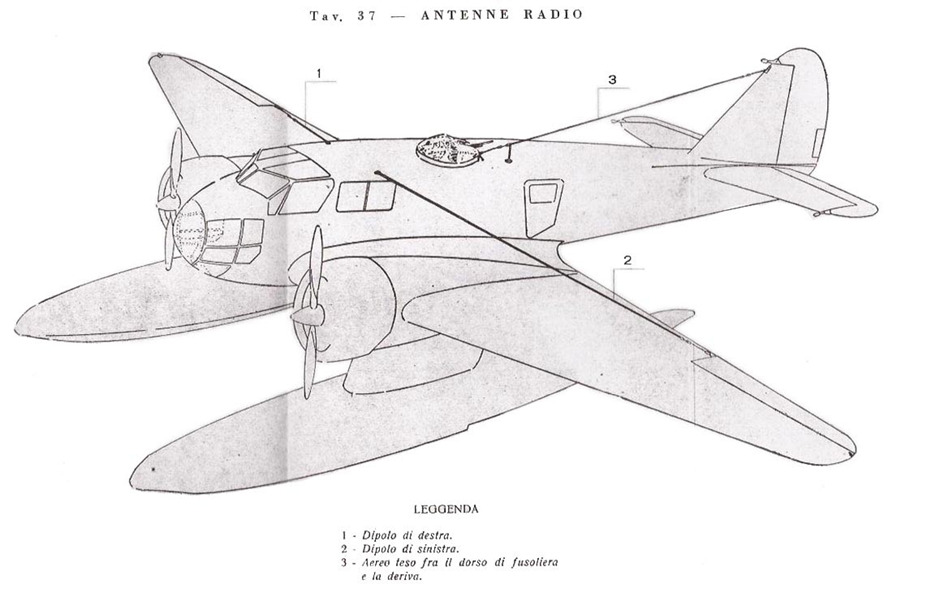
We can take a lot from the construction of the CA 310 to explain the CA 316: Like the former, the model built at CANTIERI AERONAUTICI BERGAMASCHI (which had limited capacity). Cesare Pallavicino made a twin-float, low-wing cantilever monoplane featuring a mixed-construction design with the fuselage made of welded metal sections covered in light alloy, with the exception of the forward section, fabric-covered. The wings were of a two-spar wooden design with metal reinforcement and a plywood-and-fabric skin; and the floats, which featured a metal structure, were connected to the wing assembly. The prototype was a refinement of the Ca.310 Idro, boasting more sophisticated aerodynamics, a shorter, glazed nose and a dorsal defensive position with an LMG. But also specialized radio equipment, struts between the fuselage and the floats enclosed in fairings, and a more aerodynamically refined engine installation on the wings.
Propulsion and Performances
It was powered by two 480 hp Piaggio P.VII C.16 (C.35) engines, driving two-bladed, variable-pitch propellers. This 7-cylinder, single-row, air-cooled radial aircraft engine rated at approximately 450 to 480 hp (roughly 338–353 kW depending on the specific sub-variant and altitude calibration) had been designed by Renzo Spolti, based on Gnome-Rhône 7K under licence. It displacemed 19.337 liters (Bore: 146 mm, Stroke: 165 mm) and had a single-stage centrifugal compressor rated for altitude performance (optimized around 1,600 meters / 5,200 ft for the C.16 designation). Power Output was 450–470 hp (approx. 338–350 kW) and it ran on 87 octane aviation petrol. It was used also on the Ca.133, Ca.142, Hispano HS-42, Ca.310 and present model.The issues for such engines was the drag caused by the floats and take-off lenght. The CA 316 still weighted a robust 3,41 ton, with a Take off weight of 4,75 ton, and with its engines rated for 338 kW/460 hp at 1,600 m, it could only reach 320 km/h at 2,000 m, making it an easy prey for fighters (but as slow as 114 kph). It had a climb rate of 18 min. to 4000 m, a service ceiling of 5,550 m and range of 2,110 km based on its 940 gasoline capacity. Despite its powerplants, it proved to be highly maneuverable, with excellent visibility. However it was discovered it required great care during takeoff and landing on water. This was its main issue, alongside being too large to be catapulted in the end.

Armament
It was armed with a fixed 12.7 mm Breda-SAFAT machine gun in the root of the left wing to fire forward, strafe, as well as protected by a 7.7 mm Breda-SAFAT machine gun in a Caproni Lanciani turret on the dorsal fuselage. Some sources states the forward LMG was also a 7.7mm. In addition it could carry a symbolic load of 400gs bombs. The crew of thre comprised the pilots, also in charge of the wing HMG, the dorsal gunner and the navigator, also tasked to drop bombs if needed and usually located in the glassed nose for reconnaissance.Production
The first Ca.316 prototype (MM 27193) made its maiden flight on August 14, 1940. It was piloted by Mario de Bernardi, taking off from Lake Iseo near Brescia (at Montecollino). On September 8, it was flown to the Guidonia Research Center. There, military pilots evaluated its combat value, on the lake near Bracciano. It was also stationed at Vigna di Valle during naval trials. If the model failed to deliver outstanding performance gievn its low-rate engines, the Regia Marina agreed to the produce a small batch. So a total of seven were built (serial numbers MM 27194 through MM 27200), delivered to the Aviazione Ausilaria per la Regia Marina (AARM) or "Marinavia" for evaluation in 1941. The last two were delivered on January 15, 1942. These were indeed considered pre-production batch for evaluation. Meanwhile, the prototype was transferred to the 148th Squadron (148ª Squadriglia) to train new pilots for this model.In between, the Royal Yugoslav Navy also showed interest for the model and ordered six. However, these models were low priortity in the already busy schedule of the local Caproni's manufacturing facilities, and the rate was abysmal. Most of the resources were indeed alocated on large scale ordered for the Regia Aeronautica, such as the Ca-313 and Ca-314 bombers. So in the end, none of these export models were delivered before the German occupation of Yugoslavia. The completed aircraft were transferred to the Regia Aeronautica with the serial numbers MM.27201 to MM.27206, with the final one handed over to the military in late December 1942. By that stage the war, already changed face a lot.
⚙ specifications | |
| Empty Weight | 3,360 kg (8,820 lb) |
| Gross weight | 4,804 kg (10,590 lb) |
| Lenght | 12.89 m (42 ft 3 in) |
| Wingspan | 15.90 m (52 ft 1 in) |
| Height | 5.44 m (16 ft 9 in) |
| Wing Area | 38.0 m2 (409 sq ft) |
| Engine | 2× Piaggio P.VII radials 460 kW (616 hp) each |
| Top Speed, sea level | 331 km/h (205 mph, 178 kn) |
| Cruise Speed | In research |
| Range | 1,600 km (1,000 mi, 870 nmi) |
| Climb Rate | In research |
| Ceiling | 5,850 m (19,680 ft) |
| Armament | 12.7 mm (0.5 in) Fwd Scotti-I.F. MG +1 dorsal 7.7mm (0.3 in) bombs. |
| Crew | 4 (pilot, observer, navigator, MG gunner |
The CA 316 in Action
The fate of the production Ca.316s was sealed by the fact engineers made several miscalculations regarding dimensions, making it impossible to operate it from ships without major structural modifications. Indeed the weight of the model reuired a very powerful catapult, which was not the model installed on the Litorrio and the RM had little incidentive to pay for a more powerful model. Consequently, the CA 316 was abandoned. Another setback was the crash of the third production aircraft on May 15, 1941 at Montecollino. The incident occurred during a delivery flight to a reserve air unit in Taranto.So the initial batch was transferred to the Regia Marina from early 1941 and underwent operational trials until the accident on May 15, 1941. Following this in 1942, all were reassigned to the 3rd Squadron of the "Osservazione Marittima" (Maritime Reconnaissance) flight school, remaining there until almost the armistice of Cassibile in 1943 (all were grounded in September). One Ca.314 (MM.27202) was also used by the military governor of Dalmatia (Croatia). The extensive modifications required for the catapult cradles and large footprint compared to the Ro.43 made Caproni looking like a botched submission aside its main projects where the resouces went. It did not improved its reputation with the Regia Marina which almost never worked with the company.
Even after transfer to the Observation School in Orbetello where officers from the Regia Marina underwent training as aerial observers, the aircraft proved difficult to fly and was, in any case, unsuitable for combat operations. After several fatal accidents, an order to suspend all flights was issued in August 1943. One happened on January 19, 1943, with aircraft M.M.27200 crashing into the town of Orbetello. Subsequently, under orders of Major Ercole Savi, a portion of the school relocated to Portorose, Istria to avoid further issues, but the accidents continued there as well, eating away the park and pilots. The cause of these accidents, however, was attributed entirely to a shortage of spare parts. On September 8, 1943 the armistic proclamation caught the aircraft in the base unable to take off and pilots sabotage the engines enough to make them unusuable by the Germans. In the end, this model probably was the worst attempt made by Caproni on seaplanes, an area already well covered by CANT and Savoir Marchetti with gusto.
Gallery
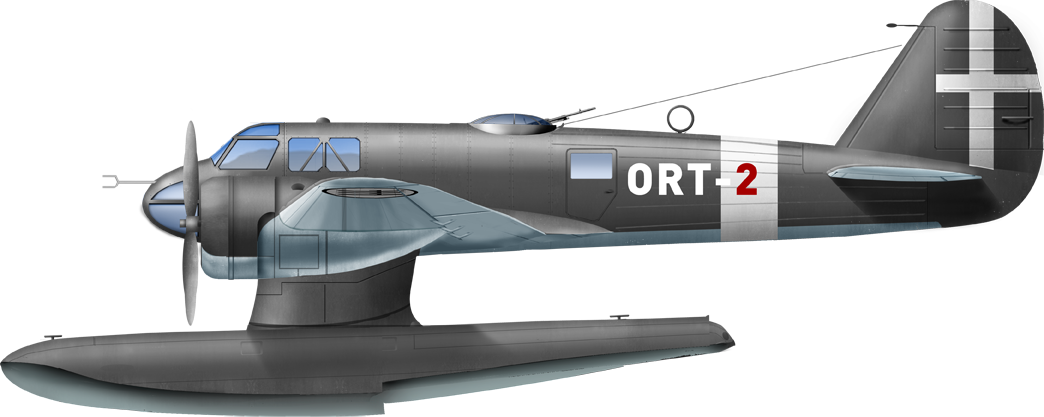
Caproni Ca 316 of the Orbetello Unit in 1943
The prototype Caproni CA 316 MM27193 (CC), with a white or pale blue livery.
Read More/Src
Books
Brotzu, E. (1973). Bombardieri Ricognitori 6. Roma: Edizioni Bizzarri.Istruzioni e norme per il montaggio, la regolazione, l'impiego e la manutenzione dell'idrovolante tipo ca 316. 1942.
Taylor, Michael J. H. (1989). Jane's Encyclopedia of Aviation. London: Studio Editions. p. 237.
World Aircraft Information Files. London: Bright Star Publishing. pp. File 891 Sheet 1
R. Abate, G. Alegri, G. Apostolo. Aeroplani Caproni : Gianni Caproni and His Aircraft, 1910-1983
Krzysztof Zalewski. Samoloty Wojskowe Swiata 1935-1945. Caproni Ca-316
W. Baczkowski. Wloskie samoloty wojskowe 1936-1945
Finn.it. Regia Aeronautica Italiana. La Seconda Guerra Mondiale
Edizioni dell'Ateneo e Bizzarri. Caproni Aeronautica Bergamasca
William Green. War Planes of the Second World War : Floatplanes
Cmpr.it. Enrico Calanchini. Caproni Ca.316
Aeroclubmodena.it. Piergiorgio Goldoni. Storia del Caproni Ca.316
Links
stormomagazine.comCa 316 tech
airpages.ru
Google Books catapulted
1000aircraftphotos.com
aeronautica.difesa.it
en.wikipedia.org
airwar.ru
alieuomini.it marina.difesa.it
valka.cz
giemmesesto.org
Model Kits
1/72 model by Broplan, MS-158, 1:72Review by Richard Mendes
- Lohner E (1913)
- Macchi M3 (1916)
- Macchi M5 (1917)
- Macchi M7 (1918)
- Ansaldo ISVA (1918)
- Short S.38 (1912)
- Sopwith Baby (1916)
- Short 184 (1916)
- Fairey Campania (1917)
- Sopwith Cuckoo (1917)
- Felixstowe F.2 (1917)
- Gotha WD.2 (1914)
- Friedrichshafen FF 33 (1916)
- Albatros W4 (1916)
- Albatros W8 (1918)
- Hanriot HD.2
- Grigorovich M5 (1915)
- Grigorovich M9 (1916)
- Grigorovich M11 (1917)
- IJN Farman MF.7
- IJN Yokosho Type Mo
- Yokosho Rogou Kougata (1917)
- Yokosuka Igo-Ko (1920)
- Curtiss N9 (1916)
- Curtiss H4 (1916)
- Curtiss H12 (1917)
- Curtiss H16 (1918)
- Aeromarine 39
- Vought VE-7
- Douglas DT (1921)
- NAF/Curtiss TS-1 (1922)
- Boeing FB.5 (1923)
- Boeing F4B (1928)
- Vought O2U/O3U Corsair (1928)
- Grumman FF (1931)
- Akron class airships (1931)
- Curtiss F9C Sparrowhawk (1931)
- Curtiss F11C Goshawk (1932)
- Curtiss BF2C Goshawk (1933)
- Blackburn Blackburn (1922)
- Supermarine Seagull (1922)
- Fairey Flycatcher (1923)
- Hawker Horsley (1925)
- Blackburn Ripon (1926)
- Fairey IIIF (1927)
- Fairey Seal (1930)
- LGL-32 C.1 (1927)
- Fokker T.II (1921)
- Fokker T.III (1923)
- Caspar U1 (1921)
- Dornier Do J Wal (1922)
- Rohrbach R-III (1924)
- Mitsubishi 1MF (1923)
- Mitsubishi B1M (1923)
- Yokosuka E1Y (1923)
- Nakajima A1N (1927)
- Nakajima E2N (1927)
- Mitsubishi B2M (1929)
- Nakajima A2N (1930)
- Nakajima A4N (1935)
- CANT 18
WW1
✠ K.u.K. Seefliegerkorps:
 Italian Naval Aviation
 RNAS
RNAS
 Marineflieger
 French Naval Aviation
 Russian Naval Aviation
 IJN Air Service
 USA
USA
Interwar
 Interwar US
 Interwar Britain
 Interwar France
 Interwar Netherlands
 Interwar Germany
 Interwar Japan
 Interwar Italy
- Grumman F2F (1933)
- Curtiss SOC seagull (1934)
- Grumman F3F (1935)
- Northrop BT-1 (1935)
- Consolidated PBY Catalina (1935)
- Grumman J2F Duck (1936)
- Brewster/NAF SBN-1 (1936)
- Curtiss SBC Helldiver (1936)
- Vought SB2U Vindicator (1936)
- Brewster F2A Buffalo (1937)
- Douglas TBD Devastator (1937)
- Vought Kingfisher (1938)
- Curtiss SO3C Seamew (1939)
- K-class Blimps (1939)
- Douglas SBD Dauntless (1939)
- Grumman F4F Wildcat (1940)
- F4U Corsair (NE) (1940)
- Brewster SB2A Buccaneer (1941)
- Grumman TBF/TBM Avenger (1941)
- Consolidated TBY Sea Wolf (1941)
- Grumman F6F Hellcat (1942)
- Curtiss SB2C Helldiver (1942)
- Curtiss SC Seahawk (1944)
- Grumman F7F Tigercat (1944)
- Grumman F8F Bearcat (1944)
- Ryan FR-1 Fireball (1944)
- Douglas AD-1 Skyraider (1945)
- Fleet Air Arm
- Hawker Osprey (1932)
- Fairey Swordfish (1934)
- Blackburn Shark (1934)
- Supermarine Walrus (1936)
- Fairey Seafox (1936)
- Blackburn Skua (1937)
- Short Sunderland (1937)
- Blackburn Roc (1938)
- Fairey Albacore (1940)
- Fairey Fulmar (1940)
- Grumman Martlet (1941)
- Hawker sea Hurricane (1941)
- Brewster Bermuda (1942)
- Fairey Barracuda (1943)
- Fairey Firefly (1943)
- Grumman Tarpon (1943)
- Grumman Gannet (1943)
- Supermarine seafire (1943)
- Blackburn Firebrand (1944)
- Hawker Sea Fury (1944)
- Coastal Command
- Vickers Wellington (1937)
- IJN aviation
- Yokosuka E6Y (1930)
- Aichi D1A "Susie" (1934)
- Mitsubishi A5M "Claude" (1935)
- Nakajima A4N (1935)
- Yokosuka B4Y "Jean" (1935)
- Mitsubishi G3M "Nell" (1935)
- Nakajima E8N "Dave" (1935)
- Kawanishi E7K "Alf" (1935)
- Nakajima B5N "Kate" (1937)
- Kawanishi H6K "Mavis" (1938)
- Aichi D3A "Val" (1940)
- Mitsubishi G4M "Betty" (1940)
- Mitsubishi A6M "zeke" (1940)
- Nakajima E14Y "Glen" (1941)
- Nakajima B6N "Jill" (1941)
- Mitsubishi F1M "pete" (1941)
- Aichi E13A Reisu "Jake" (1941)
- Kawanishi E15K Shiun "Norm" (1941)
- Nakajima C6N Saiun "Myrt" (1942)
- Yokosuka D4Y "Judy" (1942)
- Kyushu Q1W Tokai "Lorna" (1944)
 Luftwaffe
- Heinkel 114 (1935)
- Arado 196 (1937)
- Me109 T (1938)
- Blohm & Voss 138 Seedrache (1940)
 Italian Aviation
- Savoia-Marchetti S.55
- IMAM Ro.43/44
- CANT Z.501 Gabbiano
- CANT Z.506 Airone
- CANT Z.508
- CANT Z.511
- CANT Z.515
 French Aeronavale
- GL.300 (1926-39)
- CAMS 37 (1926)
- Levasseur PL.5 (1927)
- Potez 452 (1935)
- Loire 210 (1936)
- Loire 130 (1937)
- LN 401 (1938)
 Soviet Naval Aviation
- Shavrov SH-2 (1928)
- Tupolev TB-1P (1931)
- Beriev MBR-2 (1930)
- Tupolev MR-6 (1933)
- Tupolev MTB-1 (1934)
- Beriev Be-2 (1936)
- Polikarpov I16 naval (1936)
- Tupolev MTB-2 (1937)
- Ilyushine DB-3T/TP (1937)
- Beriev Be-4 (1940)
 Swedish Naval Aviation
- SAAB B17S
-
 Skoda Š-328V
  R-XIII Idro
 Fokker C.XI W (1934)
 Rogožarski PVT-H (1938)
WW2
 ☍ USNA
- De Havilland Sea Vixen
- Hawker Sea Hawk
- Supermarine Scimitar
- Blackburn Buccaneer
- Hawker Sea Harrier
- Douglas A4 Skyhawk
- Grumman F9F Panther
- Vought F8 Crusader
- McDonnell-Douglas F-4 Phantom-II
- North Am. A5 Vigilante
- TU-142
- Yak 38 forger
☢ Cold War
✧ NATO
Fleet Air Arm
 US Navy
☭ Warsaw Pact
Merch
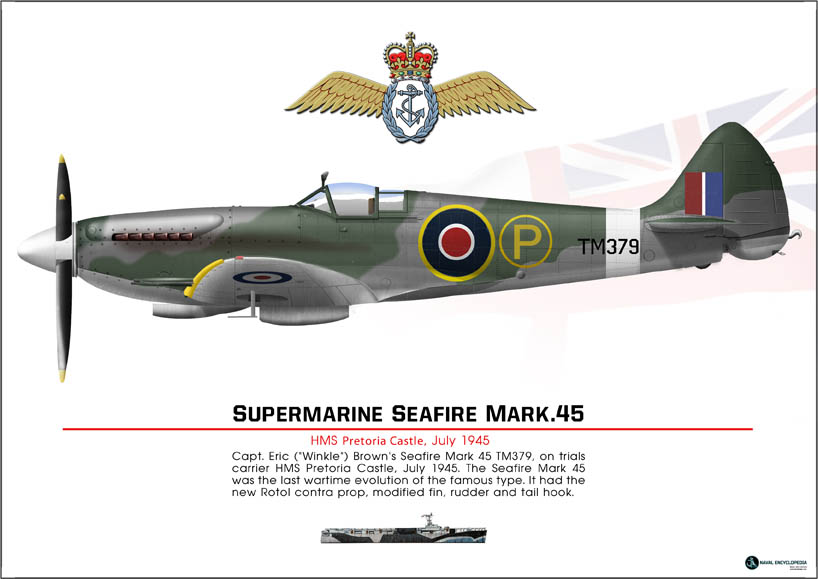
Seafire Mark 45; HMS Pretoria Castle
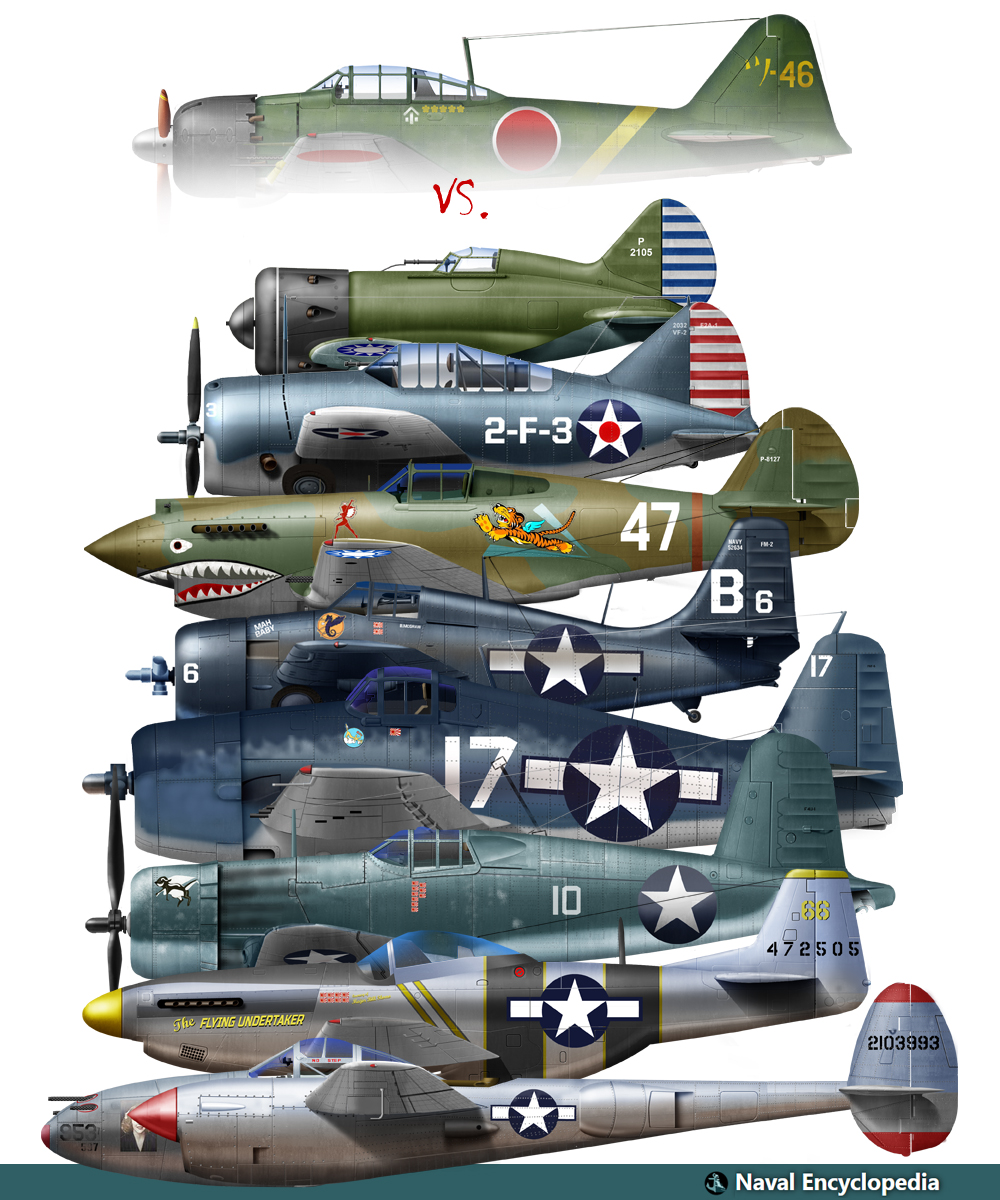
Zeros vs its aversaries
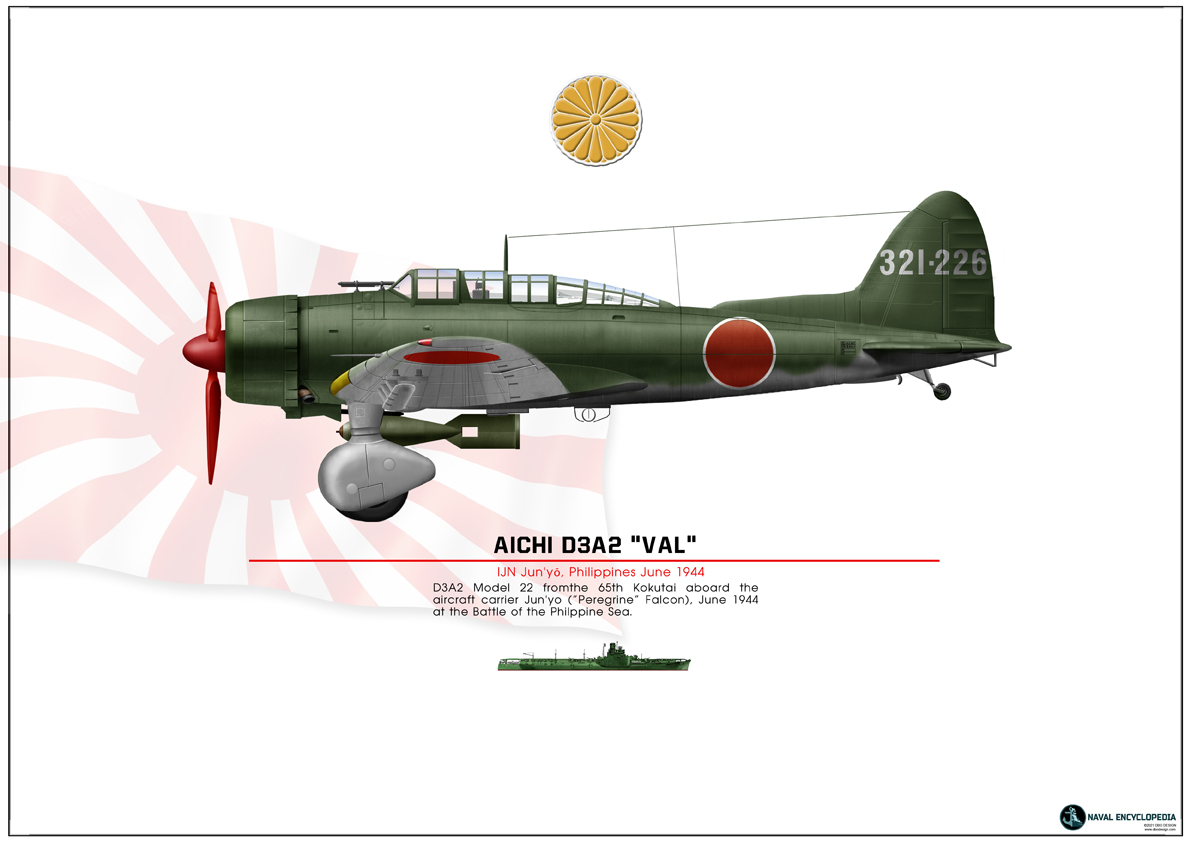
Aichi D3A “Val” Junyo
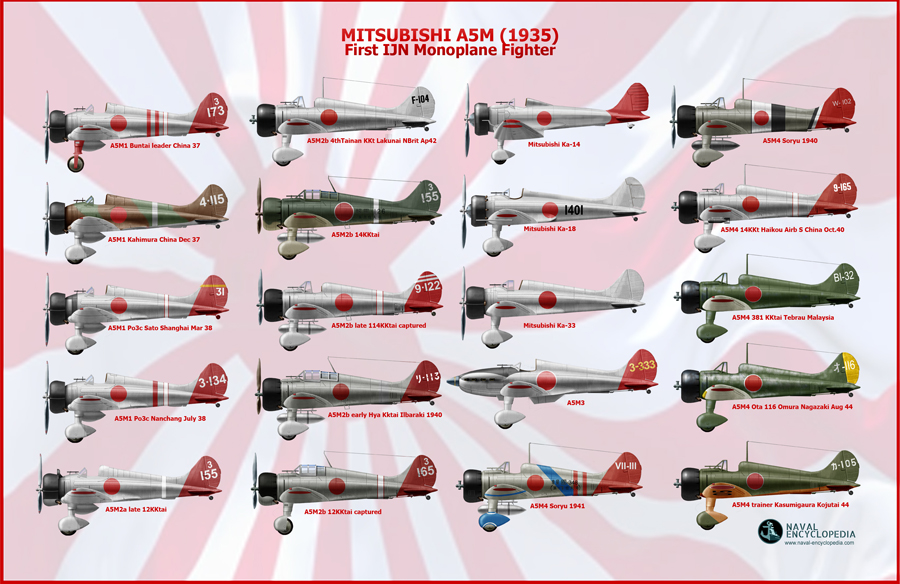
Mitsubishi A5M poster
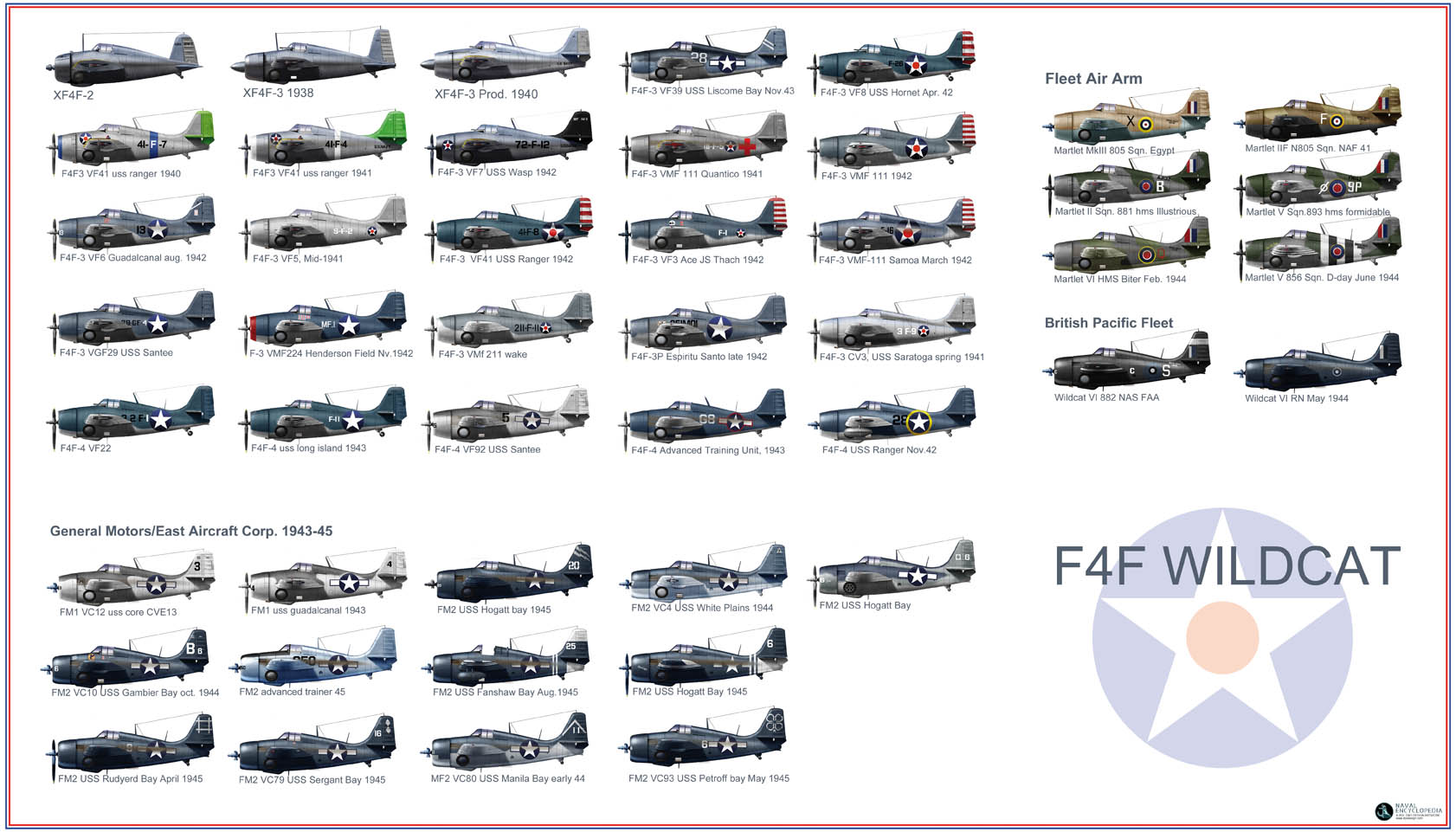
F4F wildcat
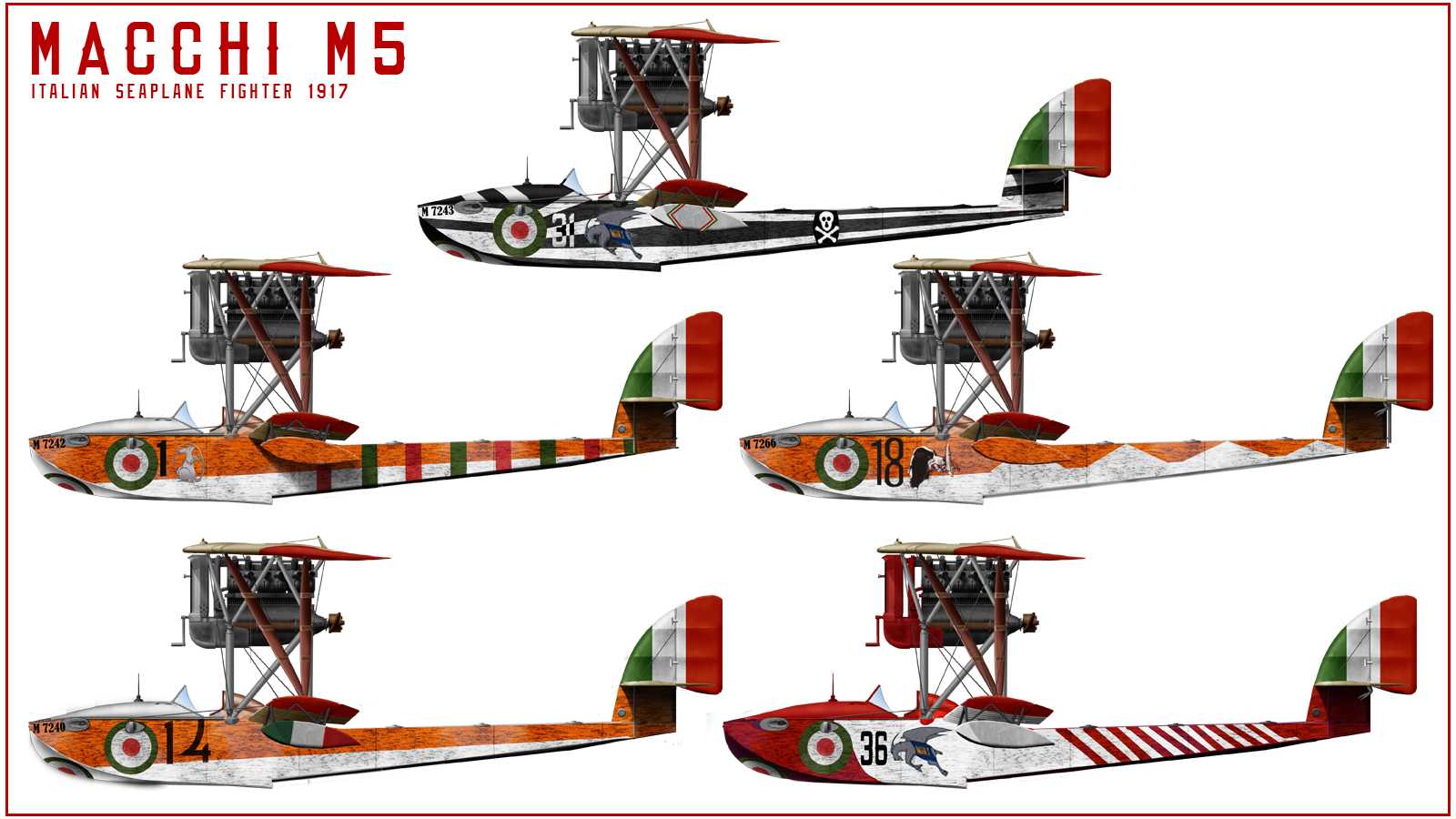
Macchi M5
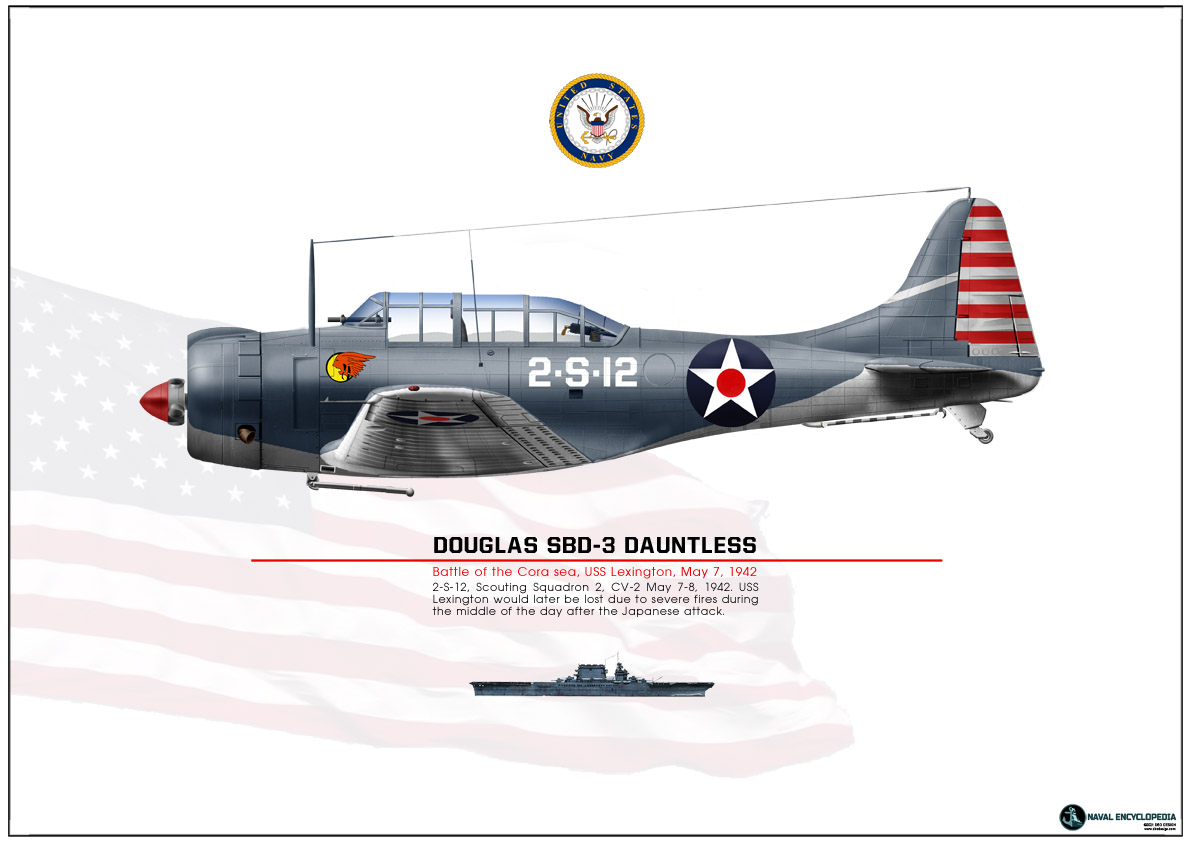
SBD Dauntless Coral Sea
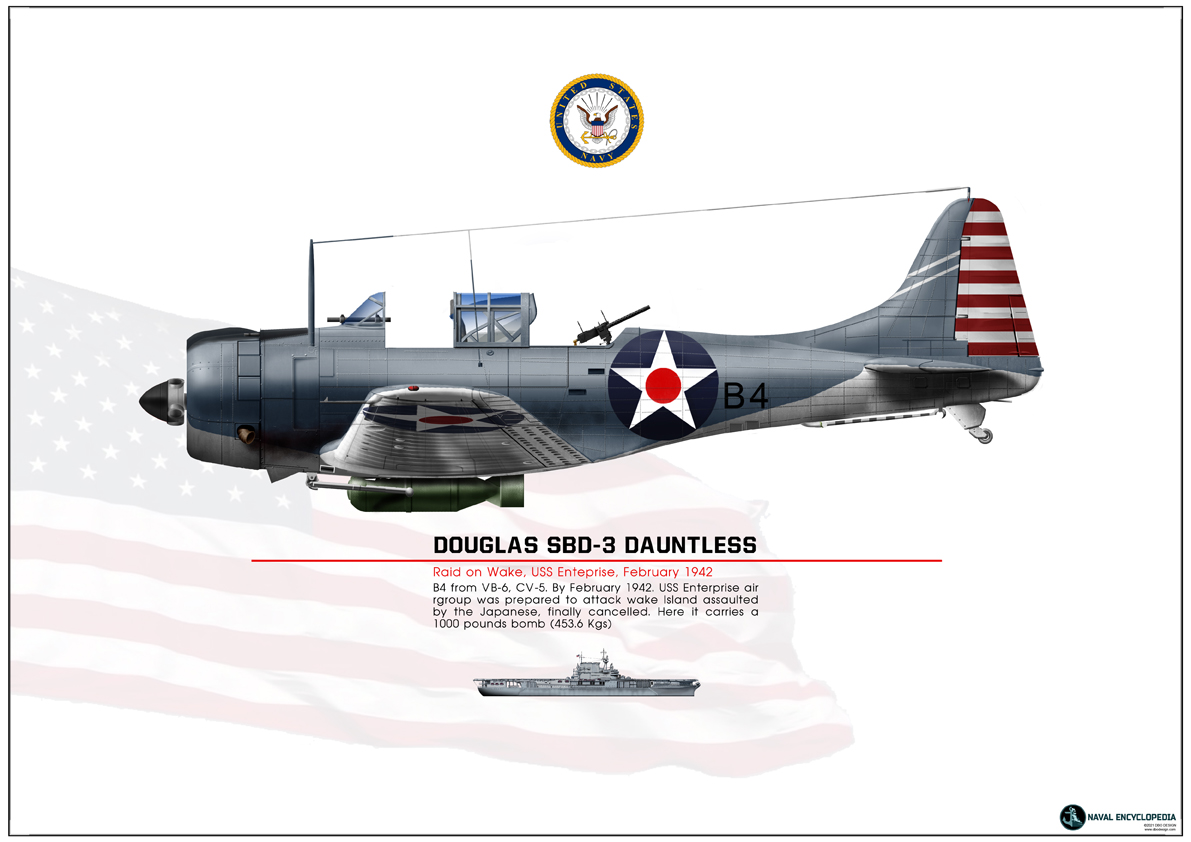
SBD Dauntless USS Enterprise
SBD-4 CV22